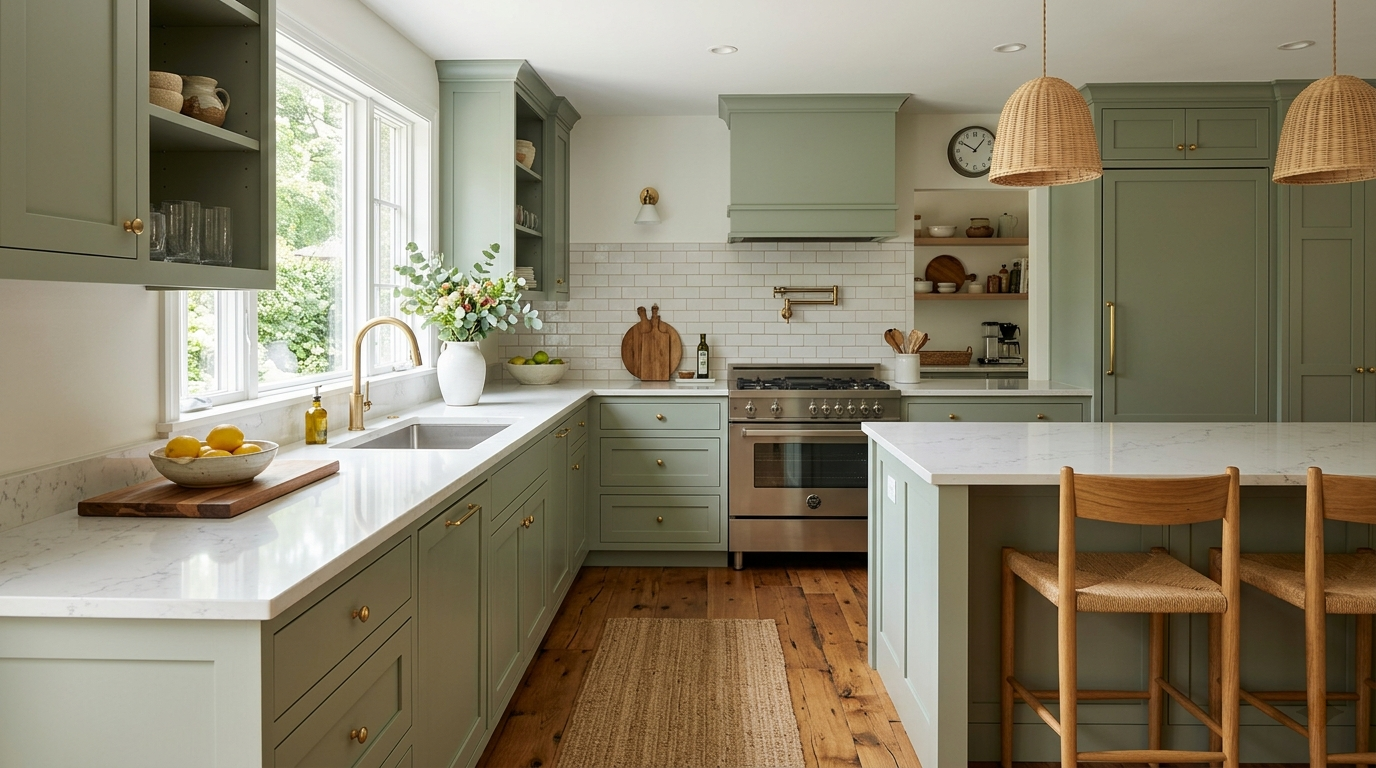
Sage green kitchen cabinets bring color into a kitchen without making the room feel overly bold. The soft gray-green tone works with natural wood, stone, warm neutrals and a wide range of cabinet styles, which is why it can suit everything from a rustic farmhouse kitchen to a clean modern interior.
The key is choosing the right sage tone for your room and then balancing it with the countertop, flooring, wall color, hardware and lighting.
If you are still deciding between sage and other green finishes, explore our green kitchen cabinets collection for a broader look at light, dark and natural green cabinetry.
In this guide, we will look at the best sage green cabinet combinations, including rustic and farmhouse kitchens, Shaker cabinets, modern designs, wood pairings, countertops, hardware and practical advice for choosing the right shade.
What Are Sage Green Kitchen Cabinets?
Sage green is generally a muted green with gray undertones. Compared with brighter greens, it has less saturation, giving it a softer and more understated appearance.
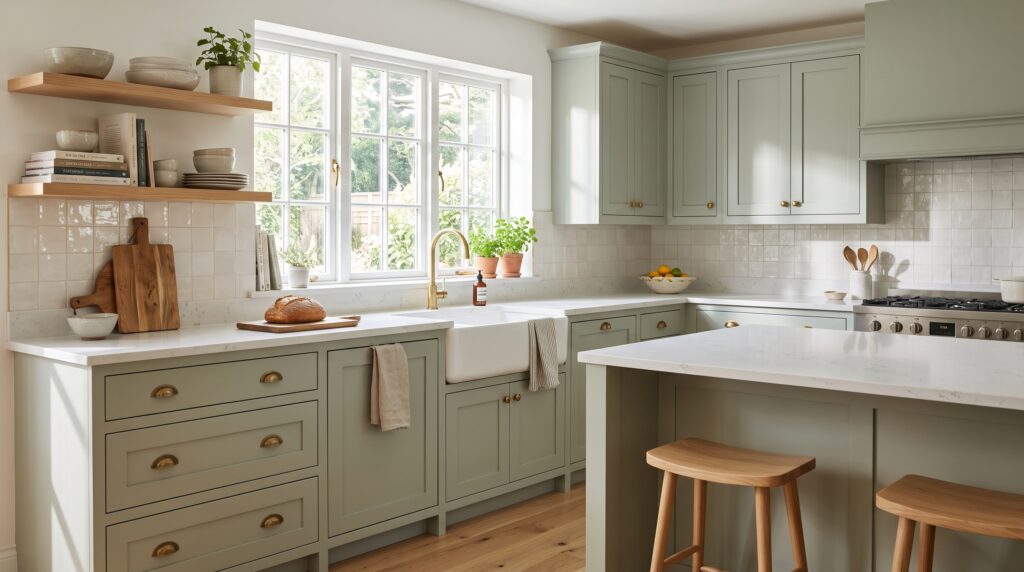
That makes sage particularly useful for kitchen cabinetry. Cabinets occupy a large amount of visual space, so a very bright color can dominate the room. Sage introduces noticeable color while remaining relatively easy to combine with other materials.
Depending on the exact finish, sage can lean:
This variation is important. Two colors described as “sage green” can look completely different once they are installed.
Natural and artificial lighting also affect how a cabinet finish appears. For that reason, always compare your cabinet sample beside the countertop, flooring and wall finishes you plan to use, and look at it at different times of day before approving the final color.
Why Sage Green Works So Well in a Kitchen
One of sage green’s biggest advantages is versatility.
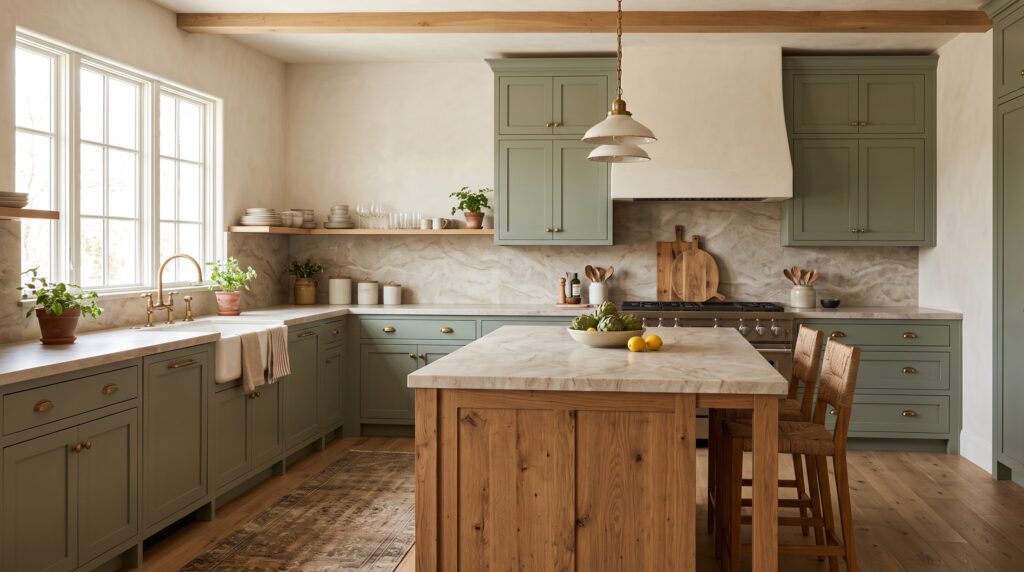
It can sit comfortably beside natural materials such as oak, walnut, marble and textured stone, while also working with more contemporary materials such as quartz, stainless steel and matte-black hardware.
It also provides a useful middle ground between neutral and colorful cabinetry.
For example:
If you want to compare how different cabinet colors and configurations can work across an entire kitchen, explore Parlun’s custom kitchen cabinets range.
Choosing the Right Shade of Sage Green
There is no single correct sage green. The right shade depends on the size of the kitchen, natural light, surrounding materials and the atmosphere you want to create.
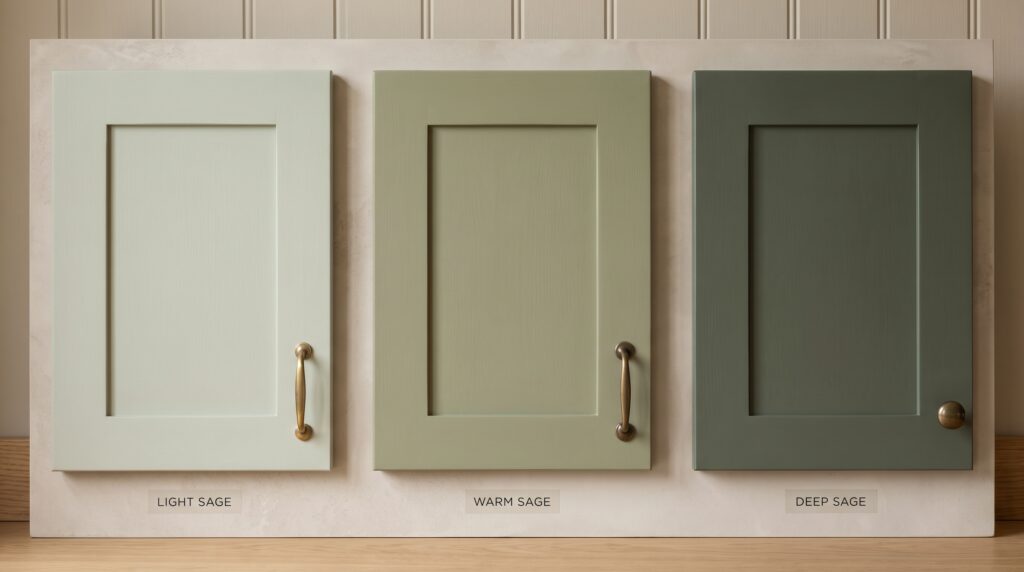
Light Muted Sage
A lighter gray-green is usually the easiest option for smaller kitchens or rooms with limited daylight.
It pairs particularly well with:
A light sage finish can also work well when most of the cabinetry is green because the color does not visually dominate the room as strongly as a deep green.
Warm Earthy Sage
A warmer mid-tone sage gives the kitchen more depth while remaining relatively understated.
This is one of the easiest tones to use with:
It works especially well in farmhouse, transitional and organic-modern kitchens.
Deep Sage and Olive-Leaning Green
A darker, warmer sage can create a more dramatic kitchen.
Deeper finishes tend to work particularly well in larger kitchens, open-plan rooms and kitchens with good natural light.
Pair them with lighter countertops or backsplash materials if you want to keep enough visual contrast.
Olive green is not exactly the same color as sage, but olive-leaning sage finishes can be useful when you want a warmer, earthier palette.
Always Test the Finish First
Never select cabinetry based only on a small digital color sample.
View a real sample:
The surrounding colors can make the same sage finish appear grayer, greener, cooler or warmer.
Rustic Sage Green Kitchen Cabinets
Rustic sage green kitchen cabinets are one of the strongest ways to use this color because sage already works naturally with wood, stone and other textured materials.
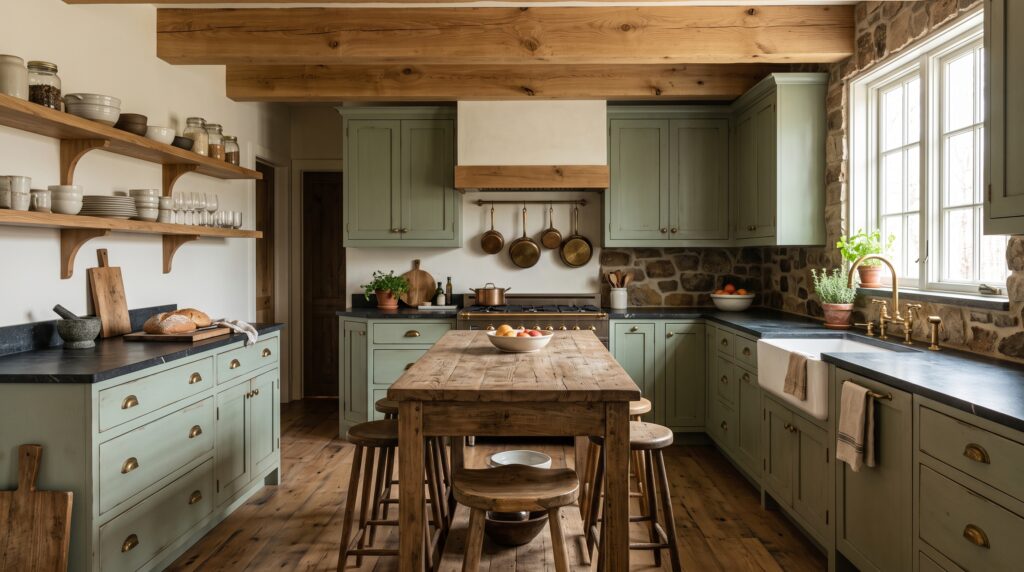
The rustic look depends less on adding decorative objects and more on choosing materials that feel natural and substantial.
A successful rustic sage kitchen might include:
You do not need every rustic element in the same room. In fact, using a smaller number of well-chosen materials usually gives a more convincing result.
For example, sage Shaker cabinets, an oak island and aged-brass handles can create enough rustic character without making every surface look aged.
Homeowners planning this type of kitchen may also want to compare Parlun’s country style kitchen cabinets for additional door and layout inspiration.
Farmhouse Sage Green Kitchen Cabinets
Sage green is also an excellent match for farmhouse kitchens.
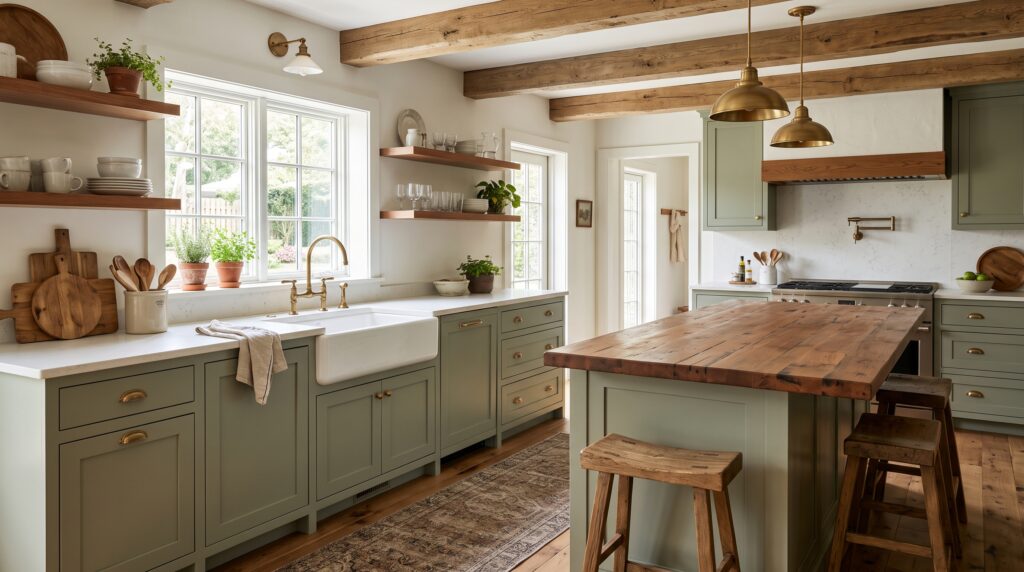
The farmhouse look usually feels lighter and softer than a heavily rustic kitchen. Shaker doors, simple moldings, apron-front sinks, open shelving and natural finishes can create the style without excessive decoration.
A balanced farmhouse sage kitchen can combine:
Cabinets:
Light or mid-tone sage Shaker cabinets.
Countertop:
Cream quartz, light stone, marble-look surfaces or butcher block.
Flooring:
Natural or warm-toned wood.
Hardware:
Aged brass, brushed brass, bronze or traditional cup pulls.
Walls:
Warm white, cream or soft beige.
Backsplash:
Subway tile, handmade-look tile, warm stone or lightly textured ceramic.
If you are combining the cabinetry with extensive natural timber, our wooden kitchen cabinets collection can also provide useful inspiration for wood species, grains and finishes.
Sage Green Shaker Kitchen Cabinets
Shaker doors and sage green are a particularly flexible combination.
A Shaker door has enough detail to give the cabinetry character without becoming heavily decorative. That means it can move between several kitchen styles depending on the surrounding finishes.
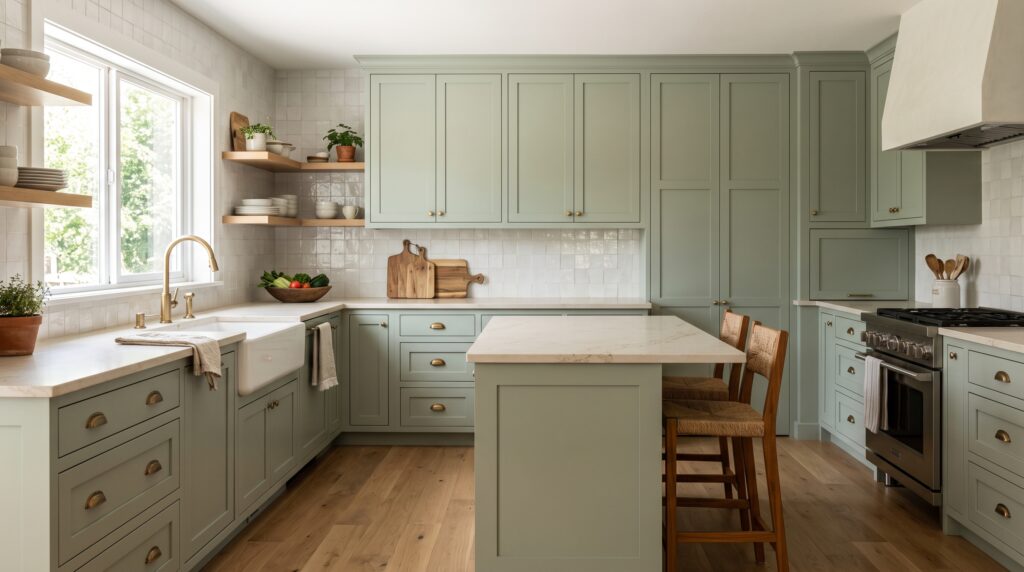
For a Modern Shaker Kitchen
Use:
For a Farmhouse Shaker Kitchen
Use:
For a Transitional Kitchen
Combine the traditional shape of a Shaker door with contemporary countertops, lighting and appliances.
For additional traditional cabinet options, compare Parlun’s classic kitchen cabinets.
Modern Sage Green Kitchen Cabinets
Sage is not limited to country-style kitchens.
For a contemporary design, pair sage with flat-panel or slab-front cabinetry, simple lines and minimal hardware.
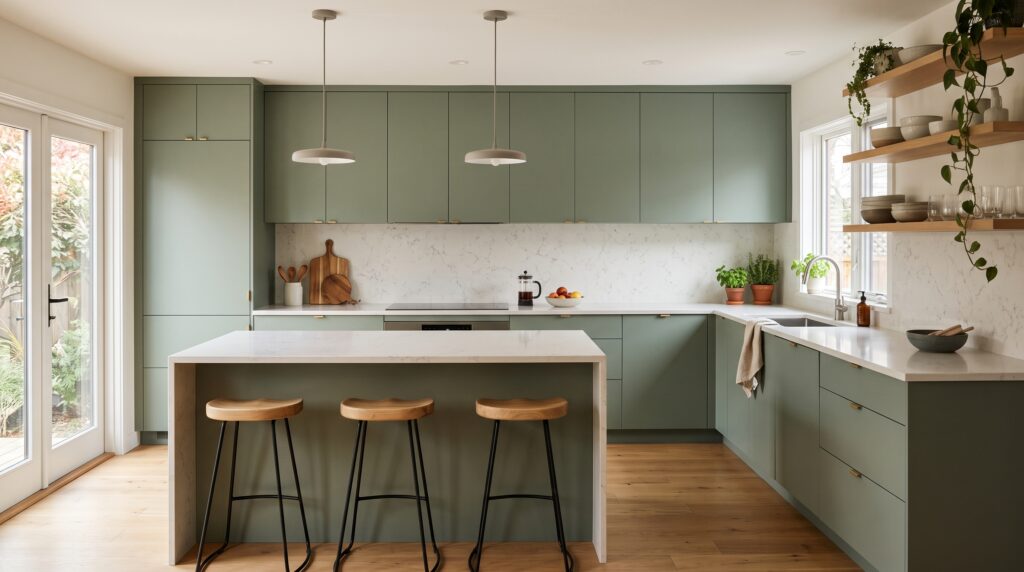
A modern sage kitchen can work particularly well with:
Another approach is to use sage only on the island or lower cabinets while using neutral cabinetry elsewhere.
This introduces color without wrapping the entire room in green.
If your project is more minimalist, Parlun’s modern kitchen cabinets provide examples of cleaner cabinet forms that can also be produced in colored finishes.
Sage Green Cabinets With Wood
Wood is one of the most natural materials to combine with sage green.
Both have an earthy character, but the contrast between painted cabinetry and visible wood grain prevents the kitchen from looking flat.
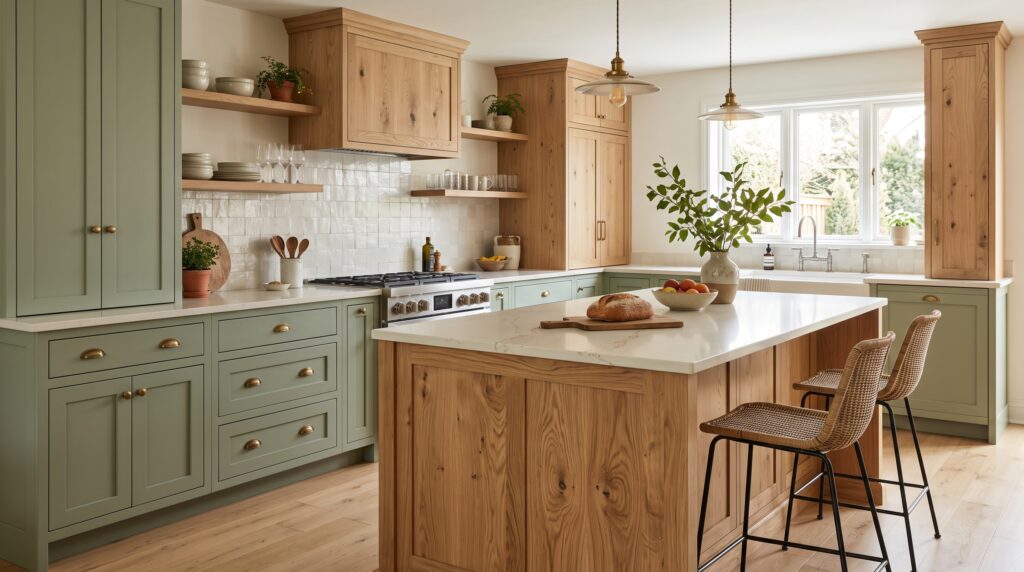
Sage Green and Light Oak
Light oak gives sage a bright, Scandinavian-inspired appearance.
Use it for:
This combination works particularly well with light countertops and warm-white walls.
Sage Green and Walnut
Walnut introduces greater contrast.
Its deeper brown tones can make sage cabinetry feel warmer and more sophisticated, especially when paired with brass details or natural stone.
Sage Green and Butcher Block
Butcher block is especially effective in rustic and farmhouse kitchens.
The visible grain and warmth of the timber contrast with the painted cabinet finish and give the kitchen a less formal appearance.
When mixing sage and timber cabinetry, try to repeat the wood tone in at least one additional feature, such as shelving, stools or flooring, so the material does not look isolated.
Best Countertops for Sage Green Kitchen Cabinets
Countertops have a major influence on how sage cabinets look because the two surfaces meet directly.
You can explore Parlun’s full kitchen countertops range when comparing countertop materials.
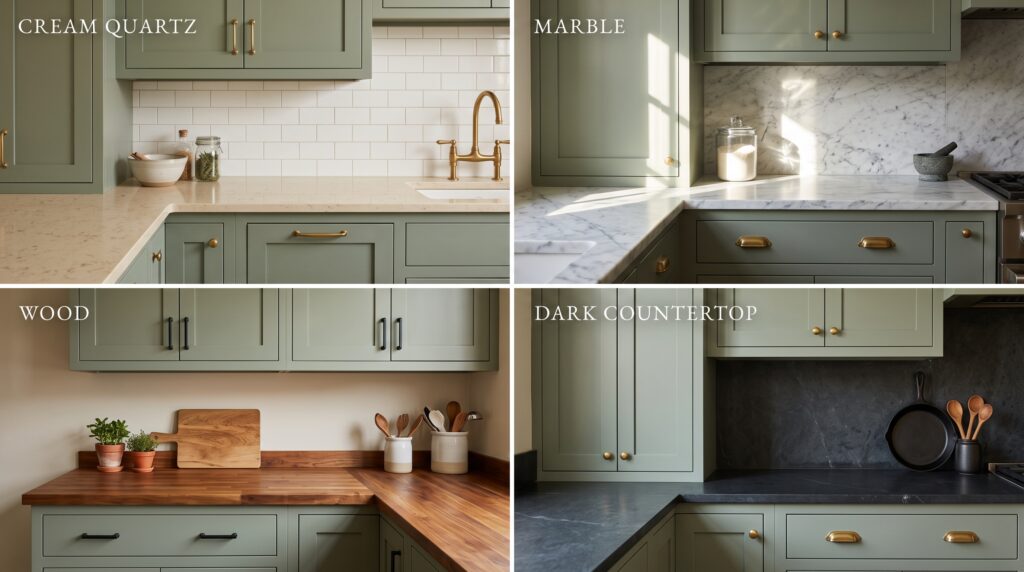
Warm White or Cream Quartz
A warm white or cream-colored surface is one of the easiest choices.
It gives sage enough contrast to stand out while maintaining a soft overall palette.
It is particularly useful in:
White or Light Marble
Marble and marble-look surfaces can create a more elegant finish.
Soft gray, beige or subtle warm veining can visually connect the countertop to the cabinet color and surrounding materials.
Natural Stone
Granite, limestone-look surfaces and other natural stone finishes can give sage cabinetry more texture and depth.
Consider the undertone of the stone carefully. A warm sage usually pairs more naturally with warm beige, cream or brown tones, while a cooler gray-sage can work with cooler stone.
Wood Countertops
Wood is one of the best options when your target style is rustic, cottage or farmhouse.
It adds warmth and creates a clear material contrast against painted cabinet doors.
Dark Countertops
Black, charcoal and dark stone can also work with sage green.
This creates a stronger and more contemporary contrast, especially with medium or light sage cabinets.
Because dark countertops carry more visual weight, they are usually easier to balance in rooms with good light.
Best Backsplash Ideas for Sage Green Cabinets
The backsplash should support the cabinetry rather than compete with it.
Some of the most reliable combinations include:
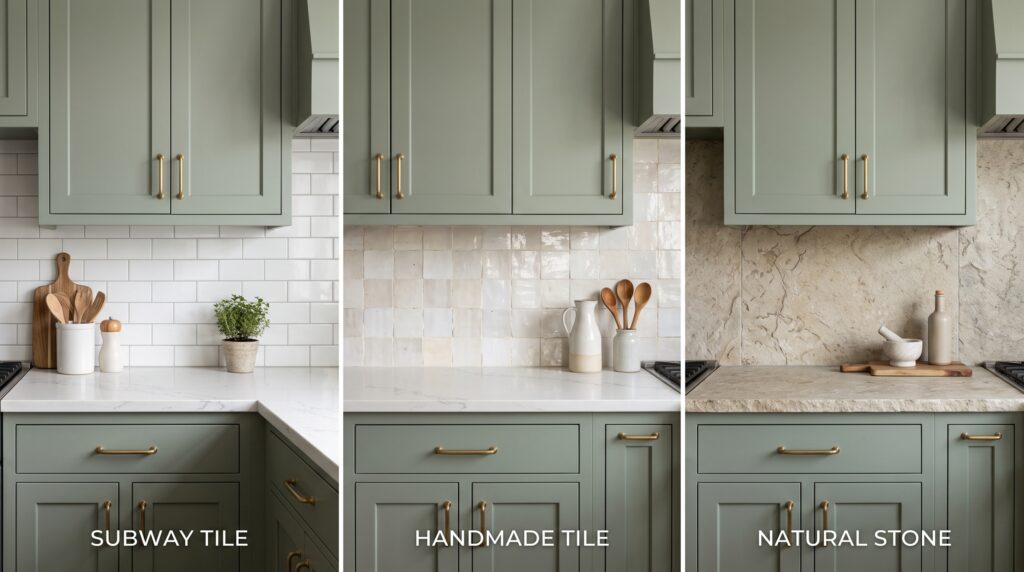
Warm White Subway Tile
A simple choice that works with both traditional and contemporary kitchens.
Zellige-Style or Handmade-Look Tile
The uneven surface and variation in tone add texture to a sage kitchen, especially when the other finishes are relatively simple.
Marble or Stone Backsplash
Using a stone backsplash that relates to the countertop can produce a more continuous and premium appearance.
Brick or Brick-Effect Tile
Brick works particularly well with rustic sage green kitchen cabinets because it introduces natural variation and warmth.
Terracotta
Terracotta and clay-colored tiles provide a stronger color contrast while maintaining an earthy palette.
What Hardware Goes With Sage Green Cabinets?
Hardware can change the character of sage cabinetry surprisingly quickly.
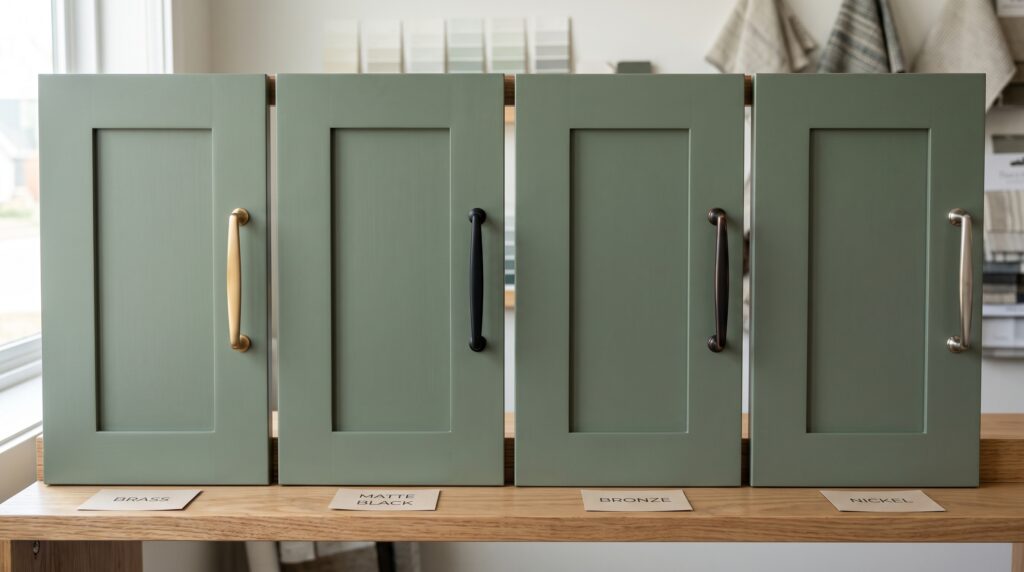
Brushed or Aged Brass
Brass adds warmth and suits farmhouse, transitional and traditional kitchens particularly well.
It can be used on:
Matte Black
Matte black gives sage cabinets a sharper, more contemporary appearance.
It works particularly well when black is repeated elsewhere in the room, such as on window frames, appliances, lighting or seating.
Bronze
Aged or oil-rubbed bronze has a softer antique character than black and is a natural fit for rustic kitchens.
Nickel or Chrome
Nickel and chrome provide a cooler, cleaner look and can help connect the cabinetry to stainless steel appliances.
Rather than choosing hardware independently, consider all visible metal finishes in the room together.
What Wall Colors Go With Sage Green Kitchen Cabinets?
Neutral wall colors are usually the easiest starting point.
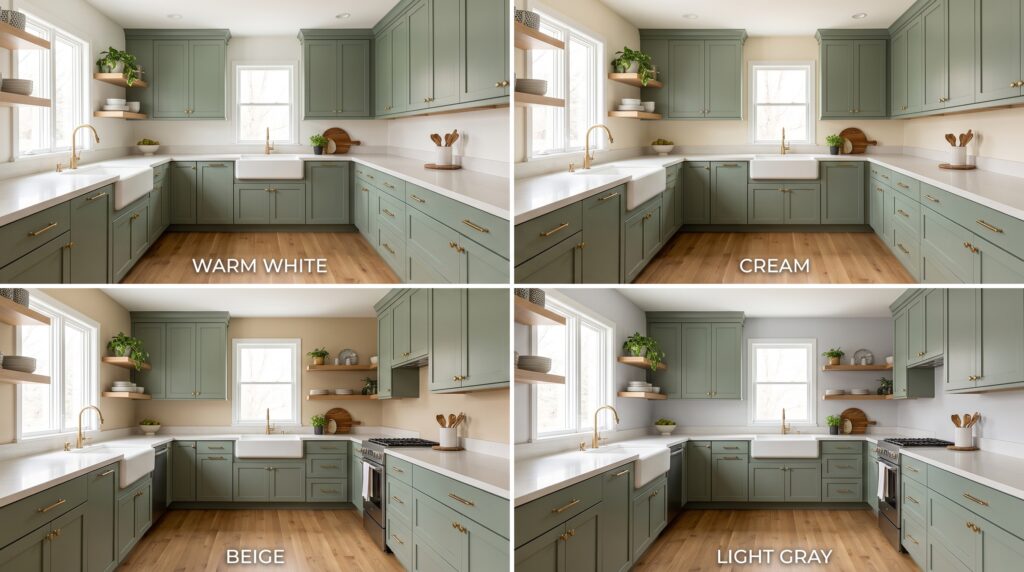
Warm White
Warm white provides contrast without creating as sharp a transition as a very cool, brilliant white.
Cream
Cream reinforces the warm side of sage and works well with wood and brass.
Beige and Greige
These shades create a very soft, layered palette and can work particularly well with earthy sage.
Light Gray
A carefully chosen light gray can work with cooler gray-green cabinetry.
Always compare the undertones before committing.
Dark Walls
Black, charcoal or deep green walls can create a dramatic kitchen, but they require enough natural and artificial light to prevent the room from feeling visually heavy.
Flooring for Sage Green Kitchens
Flooring should connect the cabinets to the rest of the room.
Natural wood remains one of the easiest choices.
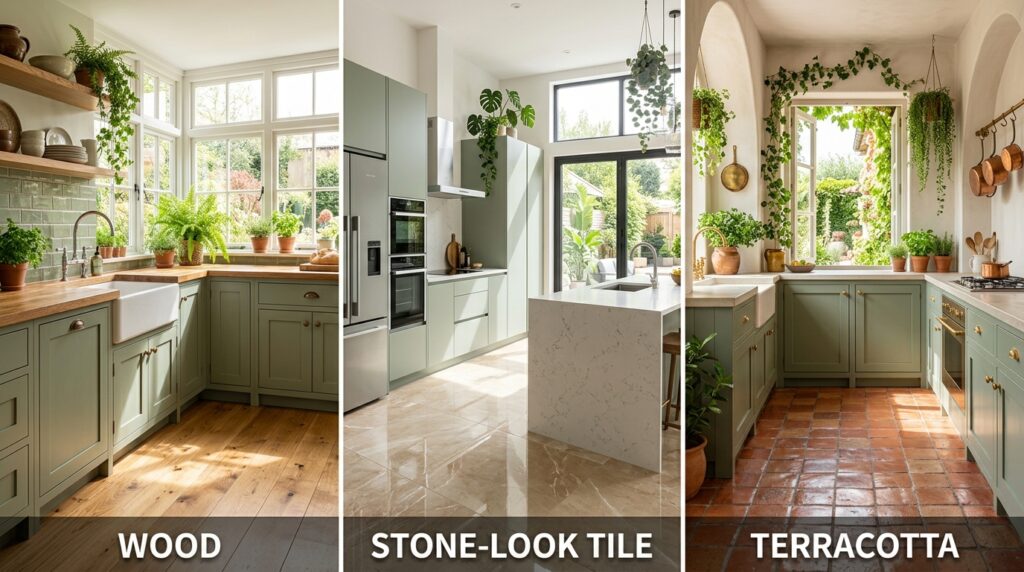
Light oak creates a brighter and more relaxed appearance.
Medium and dark wood give the kitchen more contrast and suit rustic or traditional interiors.
Stone-look tile can work with both modern and country kitchens.
Terracotta introduces warmth and is particularly effective with muted sage cabinetry.
Concrete-look flooring provides a cooler, contemporary contrast.
For homeowners who prefer real timber underfoot, Parlun’s hardwood flooring collection provides additional material options.
Do Sage Green Cabinets Work in Small Kitchens?
Yes. Sage green can work very well in a small kitchen, but choosing the correct tone and surrounding finishes becomes more important.
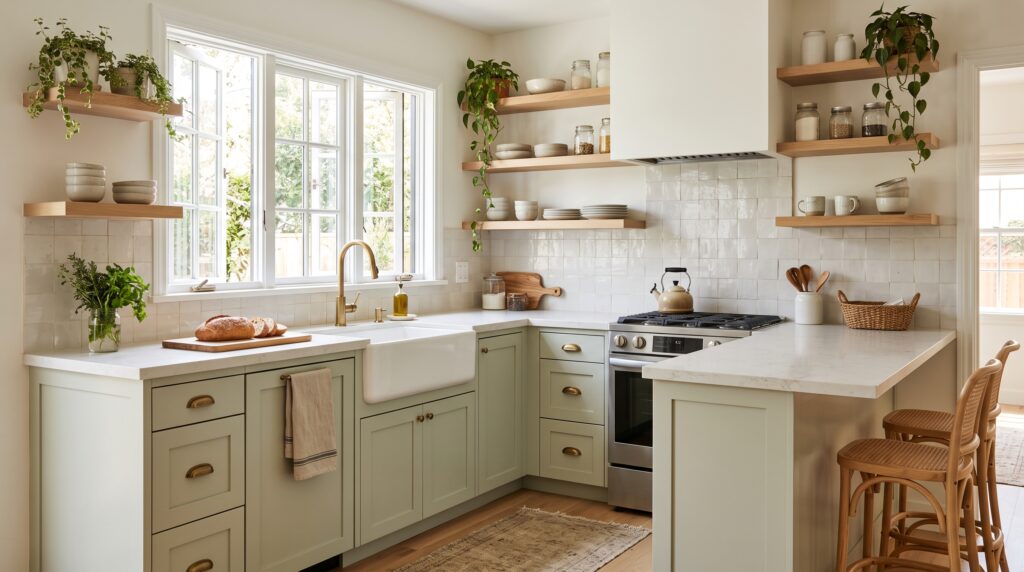
For a smaller room, consider:
You can also use sage on the lower cabinets while keeping upper cabinets lighter.
Another option is to make only the island or one cabinet run sage green.
These approaches introduce the color without allowing it to visually dominate a compact room.
Sage Green Kitchen Cabinets With White Appliances
White appliances can blend naturally into a light sage kitchen.
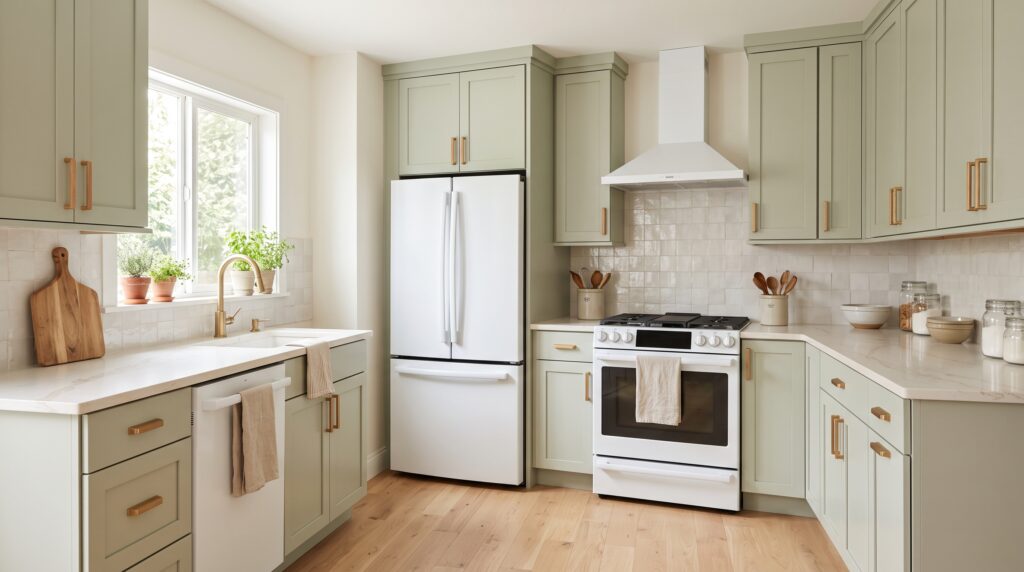
This combination works particularly well when the room already contains:
The result is a relatively soft, low-contrast palette.
Stainless steel appliances provide more visual separation, while black appliances create the strongest contrast.
There is no requirement to match every appliance finish to the cabinet hardware. The more important goal is to repeat each major finish enough that it looks deliberate.
Two-Tone Sage Green Kitchen Ideas
You do not have to use sage on every cabinet.
Two-tone kitchens are a practical way to control how much color appears in the room.
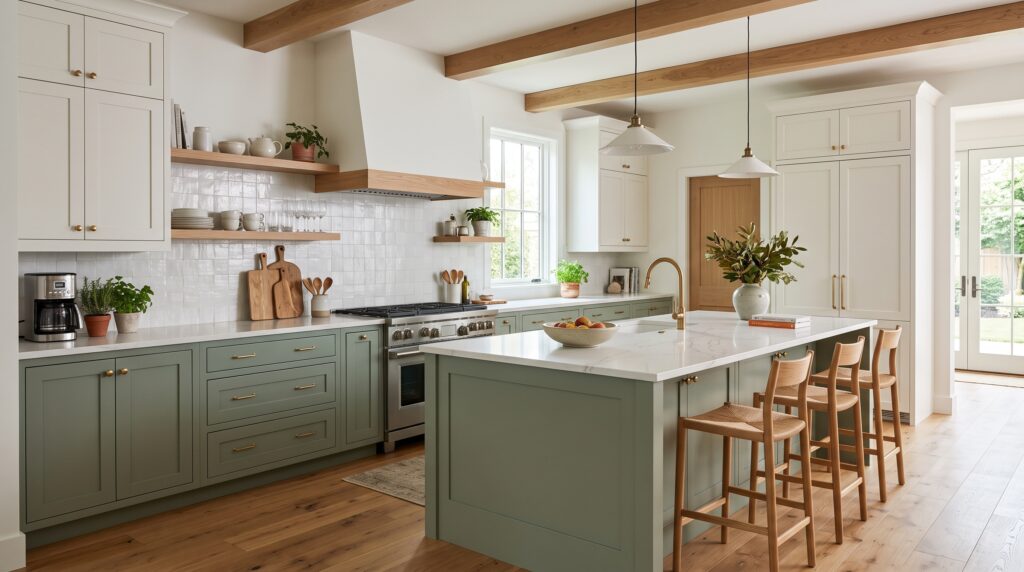
Sage Island With Neutral Cabinets
Use white, cream or wood cabinets around the perimeter and make the island sage.
This gives the kitchen a clear focal point.
Sage Lower Cabinets With Light Upper Cabinets
Keeping the upper half of the room lighter can make the kitchen feel more open while still introducing plenty of green.
Sage and Natural Wood
Combining sage cabinet sections with oak or walnut creates a layered, natural appearance.
Sage With Dark Accents
A sage kitchen with a black island, dark worktop or black-framed glazing produces a more contemporary look.
Rustic vs Farmhouse vs Modern Sage Kitchens
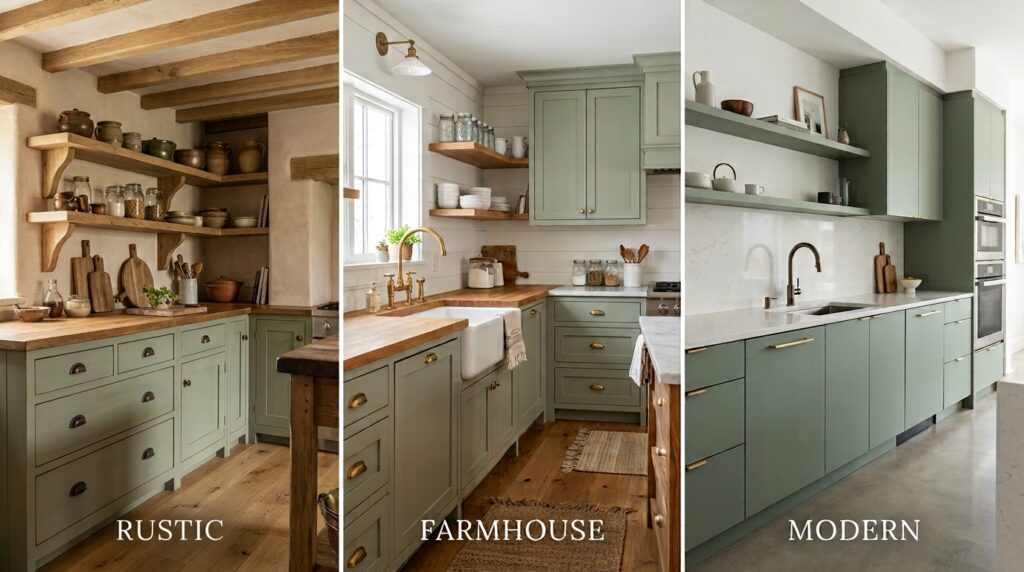
If you are deciding which direction to take, use this simple comparison:
|
Style |
Cabinet Style |
Countertop |
Hardware |
Flooring |
|
Rustic |
Shaker, framed or textured |
Wood or natural stone |
Aged brass, bronze or pewter |
Reclaimed or warm wood |
|
Farmhouse |
Shaker or beadboard |
Cream quartz, stone or butcher block |
Brass or cup pulls |
Oak or traditional tile |
|
Transitional |
Shaker |
Quartz or marble-look |
Brass, nickel or black |
Wood or neutral tile |
|
Modern |
Flat-panel or handleless |
Quartz, stone or concrete-look |
Black, nickel or minimal hardware |
Large-format tile or wood |
The same sage color can move between these styles simply by changing the door design, countertop, hardware and flooring.
How to Plan Custom Sage Green Kitchen Cabinets With Parlun
The best results come from treating the cabinet color as part of the complete kitchen rather than choosing it in isolation.
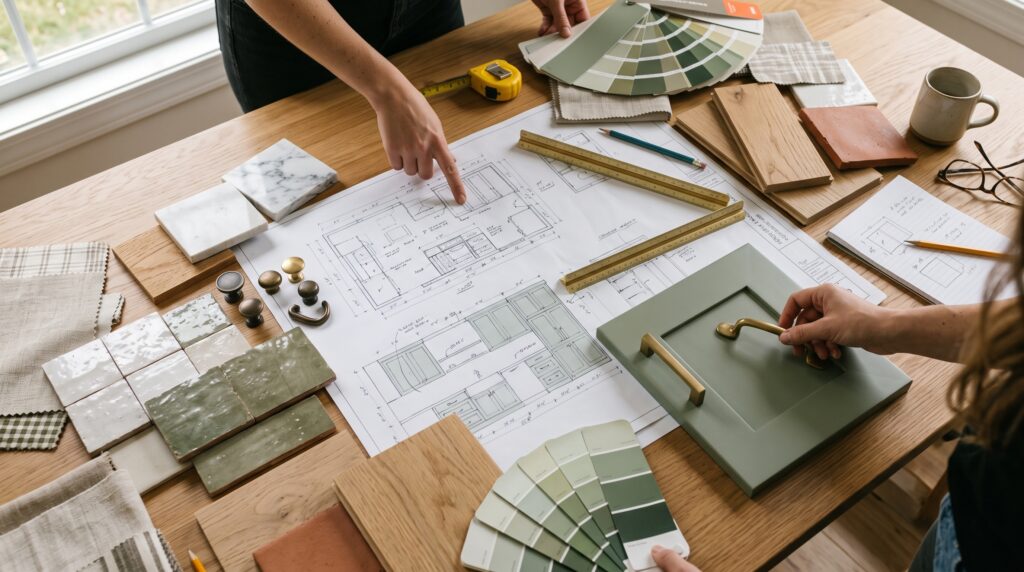
Start with the room dimensions and desired layout, then consider:
Parlun produces custom kitchen cabinetry based on project requirements rather than limiting every project to one standard kitchen configuration.
Our interior design service can also work from project drawings and develop layouts, 3D renderings and detailed design documentation to help coordinate the cabinetry with the wider interior.
For sage cabinetry, this is especially useful because the final result depends on several finishes working together.
Whether you are planning a single residential kitchen or purchasing cabinetry for a larger building project, the aim should be to approve the cabinet color alongside all of the major surrounding materials before manufacturing begins.
Ordering and Delivery
Once the design and materials have been confirmed, Parlun can coordinate the cabinetry as part of a wider building-material order.
For international projects, our team can also help coordinate shipping from China and provide installation guidance depending on project requirements.

Before placing an order, discuss:
This helps reduce changes later in the project.
Final Thoughts
Sage green kitchen cabinets work best when the complete palette is considered together.
For a warmer design, combine sage with wood, cream surfaces and aged metals.
For a cleaner modern kitchen, use simple cabinet fronts, restrained hardware and a light quartz or stone countertop.
For a rustic or farmhouse kitchen, Shaker cabinetry, natural wood, stone, handmade-look tiles and warm metal finishes provide the strongest combination.
Most importantly, choose the actual sage finish in the room where it will be used. Test it beside the countertop, flooring and wall colors under both daylight and artificial light before making the final decision.
If you are ready to plan your kitchen, Parlun can help you select cabinet styles, finishes and materials and develop a custom design for your project.