A bathroom vanity is a cabinet-and-sink station that adds storage, hides plumbing, and defines your bathroom’s style. Choose the right bathroom vanity by matching width, depth, sink type, countertop material, and installation style (floating or freestanding) to your space, budget, and daily routines.
Key Takeaways
- Measure width, depth, and clearance first—size mistakes cause most remodel problems.
- Pick single vs double sink based on morning traffic and bathroom width.
- Floating vanities look modern and save visual space; freestanding styles offer easier installs.
- Quartz, granite, and cultured stone are popular vanity top options for durability.
- Mirrors and vanity lights should be scaled to the vanity width for balanced lighting.
- Installation costs vary by plumbing changes, wall condition, and countertop type.
What Is a Bathroom Vanity and Why It Matters
A bathroom vanity is more than a sink cabinet—it’s the visual anchor of your bathroom. It influences storage, cleaning ease, plumbing access, and the overall feel of the space. The right vanity makes small bathrooms feel larger and busy bathrooms feel more organized.
Success Box: Quick sizing rule
For most bathrooms, choose the largest vanity that still leaves comfortable walkway clearance and door swing space. Bigger storage almost always improves day-to-day usability.
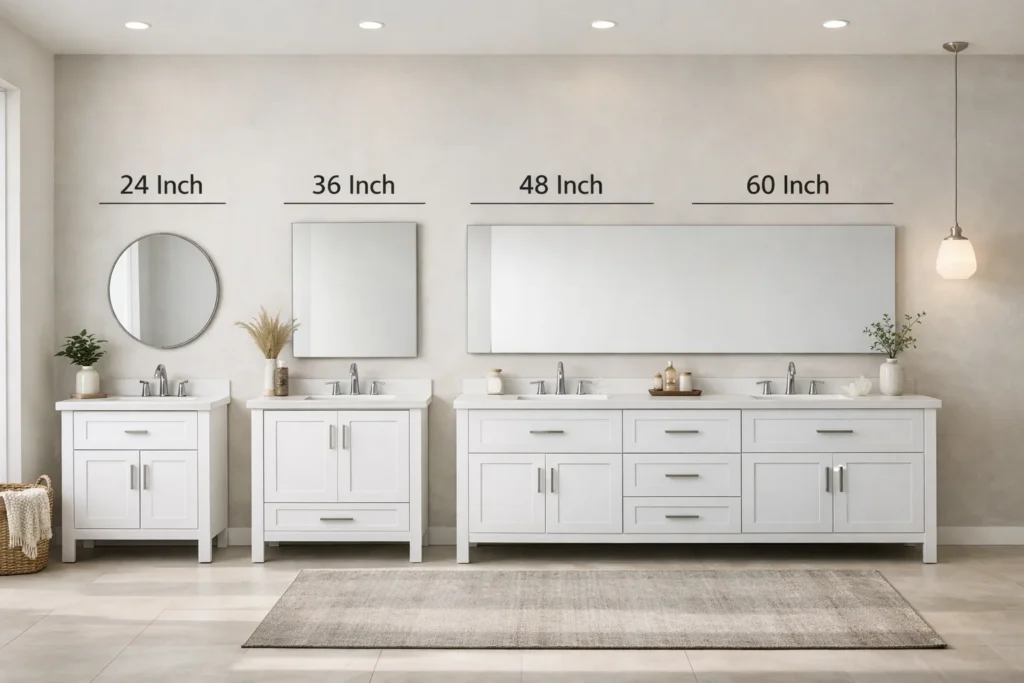
Bathroom Vanity Sizes and Standard Dimensions
Vanities are usually sold by width (left to right). Depth and height matter just as much—especially in small or narrow bathrooms.
Standard Bathroom Vanity Widths
Common sizes include 18″, 20″, 24″, 30″, 32″, 36″, 42″, 48″, 54″, 60″, 72″, 84″, and 96″. Smaller sizes fit powder rooms; larger widths suit master bathrooms.
Standard Bathroom Vanity Depth and Height
- Depth: often around 18–22 inches (shallower options exist for tight layouts)
- Height: standard and comfort-height options are common, depending on preference
Clearances to Plan For
Leave room for:
- cabinet door/drawer opening
- toilet and shower clearance
- walkway space in front of the vanity
Bathroom Vanity With Sink vs Vanity Base Only
Many shoppers prefer a bathroom vanity with sink because it simplifies selection and ensures compatibility.
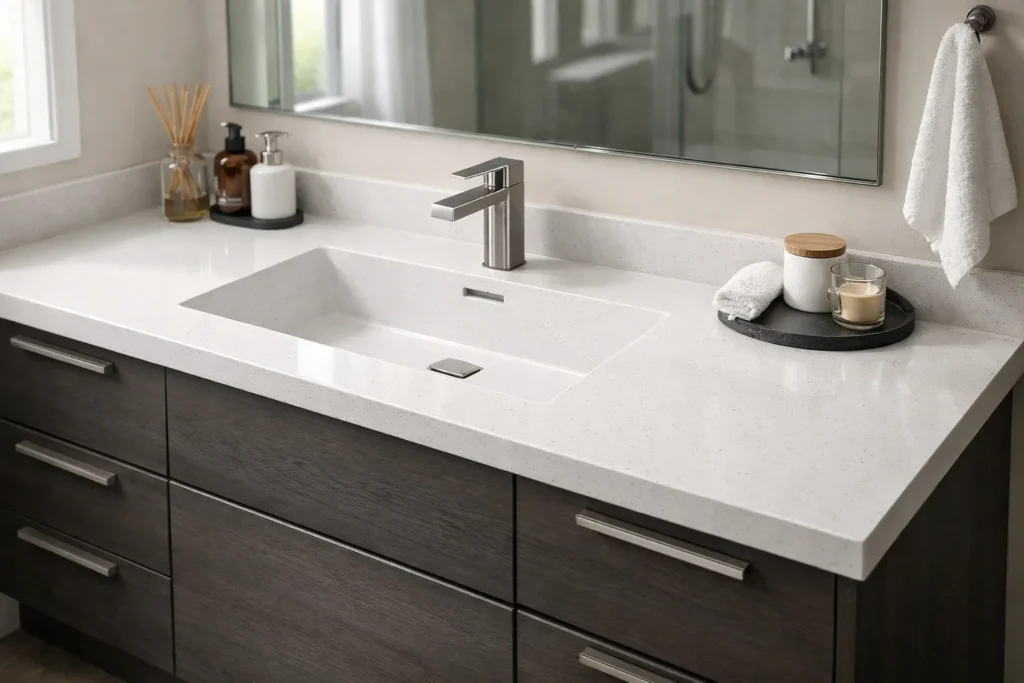
Vanity With Sink (All-in-One)
This option typically includes:
- vanity cabinet
- countertop
- sink (often pre-cut and fitted)
It’s ideal for faster installations and fewer mismatch issues.
Vanity Base Only
Best when you want a custom top or specific sink type (undermount, vessel, or integrated). This route offers maximum design flexibility but requires careful measurements.
Sink Types to Consider
- Undermount: clean, easy-to-wipe countertop edge
- Vessel: bold style statement, requires height planning
- Integrated: seamless look, easy maintenance
Single Sink vs Double Sink Bathroom Vanity
Choosing between one sink and two depends on space and household routines.
Single Sink Bathroom Vanity
A single sink leaves more counter and storage room—often the best choice under 60″ wide unless you truly need two stations.
Double Sink Bathroom Vanity
A double sink shines in shared bathrooms but typically needs more width to avoid cramped counter space between bowls.
Master Bathroom Vanity Planning
For master baths, consider adding a wider countertop, extra drawers, or a linen tower for better storage and long-term convenience.
Alert Box: Don’t force a double sink
If the vanity is too narrow, two sinks can reduce usable counter space and make cleaning harder. A wider single sink vanity with more storage often performs better day to day.
Floating Bathroom Vanity vs Freestanding
Both styles can look amazing—your decision should match your wall structure, plumbing, and design goals.
Floating Bathroom Vanity
A floating bathroom vanity mounts to the wall and exposes the floor, creating a clean, modern look. It can visually expand smaller bathrooms and makes floor cleaning easier.
Freestanding Bathroom Vanity
Freestanding vanities sit on the floor and are often easier to install, especially in remodels where wall reinforcement may be limited.
Wall-Mounted Considerations
Floating styles may require:
- solid blocking or studs for mounting
- precise plumbing alignment
- careful height planning (especially with vessel sinks)
Modern Bathroom Vanity Styles and Popular Looks
Style trends change, but the best results come from matching the vanity to your tile, fixtures, and overall theme.
Common style directions include:
- Modern / minimalist: flat-panel doors, clean lines, matte finishes
- Farmhouse: shaker doors, warmer tones, softer profiles
- Mid-century modern: tapered legs, walnut tones, simple hardware
- Rustic / vintage: textured woods, classic silhouettes
Color trends remain strong for:
- white, black, gray
- navy/blue and sage/green accents
- natural oak and walnut finishes
Bathroom Vanity Tops and Countertop Materials
Your vanity top affects durability, maintenance, and the overall look.
Quartz Vanity Tops
Quartz is popular for scratch resistance and low maintenance. It also offers consistent patterns and modern styles.
Granite and Marble Options
- Granite: durable natural stone, varied patterns
- Marble: premium look, more maintenance sensitive
Backsplashes and Edges
A short backsplash can protect walls from moisture and simplify cleaning, especially behind faucets.
Bathroom Vanity Mirrors and Lighting
Lighting and mirrors can make a vanity feel expensive—or poorly planned.
Bathroom Vanity Mirrors
Aim for a mirror that matches the vanity width (or slightly smaller). Medicine cabinets add storage, especially in tight bathrooms.
Bathroom Vanity Lights
Choose fixtures that provide even, face-level illumination. Options include:
- bars over the mirror
- side sconces
- LED integrated mirrors
Placement Tips
Keep lighting aligned with the sink position and avoid shadows by balancing brightness and fixture placement.
Note Box: Mirror + Light Combo Win
A properly sized mirror and correctly placed vanity lights can make a modest vanity look high-end, while poor scaling can make even expensive cabinets feel visually unbalanced.
Cost, Installation, and Replacement Tips
Costs depend heavily on plumbing changes and countertop materials.
Typical cost drivers include:
- moving drain lines or water supply
- upgrading faucets and valves
- wall repair, flooring changes, or backsplash updates
- countertop material and sink type
Installation is smoother when your new vanity matches the existing plumbing location—especially for quick upgrades.
Why Choose Parlun Building for Bathroom Vanities?
Sourcing quality bathroom vanities for projects, remodels, or bulk orders? Parlun Building delivers modern vanity solutions — from premium cabinet styles to countertop-ready designs tailored to your space, style, and budget.
Explore Parlun Bathroom Vanity Solutions →Final Thoughts
The right bathroom vanity balances size, storage, sink configuration, and style—without sacrificing clearance or comfort. Start with measurements, choose the sink setup that fits your routine, then refine the look with the right top, mirror, and lighting. A well-planned bathroom vanity upgrade can transform daily function fast.
FAQs
What is the best bathroom vanity size for a small bathroom?
For small bathrooms, 18″, 20″, 24″, or 30″ widths are most common. Choose a shallow-depth vanity if space is tight, and prioritize drawers or vertical storage. A floating vanity can also make the room feel larger.
Is a floating bathroom vanity better than a freestanding one?
A floating vanity looks modern, makes cleaning easier, and visually opens the floor. Freestanding vanities are often simpler to install and can be more forgiving in remodels. The best choice depends on wall strength and plumbing location.
Should I buy a bathroom vanity with sink or cabinet only?
A bathroom vanity with sink is easier because the top and basin are matched and pre-cut. Cabinet-only buys are better for custom countertops or special sink types like vessel or integrated sinks, but they require more precise measurements.
What is the most durable countertop for a bathroom vanity?
Quartz is a top choice for durability and low maintenance. Granite is also strong but varies by slab and sealing needs. Marble looks premium but stains more easily, so it’s best for low-use bathrooms or owners who don’t mind upkeep.
How do I choose vanity lights for my bathroom vanity mirror?
Match the light size to the mirror/vanity width and aim for even, glare-free brightness. Over-mirror bars work well in many bathrooms, while side sconces reduce shadows. LED mirrors can be sleek but ensure adequate lumen output.
What is the standard height for a bathroom vanity?
Standard vanity heights vary, but many modern bathrooms prefer comfort-height options for easier use. Your best height depends on user comfort and sink type, vessel sinks often require a lower cabinet to avoid an overly tall final rim height.
How much does bathroom vanity installation cost?
Installation cost depends on whether plumbing moves, the countertop material, and any wall or flooring repairs. Simple replacements that keep plumbing in place cost less, while changes to drain lines, shutoff valves, or wall mounting increase labor.