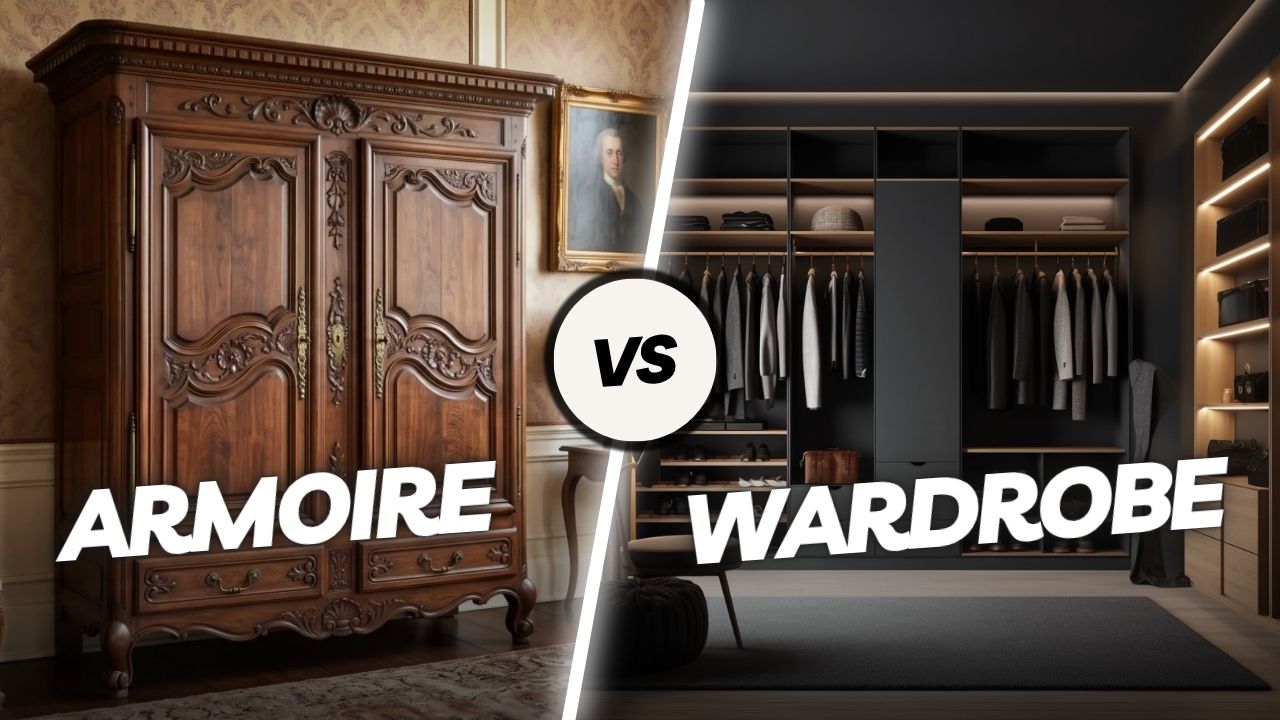
If you have ever shopped for bedroom storage, you have probably seen the words “armoire” and “wardrobe” used as if they mean exactly the same thing. They are closely related, and people often use them interchangeably, but they are not identical, and the wardrobe vs armoire distinction matters more than most buyers expect.
In short, an armoire is a specific type of freestanding cabinet with French origins, while a wardrobe is a much broader category that can be freestanding or built in. Below, we explain the real armoire vs wardrobe difference in plain terms, show how each option performs in a modern home, and help you choose the right storage for your space, your client, or your development.
What Is an Armoire?
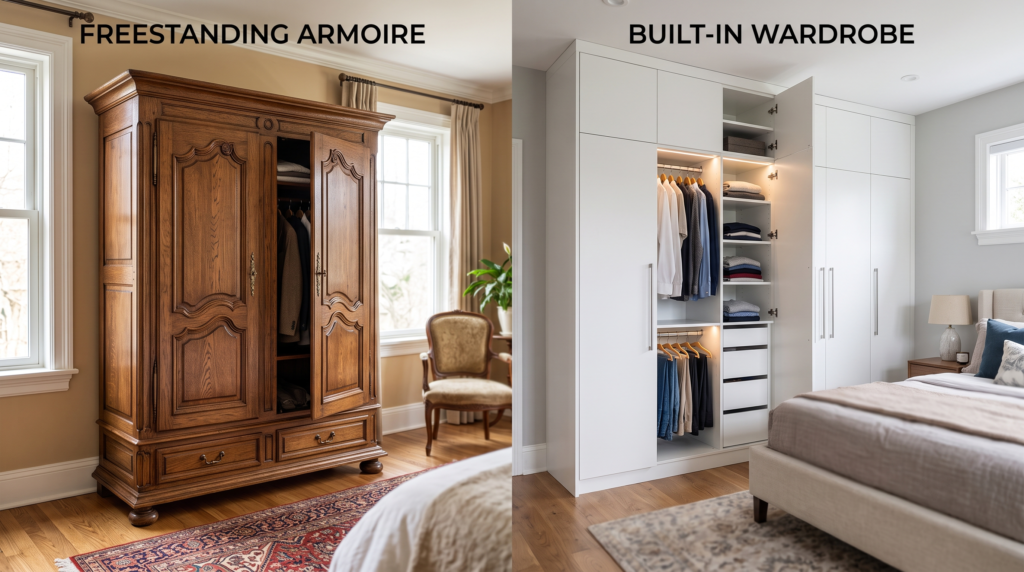
An armoire is a large, freestanding cabinet designed to store clothes, linens, and personal belongings. The name comes from the French word “armoire,” and the piece wears that heritage openly: tall proportions, panelled or carved doors, and decorative detailing that turns everyday storage into a piece of furniture. Traditional armoires usually include an interior hanging rail, along with a mix of drawers or shelves, and many feature a full-length mirror fixed to the inside of a door.
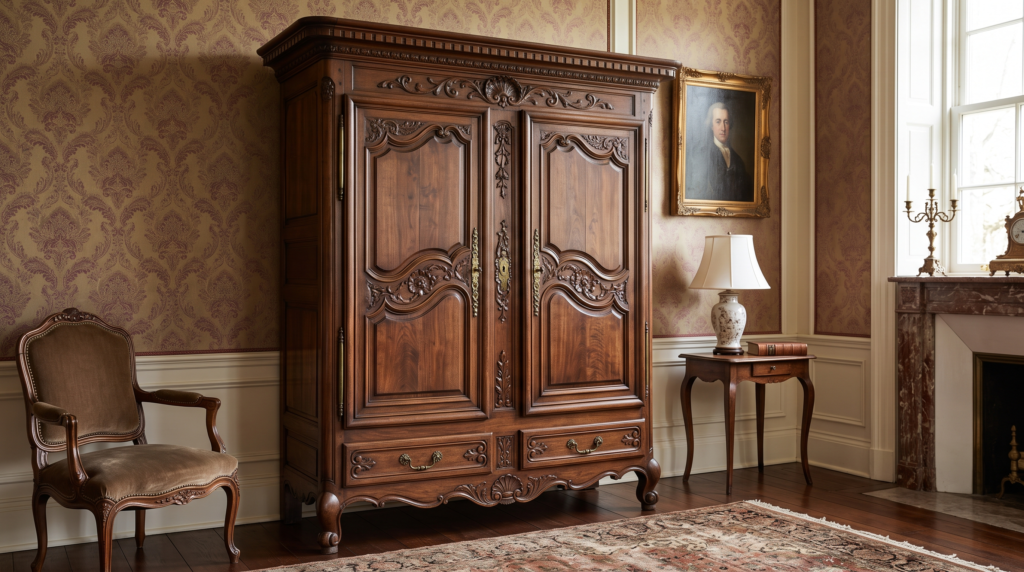
The defining trait of an armoire is that it is always a standalone piece. It is never fixed to the wall or built into the structure of the room, so you can reposition it, sell it, or take it with you when you move. Historically, that portability was the whole point, because rooms rarely came with fitted storage, so a beautiful freestanding cabinet did the work that built-in joinery does today. You will still find armoires specified in traditional, rustic, and country-style interiors, where the ornate frame is meant to be seen and admired. This is where the armoire vs wardrobe difference becomes clearest: compared with a plain freestanding wardrobe, an armoire leans much more heavily on decorative appeal than on raw capacity.
Most armoires are built from solid wood or wood veneer, which is part of why they feel substantial and, often, cost more than a simple flat-pack unit of the same size. That weight is worth planning for: because an armoire is a fixed, single volume, it will not adapt to a sloped ceiling or a shallow alcove the way a made-to-measure unit can. For buyers who want a movable heirloom piece it is a strength, but for anyone chasing maximum storage per square metre it is a genuine limitation.
What Is a Wardrobe?
A wardrobe is any storage unit built to hold clothing, and that broad definition is exactly why the category covers so much ground. A wardrobe can be freestanding, like a classic two-door cabinet, or it can be a built-in wardrobe fitted flush against the wall and finished to match the surrounding room. It might be a single narrow unit tucked into a small apartment, or a complete walk-in wardrobe with open shelving, banks of drawers, dedicated shoe racks, and separate hanging zones for long and short garments.
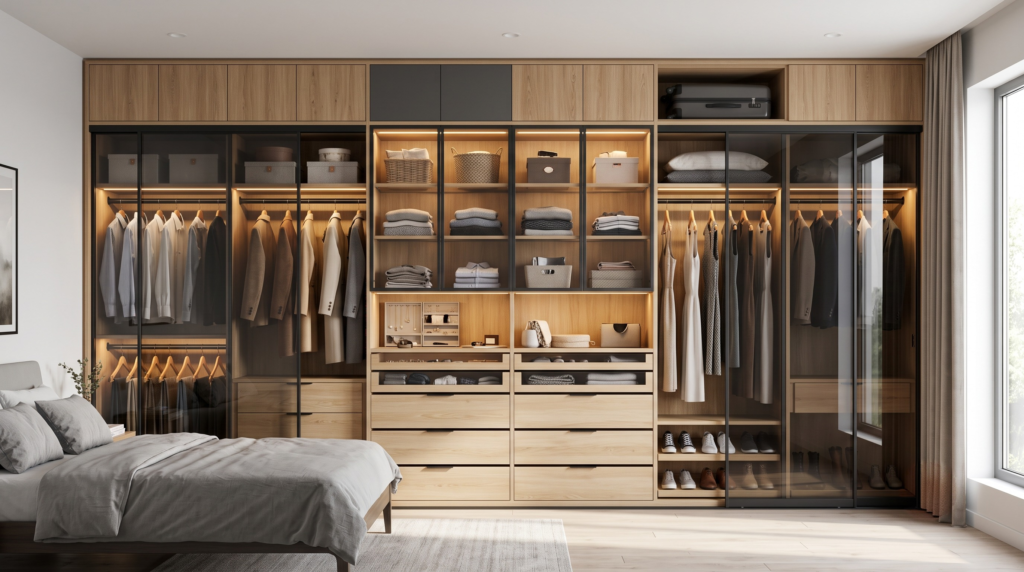
Because the term stretches so far, wardrobe types vary widely in size, price, and installation method. Freestanding models offer flexibility and are easy to move between rooms or homes. Fitted and built-in models, by contrast, use every available centimetre, including awkward corners, alcoves, and sloped ceilings, and deliver a seamless, architectural finish that reads as part of the building rather than as furniture. When buyers search for wardrobe ideas today, they are usually picturing these tailored, space-efficient systems rather than a single ornamental cabinet. In practical terms, a wardrobe is defined by function first: the styling follows the room, not the other way around.
The interior is where a modern wardrobe pulls ahead. Instead of one hanging rail and a shelf, a well-planned unit can combine double-hang sections for shirts and jackets, full-height hanging for coats and dresses, adjustable shelving, pull-out drawers, and integrated lighting. A walk-in wardrobe takes the same logic further, turning a small room or a section of the bedroom into a dedicated dressing space. This flexibility is exactly why wardrobes suit everything from a studio apartment to a high-specification family home.
Key Differences: Armoire vs Wardrobe
Now that both are defined, the armoire vs wardrobe comparison comes down to three practical factors: scale, styling, and installation. Each of these affects the look of the finished room and, just as importantly, its actual storage capacity. The three sub-sections below break the comparison down.
Size and Scale
Armoires are typically large, ornate single pieces built to a fixed footprint, so what you buy is what you get. Wardrobes are far more flexible in scale, running from compact 60cm units suited to small bedrooms all the way up to room-width fitted systems that stretch across an entire wall from floor to ceiling.
Style and Design
An armoire is a decorative statement piece, with carved detailing, standout finishes, and a frame designed to draw the eye. A wardrobe is primarily functional and can be integrated seamlessly into the room. With a sliding door wardrobe or a flush-fitted design, the storage almost disappears, letting the rest of the bedroom take centre stage.
Built-In vs Freestanding
This is the clearest line between the two. An armoire is always freestanding, standing on its own and ready to be repositioned or removed at any time. A wardrobe can be either freestanding or built in. Built-in options are fixed to the room and often use hard-wearing wardrobe materials such as engineered wood, laminate, glass, or lacquered panels.
Which Is Better for a Modern Bedroom?
For most modern bedrooms, a fitted wardrobe is the stronger choice. Contemporary interiors reward clean lines and the efficient use of space, and a built-in system delivers both at once, because it uses the full height of the room, hides clutter behind flat doors, and keeps sightlines calm and uninterrupted. This is where modern wardrobe design really earns its keep, since the storage works hard without ever dominating the room it sits in.
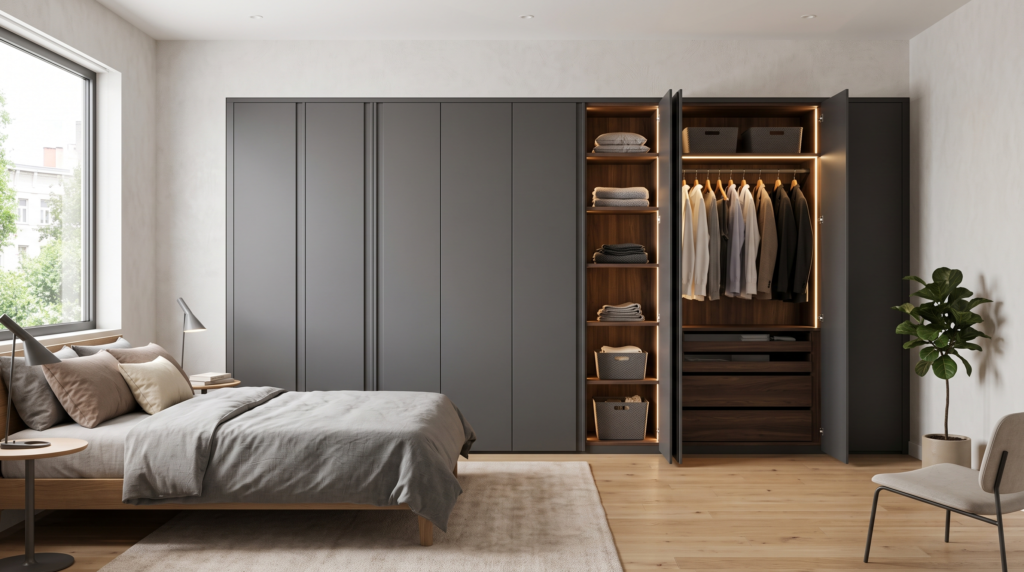
That said, an armoire still has a genuine role, and the wardrobe vs armoire decision is not always one-sided. In a period property, an eclectic scheme, or any space where the furniture is meant to be a visual feature, a well-chosen armoire brings character that a flush, minimalist wardrobe simply cannot. It suits rooms with generous floor area and a decorative brief, where standing furniture is part of the intended look rather than something to be tucked away.
But when space is limited, a fitted wardrobe almost always wins. It returns more usable storage from the same footprint, and it keeps a small room feeling open. When you are weighing up wardrobe ideas against a single freestanding wardrobe or a standalone armoire, the fitted route delivers more hanging space, more shelving, and a cleaner finish nearly every time, which is why it dominates new residential design. For builders and designers specifying at scale, that efficiency also translates into a more consistent look across multiple rooms and a stronger selling point for the finished property.
Custom Wardrobes from Parlun
At Parlun, we manufacture custom built-in wardrobe systems designed around your exact space and specifications. Choose sliding or hinged doors, then configure the interior with the hanging rails, drawers, shelving, and accessories each project needs. Every wardrobe can be produced in the finish and colour you want, from natural wood tones to matte, high-gloss, and on-trend textured panels, so the finished unit matches the design brief precisely rather than forcing a compromise.
As an established wardrobe manufacturer, we supply individual residential projects and large apartment developments alike, holding quality consistent even across high-volume orders. Our custom wardrobes from China ship worldwide, giving builders, interior designers, and homeowners direct access to tailored storage without restrictive local minimums or long lead times slowing the project down. Whether you need a single statement unit for one bedroom or fitted wardrobes for an entire building, we can build to your plans and deliver straight to site.
For trade buyers, that means one supplier for the whole scheme: consistent hardware, matching finishes across dozens of units, and drawings confirmed before anything goes into production. We handle export packing and international freight, so a developer in another market receives factory-direct pricing without managing a separate logistics chain. If you are comparing a bespoke wardrobe against an off-the-shelf armoire or a stock cabinet, a custom system almost always makes better use of the space and holds its value across a project far more reliably.