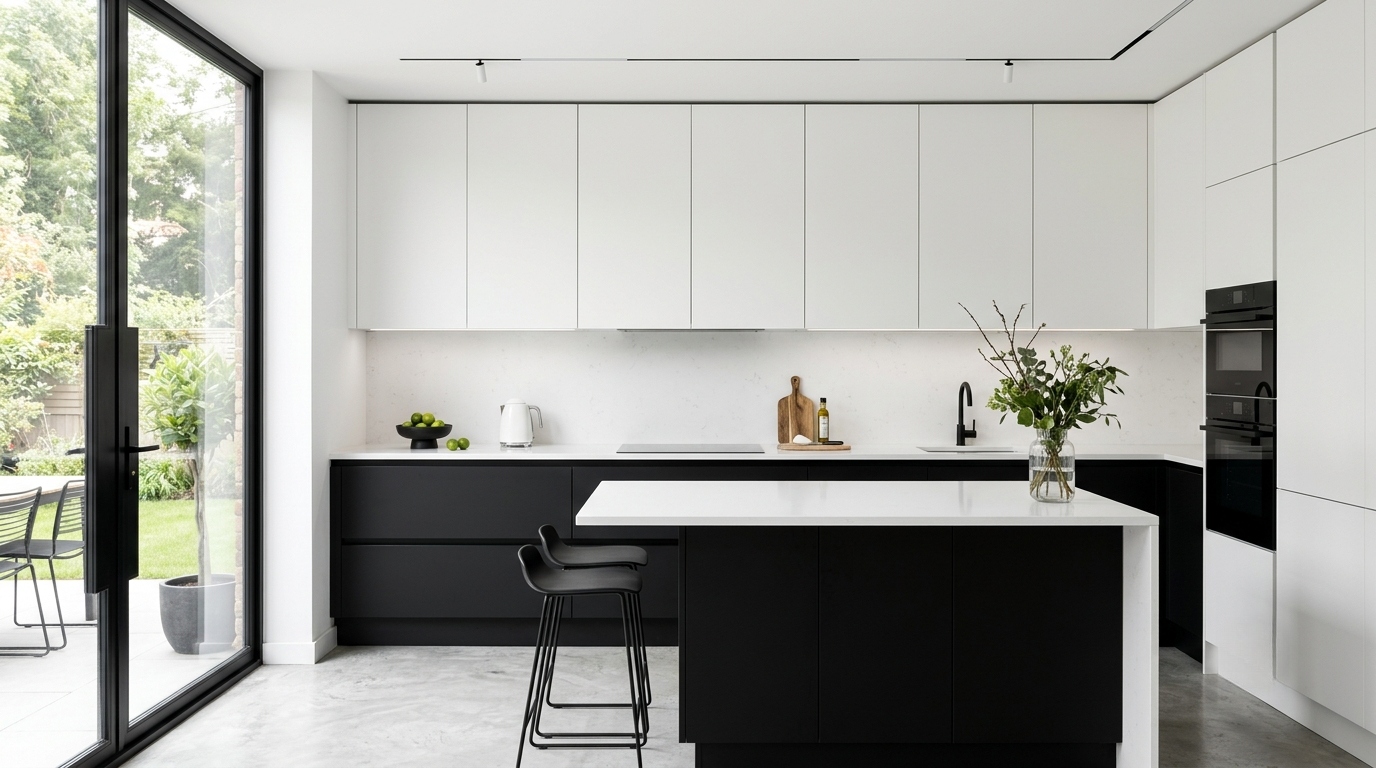
A black and white kitchen can feel crisp and modern or warm and traditional. The result depends on much more than choosing two opposite colours. You need the right balance of dark and light cabinets, a countertop that connects the palette and enough texture to stop the room from feeling flat.
This guide explores practical black and white kitchen ideas for large rooms, compact layouts and different interior styles. You will learn where to place each colour, which materials work well and how to choose flooring, hardware, appliances and lighting. The goal is not simply to create strong contrast. It is to design a kitchen that feels comfortable every day and still looks considered years later.
Black and White Kitchen Design Overview
The easiest way to plan a black and white kitchen is to begin with the size and natural light of the room. Small or darker kitchens usually benefit from more white, while larger and brighter rooms can carry more black. Black lower cabinets with white upper cabinets create a balanced two tone layout. A black island can add contrast without making the whole room feel dark. Warm wood, brass, soft white paint and textured tile can prevent the palette from looking cold. Countertops and backsplashes should connect the cabinet colours instead of competing with them. Flooring must also be chosen early because it affects the overall warmth of the design. Before ordering cabinets, compare large finish samples in the actual room during the morning and evening. This simple step helps you see how every black and white surface will behave under changing light.
Why Black and White Works in the Kitchen
Black and white create clear visual structure. White reflects available light and can make cabinets feel less heavy. Black adds depth, defines shapes and gives the eye a place to rest. Together they can make a simple kitchen layout feel more deliberate.
The combination also works across different styles. Flat doors create a modern black and white kitchen. Shaker doors, warm metal handles and timber flooring move the palette toward a transitional or farmhouse look. Slim black frames and concrete style surfaces can give it an industrial character.
You can change the mood later with wall paint, stools and lighting. However, black and white are not automatic shortcuts to a lasting design. The palette works best when contrast is supported by texture, practical lighting and a clear colour balance.
Kitchen Condition Useful Starting Balance Suitable Design Approach
There is no fixed percentage that works for every room. A useful starting point is to choose one dominant colour and use the other as support. This creates a clear hierarchy and stops the kitchen from looking divided into random blocks.
| Kitchen Condition | Useful Starting Balance | Suitable Design Approach |
|---|---|---|
| Small kitchen with little daylight | About 70 percent white and 30 percent black | White cabinets with black handles lighting and stools |
| Medium kitchen | About 60 percent white and 40 percent black | Black lower cabinets with white upper cabinets |
| Large bright kitchen | An even balance or more black | Black cabinets with white countertops and walls |
| Open plan kitchen | White perimeter with a black feature | Black island with white surrounding cabinets |
| Warm traditional home | White and black with natural materials | Shaker cabinets with timber flooring and warm metal details |
These figures are planning guides rather than rules. The right balance depends on ceiling height, windows, floor colour and how the kitchen connects with nearby rooms.
More White for Small or Dark Kitchens
If the kitchen is narrow or receives limited daylight, place white on the largest surfaces. Use white upper cabinets and pale walls, then add black through lower cabinets, worktops, handles or lighting. Avoid solid black cabinets across every wall because the room may feel enclosed.
More Black for Large or Bright Kitchens
A large kitchen with generous daylight gives black finishes more room to breathe. Break up full black cabinet runs with a white countertop, light backsplash or open shelving. Charcoal and black wood grain can feel gentler than a deep uniform finish. Matte doors look quiet, while gloss reflects more light but may show marks more clearly.
Balanced Two Tone Cabinet Layouts
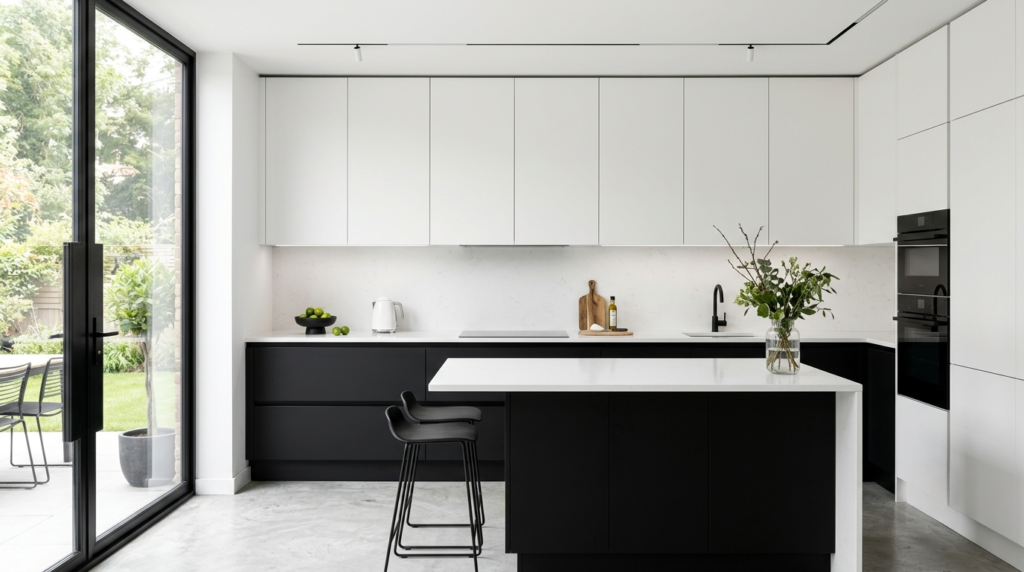
The most dependable layout places the darker finish on the lower cabinets and the lighter finish above. The dark base visually anchors the room while white upper cabinets keep the walls open. A second option is to keep the perimeter white and make the island black.
For more colour placement examples, explore the two tone kitchen cabinets guide. Keep the cabinet door profile and hardware consistent across both colours so the contrast looks intentional.
Black and White Kitchen Ideas for Every Style
The best inspiration is not a picture you copy exactly. It is an idea you adapt to your room, light and daily routine. The following designs cover different layouts and styles without forcing every kitchen into the same formula.
Modern Black and White Kitchen
Use flat panel cabinets, slim handles and simple surfaces to create a clean modern kitchen. A black base cabinet run under a white worktop gives strong contrast without making the walls feel crowded. Keep small appliances hidden where practical and repeat black in the tap, window frame or pendant lights.
If you prefer a deeper modern look, review the available modern black kitchen cabinets before deciding between matte, textured and glossy fronts. Test each sample beside the countertop because blacks with different undertones can clash.
Small Black and White Kitchen
In a compact kitchen, let white control the larger surfaces. Use black on the base cabinets or one short wall and keep the upper area lighter. A white backsplash with limited grout lines can make the room look calmer. Under cabinet lighting also prevents the worktop from sitting in shadow.
Choose only one or two strong black features. Too many dark pendants, appliances and patterned tiles can make a small room busy. A timber shelf or light floor adds warmth.
Black Lower Cabinets with White Upper Cabinets
This layout is practical because the colour change follows the countertop line. Black lower cabinets ground the working area, while white uppers blend more easily with pale walls. It is especially useful in galley and L shaped kitchens where dark upper cabinets may feel close to the face.
Use one countertop and the same hardware across both colours so the kitchen feels like one design.
Black Cabinets with White Countertops
Black cabinets and a white worktop create the clearest high contrast combination. The countertop forms a bright horizontal line that keeps full black cabinetry from appearing too heavy. It works particularly well with flat panel cabinets and simple stone patterns.
Pure white is not the only option. A soft white surface with grey or warm veining can connect the cabinets with wood floors and warmer wall colours. Our detailed guide to black kitchen cabinets with white countertops covers this specific pairing without repeating every option here.
White Cabinets with Black Countertops
White cabinets with a black countertop reverse the visual weight. The room remains bright while the dark worktop outlines the preparation area. This approach suits small kitchens and homeowners who want contrast without committing to many black cabinet doors.
Consider how the black surface behaves in everyday use. Dark polished countertops may reveal dust, water spots or crumbs more quickly. A softly patterned or honed appearance can be more forgiving, although care requirements depend on the exact material and finish.
Black and White Shaker Kitchen
Shaker doors soften the sharpness of the colour palette. White shaker upper cabinets with black lower cabinets can feel traditional, transitional or farmhouse depending on the handles, flooring and backsplash. Compare classic slim and modern profiles in the shaker kitchen cabinets guide.
Keep decorative detail under control. If the door profile is already a feature, choose a quieter countertop and backsplash.
Black and White Kitchen with Wood
Wood is one of the easiest ways to warm a monochrome kitchen. Oak, walnut and other natural looking tones add colour and grain without weakening the black and white concept. Use timber on the floor, open shelves, stools, an island panel or a small section of cabinetry.
Light oak supports Scandinavian and warm modern rooms. Deeper walnut creates richer contrast and can make black features feel less severe.
Black and White Kitchen Island
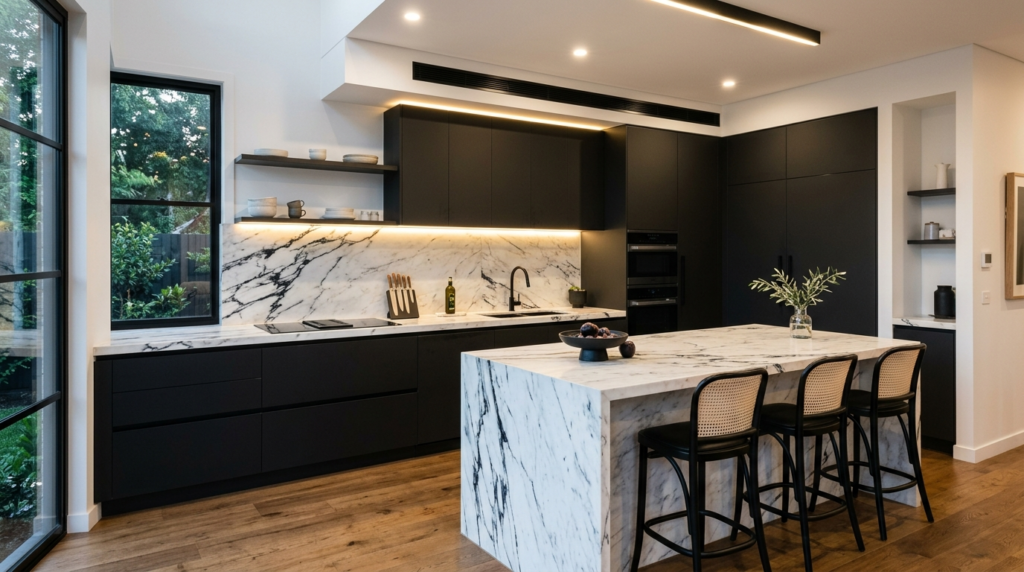
A black island creates a clear focal point while the surrounding cabinets stay white. This is useful in an open plan room because the island can connect with dark furniture, window frames or lighting in the living area.
Check the island finish beside the floor, countertop and stools. A white or lightly veined top can reduce the visual weight of a large black island.
Black and White Kitchen Backsplash
A simple white tile backsplash lets the cabinet contrast lead the design. Black grout creates a graphic grid, while pale grout gives a softer surface. A full height slab can make the room feel cleaner because it reduces visible joints.
Patterned tile can work as a feature, but one strong pattern is usually enough. If the floor is already busy, keep the backsplash quiet. Also consider grout maintenance near cooking and washing areas.
Black and White Kitchen Flooring
Flooring controls how warm or dramatic the kitchen feels. A medium wood floor softens the palette and works across modern and traditional styles. Light stone or porcelain keeps the room bright. Dark flooring creates a moodier result and is more suitable when the room has enough light.
A checkerboard floor can give the kitchen strong character, but it should not compete with busy veining or a patterned backsplash. If the floor makes a clear statement, keep the cabinets and worktops visually simple.
Black and White Kitchen with Gold Accents
Brass and gold coloured details add warmth and can make black and white cabinets feel more inviting. Use the finish on handles, taps or lighting rather than placing it on every available surface.
Match the undertone across visible metals. A warmer brushed brass often feels softer than a highly polished yellow gold. Before ordering, compare samples beside the cabinet finish because warm metals can make a cool white look sharper.
Black and White Kitchen with Stainless Steel
Stainless steel appliances fit naturally between black and white cabinets. The neutral metal creates a visual bridge and works especially well in modern and industrial kitchens. Repeat the finish in one or two smaller details such as the sink, tap or handles.
If you want a calmer look, choose integrated appliances or panel ready doors where the layout permits. Black appliances can also work, but a full wall of black cabinetry and appliances may need a pale backsplash or surrounding white units for balance.
Countertops Backsplash and Flooring for a Black and White Kitchen
Cabinets set the main contrast, but the surrounding materials decide whether the room feels calm or crowded. Select the countertop first because it touches the cabinets and often becomes the visual bridge between black and white.
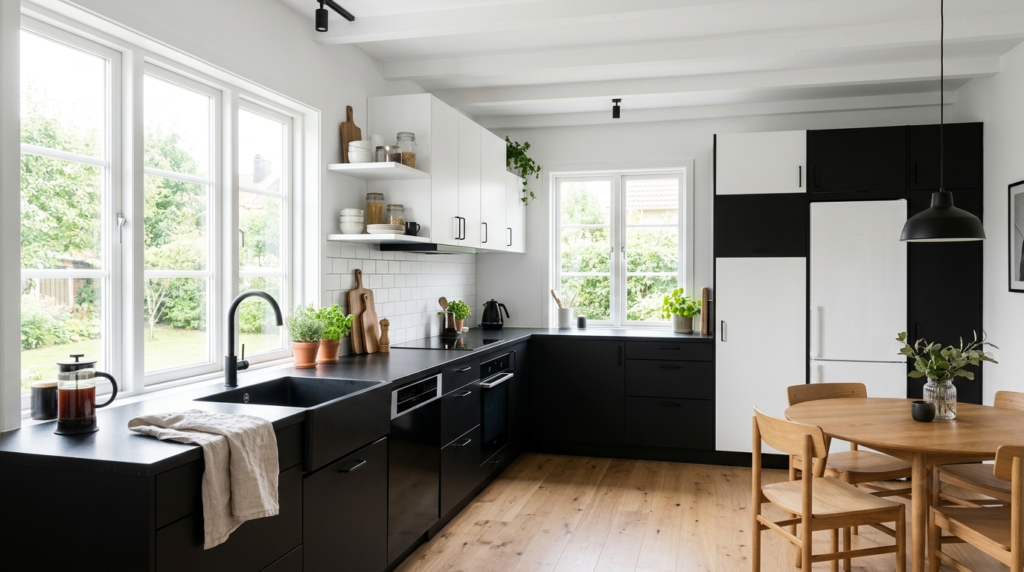
Countertops for Black and White Kitchens
White quartz is a popular partner for black cabinets because it creates a clean contrast and is generally simple to maintain. It is not maintenance free. Spills should still be wiped promptly and hot cookware should be used according to the manufacturer guidance. Caesarstone recommends routine cleaning with mild soap and water or a suitable pH neutral cleaner for its quartz surfaces.
Natural stone gives each kitchen a less uniform appearance. Granite, marble and quartzite differ in porosity, sensitivity and care needs, so do not select them by appearance alone. The Natural Stone Institute care guidance recommends suitable cleaners and following the care instructions for the specific stone.
Black countertops work well with white cabinets when you want a strong outline around the work zone. But they can reveal crumbs, dust and water marks. Look at a full sample in natural and artificial light before choosing a polished or matte surface.
Backsplashes for Black and White Kitchens
The safest backsplash is one that supports the cabinets instead of introducing a third competing idea. White subway tile, softly veined stone and simple porcelain are flexible options. A dark backsplash creates a more continuous look behind black lower or full height cabinets.
Pay attention to scale. Small tiles create more grout lines and visual movement. Larger tile or slab surfaces appear quieter. If easy cleaning matters, compare the number of joints, grout colour and surface texture before making a decision.
Flooring for Black and White Kitchens
Choose the floor with the wider home in mind. The kitchen should connect naturally with nearby dining and living spaces. Wood and wood look flooring add warmth. Pale porcelain or stone can support a bright modern scheme. Mid tone grey floors create a neutral bridge but may make the room feel cool if every other surface is also grey or blue based.
Check slip resistance, cleaning needs and suitability for kitchen conditions with the supplier. Appearance matters, but the floor must also handle moisture, food spills and regular foot traffic.
Choosing Hardware, Appliances and Lighting
Hardware can either sharpen the contrast or introduce warmth. Matte black handles disappear against black cabinets and stand out clearly against white doors. Brushed brass adds warmth. Nickel and stainless steel create a quieter link with appliances.
Select one main metal finish and repeat it in at least two places. For example, stainless steel appliances can connect with nickel handles and a steel sink. Brass pendants can relate to brass cabinet pulls. Mixing metals can work, but one finish should remain dominant.
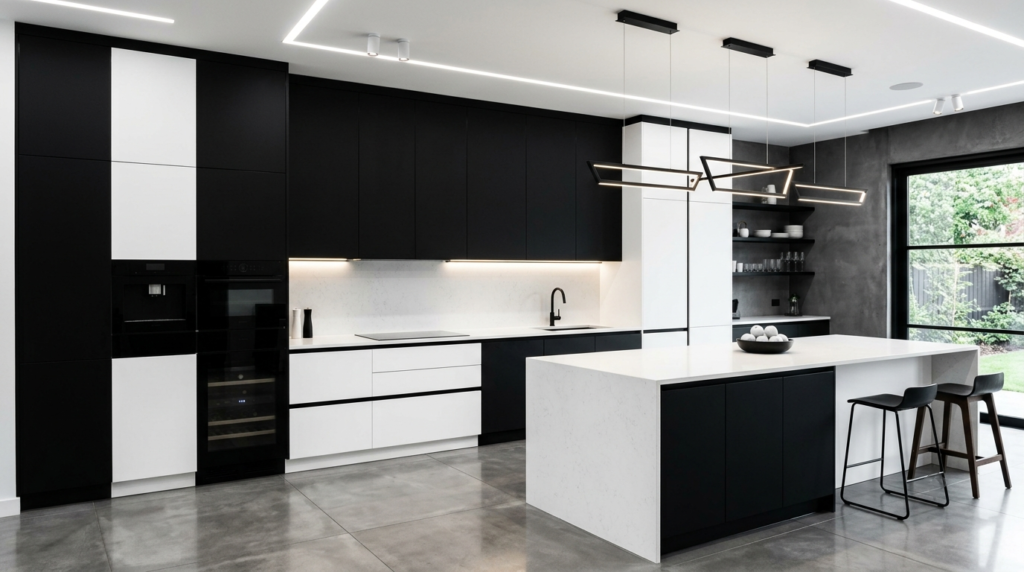
Good lighting is essential because black surfaces absorb more visible light than pale ones. Combine general ceiling light with focused light over worktops, the sink and the island. Under cabinet lighting is particularly valuable when dark lower cabinets or countertops create shadow below white upper units.
Use lighting to reveal the real cabinet colour rather than changing it. Very cool bulbs can make warm white cabinets look dull, while very warm bulbs may shift clean white toward cream. Test the proposed light beside the finish samples. Efficient LED products are suitable for frequently used kitchen lighting, and the United States Department of Energy provides general guidance on LED efficiency and selection.
Common Black and White Kitchen Mistakes
Using Too Much Black
Black can add depth, but using it across cabinets, walls, worktops and flooring may remove the contrast that makes the palette work. Keep at least one large surface light. In smaller rooms, place black lower in the visual field or limit it to an island.
Forgetting Warm Materials
A room made only from black paint, bright white panels, steel and glossy tile can feel hard. Add wood, woven seating, warm metal, textured stone or soft white paint. Even one natural element can make the kitchen feel more comfortable.
Mixing Too Many Patterns
Strong veining, checkerboard flooring and patterned backsplash tile may look exciting separately but compete when used together. Choose one main pattern. Let the other surfaces support it with simpler colours and smaller changes in texture.
Ignoring the Kitchen Lighting
Never approve black and white finishes under showroom lighting alone. Take large samples into the actual room and check them during the day and at night. Make sure work surfaces have direct task lighting and dark corners receive enough general light.
Choosing Every Finish Separately
Cabinets, counters, floors, paint and hardware can all look good individually but still clash when combined. Build a physical sample board before ordering. Place every finish together and remove any item that introduces an unrelated undertone or pattern.
Plan Your Black and White Kitchen with Parlunbuilding
A successful black and white kitchen begins with the room rather than a trend image. Measure the layout, study the natural light and decide where the darker colour will provide the most useful visual weight. Then compare cabinet, countertop, flooring and hardware samples together.
Parlunbuilding manufactures black and white kitchen cabinets to order, so your design is not limited to whatever a local showroom happens to have in stock.
Cabinet sets are produced in any combination of black and white finishes, cut to your exact dimensions, in matte or high gloss, with flat panel or shaker doors to match the rest of your interior. Because cabinets are supplied factory-direct, they reach you without the layers of markup that showrooms and middlemen add along the way. Review the white kitchen cabinet collection and compare it with the black finishes discussed above before finalising your palette. If you are still deciding how far to take the contrast, the two tone kitchen cabinets range shows further ways to balance dark and light within a single layout.
When your layout and finish preferences are ready, send Parlunbuilding your floor plan and finish preferences and the team will build a black and white kitchen designed around them. Finish samples can be supplied before production begins, so you can check how a particular pairing behaves under your own lighting rather than judging it from a screen.