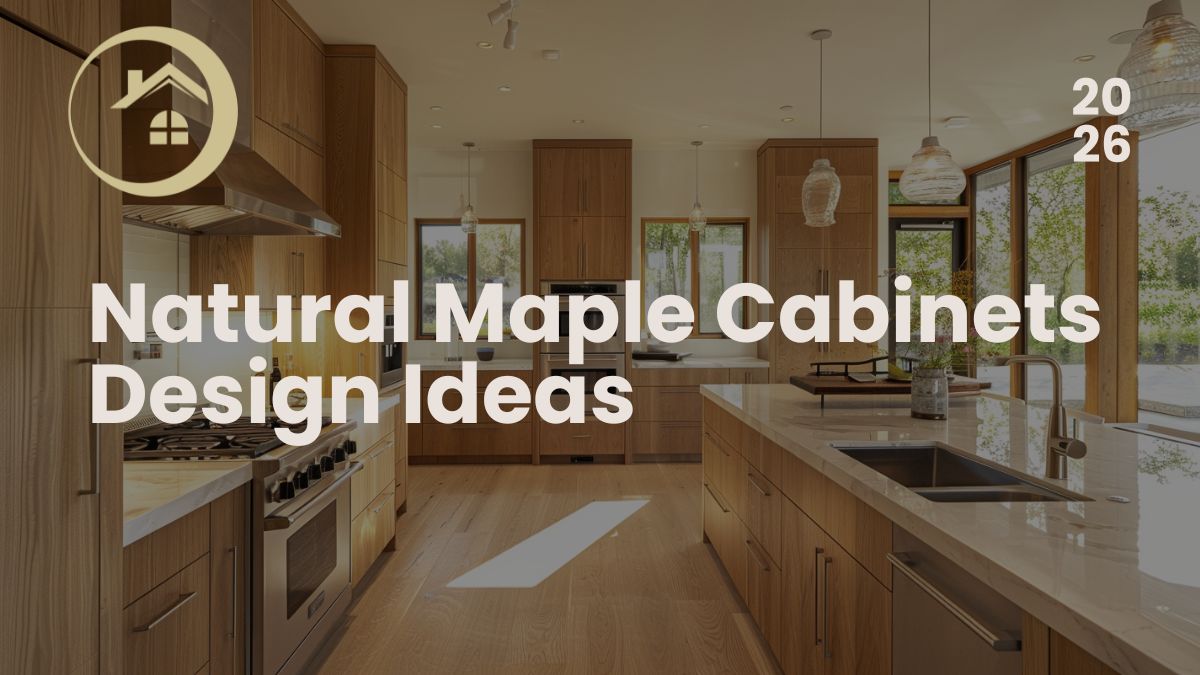
Natural maple cabinets are one of the most adaptable choices in kitchen design. The wood is fine-grained, pale and remarkably smooth, which means it suits modern and minimalist kitchens as well as traditional and transitional ones, depending entirely on the finish and door style chosen. That adaptability comes with one well-known challenge: maple absorbs stain unevenly and changes colour over time, deepening and yellowing slowly with UV exposure. Understanding both properties before selecting a finish is the difference between a kitchen that holds its look and one that disappoints within a few years. This guide covers stain options, pairings and comparisons in full.
Quick Summary of Natural Maple Cabinets
Natural maple cabinets suit a wide range of kitchen styles because of their fine, smooth grain and pale, neutral tone.
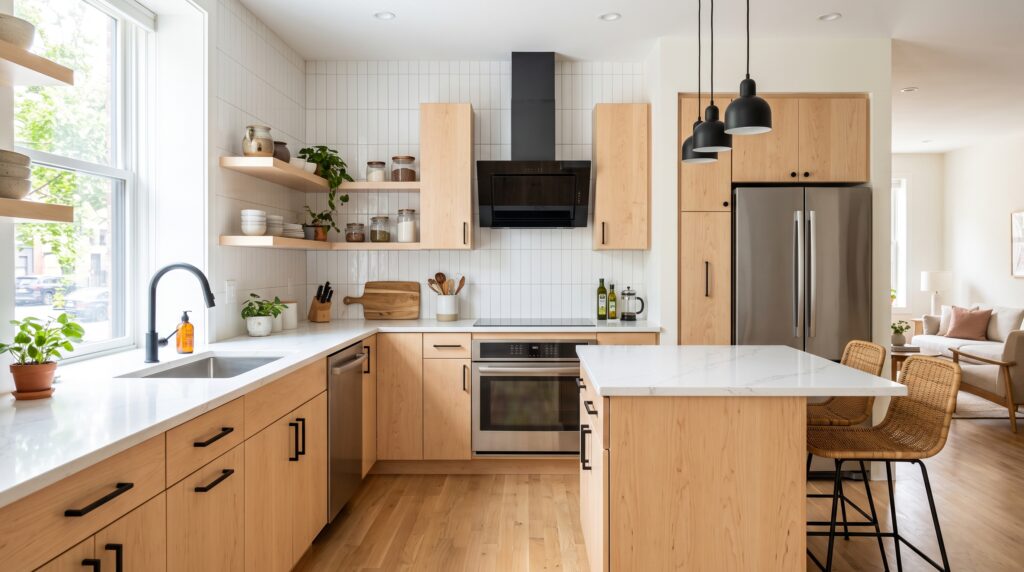
In a clear or natural finish, maple is a light blond wood with a creamy warmth. Stained, it covers everything from a soft whitewash or grey to a rich honey or deep espresso. Compared with oak, maple is finer in grain and more prone to blotching when stained, requiring a pre-conditioner for even colour. White quartz is the most popular countertop pairing; warm white, grey and sage are the most versatile wall colours. Brushed nickel and matte black are the strongest hardware choices.
Honey maple cabinets, the dominant kitchen look of the late 1990s and early 2000s, can be refreshed without replacement by updating hardware, countertops and backsplash. Natural maple is not outdated. With the right finish and pairings, it is one of the cleaner and more durable choices available in solid wood cabinetry.
What Maple Wood Looks Like
Maple is a dense, fine-grained North American hardwood. Hard maple (Acer saccharum) is the species most commonly used in kitchen cabinetry. Its natural colour is creamy white to pale gold, with the surface appearing almost luminous because the grain is so tight and uniform. There is very little visible grain texture compared with oak or walnut, which gives maple a clean, contemporary appearance in its natural state.
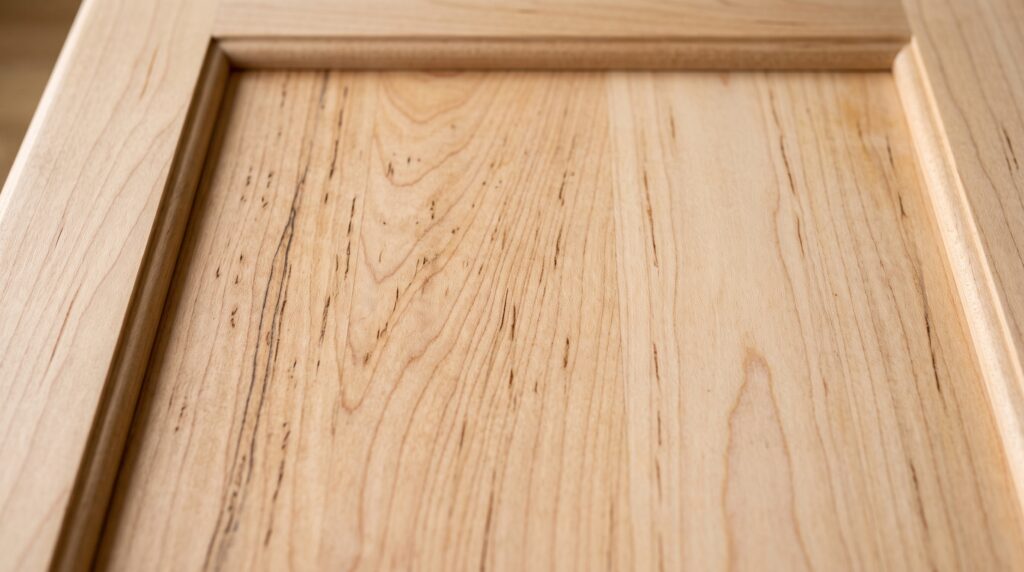
Mineral streaks appear as grey or brownish-green lines running through the wood. They are a natural characteristic rather than a defect, and their frequency varies between batches. Some buyers consider them to add character; others prefer a more consistent panel. Requesting a sample before ordering is the only way to gauge mineral content in a specific batch.
The most significant characteristic to understand before choosing a finish is ambering. Maple yellows slowly with UV light exposure over years of use. A clear lacquer or oil finish will amber; a stained finish typically does not, because the pigment masks the colour shift. This is one of the main reasons a stained or painted maple is often a more stable long-term choice than a clear natural one.
Maple Cabinet Stain and Finish Options
The most important decision with natural maple cabinets is the finish, because maple stains unevenly. Its dense, fine grain absorbs pigment at different rates across the surface, producing blotchy patches if stained without preparation. A water-based pre-conditioner or a washcoat of diluted finish applied before staining allows more even colour absorption. Always test on an offcut from the same batch and request a sample door before approving any stain.
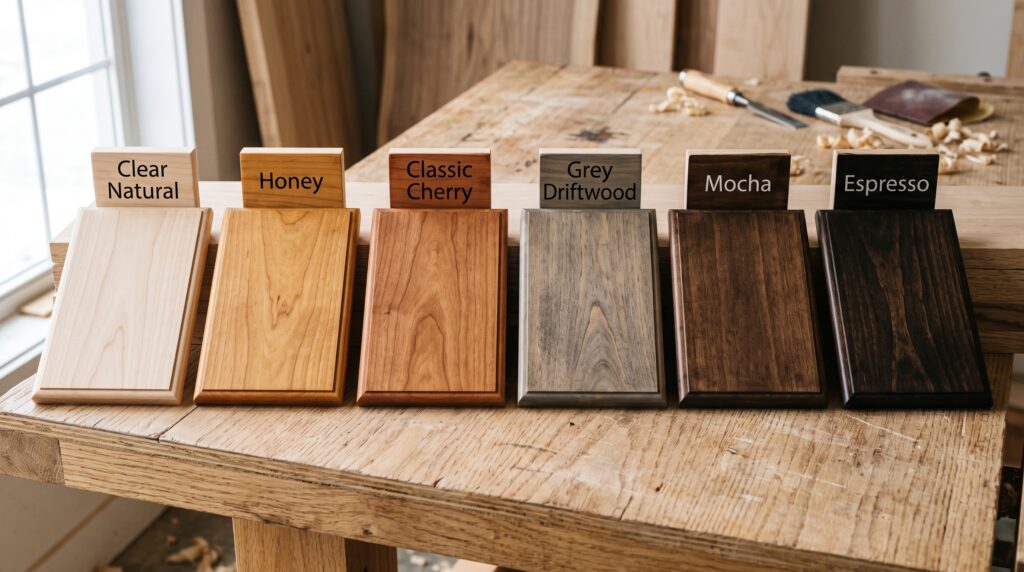
Clear Natural Finish
A clear finish using lacquer, conversion varnish or hardwax oil reveals the creamy natural colour and fine grain. This is the cleanest, most contemporary option and suits Scandinavian and minimalist kitchens well. The trade-off is ambering: the wood will gradually deepen and shift warmer over years of UV exposure.
Honey Stain
Honey maple uses a warm amber-to-gold stain that was the dominant North American kitchen look from the 1990s through the mid-2000s. While this specific version of maple carries dated associations, a well-executed honey stain in a kitchen with modern hardware and a quiet countertop can still work in a traditional or transitional scheme.
Whitewash and White Stain
A whitewash or white stain lightens the maple surface without masking the grain, producing a pale, airy finish that suits Scandinavian and coastal kitchens. Blotching risk is lower than with pigmented stains because the white diffuses rather than concentrates.
Grey Stain
Grey stain introduces a cooler, more contemporary tone and is one of the most popular choices for a modern maple kitchen. The grey suppresses the amber undertone of the natural wood and gives the result a distinctly current character.
Medium Brown Stain
A medium warm brown in a cherry or walnut-adjacent tone gives maple a richer, more traditional character. The grain remains visible and the result suits transitional kitchens with warm stone countertops and a shaker door profile.
Espresso and Dark Stain
Dark espresso on maple creates a dramatic, contemporary cabinet. The blotching risk is highest with dark stains, making pre-conditioning essential. When well executed, dark-stained maple is a strong alternative to walnut kitchen cabinets in terms of visual depth and richness.
Maple Stain Guide
|
Stain |
Colour |
Style Direction |
Blotching Risk |
|---|---|---|---|
|
Clear natural |
Creamy white-gold |
Modern, Scandinavian |
Low |
|
Honey |
Warm golden amber |
Traditional, transitional |
Low-medium |
|
Whitewash |
Pale white wash |
Scandinavian, coastal |
Low |
|
Grey |
Cool-toned mid |
Contemporary, modern |
Medium |
|
Medium brown |
Warm mid-tone |
Transitional, traditional |
Medium |
|
Espresso |
Deep brown-black |
Modern, dramatic |
High |
Natural Maple Compared with Oak and Birch
Understanding how maple sits alongside its common alternatives helps narrow the decision.
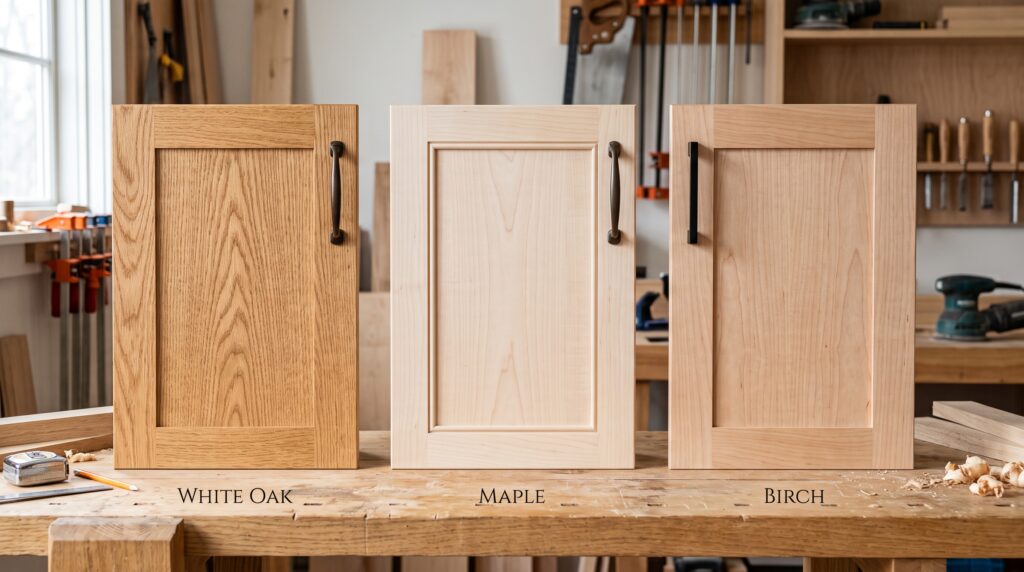
Maple’s fine, uniform surface makes it the cleanest-looking of the three and the most adaptable to modern and minimalist kitchens. White oak kitchen cabinets have a more pronounced open grain that adds texture and narrows the style range slightly, sitting most naturally in transitional, rustic modern and organic modern kitchens. Birch is similar to maple in grain fineness but typically less dense and more prone to variation between sheets. It is often used as a cost-effective alternative to maple in contemporary cabinetry.
On stain response, oak is the most forgiving, absorbing colour evenly without blotching. Maple requires the most preparation. Birch falls between the two. Price-wise, all three occupy a similar domestic hardwood range, with maple and oak sitting marginally above birch in cabinet-grade stock.
|
Property |
Maple |
Oak |
Birch |
|---|---|---|---|
|
Grain |
Fine and uniform |
Pronounced and open |
Medium, wavy |
|
Natural colour |
Creamy white to pale gold |
Golden-brown |
Pale yellow-white |
|
Stain response |
Blotches without pre-conditioning |
Absorbs evenly |
Moderate blotching |
|
Ambering |
High (clear finish) |
Moderate |
Low |
|
Style |
Modern, Scandi, transitional |
Farmhouse, transitional, rustic |
Modern, budget contemporary |
|
Best use |
Clean contemporary or stained kitchens |
Character and grain-forward kitchens |
Clean contemporary on a moderate budget |
Best Countertops for Maple Cabinets
Maple’s fine grain and pale warm tone make it compatible with a wide range of countertop materials.
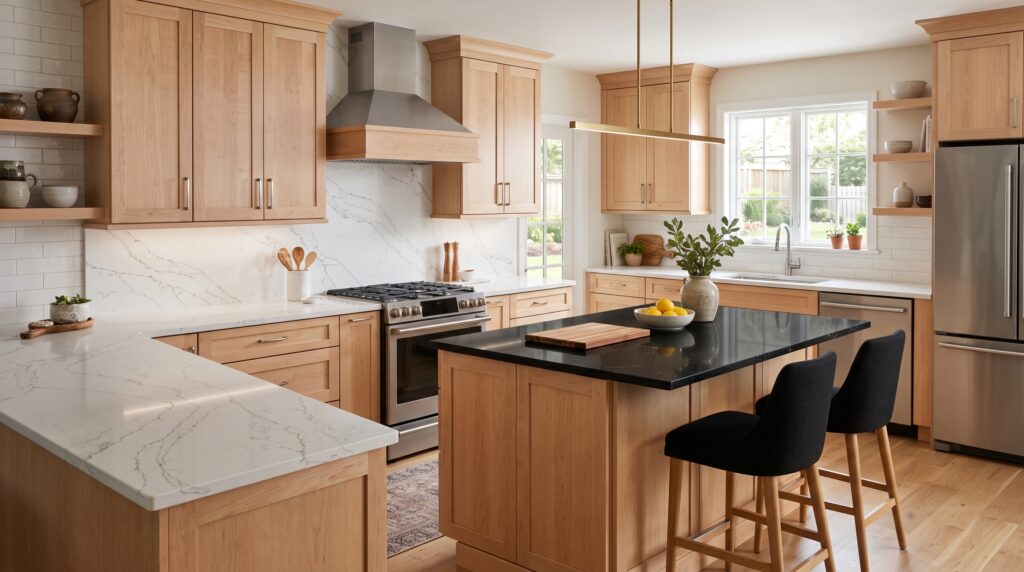
White quartz is the most popular pairing. It provides a clean, bright surface that lifts the maple tone and suits both modern and transitional kitchens. The contrast between pale wood grain and white stone is sufficient to separate the two surfaces without visual competition.
Marble-look quartz with warm or amber veining adds elegance. Choose a version with warm undertones for natural maple. A very white marble-look with cold grey veining can make natural maple appear slightly yellow by comparison.
Warm grey quartz provides a contemporary neutral surface that suits grey-stained or clear-finish maple particularly well.
Black granite or black quartz creates strong contrast and suits stained maple in honey, medium brown or espresso rather than clear natural maple, where the tonal gap may be too sharp without supporting wall and flooring choices to bridge it.
Butcher block is a natural complement to clear or honey-stained maple, adding warmth and extending the wood palette into the work surface. It requires regular sealing and oiling. For guidance on wood-tone pairing logic across species, the colour schemes with hickory cabinets guide covers similar principles.
Avoid heavily patterned granite alongside clear or natural maple. Two competing levels of surface activity produce a kitchen that is difficult to settle on visually.
Wall Colours Backsplashes Flooring and Hardware
Maple is flexible enough to anchor four distinct design directions, and the surrounding surfaces determine which one it takes.
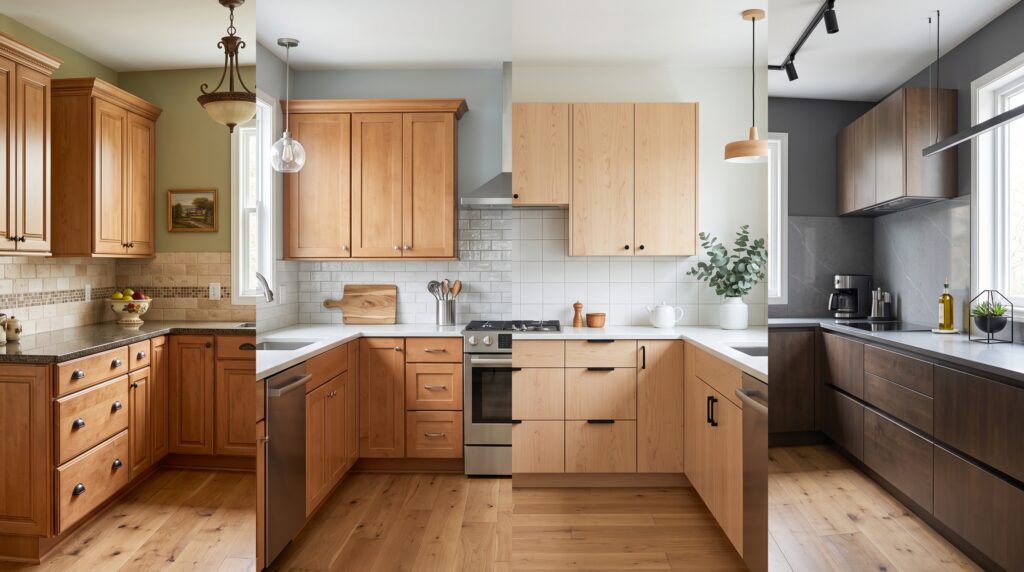
Scandinavian. Warm white walls, white subway tile backsplash, brushed nickel hardware and a light oak or white tile floor keep clear-finish maple fresh and contemporary. The palette stays light throughout, with maple supplying the only warmth.
Modern. Soft grey or sage walls, large-format light tile backsplash, matte black hardware and a concrete-look or white tile floor give grey-stained or clear maple a clean, current character. Every surface should be quiet and free of pattern.
Traditional. Warm cream or beige walls, cream subway or marble tile backsplash, oil-rubbed bronze or warm brass hardware and travertine or warm wood flooring suit honey or medium brown stained maple. This direction works best with a shaker door profile. Ash kitchen cabinets occupy a similar warm-natural territory and follow comparable pairing logic.
Transitional. Warm greige walls, zellige or stone tile backsplash, brushed gold hardware and wide-plank oak flooring suit maple across most finish options. This combination avoids the extremes of any single style and is the most flexible starting point for a maple kitchen with mixed design references.
|
Style |
Wall |
Countertop |
Backsplash |
Hardware |
Floor |
|---|---|---|---|---|---|
|
Scandinavian |
Warm white |
White quartz |
White subway tile |
Brushed nickel |
Light oak or white tile |
|
Modern |
Soft grey or sage |
Warm grey quartz |
Light large-format tile |
Matte black |
Concrete-look tile |
|
Traditional |
Warm cream or beige |
Granite or warm quartz |
Cream subway or marble tile |
Oil-rubbed bronze |
Travertine or warm wood |
|
Transitional |
Warm greige |
Marble-look quartz |
Zellige or stone tile |
Brushed gold |
Wide-plank oak |
How to Modernize Honey Maple Cabinets
Honey maple cabinets carry strong associations with the 1990s and early 2000s, but full replacement is not always necessary. Several targeted changes can update the look significantly without touching the cabinet boxes.
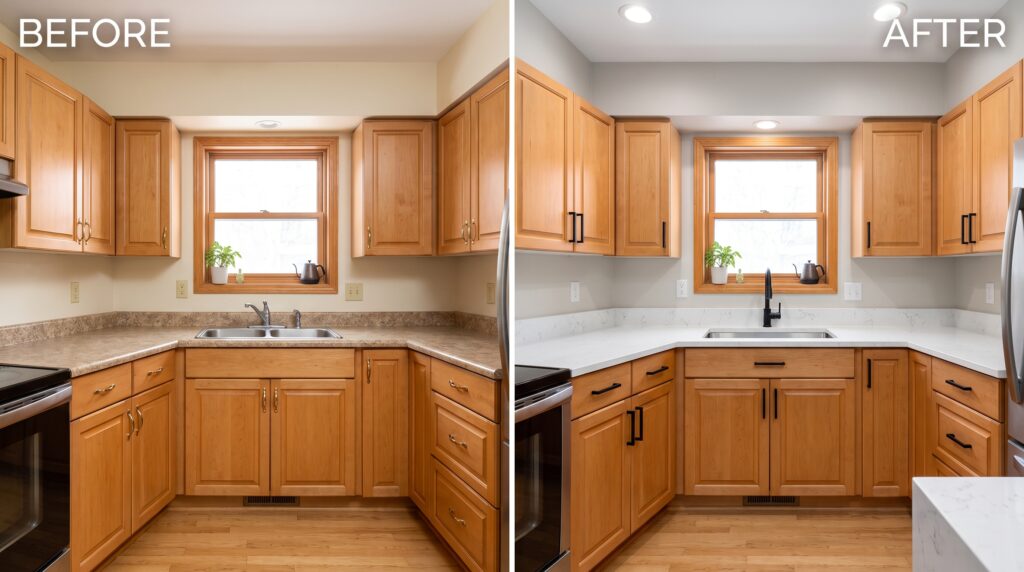
Hardware is the first and highest-impact change. Replacing ornate brass or antique copper hardware with matte black or brushed nickel bar handles moves the kitchen into contemporary territory immediately, at a fraction of the cost of a renovation.
A new countertop in white or warm grey quartz removes the second-strongest dated element, typically the busy granite that accompanied honey maple in that era. A simpler backsplash, whether white subway tile, zellige or plain stone, removes the third. Repainting walls in warm white, sage or soft warm greige closes the gap between a 1990s honey maple kitchen and a current one. None of these changes require any cabinetry work.
Honey Maple Modernising Checklist
Custom Maple Kitchen Cabinets from Parlun
Parlun Building produces kitchen cabinet doors factory-direct with a range of wood veneer and painted finish options. For buyers planning a two-tone maple kitchen, where natural maple lower cabinets are paired with painted uppers or a contrasting island, Parlun’s painted door range in warm whites, soft neutrals and deeper contrasting tones provides a straightforward factory-direct solution. Painted maple or maple-grade MDF doors also offer a clean, fine-grained surface that holds paint well and suits the same contemporary direction as natural maple veneer.
Finish samples are available before any order is confirmed. To discuss your specification, request a sample door or ask about production lead times and quantities, contact the Parlun team directly through the website. Custom painted finishes can be matched to a paint code or reference swatch on request.