If you plan to buy windows from China, the biggest mistake is starting with price. Builders, developers, contractors, and purchasing teams get better results when they first define the size, frame, glass, opening method, and performance their project actually needs. The process to import windows from China should include supplier checks, technical drawings, samples where needed, production inspection, packaging, and shipping. Working with an experienced manufacturer or sourcing partner can make custom project buying much easier, but every detail still needs to be confirmed before production begins.
Table of content
Buy Windows From China Step by Step Guide
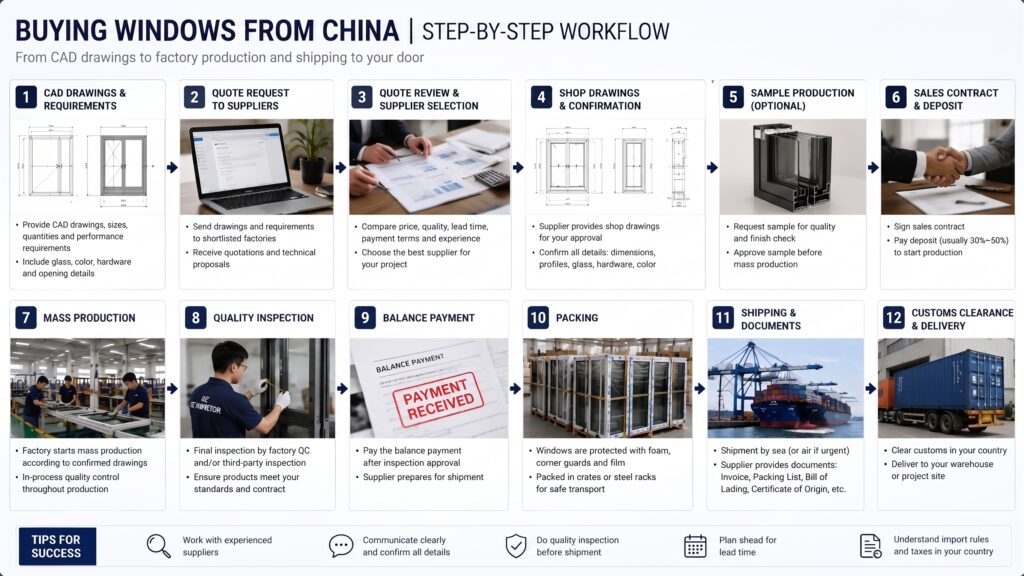
A successful window order starts with a clear window schedule, then moves through material selection, glazing performance, supplier verification, quotations, technical drawings, samples, production, quality control, shipping, and import documentation. This guide explains how to find a reliable window supplier, how MOQ and lead times work, what FOB and CIF actually mean, how to check CE, AS2047, NFRC, and ISO related requirements, how factory inspections work, and how Parlunbuilding can support custom window projects from China.
Is It Safe to Buy Windows From China
Yes, but the process matters. China has a large manufacturing base for aluminum, PVC, glass, and hardware, giving buyers a wide choice of products and customization. But buying internationally creates risks that do not exist when you walk into a local showroom.
The biggest risks usually come from unclear specifications, different expectations about quality, wrong dimensions, unsupported performance claims, incomplete drawings, poor packaging, late design changes, incorrect shipping terms, missing import documents, and ordering only by lowest price.
A reliable buying process reduces these risks before production starts. Do not ask only whether a supplier is trustworthy. Ask what process will prove the final windows match your project.
Why Builders Buy Windows From China

Builders and developers normally consider China because of manufacturing scale, customization, and access to a large building materials supply chain. Potential advantages include custom sizes, PVC, aluminum, wood, and metal options, multiple opening systems, double and triple glazing, Low E glass, custom colors, and large order capacity.
Direct sourcing can also remove layers from a traditional distribution chain, but that does not mean every project saves a fixed percentage. Final value depends on specification, order quantity, shipping, insurance, duties, taxes, and installation. Never base an investment decision on a claim that imported windows are always a certain percentage less expensive. Calculate the total landed project cost.
Prepare a Window Schedule Before Asking for Prices
A window schedule is one of the most valuable documents in an international project. Instead of writing “I need 100 aluminum windows,” create a list showing exactly what those 100 windows are.
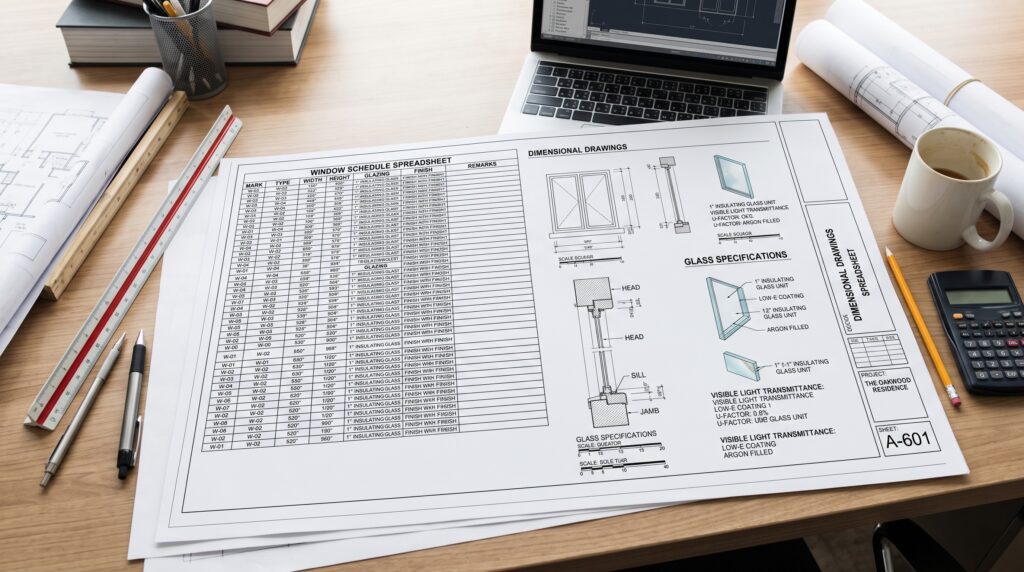
Include the window reference, room or location, width, height, quantity, opening style, opening direction, frame material, frame color, glass specification, hardware, fly screen, and thermal requirement. For example, one project might include W01 bedroom casement windows, W02 bathroom windows, and W03 large sliding living room windows.
This prevents confusion during quotation, production, and installation. Parlun Building can help buyers configure different windows from China around a complete project rather than treating every unit as the same product.
Choose the Right Window Material
The frame material should match the actual opening and project.
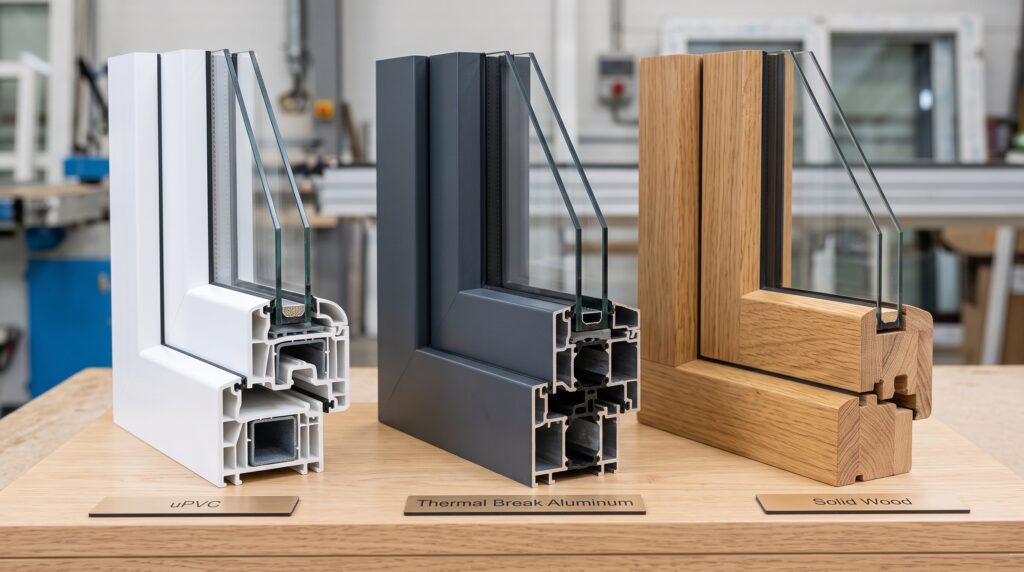
PVC windows from China can be a strong option for residential and repeated project openings where insulation, low maintenance, and cost control are priorities. Review Parlunbuilding’s PVC windows if this is your main frame option.
Aluminum is useful for large windows, slim frames, wide sliding systems, and modern facades. For conditioned spaces, ask whether the system includes a suitable thermal break. Parlunbuilding’s metal windows can help buyers compare metal frame choices.
Depending on design requirements, you may also consider wood, wood-aluminum combinations, or steel. Do not choose a material only from appearance. Compare structural, thermal, and maintenance requirements too. For a full breakdown, see our PVC vs aluminum windows comparison guide.
Choose the Right Window Type
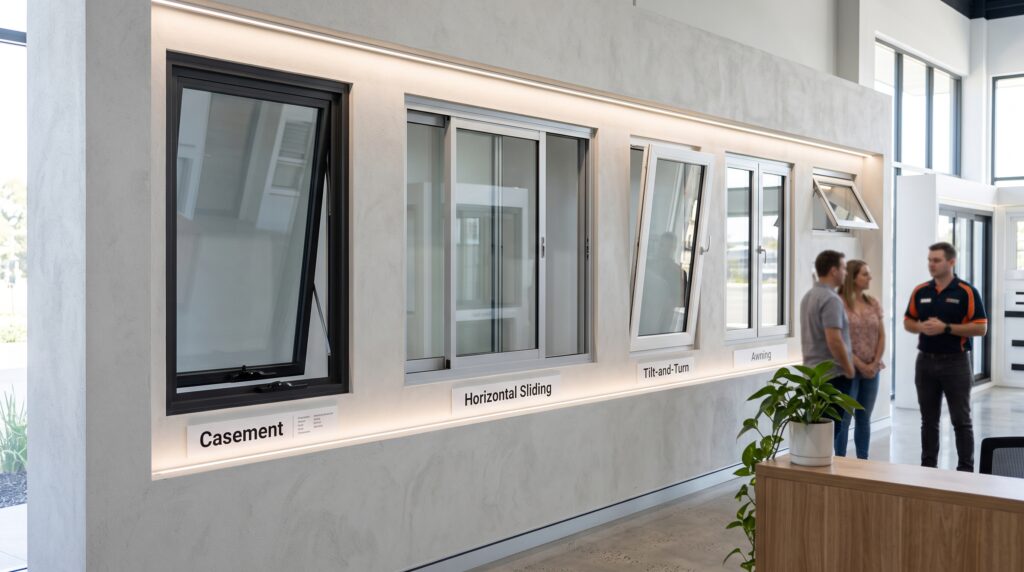
The opening type affects ventilation, sealing, available space, and daily operation. Common choices include casement windows, sliding windows, fixed windows, tilt and turn windows, bay windows, and floor to ceiling windows.
Casement windows from China can work well when ventilation and compression sealing are important. Sliding windows are useful where wide openings or limited exterior clearance matter. A large project may use several types rather than one. See our casement vs sliding windows comparison for a detailed breakdown.
Choose the Glass Before Final Pricing
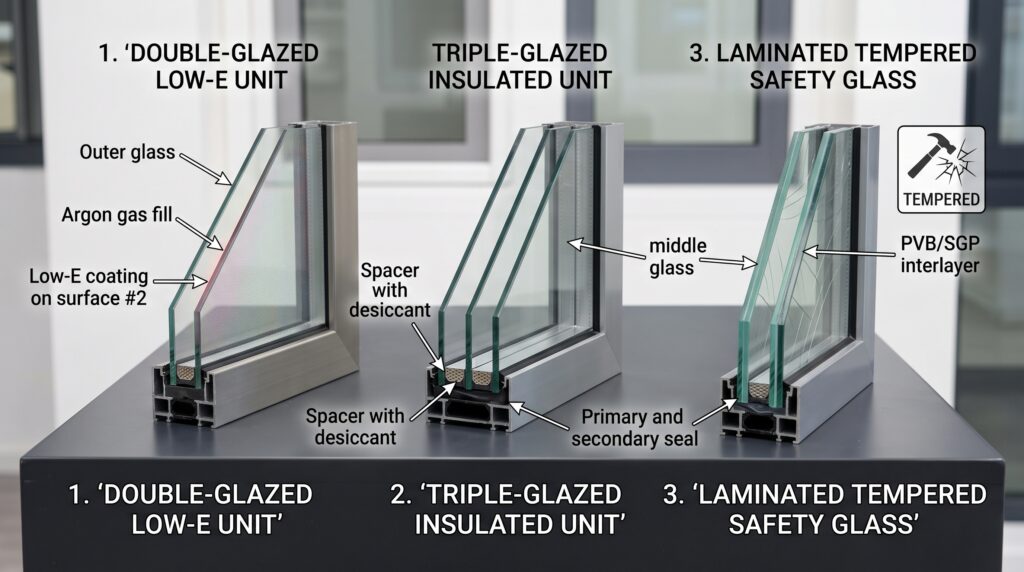
Glass can change the price, performance, weight, and safety of the window. Important options include single, double, or triple glazing, Low E glass, argon filled insulated glass, laminated safety glass, tempered glass, tinted glass, solar control glass, and acoustic glazing.
Do not tell a supplier you need double glazing and stop there. Ask for the full glass build up, including pane thickness, air or gas spaces, coatings, and safety requirements. For projects with strict thermal targets, review Parlunbuilding’s energy efficient windows guide before confirming the glass.
Confirm U Value and Solar Performance
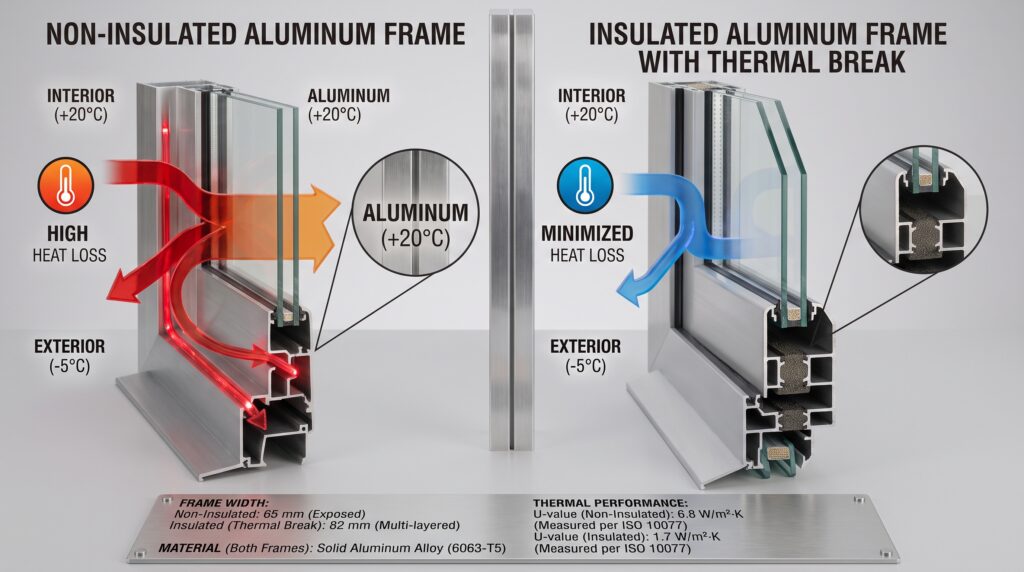
If the project has energy requirements, tell the supplier what performance is required. Terms you may see include U factor, U value, Uw value, SHGC, and Low E coating. Do not accept only the center of glass performance if the project requires a whole window rating, since frame, sash, glass, spacer, and configuration all affect the complete result. Requirements also vary by country, climate, and building code.
How to Find a Reliable China Window Manufacturer
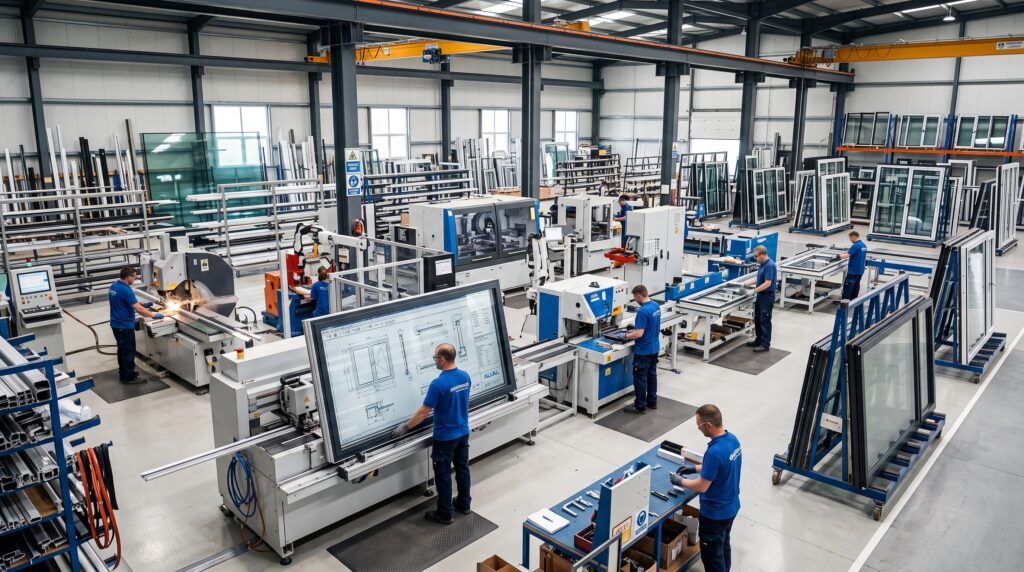
A polished website is useful but not enough. When assessing a manufacturer, ask for information that helps verify actual capability: business history, factory information, project examples, technical drawings, testing documents, export experience, quality control process, and communication speed.
Ask whether manufacturing is completed internally or through partner factories, and if several factories are involved, understand who controls the final specification and quality. Parlunbuilding operates from Foshan and works through a building materials supply and manufacturing network for international projects. You can review Parlunbuilding’s factory information when evaluating production capability.
Foshan and Guangdong Window Manufacturing
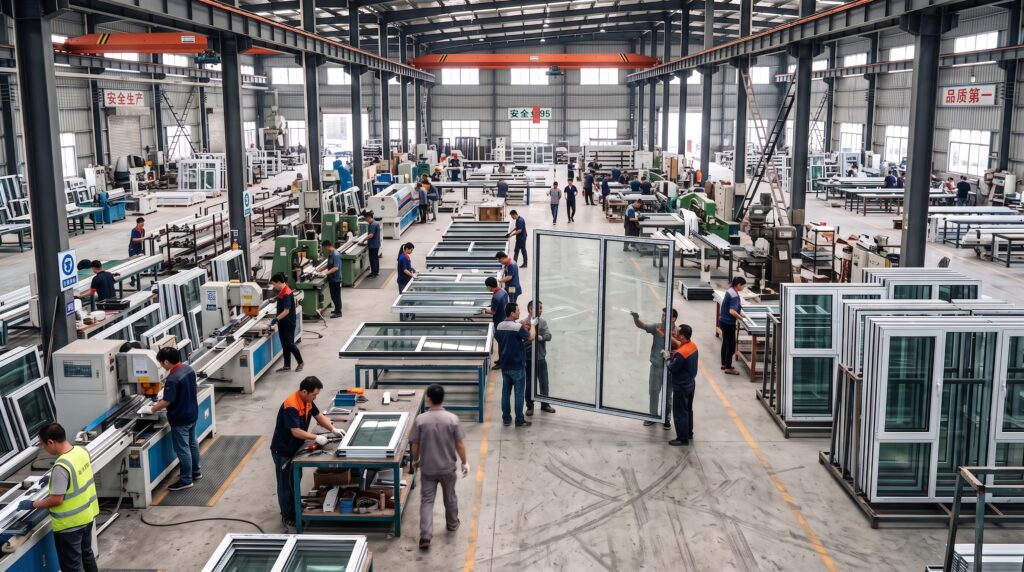
Foshan in Guangdong is one of China’s well known building materials manufacturing areas, with a surrounding supply chain that includes producers for aluminum profiles, glass, hardware, doors, and windows. For buyers sourcing several building material categories, this concentration can make supplier coordination easier.
But location alone does not prove quality. A Foshan window factory still needs to be checked against your project specification, and the same applies to any Guangdong window manufacturer.
How to Verify a Window Factory
If your project is large, consider a factory audit or inspection. A basic factory inspection checklist may include:
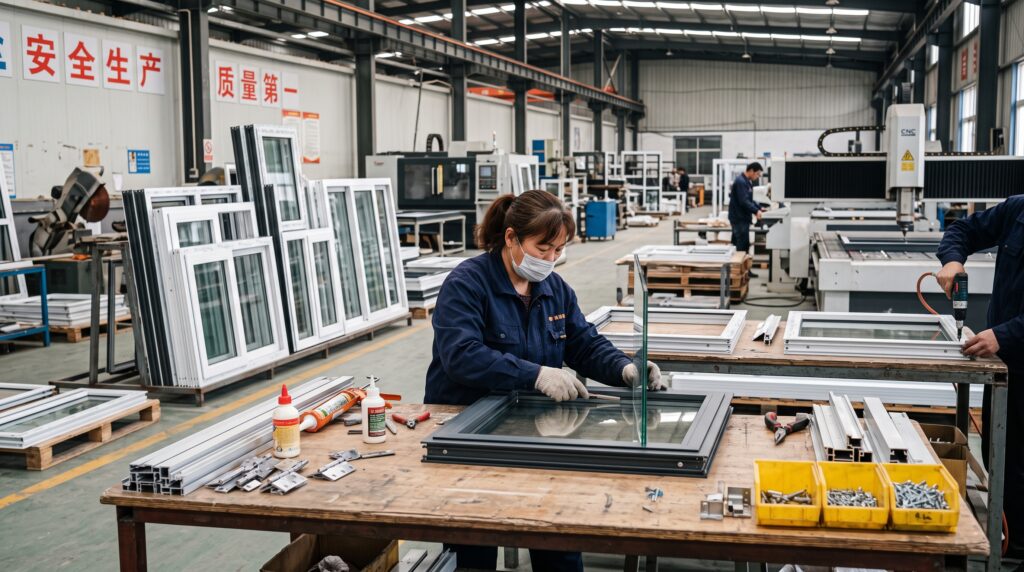
Business verification — confirm company identity and manufacturing address.
Production capability — look at profile processing, cutting, corner assembly, glass handling, hardware installation, final assembly, and packaging.
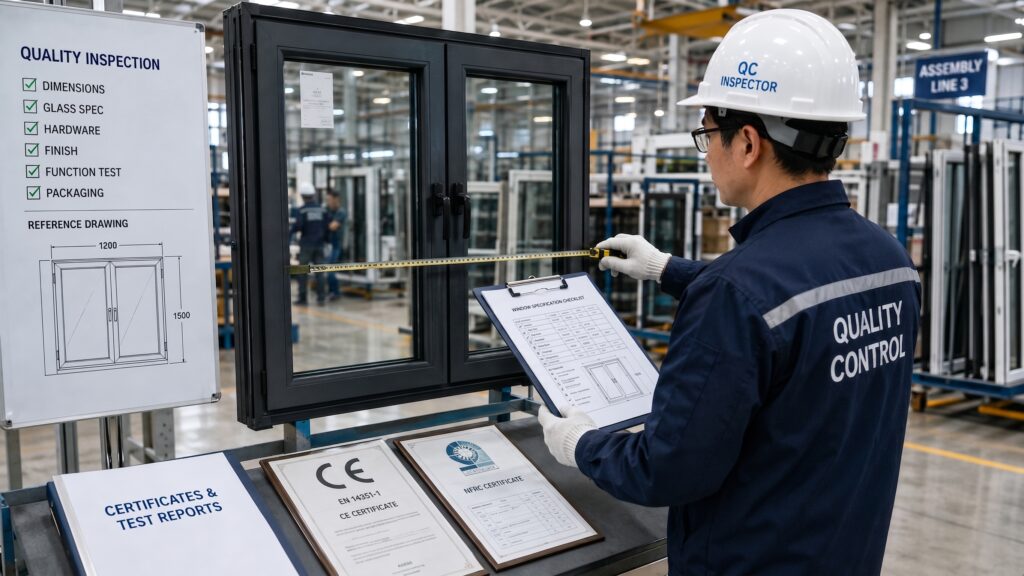
Quality control — ask how the factory checks dimensions, diagonals, glass, hardware, operation, seals, color, and surface finish.
Testing — ask what tests or reports apply to the exact window system being quoted.
Previous projects — review comparable project sizes and export destinations when available.
A factory tour is useful, but it should support technical verification rather than replace it.
Window Samples and Mockups

Do not assume every factory offers a free sample. Sample policies vary. Some suppliers provide small profile or finish samples, while others may charge for full window samples, hardware samples, or special glass.
For a major project, a paid sample or mockup can still be a good investment, letting your team check frame appearance, color, hardware, opening direction, roller movement, locks, and seals. Clarify whether sample cost can be credited toward a later bulk order.
Approve Technical Drawings Before Production
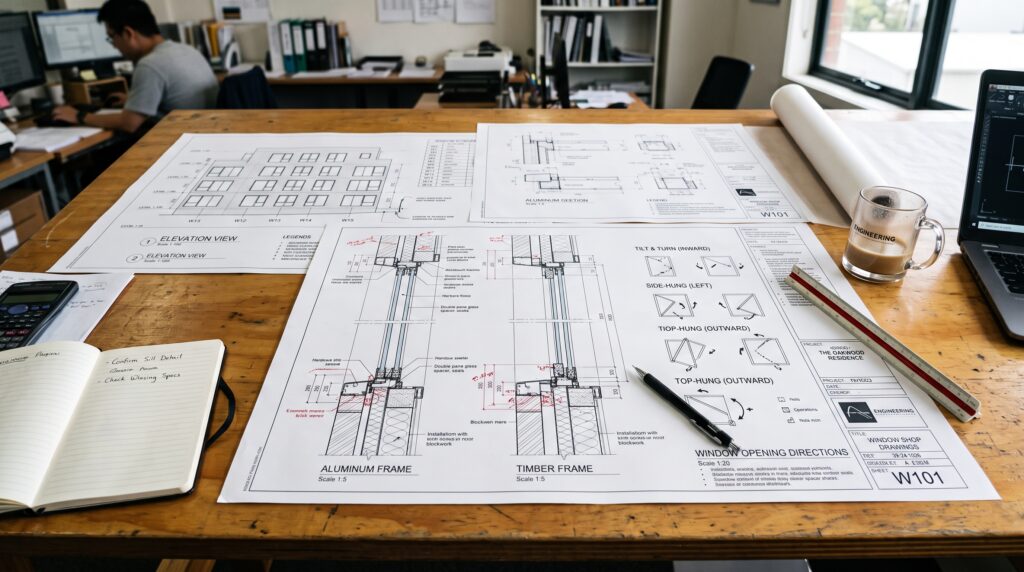
This step should never be skipped. The drawing should show enough detail to confirm what will actually be manufactured, including overall width and height, frame dimensions, sash arrangement, opening direction, fixed panels, glass, mullions, hardware, and color.
The person approving the drawings needs to understand the project. Do not approve drawings just because the general shape looks correct. One wrong opening direction repeated across 200 units becomes a serious site problem.
What Is the MOQ for Windows From China
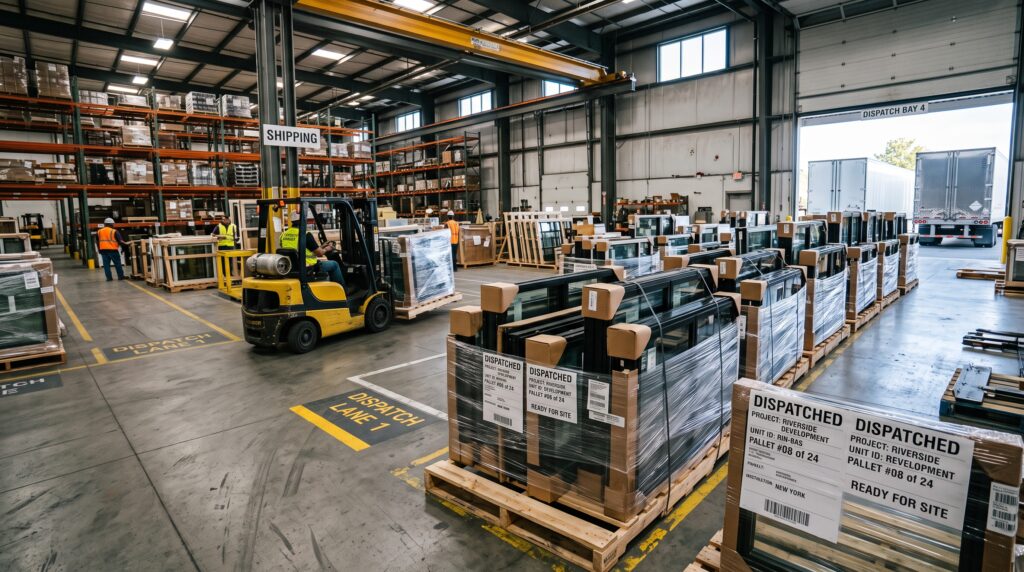
There is no universal MOQ number. Minimum order quantity depends on the manufacturer, window system, profile, color, glass, custom extrusion, hardware, production setup, and project value. Some suppliers may accept one sample window, while other custom systems may require a larger order. A special color or extrusion can also create a different minimum quantity from a standard product. Ask for the MOQ only after explaining the actual specification.
How Window Pricing Works
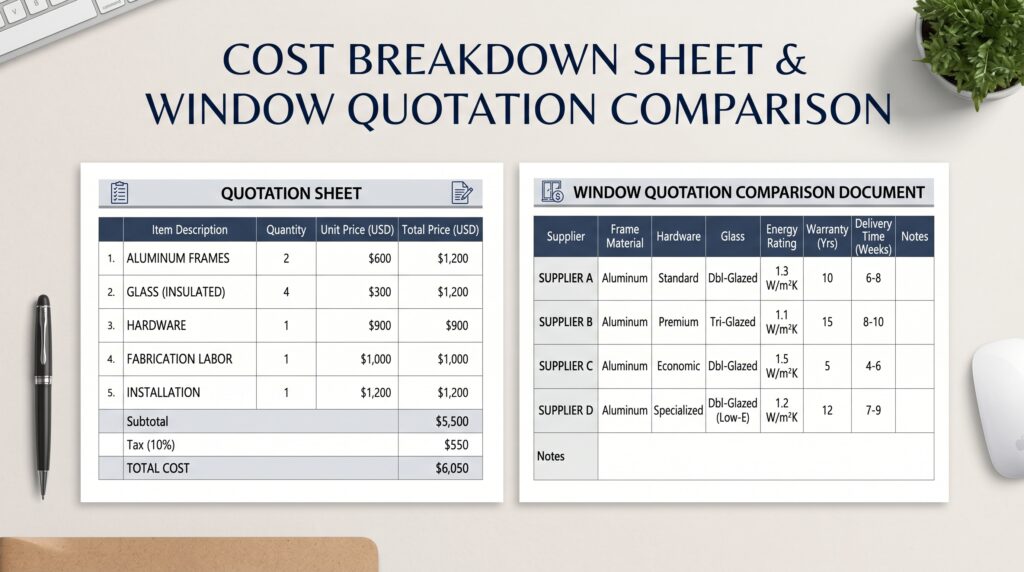
Window pricing should be compared carefully. A supplier may quote per square meter, per unit, per complete window schedule, or by product series. A low square meter price can become expensive after adding glass upgrades, hardware, screens, thermal breaks, special colors, packing, and freight. Ask for a clear breakdown, and for project purchasing, compare complete delivered specifications rather than headline prices.
FOB Window Pricing China
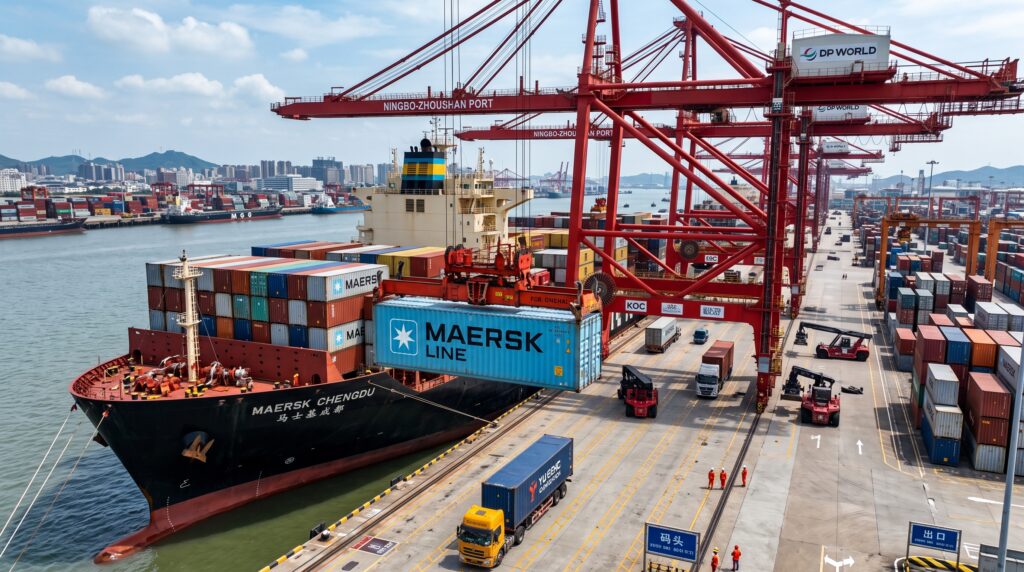
FOB means Free On Board under Incoterms 2020. For sea or inland waterway transport, the seller delivers the goods on board the vessel at the named port of shipment, and risk transfers according to the agreed Incoterm.
However, buyers should be careful with container shipments. Modern container cargo is often handed to a carrier at a terminal before it is physically loaded onto a vessel, so another rule such as FCA can sometimes describe that handover more accurately. Ask your freight forwarder which Incoterm fits the actual shipment. Do not select FOB simply because it is familiar.
CIF Window Pricing China

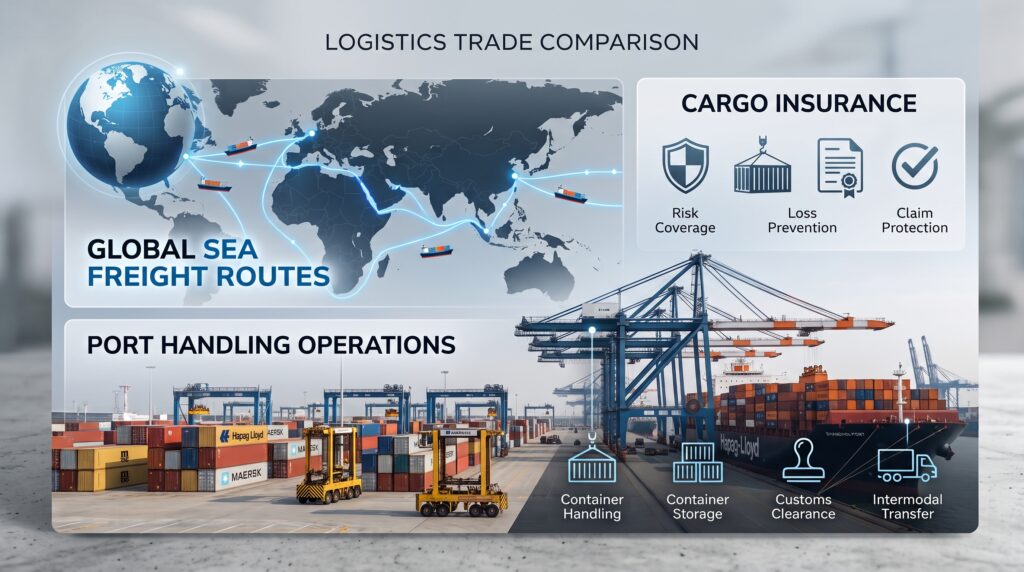
CIF means Cost, Insurance, and Freight. Under CIF, the seller arranges carriage to the named destination port and also obtains the insurance required by the rule.
An important detail is that paying freight to the destination does not mean risk waits until the goods arrive there. Under CIF, risk transfers when the goods are delivered on board at the shipment port, a difference between cost and risk that surprises many new importers. CIF also does not normally mean the seller is responsible for import duty, customs clearance, and every destination charge. Request a written list showing what the quotation includes.
FOB vs CIF for Window Imports
|
Factor |
FOB |
CIF |
|
Seller arranges main sea freight |
No |
Yes |
|
Seller provides CIF insurance |
No |
Yes |
|
Buyer has more freight control |
Usually |
Less |
|
Import clearance by seller |
No |
No |
|
Suitable automatically for every container shipment |
No |
No |
|
Named port matters |
Yes |
Yes |
For containerized or multimodal shipments, also ask whether FCA, CIP, CPT, or another Incoterm better matches the actual delivery point. This is especially important for large projects using several transport stages.
Window Certifications and Standards
Certification is one of the most misunderstood parts of international buying. Do not ask “Does your factory have CE, NFRC, and AS2047?” Ask “Does the exact window system I am buying have the documentation required for my project and destination?” That difference matters.
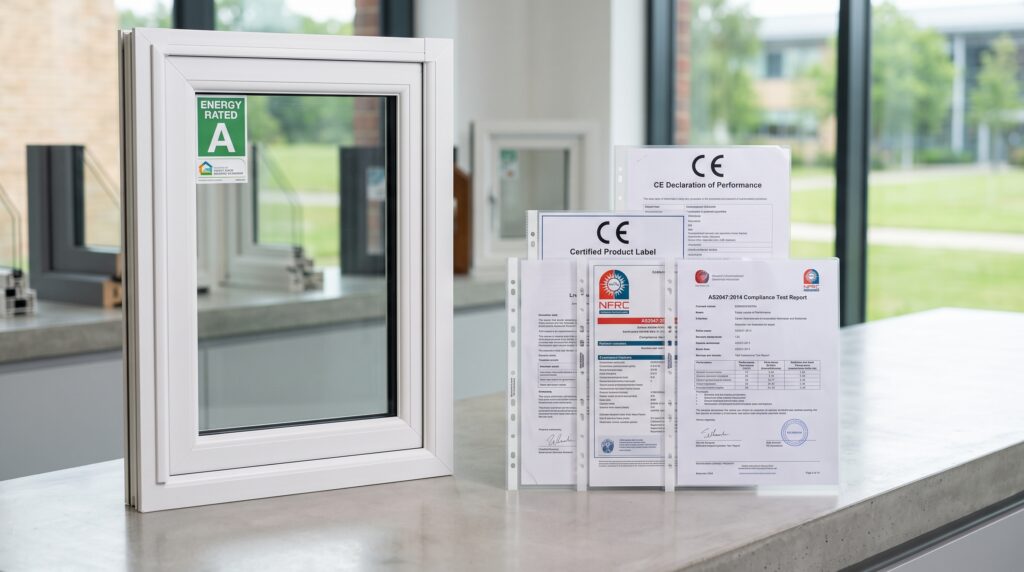
ISO 9001 relates to a quality management system. It tells you something useful about how a company manages processes, but it does not automatically prove a specific window meets your project’s air, water, structural, or safety requirements. Treat factory management certification and product performance testing as different things.
CE marking for products placed on the European market can require a Declaration of Performance when the product falls under the relevant harmonised framework. Verify the exact product type, intended use, and declared characteristics. Do not accept a generic CE logo as the complete answer.
NFRC ratings are commonly used in North American window energy performance discussions, covering metrics such as U factor, SHGC, and visible transmittance. If your project needs an NFRC rated window, verify that the exact configuration you are ordering is within the applicable rated scope, since changing glass or opening configuration can matter.
AS2047 may be specified for Australian projects covering windows and external glazed doors. Ask for documentation related to the exact series and configurations needed rather than relying on a supplier simply saying “Australian standard.” Your architect or certifier should confirm which standards apply.
SGS inspection can be useful, but the words “SGS inspected” do not explain what was actually checked. Define the inspection scope, such as quantity, dimensions, appearance, glass markings, hardware, and packing. A third party inspector can only verify the items included in the agreed inspection plan.
Window Quality Inspection Before Shipping
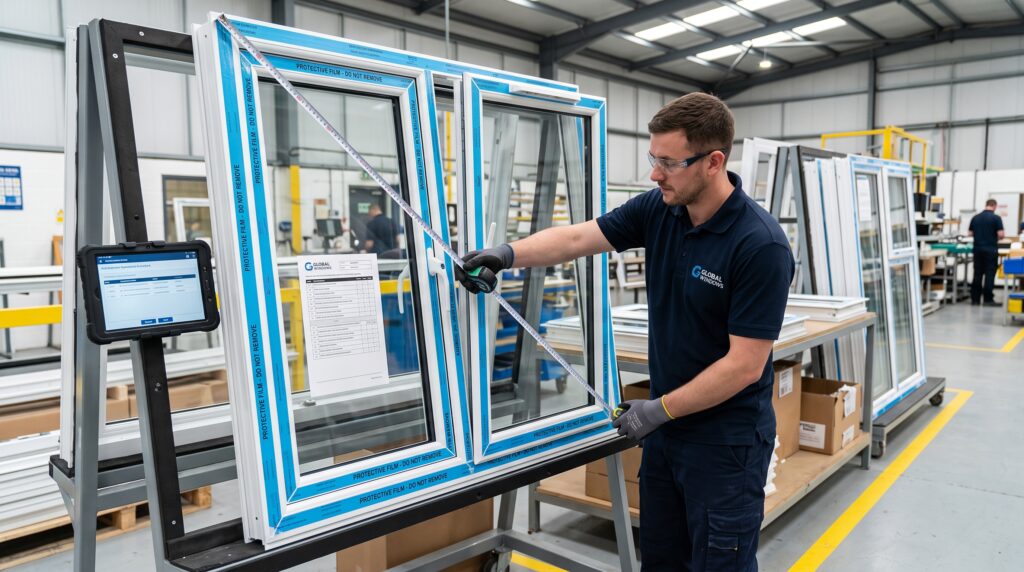
Do not wait until the container reaches your country to discover manufacturing problems. A pre shipment inspection can check selected units before loading, covering quantity, sizes, opening direction, glass, color, surface quality, handles, locks, rollers, hinges, and packaging.
For large orders, decide the inspection standard before production starts. If you need laboratory performance testing, plan that separately, since a visual factory inspection cannot replace a formal performance test.
Window Packaging and Container Shipping
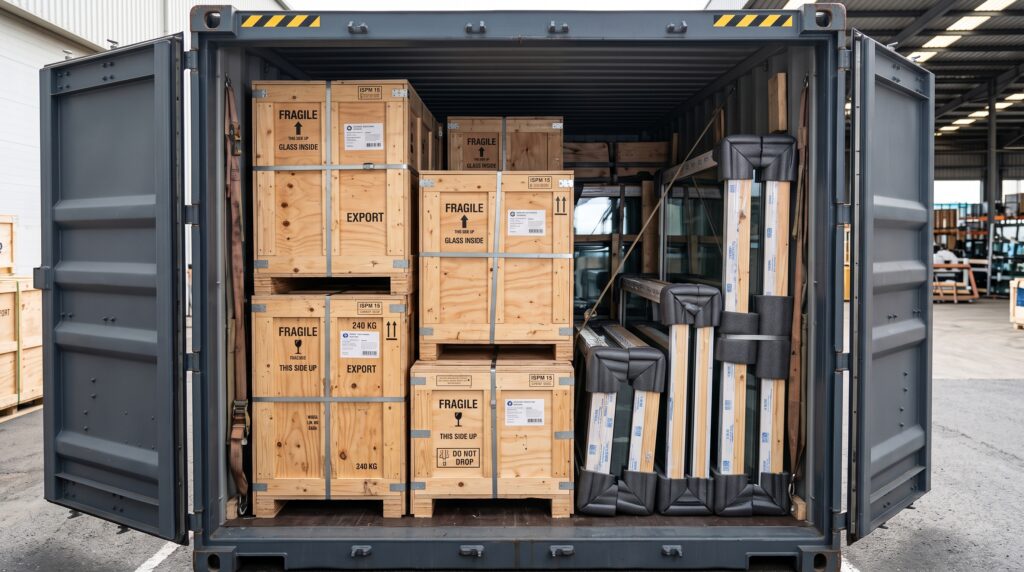
Windows are fragile, heavy, and awkward to move. Good packaging needs to protect glass, frame corners, finished surfaces, hardware, and accessories. Large projects should also use clear identification, so a crate or window is labeled to connect it to the window schedule, for example W01, W02, W03. This saves a lot of time when hundreds of windows arrive together.
Many international window orders travel by sea in container loads, using a 20 foot or 40 foot container depending on quantity and packaging. There is no universal number of windows that fits in one container, since loading efficiency changes with dimensions, frame depth, glass, crates, and oversized units. Ask for a load plan for large shipments rather than relying on a generic capacity figure from another project.
How Long Does It Take to Import Windows From China
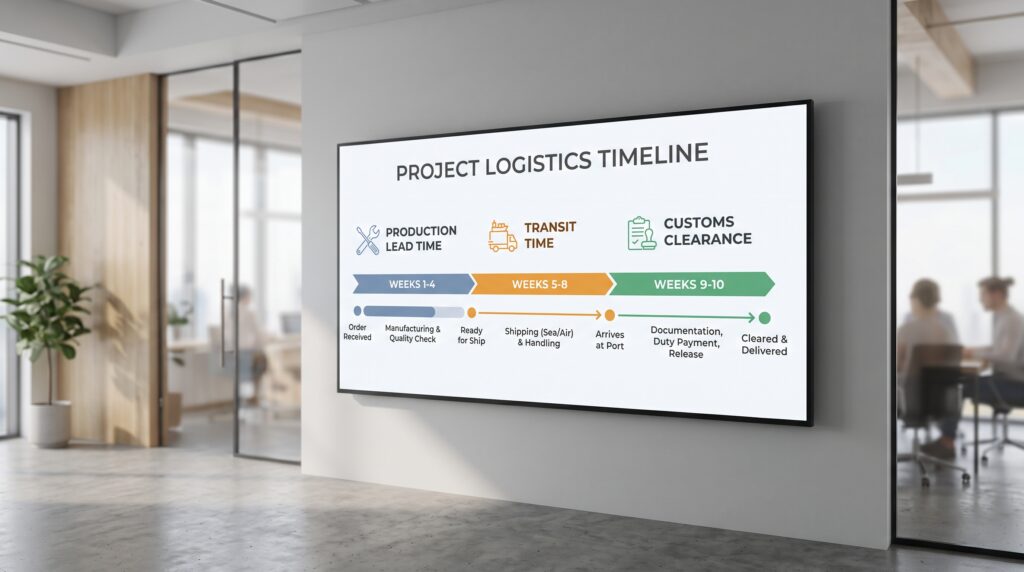
There is no single answer, since the total timeline includes more than manufacturing. Allow for specification, quotation, samples where required, technical drawings, drawing approval, manufacturing, inspection, packing, export handling, sea freight, import clearance, and inland delivery.
Custom color profiles, unusual glass, major holidays, and production volume can all affect timing. Ask the supplier for a project specific production schedule and your freight provider for the current transit estimate. Do not promise your construction team a delivery date based only on factory production days.
How to Ship Windows From China to Europe

European buyers should plan compliance and logistics together. Before shipment, confirm product documentation, Declaration of Performance where applicable, CE requirements, packing list, commercial invoice, shipping document, insurance arrangement, Incoterm, destination port, customs broker, and import taxes and duties. Do this before the container leaves China, since solving documentation problems after arrival can create avoidable delays.
Common Mistakes When Buying Windows From China
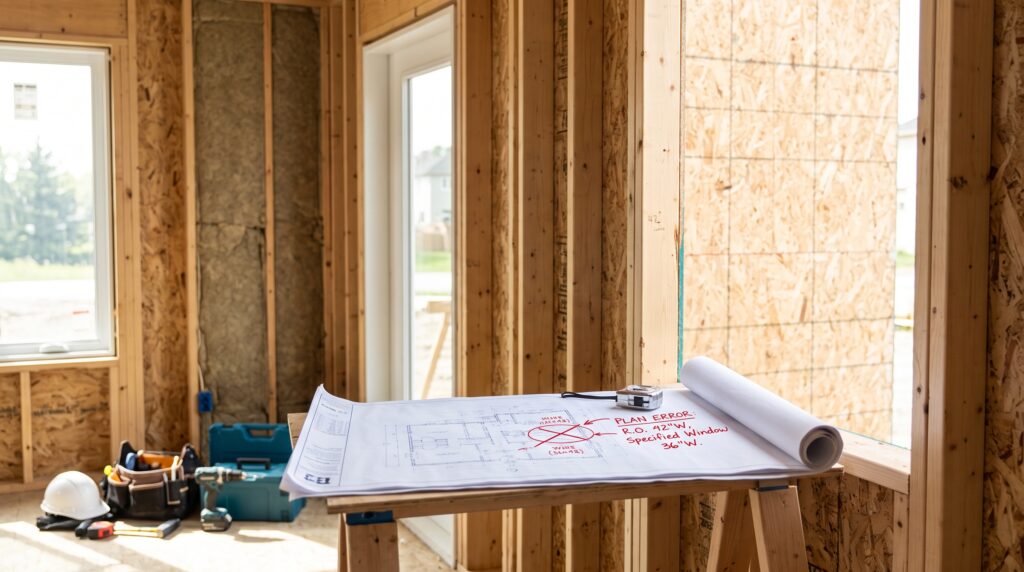
Buying only by price. The least expensive quote may use different glass, profiles, hardware, or finishes.
Sending rough sizes. Manufacturers need approved dimensions.
Ignoring opening directions. Left, right, inward, outward, and fixed panels must be clear.
Skipping technical drawings. Drawings are the bridge between your idea and the factory floor.
Assuming every certificate covers every window. Check the exact product and scope.
Forgetting shipping and import costs. Calculate landed cost.
Changing specifications during production. Late changes can create delays, waste, or inconsistency.
Ignoring installation. A good window can still fail when poorly installed.
How to Avoid Scams Buying Windows From China
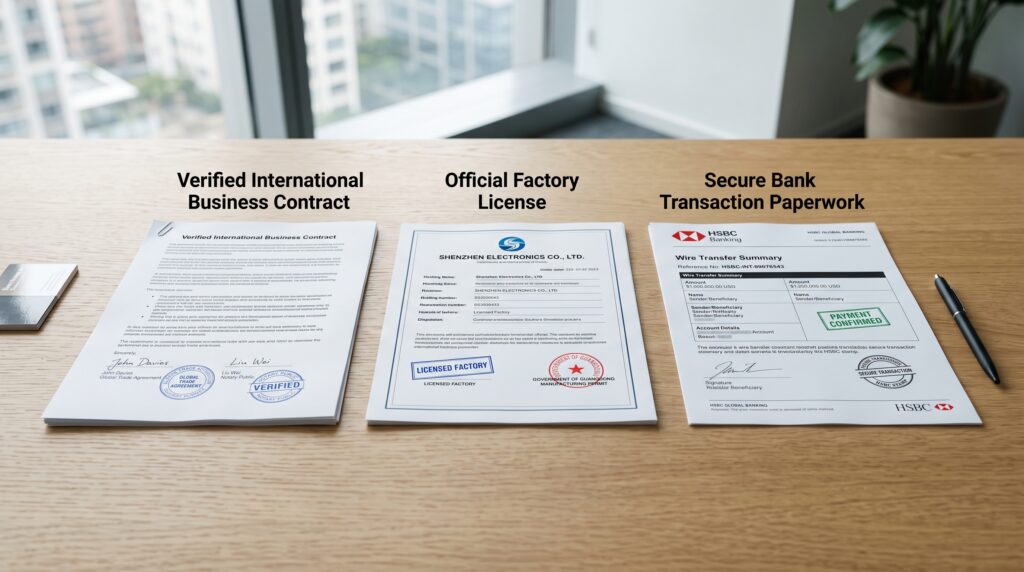
There is no single trick, but several checks together reduce risk: verify company details, use clear contracts and specifications, check factory capability, request product documentation, use approved drawings, inspect samples where worthwhile, keep payment records, plan inspection, confirm shipping terms, and avoid unrealistic prices or rushed pressure to pay. For large purchases, independent professional advice may also be worthwhile.

How Parlun Building Supports Window Project Buyers
Parlun Building works with residential buyers, builders, developers, contractors, and purchasing teams sourcing building materials from China. For windows, you can discuss PVC frames, aluminum frames, casement designs, sliding designs, custom sizes, glazing, energy performance, colors, hardware, quantities, and shipping.
Parlun Building’s purchase team can also support broader building material sourcing where a project needs more than windows. Working from one project schedule makes it easier to coordinate multiple sizes and product types.
Start Your Window Sourcing Project With Parlun Building
Ready to turn your drawings into a window quotation? Send Parlun Building your window schedule, sizes, quantities, destination, and technical requirements. The goal is not simply to find a factory price. It is to make sure the windows that arrive match the building you are actually constructing.