Key Takeaways:
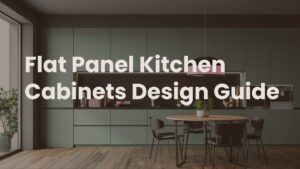
Slab kitchen cabinets—also known as flat-panel cabinets—are defined by a single, uninterrupted door surface with no frames, grooves, or decorative detailing. But their appeal goes beyond simplicity.
In high-end modern kitchen design, slab construction is the foundation that makes everything else possible: seamless appliance integration, continuous material expression, and a visual calm that framed cabinetry cannot replicate.
Walnut as a Slab Door Material
Of all the natural materials suited to slab door construction, walnut is the most architecturally compelling. The flat, unframed surface of a slab door strips away all decorative distraction, meaning the cabinet front itself becomes the design element. In walnut, this is particularly effective because the wood’s linear grain and deep tonal variation give the flat surface a natural depth and richness that lacquer or painted finishes cannot replicate. Walnut slab doors work especially well in open-plan modern homes where the kitchen is visible from the living area and needs to hold its own as a design statement rather than a functional backdrop. For homeowners exploring this option, our detailed resource on flat panel walnut kitchen cabinets covers construction specifications, core materials, handleless configurations, and countertop pairing recommendations.
The Design Logic Behind Slab Kitchen Cabinetry
Traditional framed doors—Shaker, raised-panel, or beaded—introduce a grid of shadow lines across every wall surface. Each frame edge creates a micro-shadow, and across an entire kitchen, this accumulates into significant visual noise. The brain processes these lines continuously, even when you are not consciously aware of it.

Slab cabinetry works through subtraction. By removing nonessential lines, the cabinet wall reads as a single architectural plane rather than a collection of individual units. The result is a space that feels quieter and more considered—not because it is sparse, but because every visual element is intentional.
This is why slab construction has become the default choice in contemporary and luxury kitchen design. It does not compete with the materials, the lighting, or the spatial layout. It supports them.
Where Slab Cabinets Do Something Framed Cabinets Cannot
Continuous material expression
In framed construction, the door frame interrupts the material surface. Wood grain stops and restarts at every border. Stone texture fragments into panels. The material never gets to speak for itself across a full wall.
Slab doors remove that interruption. When veneers are sequence-matched—meaning each door is cut from the same flitch of wood in order, so the grain flows continuously from one cabinet to the next—the entire wall becomes a single coherent surface. This is the difference between a kitchen that uses natural materials and one that is defined by them.
At Parlun Building, sequence-matching is standard practice for veneer projects. The effect is most visible in walnut and oak, where the grain movement across 6 to 8 cabinet doors reads as one unbroken composition rather than a repetition of similar panels.
Precision integration with smart appliances
The defining ambition of high-end modern kitchens is invisibility—refrigerators, dishwashers, and ovens that disappear into the cabinetry rather than interrupt it. This requires a level of dimensional precision that framed doors cannot consistently deliver.
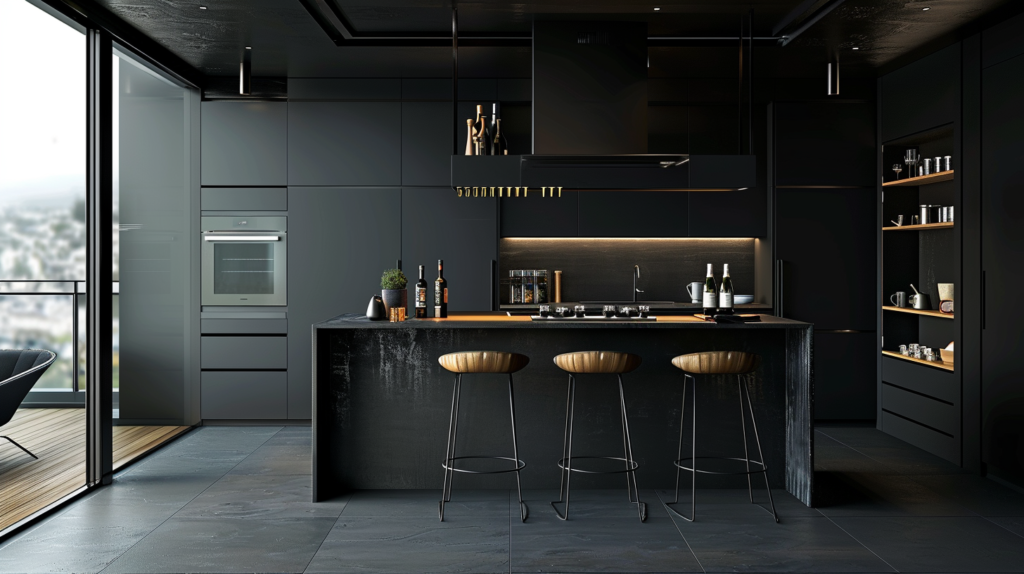
Slab construction allows appliance panels to align with adjacent cabinet doors to within 3mm in both thickness and reveal. At this tolerance, the transition between a cabinet door and a refrigerator panel becomes effectively invisible. The kitchen reads as architecture rather than a collection of objects.
Framed doors introduce an additional variable: the frame thickness itself creates a step at every appliance edge, making flush integration difficult to achieve without custom workarounds. Slab construction eliminates that variable from the start.
Full support for handleless systems
Gola profiles, J-pull edges, and motorized push-to-open mechanisms all require a flat, uninterrupted door surface to function correctly and look intentional. On a framed door, these systems are compromises—the handle channel interrupts the frame, and the result feels like a workaround rather than a design decision.
On a slab door, handleless systems are a natural extension of the same design logic. The grip becomes part of the geometry. The kitchen moves toward the sculptural end of the spectrum—calm, precise, and resolved.
Long-Term Value: Why Slab Kitchen Cabinets Age Better
Framed cabinet styles are tied to specific aesthetic moments. Shaker had its peak. Farmhouse is already showing its age in some markets. Slab construction has no such expiration date because it carries no inherent stylistic signature—it is a format, not a trend.
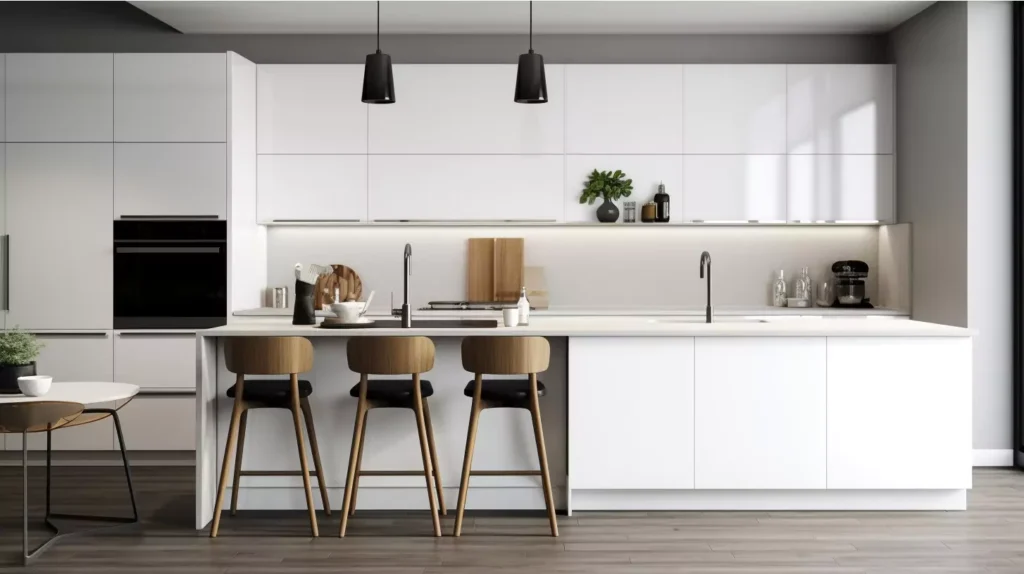
This neutrality is an asset over time. The same slab cabinet boxes can shift from a Nordic aesthetic to a warmer organic-modern look simply by changing hardware, countertop material, or backsplash. No structural renovation required. For homeowners making a long-term investment in a kitchen, this adaptability has real financial value.
From a manufacturing standpoint, slab construction also ages more predictably. There are no frame joints to loosen, no corner intersections to trap moisture and allow warping. A well-built slab door with proper edge sealing and quality core material—high-density MDF or cross-laminated plywood—maintains its geometry and finish integrity for 15 years or more under normal residential use.
What to Look for in Slab Kitchen Cabinet Quality
Not all slab cabinets perform equally. The flat surface that makes them visually clean also makes any manufacturing imprecision immediately visible—a bowed panel, an uneven edge, or a color inconsistency across doors is impossible to hide.
The edge is the most critical quality indicator. Lower-grade slab cabinets use standard PVC banding that eventually lifts at corners, especially near heat and moisture sources. Laser edge banding—a zero-joint process that fuses the banding to the panel without visible adhesive—eliminates this failure point and is the benchmark for cabinets intended to last.
Comparison of Edge Banding
|
|
Standard PVC Banding |
Laser Edge Banding |
|
Bond method |
Adhesive-applied |
Heat-fused, zero glue line |
|
Appearance |
Visible seam at edge |
Seamless, painted-like finish |
|
Heat resistance |
Moderate |
High |
|
Moisture resistance |
Prone to lifting over time |
Fully sealed, long-term stable |
|
Lifespan |
5–8 years near heat sources |
15+ years under normal use |
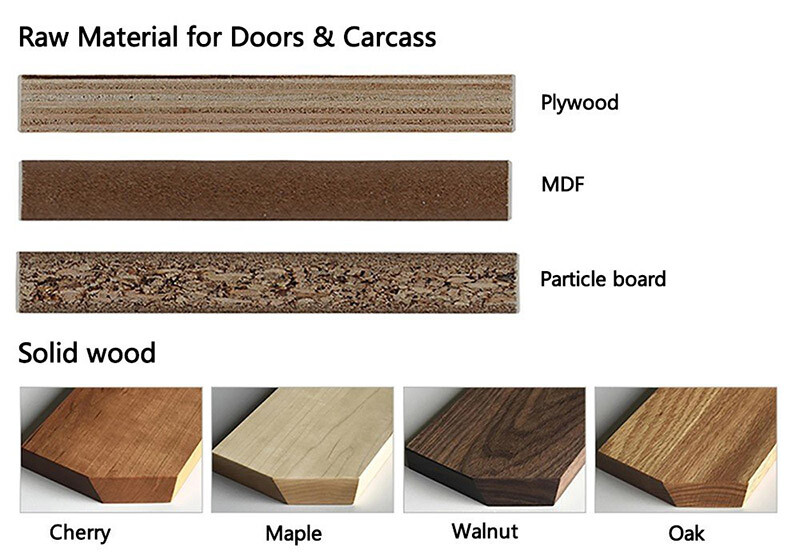
Core material stability matters equally. Panels that expand and contract with humidity changes will eventually show gaps, misalignment, or surface cracking. High-density MDF provides the most consistent substrate for painted finishes; cross-laminated plywood offers greater structural strength for heavier applications.
Summary
Slab kitchen cabinets are not a minimalist aesthetic choice. They are a structural decision that determines what a kitchen can and cannot do—in terms of material expression, appliance integration, and long-term adaptability. For modern kitchens where those things matter, slab construction is not one option among many. It is the logical starting point.
At Parlun Building, every slab cabinet is built to the tolerances that make these qualities real rather than aspirational. If you are planning a kitchen project and want to explore what slab construction can do in your specific space, our team is available to discuss layout, material options, and specifications.