Choosing a new countertop should feel exciting, but if you’ve narrowed it down to slate or artificial stone, the decision only gets harder the deeper you research. Two materials, two very different stories.
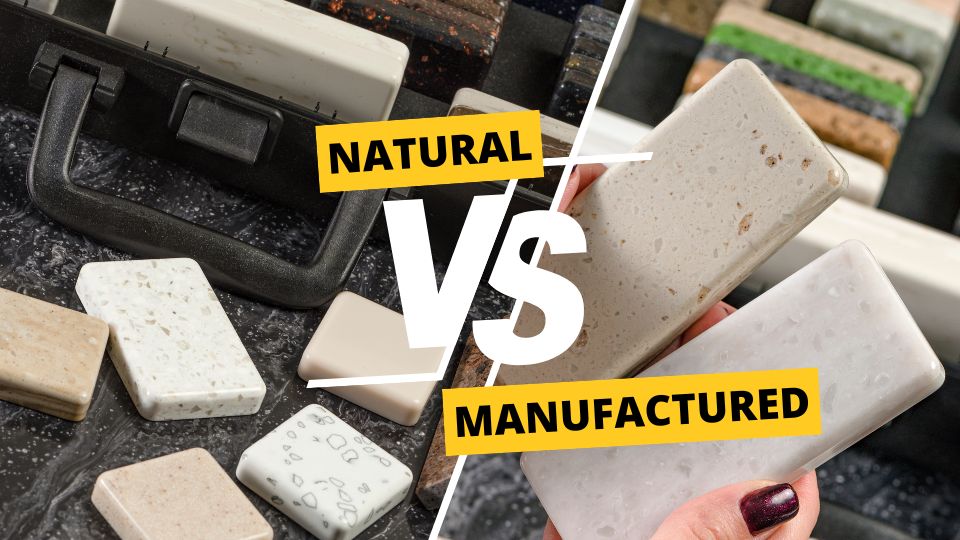
Here’s the core difference: slate countertops are quarried from natural stone, shaped by millions of years of geological pressure. Artificial stone (also called engineered stone) is manufactured by binding crushed quartz or other minerals with resin to mimic that natural beauty.
So which one actually gives you more for your money? The answer depends on four things every homeowner weighs: upfront cost, long-term durability, visual appeal, and maintenance demands. This guide breaks down all four, so by the end you’ll know which countertop fits your kitchen and your budget.
Natural vs. Manufactured Stone Countertops: Quick Comparison
Here’s how slate and artificial stone stack up across the factors that matter most: price, appearance, durability, and more. Use this for a quick overview, then keep reading for the context behind each row.
|
Factor |
Slate Countertops |
Artificial Stone Countertops |
|
Price (installed) |
$50–$100 per sq. ft. |
$60–$150 per sq. ft. |
|
Appearance |
Naturally unique veining; matte, earthy tones |
Uniform, consistent patterns; wide color range |
|
Durability |
Hard, scratch-resistant; can chip on sharp impact |
Very hard; resists scratches and chips well |
|
Lifespan |
100+ years with proper care |
25–50 years on average |
|
Maintenance |
Low; occasional sealing recommended |
Low; simple soap-and-water cleaning |
|
Heat Resistance |
Excellent; handles hot pots directly |
Moderate; resin can discolor under high heat |
|
Eco-Friendliness |
100% natural, quarried stone |
Contains synthetic resins and binders |
|
Best For |
Rustic, farmhouse, or character-rich designs |
Modern, minimalist, high-uniformity kitchens |
The table tells you what. The rest of this guide tells you why, and helps you figure out which option fits your situation.
Slate vs. Artificial Stone Countertops: A Detailed Head-to-Head Comparison
Now let’s break down how these two materials really compare, one factor at a time. Each section ends with a clear verdict so you can see which material wins on what.

1. Material Overview: Natural vs. Manufactured Stone Countertops
Slate Countertops: Slate is a fine-grained metamorphic rock formed over hundreds of millions of years from compressed clay and volcanic ash. Quarried in large blocks and cut into slabs, every piece carries a one-of-a-kind pattern shaped by geological history.
Artificial Stone Countertops: Also called engineered stone, this material binds roughly 90% crushed quartz or similar minerals with about 10% polymer resin and pigments. The mixture is compressed, cured, and polished into uniform slabs engineered to mimic the look of natural stone.
The Verdict: This is the most fundamental choice in the comparison: do you want a countertop shaped by nature or by a factory? Slate offers character and authenticity; artificial stone offers consistency and design control. Both are valid, and everything else in this guide flows from that single difference.
2. Appearance & Design: Slate vs. Faux Stone Aesthetics
For most homeowners, looks come first, and this is where the slate vs. faux stone debate gets interesting.
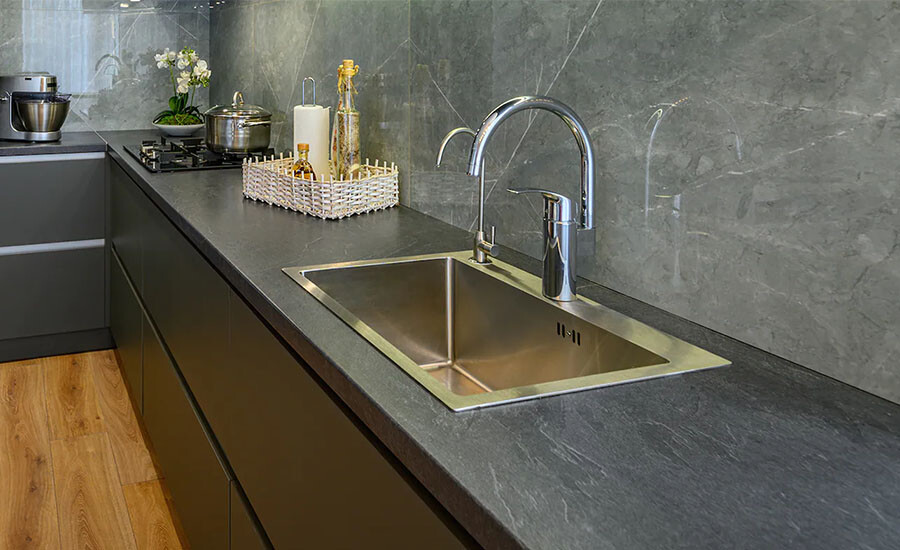
Slate Countertops: Slate offers depth and character that’s hard to fake. Its surface carries subtle veining, soft mineral shifts, and earthy tones ranging from charcoal grey and deep green to warm rust and midnight black. Because each slab is quarried from real stone, no two slate countertops look exactly alike.
Artificial Stone Countertops: Engineered stone wins on design flexibility. It comes in nearly any color you can imagine, with consistent patterns that let you match slabs perfectly across a large kitchen. If you want predictability and a clean, modern uniformity, faux stone delivers it beautifully.
The Verdict: This one comes down to taste. Slate offers organic character; artificial stone offers a wider color palette and a polished, modern look. Both can anchor a stunning kitchen.
3. Durability & Strength: Which Holds Up Better?
A countertop has to survive years of chopping, hot pans, dropped mugs, and daily wear. So how do these two materials hold up?
Slate Countertops: Slate is a hard, dense stone with a Mohs hardness rating of around 5.5, naturally scratch-resistant and tough enough for daily kitchen use. It won’t dent, won’t warp, and shrugs off most spills. Its one weakness: a sharp, direct impact on an edge can occasionally cause a small chip, though chipped slate can usually be repaired or left as-is, since the natural patina blends right in.
Artificial Stone Countertops: Engineered stone is harder on paper, with a Mohs rating of about 7. Its resin-bound structure resists chips and cracks well in the short term. Over 15 to 25 years, however, the resin can yellow, dull, or develop micro-fractures, especially near heat sources or sunlit windows.
The Verdict: Artificial stone wins on short-term toughness; slate wins on long-term endurance. If you measure durability in years, both perform well. If you measure it in decades, slate has the longer runway.
4. Maintenance: How Much Work Are You Signing Up For?
Here’s the truth about what each material requires day to day.
Slate Countertops: Among natural stones, slate is one of the lowest-maintenance options, far less needy than marble or granite. Daily care is simple: warm water and mild soap. Sealing is recommended once a year (or every two years for honed slate), takes 15 minutes, and costs under $30 in supplies.
Artificial Stone Countertops: Engineered stone wins on day-to-day convenience. It never needs sealing, and soap and water handle most messes. One thing to know: harsh cleaners like bleach or oven cleaner can damage the resin, and once it’s stained or heat-damaged, repairs are often impossible. In most cases, you’d be replacing the slab.
The Verdict: Artificial stone is the clear winner for daily ease. No sealing, ever. Slate isn’t far behind, but it does ask for that 15-minute annual sealing. If hands-off maintenance is your top priority, artificial stone has the edge.
5. Cost: Where Your Dollars Actually Go
Slate Countertops: Slate typically runs $50 to $100 per square foot installed, depending on slab quality, thickness, and edge work. That puts it among the most affordable natural stones on the market, often less than granite, marble, or quartzite. For a standard 30 sq. ft. kitchen, expect roughly $1,500 to $3,000 installed.
Artificial Stone Countertops: Engineered stone runs $60 to $150 per square foot installed. Premium brands push toward the higher end, while basic options compete with slate’s pricing. For the same 30 sq. ft. kitchen, expect $1,800 to $4,500.
The Verdict: On paper, the price ranges overlap significantly, and what you actually pay depends heavily on the supplier. Traditional countertop pricing carries layered margins from sourcing through distribution, which means the same quality of stone can cost very different amounts depending on where you buy it. The smarter question isn’t “which material is cheaper?” but “who can give me fair pricing on the quality I want?” We’ll come back to that in the final section.
If you’d like to start exploring real prices, browse our slate countertop collection or our artificial stone collection to compare options and request a no-obligation quote.
6. Installation Process: What to Expect
Installation is one place where these materials genuinely differ.
Slate Countertops: Slate slabs are heavy and dense, so installation requires experienced professionals with the right tools. Cutting and shaping takes precision, since each slab has unique veining that affects how seams should be aligned. A typical kitchen install runs one to two days, with template-to-finish timelines of about two weeks.
Artificial Stone Countertops: Engineered stone is lighter, comes in standardized slab sizes, and is easier to cut and fit. Installation is typically faster, often completed in a single day. One thing to know: seams can become more visible over time, especially under direct sunlight, as the resin in the seam adhesive ages slightly differently from the slab.
The Verdict: Artificial stone is faster and simpler to install, which often translates to lower installation costs. Slate takes more skill but rewards it with a more custom, tailored result. Whichever you choose, the biggest factor in how your countertop looks five years from now is the quality of your installer.
7. Pros and Cons at a Glance
Here’s the quick recap to help you weigh the trade-offs.
Slate Countertops
Pros:
Cons:
Artificial Stone Countertops
Pros:
Cons:
When to Choose Slate vs. Artificial Stone Countertops
By now you’ve seen how these two materials compare on every major factor. The last question is the most personal one: which is the right fit for you?
When to Choose Slate Countertops
Slate is the smarter pick if any of these sound like you:
When to Choose Artificial Stone Countertops
Artificial stone is the better fit when any of these describe you:
The Final Verdict: Which Countertop Wins for Your Money?
Both slate and artificial stone are capable, beautiful materials, and either can be the right choice depending on what you value most.
Choose artificial stone if you want maximum design flexibility, hands-off maintenance, faster installation, or a polished modern aesthetic with consistent slab matching. It’s an excellent choice for contemporary kitchens and busy households.
Choose slate if you want a countertop with natural character, the longest possible lifespan, genuine eco-friendly credentials, and a surface that ages and repairs gracefully. For homeowners building a kitchen they’ll keep for decades, slate offers long-term value that’s hard to match.
And here’s the part most buyers don’t think about: price isn’t really set by the material itself. It’s set by the supply chain. Premium countertops, both slate and engineered, have historically been expensive because the supply chain is fragmented. Multiple middlemen between the source and your kitchen each add their margin, and the final price reflects everyone’s cut.
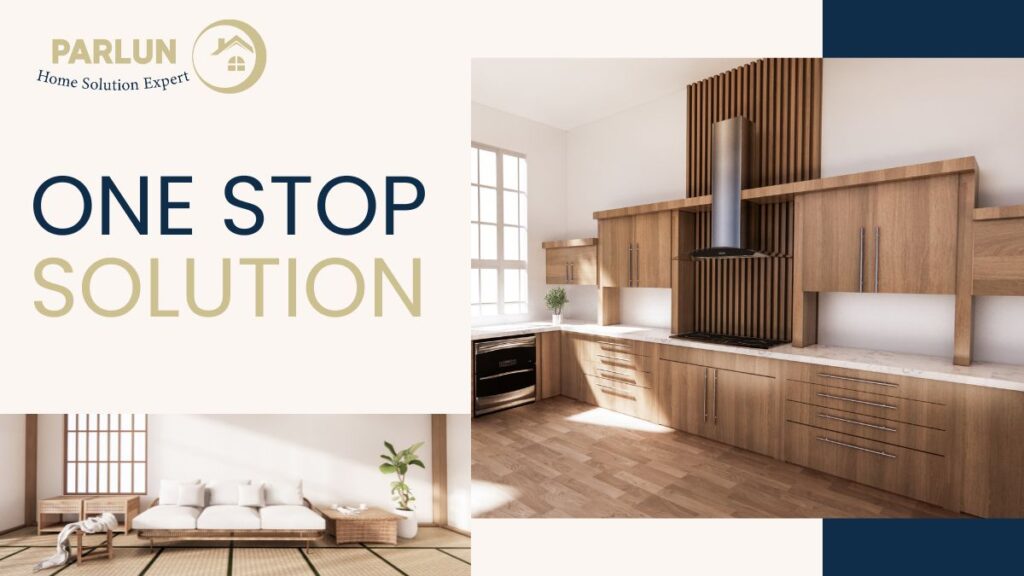
That’s the part we’ve rebuilt at Parlun Building. By integrating sourcing, fabrication, and distribution under one roof, we’ve removed the layers that inflate price without adding value. The result applies to both our slate and artificial stone collections: the same quality other suppliers sell at premium prices, available to you at a genuinely fair one. And if you want top-tier luxury options, we deliver those too, at prices that respect your budget.
That’s what “more for your money” actually means: not the cheapest stone, but smarter pricing on countertops that are truly worth owning.
Ready to see what fair pricing looks like on the countertop you have in mind?