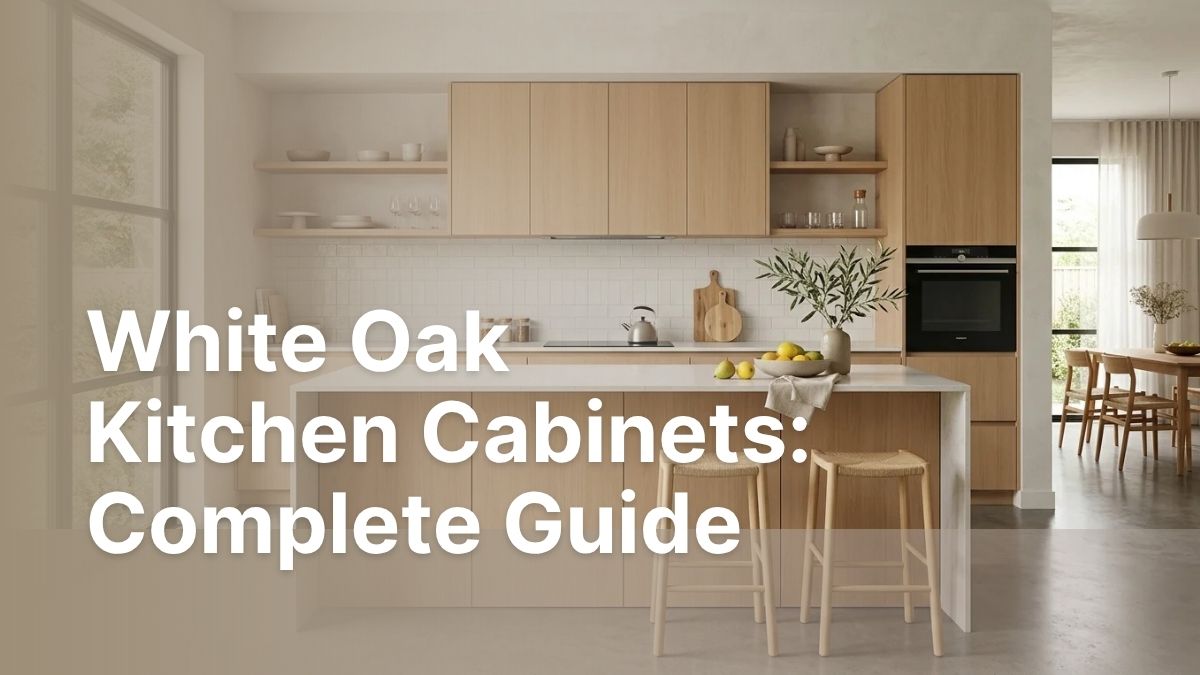
White oak kitchen cabinets have become the wood of choice for kitchens that want to feel warm without feeling dated. Where red oak can look busy and orange-toned, and painted cabinetry can feel flat, white oak sits in a sweet spot: a calm, fine grain with subtle color variation that works just as comfortably in a sleek modern kitchen as it does in a softer transitional space. A natural white oak kitchen adds warmth and texture without overpowering stone countertops, tile, or lighting, making the entire space feel balanced and inviting.
When kept close to its natural tone, white oak delivers a true light oak kitchen cabinet look that feels inherently bright, airy, and Scandinavian. Stained darker or greyed out, the same wood grain takes on a completely different mood. Understanding what makes white oak different helps when choosing the cabinet styles, finishes, and material pairings that best suit your kitchen.
What Is White Oak and Why It Works So Well in Kitchens
White oak is a North American hardwood, though its color is closer to pale honey or warm tan than true white. The wood typically ranges from pale honey to warm tan, with a tight, straight grain pattern that’s noticeably calmer than red oak. Red oak tends to have a more open, pink-toned grain with visible flecking; white oak’s grain is finer, straighter, and less reddish, which is exactly why it photographs and lives so much better in a modern kitchen.
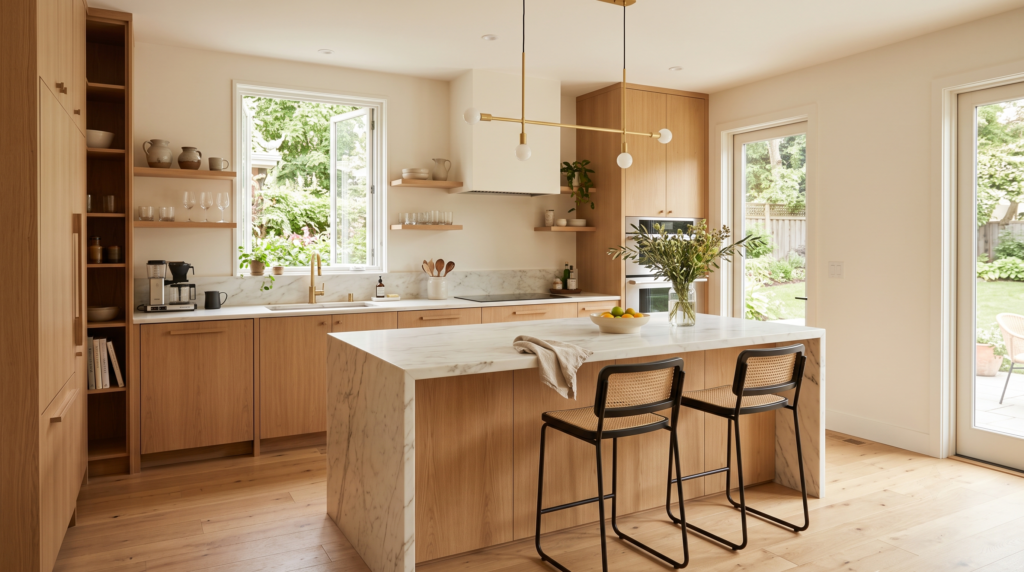
Beyond looks, white oak earns its place through performance. It’s a dense, durable hardwood that resists dents and wear better than softer woods like pine, and its closed grain structure makes it naturally more water-resistant, which provides a real advantage in a kitchen environment. It also takes stain, oil, and clear finishes evenly, without the blotchiness some woods show.
This combination of looks and durability is why white oak kitchen cabinets have overtaken red oak and maple as the default choice among designers right now. Where a builder a decade ago might have defaulted to maple for a clean, paintable surface or oak for warmth, white oak now does both: it can be left natural for a light oak kitchen cabinet look, or treated to suit almost any palette.
There’s also a practical sourcing advantage. White oak is widely available as both solid lumber and veneer, which gives manufacturers flexibility to offer it at a range of price points without sacrificing the look. That’s part of why it’s shown up so consistently across both budget renovations and high-end custom builds over the last few years, as the wood itself scales to the project in a way that rarer or more exotic species simply can’t.
White Oak Cabinet Styles
The door style you choose changes how the white oak grain unfolds within a room. While certain profiles allow the natural grain to take center stage, others reframe the wood with a sense of traditional craftsmanship. Below, we explore the three door styles we craft most frequently and the distinct character each brings to a kitchen.
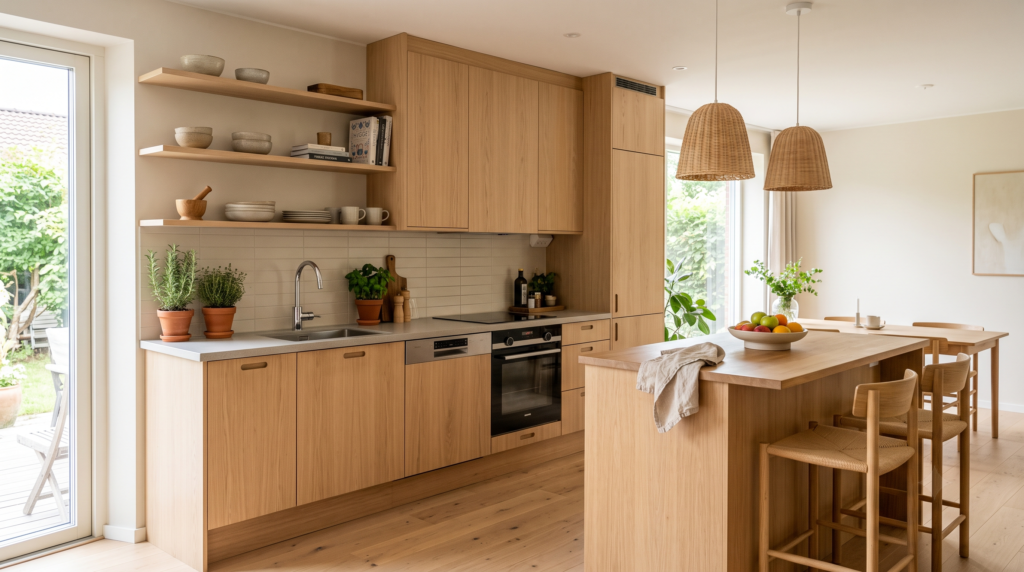
Flat Panel White Oak Cabinets
Selecting white oak flat panel cabinets is the most popular choice for modern kitchens right now, and for good reason. With no raised detailing or routed edges, the door front is a single clean plane. This simplicity ensures the grain itself becomes the design feature rather than competing with molding or panel lines. This style suits modern and minimalist kitchens especially well, where the goal is a calm, uninterrupted surface that lets the natural texture of the wood carry the look.
White Oak Shaker Cabinets
White oak shaker cabinets bring a softer, more transitional feel. The recessed center panel and simple frame add just enough detail to feel classic without tipping into ornate or traditional territory. It’s a style that pairs particularly well with brass hardware and works in kitchens that want warmth and a sense of craftsmanship, rather than the stark minimalism of a flat panel door. Shaker remains the safest, most broadly appealing choice for resale-minded projects.
Rift Sawn White Oak for a Linear Grain Look
Rift sawn white oak is cut at an angle specifically to produce a straight, consistent grain line with virtually no flecking or cathedral pattern. This technique yields a tight, linear aesthetic that leans architectural rather than rustic, delivering a refined surface akin to premium wood veneer rather than a standard oak board. It’s a premium option often used for large kitchen islands or full-height pantry walls, where the continuous grain pattern creates the strongest visual impact.
White Oak Cabinet Finishes and Stain Options
White oak kitchen cabinets are incredibly versatile mainly because of the finish. The same door style can end up looking and feeling completely different just based on how the wood is finished.
A natural or clear oil finish brings out the wood’s natural warmth, letting those beautiful honey and tan tones shine through with almost no color change. It is the ideal choice for clients who want their cabinetry to possess an organic warmth and a distinct, weathered character.
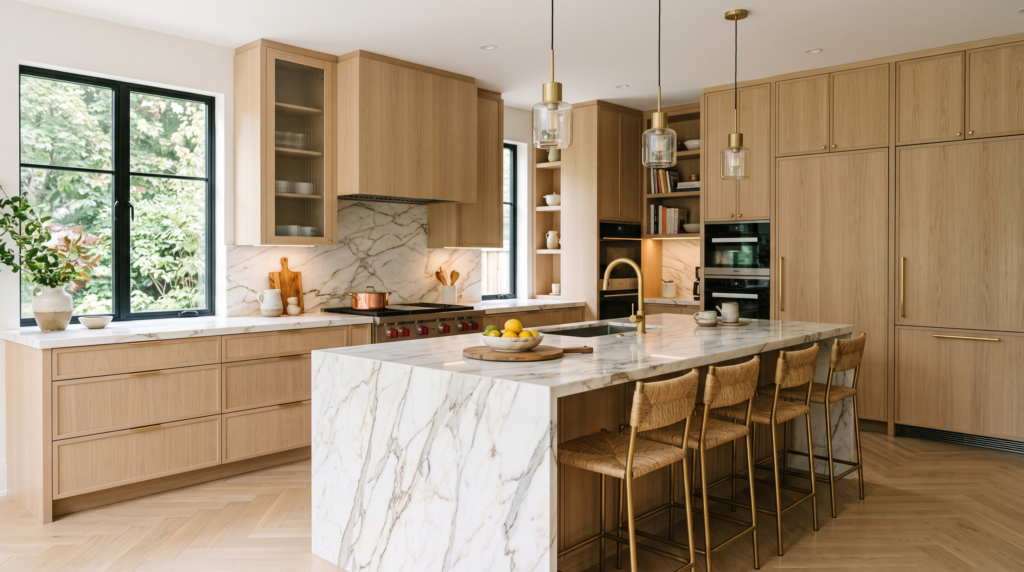
White-washed or blonde stains push the wood lighter and cooler, closer to a Scandinavian palette. This palette remains popular for stained white oak, adding beautiful tactile texture to bright, airy kitchens without heavy saturation.
Grey stains cool the wood down for a modern, architectural feel while keeping the grain visible, whereas dark stains transform it into rich walnut-like tones that pop against white countertops and light walls.
The golden rule? Avoid heavy varnish or thick polyurethane topcoats. That glossy layer suffocates the wood and hides the very grain character that makes white oak special.
Best Countertops and Hardware for White Oak Cabinets
White oak’s distinctive grain profile should remain the primary focus; selected countertops and hardware are meant to elevate this natural texture, not overwhelm it.
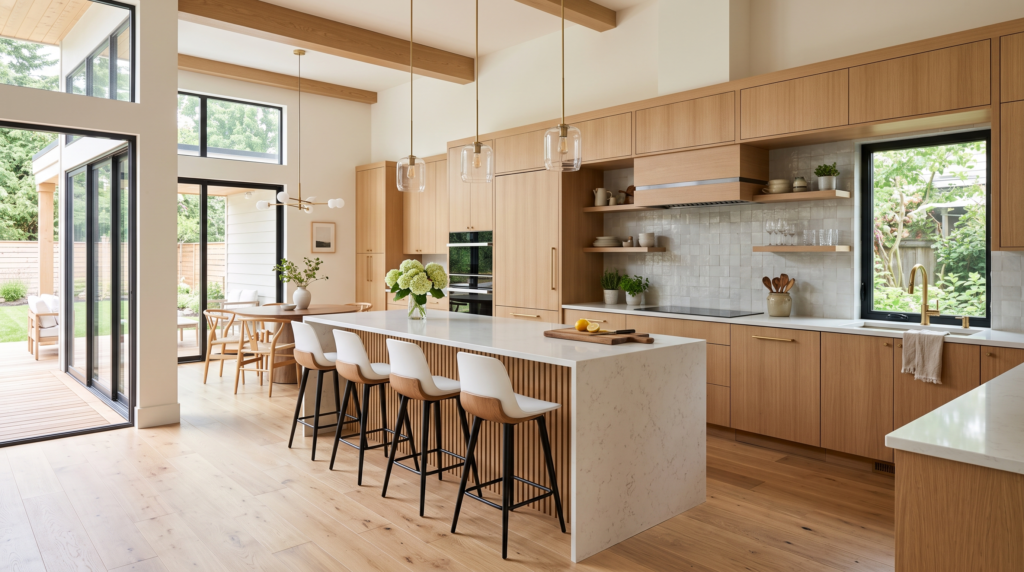
Countertop selections generally split into two design directions. White quartz or marble-look countertops bathe the space in a gentle, luminous glow that offsets the wood’s organic warmth. Dark granite or slate engineered stone heightens the drama, forming a striking counterpoint to stained white oak finishes. For clients chasing a modern industrial-meets-natural aesthetic, polished concrete serves as a compelling alternative that grounds the cabinetry’s texture.
Metal finishes dictate the ultimate character of the kitchen. Brass and aged brass hardware remain the go-to for white oak cabinets, sitting comfortably with the wood’s natural tones. Matte black hardware gives modern spaces a sharp, grounded contrast that outlines the cabinetry. Stainless steel or brushed nickel remains a safe, adaptable choice that aligns with rift-sawn grain and echoes surrounding appliances.
The smartest way to organize white oak cabinet ideas is to begin with a two-part foundation: pair the wood with either a single warm metal or a neutral surface. That core decision anchors the palette and makes the rest of the selections feel natural.
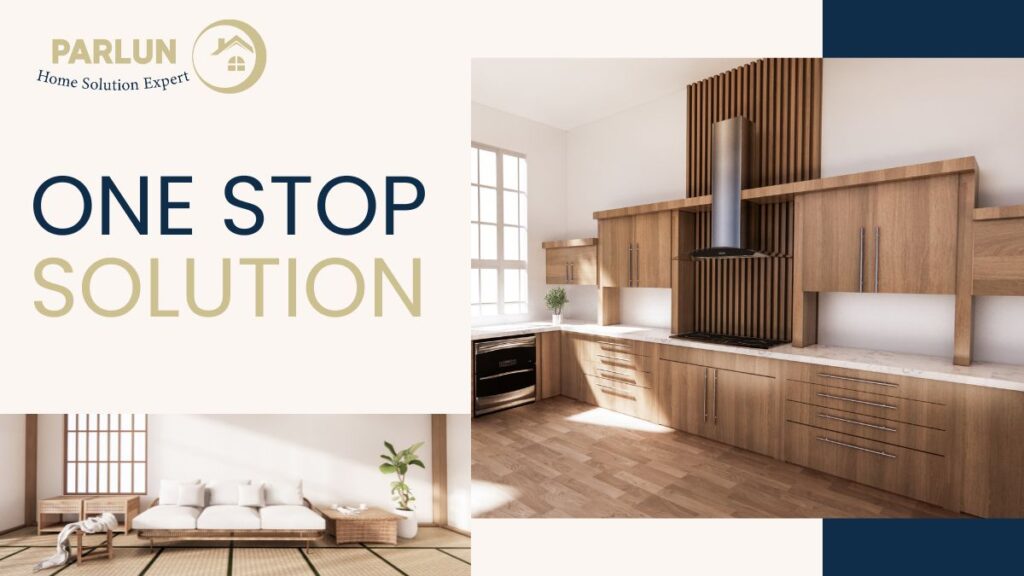
Custom White Oak Kitchen Cabinets from Parlun
At Parlun, we build premium white oak kitchen cabinets in two ways: with real oak veneer over a stable engineered core, or with affordable oak-look finishes for greater budget flexibility. Both material options are engineered into flat panel or shaker door styles, arriving in the natural, white-washed, grey, or dark stain options detailed above.
Rather than relying on rigid catalog sizes, we treat every project as a commission for fully custom kitchen cabinets. Every detail is custom to your project, including cabinet dimensions, door styles, stains, and hardware. As a trusted manufacturer of kitchen cabinets from China, we work closely with architects, designers, and contractors around the world, delivering reliable quality and smooth international shipping.
To give you complete confidence before production, we provide a free 3D design concept along with our full catalog. This lets you preview exactly how your chosen white oak style and stain will look in your space.
White Oak Kitchen Cabinet FAQs
Still weighing white oak kitchen cabinet ideas against other wood options? We’ve rounded up the most common questions from homeowners and designers choosing between white oak and other cabinetry options.