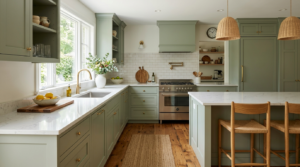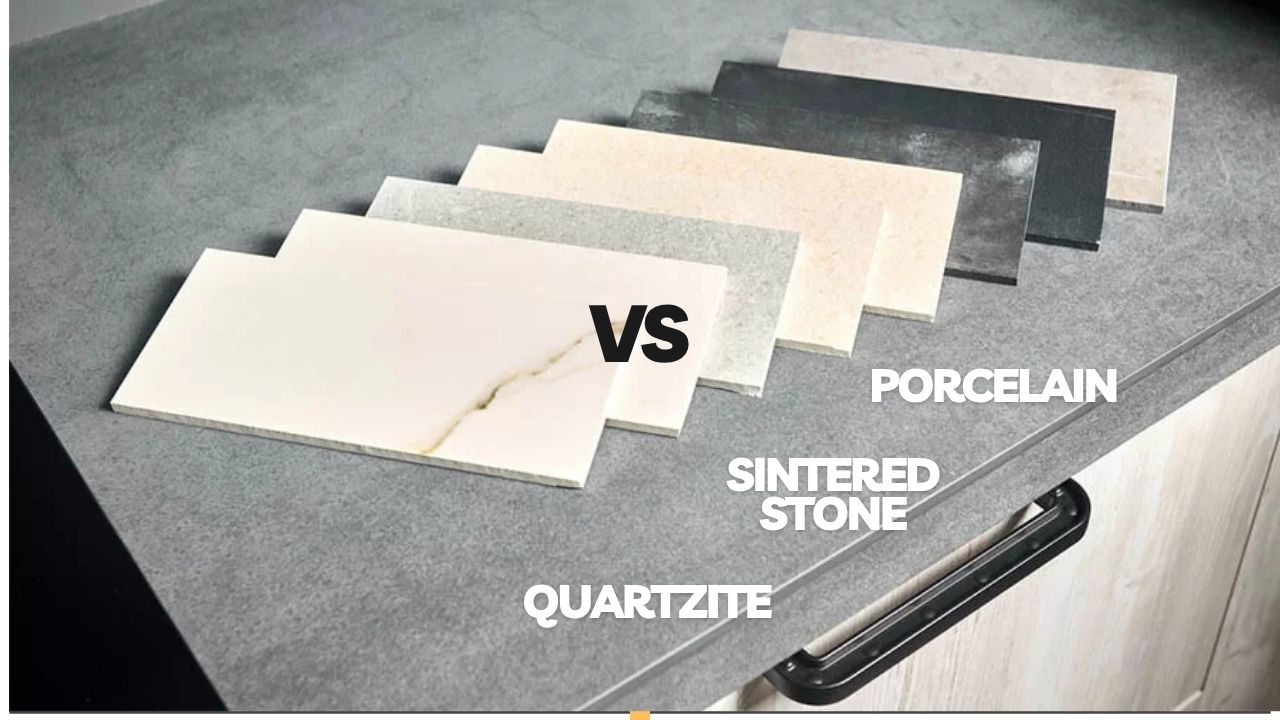
Entering 2026, the definition of a high-end kitchen has shifted away from surface-level luxury toward a balance of high performance, sustainability, and minimalist aesthetics. Countertop selection follows the same logic. In this guide, we focus on three premium countertop options: quartzite, sintered stone, and porcelain, and how to decide which one best fits your kitchen. Let’s take a closer look together with your trusted kitchen partner, Parlun Building.
How to choose the best countertop for your kitchen: a high-end countertop comparison
If you are choosing between these popular kitchen countertop materials, the real question is whether you value natural uniqueness more or the peace of mind that comes from advanced material technology. Keeping that in mind, let’s dive straight into the topic.
Quartzite countertops—timeless natural luxury
Note: This refers to natural quartzite, which is different from quartz countertops.
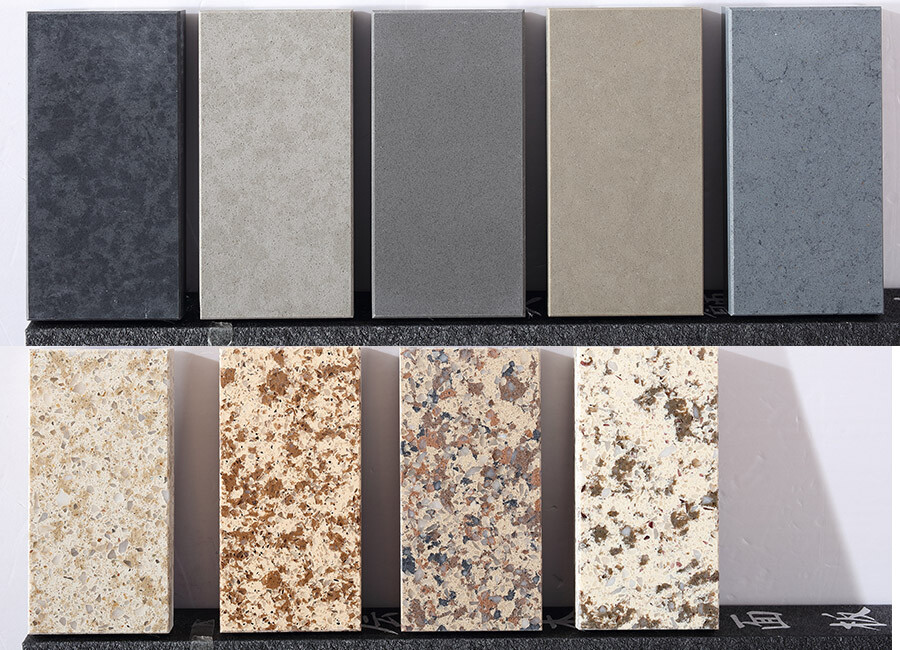
Quartzite sits at the very top of the natural stone category. In high-end markets across Europe and North America, it is one of the few right countertop materials clients are willing to pay three to five times the price of engineered stone. It remains the first choice for luxury residences or senior interior designers that prioritize individuality and an authentic, natural touch.
In the past, light tones such as Taj Mahal dominated the market. In 2026, however, clients are gravitating toward deeper greens like Amazonite, cinnamon tones, dark blues, and slabs accented with gold veining.
Preferences are clearly shifting from cool gray whites to warmer, earth-inspired colors. Warm neutrals and natural materials are often used to create modern spaces, exuding timeless charm, no matter if they are waterfall islands with unique veining or large islands with matte finishes.
Leathered and honed finishes are now more popular than polished surfaces, as they feel softer to the touch and are less likely to show fingerprints.
|
Advantages |
Disadvantages |
|
Each quartzite slab is a one-of-a-kind creation of nature. It offers the flowing, marble-like movement many homeowners love while being significantly harder than marble. Its heat resistance is exceptional, allowing it to withstand cookware taken directly off the stove. |
That said, quartzite is expensive and demanding to fabricate. Despite its hardness, it still contains micro pores. Without proper and regular sealing, prolonged exposure to substances like red wine or coffee may result in staining over time. |
Sintered stone—the performance leader
Sintered stone is essentially a laboratory-engineered powerhouse, produced under extreme heat and pressure to replicate thousands of years of natural stone formation. It has become a favorite among performance-driven luxury designers in Europe and North America, particularly those who care deeply about technical specifications and material performance. One major reason to choose sintered stone is its ability to support seamless indoor and outdoor continuity.
As integrated, seamless kitchen design continues to rise, sintered stone stands out for its large-format slabs and ultra-thin profiles. It is currently the best material for invisible induction cooktop kitchens. Leading brands include Neolith and Laminam.
Fully invisible induction has become one of the strongest selling points in 2026. The induction system is installed beneath the sintered stone, leaving the countertop completely flat. Many high-end homeowners love this ultra-minimalist look, especially for open, social kitchens that are easy to clean and maintain. Sintered stone can be produced in 3 or 6 millimeter thicknesses for cabinet panels, allowing for stone-clad cabinetry, and in 12 or 20 millimeters for countertops.
Installation quality is critical. Sintered stone requires high-precision waterjet cutting and full surface support underneath the slab. Without proper support, edges are more likely to chip. When evaluating a supplier, it is worth asking directly whether waterjet cutting is used and whether a full backing panel is installed beneath the countertop.
|
Advantages |
Disadvantages |
|
In terms of performance, sintered stone is a true all-rounder. It resists heat, scratches, and stains, and can even handle direct food preparation or torch use on its surface. Its water absorption rate is nearly zero. |
However, it is relatively brittle at the edges. Heavy impact can cause chipping, and because the pattern typically exists only on the surface, exposed edges may not look as rich or natural as those of genuine stone. |
Porcelain countertops—cost efficiency with maximum design flexibility
Porcelain can be considered a close relative of sintered stone, with a slightly lower production threshold. For upper-middle-class homeowners who want strong design impact while keeping budgets under control, large-format porcelain slabs are often the smartest choice. They are commonly used in secondary kitchens, laundry rooms, or creative kitchens where a specific visual language matters more than material rarity.
Today’s high-end porcelain can replicate up to 99% of the look of rare wood grains, oxidized metals, or even historically protected stones that are no longer quarried. This makes porcelain a powerful tool for achieving a luxury aesthetic at a significantly lower cost.
One of porcelain’s biggest upgrades in recent years is full-body veining. In the past, porcelain edges were white and visually cheap. By 2026, premium porcelain slabs will achieve visual consistency throughout the body, meaning the pattern will continue seamlessly through the cut edges.
In practical terms, if you love the look of a specific rare marble but worry about the maintenance demands or environmental impact of natural stone, porcelain is often the ideal substitute. It delivers a high-end appearance with almost zero ongoing maintenance.
For clients who prioritize recyclability and carbon footprint, porcelain becomes even more compelling. Many leading manufacturers now operate production lines with full water recycling and exceptionally high material reuse rates.
|
Advantages |
Disadvantages |
|
Porcelain can convincingly replicate almost any material, including wood, concrete, and metal, while remaining more affordable than quartzite or sintered stone. |
Similar to sintered stone, porcelain is slightly less impact resistant at the edges. Due to large-scale production, it may also lack the sense of rarity some ultra-luxury homeowners seek. |
Quartzite vs. Sintered Stone vs. Porcelai
|
Feature |
Quartzite |
Sintered Stone |
Porcelain |
|
Composition |
100% natural stone |
Natural minerals sintered under extreme heat |
Clay and mineral compounds |
|
Heat Resistance |
Excellent |
Top tier, can withstand direct flame contact |
Excellent |
|
Stain Resistance |
Good, requires regular sealing |
Top tier, nonabsorbent |
Excellent |
|
Aesthetic Value |
Naturally unique, deep and rich texture |
Industrial precision, clean and modern |
Wide range of colors and patterns |
|
2026 Recommendation |
⭐⭐⭐⭐⭐Luxury-focused |
⭐⭐⭐⭐⭐Performance-driven |
⭐⭐⭐⭐Versatile all-rounder |
Our pairing recommendations
To help different client profiles choose the most suitable countertop solution, we’ve summarized our design pairing suggestions below.
|
Client Type |
Recommendation Combination |
Visual Keywords |
|
Old Money |
Quartzite with solid walnut cabinetry |
Depth, heritage, natural richness |
|
New Tech |
Sintered stone with invisible induction and minimalist stainless steel or handleless cabinetry |
Futuristic, performance-focused, seamless |
|
Eco-conscious |
Large-format porcelain slabs with matte lacquer cabinetry and minimalist design |
Sustainable, modern, accessible luxury |
Conclusion
If you want premium material and your kitchen to look like a piece of art with unique natural patterns or natural veining and don’t mind doing some maintenance now and then, quartzite is still the best choice. Engineered materials just can’t match its inherent presence and depth of color.
Sintered stone is the clear winner if you want a kitchen that is efficient, durable, and feels practically indestructible while yet having a strong sense of technology-driven design.
In 2026, hybrid solutions will be the smartest choice, which is even more significant in terms of kitchen countertop trends. For instance, placing quartzite with consistent veining and subtle movement on the statement island, along with matte hardware and sintered stone featuring a modern aesthetic in high-wear and grease-prone areas, often provides the best compromise between appearance and performance.
How to care for high-end kitchen countertops
To ensure your kitchen countertops retain both their refined beauty and peak performance for decades to come, we’ve put together this practical care guide as a long-term reference.
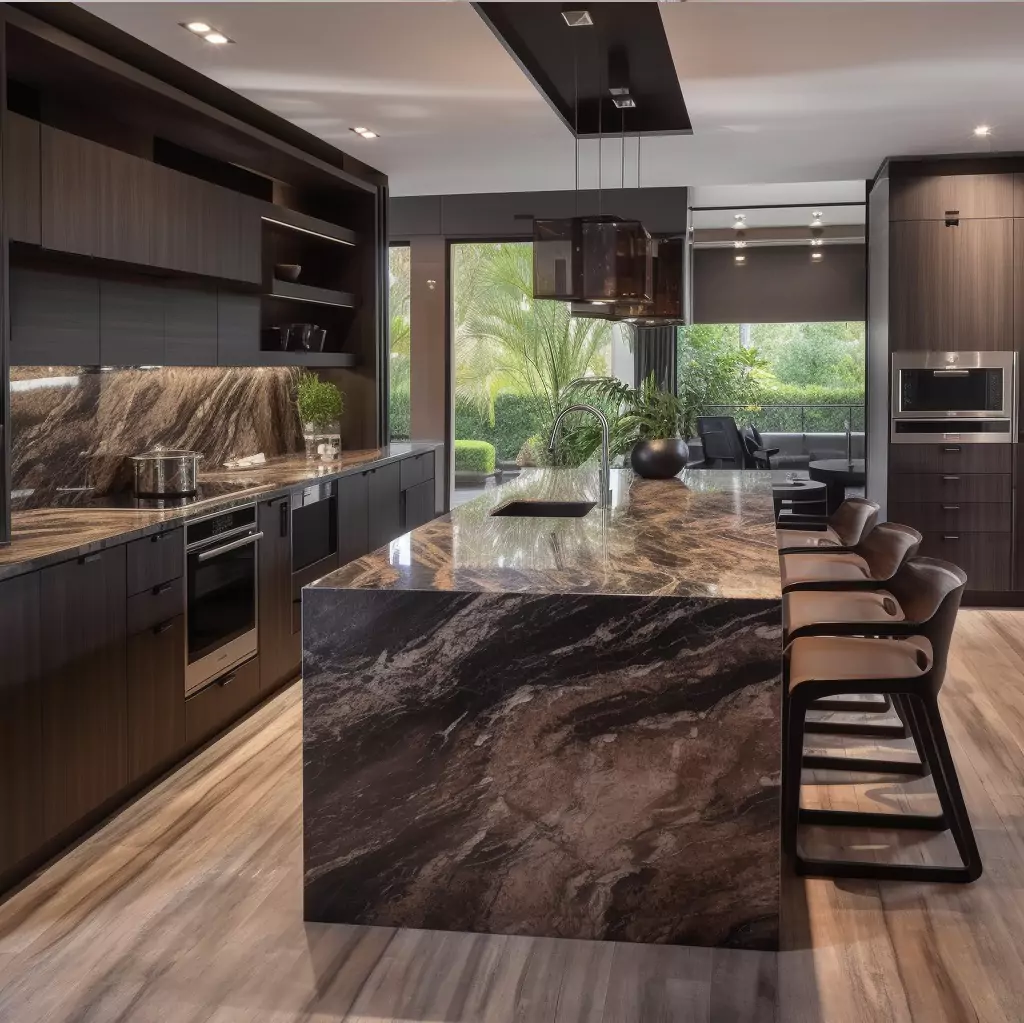
Natural quartzite
As mentioned earlier, quartzite is a natural masterpiece. While it is exceptionally hard, it still retains the microporous structure typical of natural stone.
Daily cleaning
Use a mild, neutral detergent, such as dish soap diluted in warm water, together with a soft microfiber cloth. Avoid cleaners containing bleach or strong acids and alkalis.
Stain awareness
Despite its high density, prolonged contact with red wine, coffee, lemon juice, or dark spices like turmeric may cause localized staining. We recommend wiping spills within 10 minutes whenever possible.
Periodic sealing
It’s relatively high maintenance. To maintain stain resistance, a professional penetrating sealer should be reapplied every 12 to 18 months.
Heat resistance reminder
Quartzite handles heat exceptionally well. Hot baking trays straight from the oven can be placed directly on the surface with confidence.
Sintered stone
Sintered stone is currently one of the toughest materials available, designed to handle almost every kitchen scenario.
Performance at its best
You can cut directly on the surface or even use open-flame cooking tools. It is completely nonabsorbent and resistant to everyday stains.
Cleaning made simple
From plain water to professional descaling cleaners, most products are safe to use. Even dried stains can usually be removed with a warm water soak and a quick wipe, which is low maintenance.
Edge protection (important)
Despite its strength, sintered stone is more brittle at the edges. Avoid heavy impacts from cast iron cookware or other hard objects on corners and edges to prevent chipping.
Invisible induction setup
If you’ve opted for an undermounted invisible induction cooktop, keep the heating zone dry and avoid leaving sharp metal objects on the surface for extended periods. Say bye-bye to busy kitchens!
High-end porcelain slabs
Porcelain offers an excellent balance of aesthetics and practicality, making it a highly efficient choice for modern kitchens.
Surface care
The glazed surface is highly durable. Regular wiping with a cloth is usually sufficient to keep it looking pristine.
Joint maintenance
If your countertop includes seams, pay attention to the grout or epoxy filler. Avoid scraping joints with sharp metal tools during cleaning.
Impact awareness
Like sintered stone, porcelain slabs should be protected from heavy objects falling onto the surface.
Color stability
Porcelain is UV resistant, so even kitchens with strong natural light won’t experience fading over time.
General care tips
For most stains in a normal kitchen, a soft cloth and mild soap are all the things you need to use, and not all the stone countertops require frequent cleaning.
Using a cutting board on your kitchen island is still recommended. While quartzite and sintered stone are scratch resistant, cutting directly on the surface will dull your knives.
Avoid standing or walking on countertops, though they have superior durability, for example, when reaching upper cabinets or changing light fixtures. Uneven weight distribution can lead to structural stress.
Although these materials are heat-resistant, sudden extreme temperature changes may still create physical stress. Using trivets or heat pads is a simple habit that goes a long way.
Final thoughts
If you value natural character and artistic uniqueness, quartzite is the right choice. If you prioritize performance, durability, and a technology-forward kitchen, sintered stone stands out.
Ultimately, the value of a high-end kitchen lies not in how expensive the material is, but in how well it aligns with your lifestyle. No matter how advanced the material, precise fabrication and informed maintenance are the final safeguards of a countertop’s lifespan.
That concludes our overview of caring for these three countertop materials. If you have any further questions, the professional team at Parlun Building is always here to help.