The best way to organize a closet is to remove everything, decide what you actually use and rebuild the space around your daily routine. This guide takes you through that process one practical step at a time. You will learn how to declutter clothes, measure the available space, choose storage, organize a small closet and keep everything tidy after the first big clean.
Best Closet Organization Plan at a Glance
Start by emptying the closet so you can see every item and the full storage area. Sort clothes into keep donate sell repair and recycle groups. Next measure the closet and count how many long garments short garments folded clothes shoes bags and accessories you need to store. Give daily items the easiest positions at eye level and place occasional or seasonal pieces higher or farther back. Use hanging rails for clothes that crease easily and shelves or drawers for knitwear T shirts and smaller items. In a small closet use the full height plus the back of the door and any free wall space. Choose boxes dividers and organizers only after you know what must fit. Finish by giving every category one permanent home and follow a short weekly reset so the closet stays organized.
Measure Your Closet Before Buying Storage
Buying baskets and hangers first often creates a new type of clutter. Measure the space before choosing any closet organization system. Record the internal width height and depth. Note the position of doors hinges lights sockets skirting boards and any sloped ceiling.
Measure your longest hanging clothes as well. Dresses long coats and full-length garments need a taller section than shirts jackets or folded trousers. If most of your wardrobe is short clothing two hanging rails may use the available height more effectively than one rail.
|
What to measure |
Why it matters |
|---|---|
|
Internal width |
Shows how much rail and shelf space is available |
|
Internal height |
Helps divide full-height and double-hanging areas |
|
Internal depth |
Confirms whether hangers drawers and doors can move freely |
|
Door opening |
Prevents drawers baskets and handles from blocking the door |
|
Longest garments |
Protects dresses coats and trousers from touching the floor |
Sketch a simple front view of the closet and write the measurements beside it. It does not need to be a professional drawing. A clear sketch is enough to stop you buying shelves that are too wide or drawers that cannot open.
Empty and Declutter Your Closet
No storage product can solve a closet that contains more clothes than the space can hold. Remove every item including hangers boxes shoes and objects stored on the top shelf. Wipe the shelves vacuum the floor and check whether any rail shelf or light needs repair.
Now sort one category at a time. Put all shirts together then trousers dresses shoes bags and accessories. Seeing each category in one place makes duplicates and forgotten items easier to notice.
Create Keep Donate Sell Repair and Recycle Groups
Use five clear groups so every item has a decision.
1 Keep clothes that fit feel comfortable and suit your current routine.
2 Donate clean usable items that you no longer wear.
3 Sell valuable pieces only when you have a realistic plan to list them.
4 Repair or alter items that you will genuinely use after the work is completed.
5 Recycle worn textiles that are not suitable for donation where local facilities exist.

The common 12-month question can help but it should not be treated as a strict rule. Formal clothing specialist workwear and sentimental pieces may not be worn every year. A better question is whether the item has a clear purpose and whether you would choose it again today.
Set a deadline for the repair and sell groups. If an item remains untouched after the deadline move it to donation or textile recycling. Otherwise these groups can become a second closet outside the closet.
Build a Simple Wardrobe Inventory
You do not need to count every T shirt. Estimate how much space each category requires. Record the number of long garments pairs of shoes bags drawers and stacks of folded clothing. This tells you whether the new system needs more rail space more shelves or more drawers.
The inventory also prevents duplicate purchases. When everything is visible you can see what you already own before buying another similar item.
Organize Clothes by Type and Use
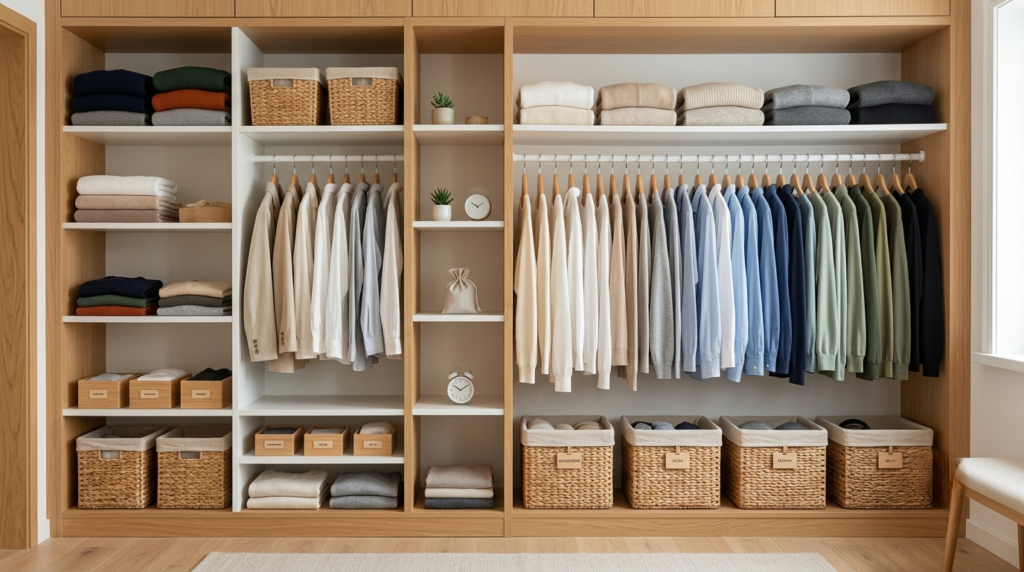
A closet should match how you get dressed. Store the things you use most between waist and eye level. Put occasional items higher and keep heavy items lower. This reduces daily searching and makes it easier to return clothes to the correct place.
Group clothes by type before arranging them by colour. Place shirts with shirts trousers with trousers and dresses with dresses. Colour order can make the finished closet look cleaner but category and frequency are more useful for daily life.
Clothes That Should Be Hung
Hang clothes that crease easily or depend on their shape. This usually includes shirts blouses dresses blazers jackets tailored trousers and lightweight skirts. Use hangers that support the shoulders and match the width of the garment.
Do not force too many items onto one rail. A little space between hangers improves visibility and makes clothes easier to remove without disturbing the whole section.
Clothes That Should Be Folded
Fold T shirts jeans sportswear and heavy knitwear. Sweaters can stretch around the shoulders when left on unsuitable hangers for a long time. Fold them in short stable stacks or place them vertically in a drawer if that makes each item easier to see.
| Hang | Fold or place in drawers |
|---|---|
| Shirts and blouses | T shirts and casual tops |
| Dresses and skirts | Sweaters and heavy knitwear |
| Blazers and jackets | Jeans and casual trousers |
| Tailored trousers | Sportswear and sleepwear |
| Delicate pieces that crease | Underwear socks and small accessories |
Seasonal Clothes and Occasional Item
Store seasonal pieces outside the main daily zone. Clean and dry them before storage because remaining moisture stains or food can damage fabric and attract pests. Use breathable storage for delicate natural fibres and avoid compressing structured coats or valuable knitwear for long periods.
Place clearly labelled seasonal boxes on the highest shelf or under the bed if the closet is small. A useful seasonal clothing care guide from Real Simple also recommends a cool dry location away from direct sunlight.
Choose Storage That Matches Your Wardrobe
The right clothes storage solution depends on what survived the decluttering stage. Someone with many dresses needs full-height hanging space. Someone with casual folded clothing benefits from shelves and drawers. Design the inside around the wardrobe rather than forcing the wardrobe into a fashionable layout.
If you are deciding between different types of bedroom storage the Parlun guide to armoires and wardrobes explains how freestanding and built-in options differ.
Use Double Hanging Rails for Short Clothes
Double rails make better use of height when most clothes are shirts jackets skirts and folded trousers. Keep one full-height section for long dresses and coats. Before installing the lower rail confirm that the garments will not touch shoes or drawers below.
Use Adjustable Shelves for Changing Needs
Adjustable shelves are more flexible than fixed narrow spaces. Keep shelves close enough to prevent tall unstable clothing stacks. Shelf dividers can stop bags sweaters and towels from leaning into one another.
Use upper shelves for light occasional items rather than heavy objects that are difficult to lift safely. Place small belongings inside labelled boxes so they do not disappear at the back.
Use Drawers for Small Clothing and Accessories
Drawers protect small items from visual clutter. Use shallow dividers for socks underwear belts jewellery and watches. Store each category in its own section instead of mixing everything in one deep drawer.
If the closet has no built-in drawers a compact freestanding drawer unit may fit below short hanging clothes. Check the depth and door clearance before purchasing it.
Organize Shoes Bags and Accessories
Store everyday shoes where they can be seen without moving boxes. Use flat shelves pull-out trays or stackable ventilated boxes. Keep footwear clean and dry before putting it away.
Place structured bags upright with enough support to hold their shape. Small bags can use shelf dividers while soft bags may sit inside a larger breathable container. Hooks work well for belts hats and frequently used accessories but avoid loading delicate bags onto narrow hooks for long periods.
The words cupboard cabinet and wardrobe are sometimes used loosely. The Parlun cupboard and cabinet comparison can help readers understand which type of enclosed storage suits a room or project.
Small Closet Organization Ideas
A small closet works best when every storage decision has a purpose. Do not fill every centimetre with products. Keep enough open space to remove items and put them back without rebuilding the whole shelf.
Use the Full Closet Height
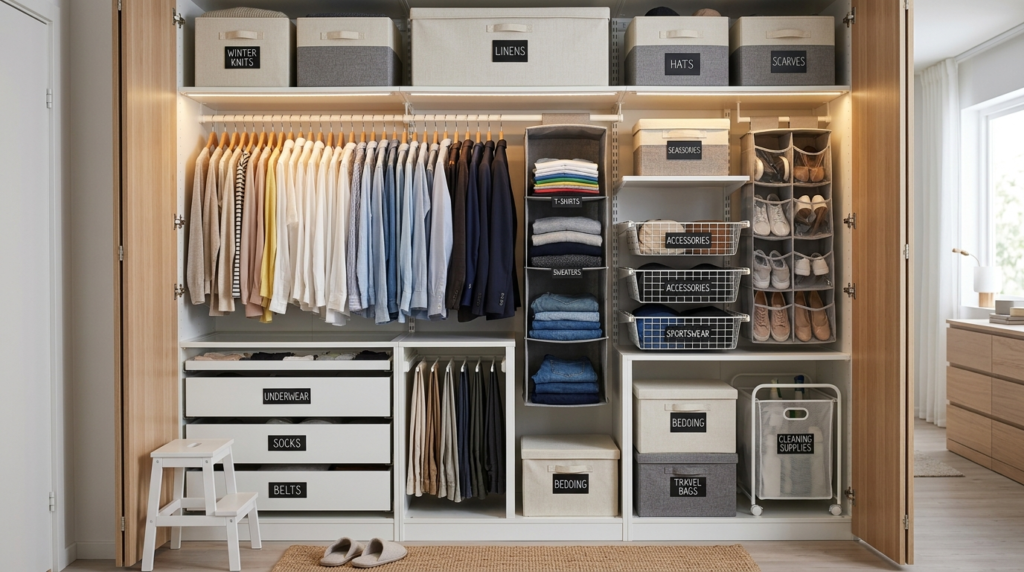
Add an upper shelf for seasonal or rarely used items. A narrow vertical shelving tower can turn an unused side area into storage for folded clothes shoes or boxes. Keep daily items within comfortable reach and use a stable step stool for higher storage.
Use Doors Walls and Corners
The back of a hinged closet door can hold lightweight shoes scarves belts or tomorrow’s outfit. Use slim organizers and confirm that the door can still close without pressing against the clothes inside.
Hooks can use narrow wall areas but should not create a crowded layer that hides everything below. If new closet doors are part of a renovation compare suitable interior door options before choosing a hinged or sliding layout.
Choose Slim Matching Hangers
Slim hangers can create more usable rail space than bulky mixed hangers. Choose a style that supports the clothes you own. Velvet hangers help stop lightweight garments from slipping while shaped hangers provide better support for jackets.
Do not rely on an unsupported percentage saving. The actual space gained depends on the thickness and number of current hangers.
Move Seasonal Items Out of the Daily Zone
Small closet organization becomes easier when winter coats summer clothing luggage and spare bedding do not occupy the best positions all year. Rotate seasonal items and store them clean in a dry suitable area.
Improve Visibility with Lighting
A tidy closet still feels frustrating when the back remains dark. Use a suitable ceiling light integrated wardrobe lighting or rechargeable motion light where electrical work is not practical. Make sure the fitting does not create excessive heat or interfere with shelves and hanging clothes.
More small closet ideas often focus on buying products. The more reliable principle is visibility. If you can see each category and reach it easily the system is more likely to stay organized. Better Homes and Gardens provides additional examples of small closet storage using shelves dividers doors and vertical space.
How to Keep Your Closet Organized
The best closet organization system is one you can maintain on a busy day. Give every category one permanent home and avoid creating storage that requires several steps to access a daily item.
Follow a simple routine:
1 Spend two minutes returning clothes and shoes at the end of the day
2 Empty the laundry basket before clean clothing builds up elsewhere
3 Check donation items once a month
4 Review seasonal clothing when the weather changes
5 Complete a deeper declutter once or twice a year
Leave a little empty space on each rail and shelf. A closet filled to its exact limit becomes difficult to maintain as soon as one new item arrives. When you buy something new consider whether an older item can leave.

Plan Your Wardrobe with Parlun
A successful wardrobe starts with accurate measurements and a clear inventory of what must be stored. Parlun works with homeowners designers builders and hospitality projects that require made-to-order wardrobe planning. The available layout finishes hardware and delivery details should be confirmed for each project before an order is placed.
Explore the Parlun design service to understand the planning process and review completed projects for wider building material applications. When your room measurements layout and finish preferences are ready contact Parlun to discuss the available wardrobe options.
When a Custom Built In Wardrobe Makes Sense
Storage accessories can improve an existing closet but they cannot change an awkward shape or poor basic layout. A custom built-in wardrobe may be worth considering when the room has a sloped ceiling deep alcove unused wall or limited floor area.
A fitted wardrobe can divide the interior around the owner’s actual clothing. It may combine long hanging short hanging adjustable shelves drawers shoe storage lighting and space for luggage. Sliding doors can help where there is limited clearance while hinged doors provide full access when the room has enough space.
| Adjustable Closet Accessories | Custom Built in Wardrobe |
|---|---|
| Lower initial cost | Higher initial investment |
| Easier to move or replace | Designed for a particular room |
| Useful for rental homes | Suitable for long-term projects |
| Limited by the current closet shape | Can use awkward walls and full ceiling height |
| Suitable for simple improvements | Suitable when layout finish and storage need full control |
Built-in storage is not automatically the best choice. Renters people planning to move soon and anyone with a simple working closet may get better value from adjustable rails shelves and drawers.