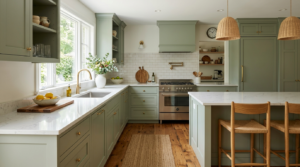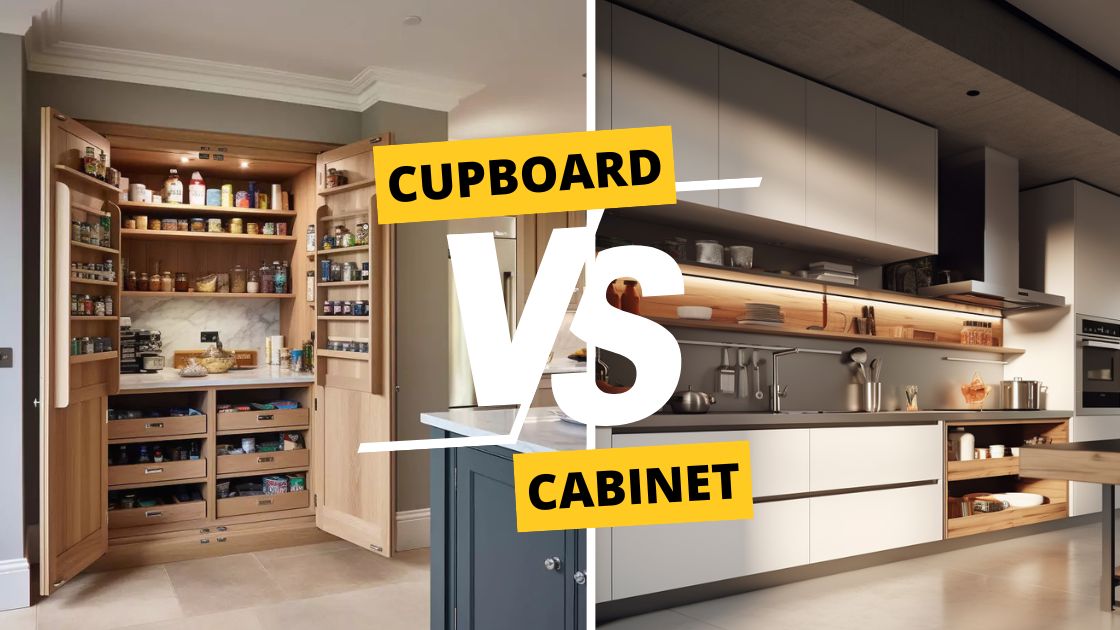
The words cupboard and cabinet often describe similar types of enclosed storage. The main difference depends on the country, room and product being discussed rather than one fixed construction rule. In the United States, cabinet is the usual term for fitted kitchen and bathroom storage. Cupboard often describes household storage used for food, dishes or supplies. In the United Kingdom and Australia, people commonly use cupboard for both fitted kitchen units and freestanding storage.
Cupboards and cabinets both provide enclosed storage, and the terms are often used interchangeably. A cupboard normally refers to storage for food, dishes, linen or household supplies. A cabinet is a broader manufacturing and design term that can describe kitchen units, bathroom storage, office furniture and display cases. Both can be built in or freestanding and both can include shelves, doors or drawers. Regional language creates most of the confusion. American suppliers normally use cabinet for fitted kitchen units, while British and Australian buyers often call the same units cupboards. When requesting a quotation, describe the unit’s dimensions, materials, installation and internal layout instead of relying only on its name.
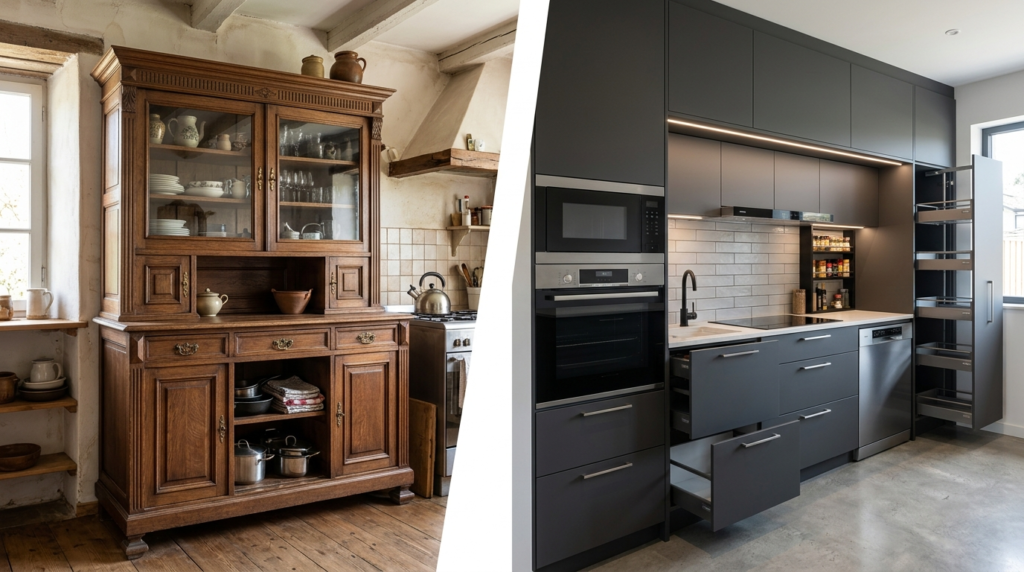
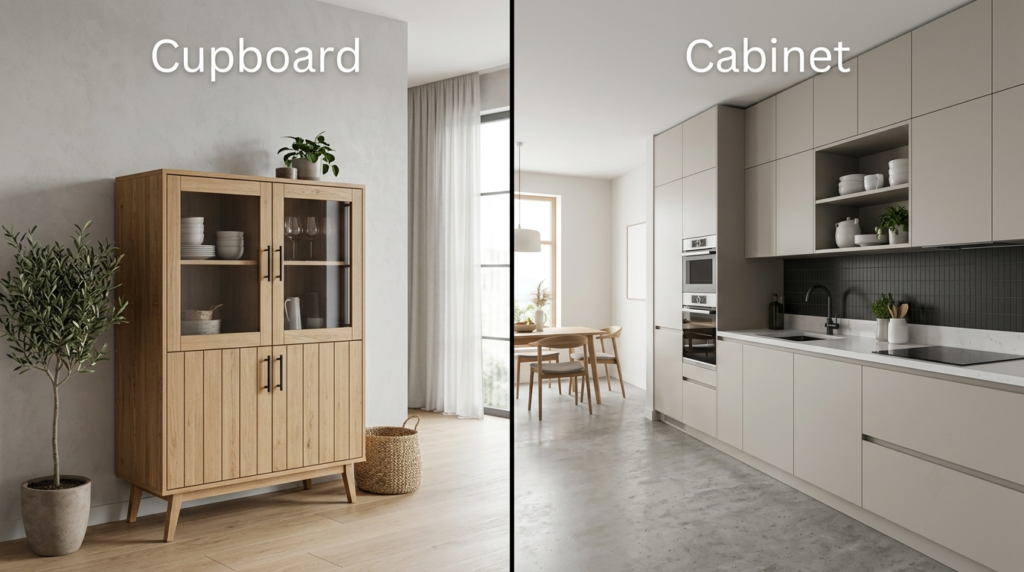
Feature Construction is usually simple. A carcass, a couple of shelves, and a hinged door cover most of what a cupboard needs to do, which keeps the price down and the build fast. Materials range from melamine-faced board on budget units to solid timber and lacquered finishes at the premium end. A freestanding cupboard stands on its own feet and can be lifted out and moved, which suits renters and anyone who expects their layout to change. Plenty of cupboards are built into a wall or alcove instead, giving a fitted appearance while keeping that same basic door-and-shelf design. People still choose cupboards for good reasons. They cost less than a fitted run, they go in quickly, and a freestanding unit moves house with you. For a pantry, a linen store, or simple kitchen storage on a tight budget, a well-made cupboard does the job without the price of a full cabinet system.
A cupboard is an enclosed storage space that normally has one or more doors and internal shelves. It may be a separate piece of furniture or a storage unit built into a wall or alcove.
A cabinet is a storage or display case that may contain doors, shelves, drawers or a combination of these features. Cabinets can be fitted into a room, attached to a wall or used as freestanding furniture. Cabinets are more architectural and more permanent than cupboards. They are built to precise dimensions, fixed to walls or floors, and finished to match the surrounding joinery and worktops. A modern kitchen is essentially a run of base cabinets along the floor, wall cabinets above, and tall cabinets for ovens or larder storage, all sharing the same finish and hardware. Inside, cabinets carry more engineering than a basic cupboard. Soft-close drawers, pull-out trays, corner mechanisms, and adjustable hinges are standard at the higher end, and that added function is part of what raises both the cost and the build quality. The distinction matters at the quoting stage too, since a fitted cabinet run is priced and manufactured as a system rather than as separate pieces. A cabinet’s quality starts with the carcass. Plywood and high-grade MDF hold screws and weight better than basic chipboard, and they resist moisture far longer in kitchens and bathrooms. Door and drawer fronts then set the look, from painted MDF to veneered or solid timber, while the hardware inside decides how the unit feels in daily use. There is genuine overlap between the two. A built in cupboard fitted with drawers and soft-close hardware starts to behave much like a cabinet, which is exactly why the words blur. The clearest dividing line is purpose and installation: cabinets are planned, fitted modules, while cupboards are simpler units that often stand alone. Cabinets dominate modern kitchens because a fitted system uses every centimetre of available space, hides services and appliances cleanly, and holds its value as part of the room. For builders and designers specifying a whole kitchen or bathroom, cabinets are almost always the starting point, with cupboards reserved for secondary or standalone storage.
Labels aside, three practical differences separate cupboards from cabinets.
Cupboards and cabinets can both be simple or highly detailed. Either product may be manufactured from plywood, MDF, particleboard, solid wood or a combination of materials. A traditional cupboard commonly has doors with shelves behind them. However, modern cupboards may also include drawers, pull-out baskets, hanging rails and adjustable shelving. Both cupboards and cabinets can be built in or freestanding.
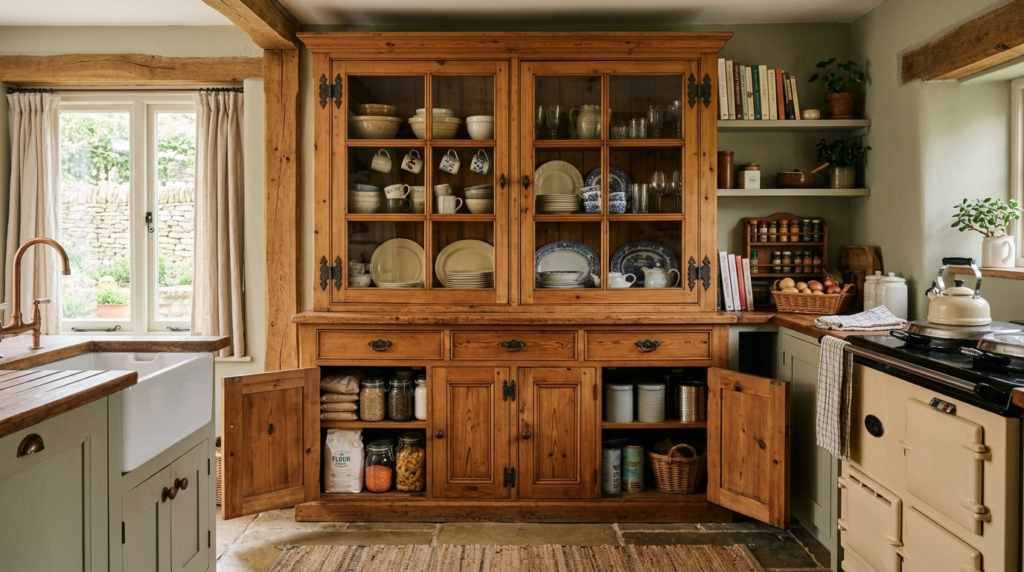
Geography decides a surprising amount of this. In British and Australian English, cupboard is the broader and more common word, used even for fitted kitchen units. A homeowner in London will cheerfully call their kitchen cabinets “kitchen cupboards” and never think twice, so the kitchen cupboard meaning there covers both standalone furniture and built-in storage.
Cupboard And Cabinet Terms In The United States Cupboard And Cabinet Terms In The United Kingdom Cupboard And Cabinet Terms In Australia Start with what you need to store and where the unit will be placed.
Parlun provides custom storage options for residential and commercial projects. These may include kitchen cabinets, bathroom storage, wardrobes and other made-to-measure units.
Before ordering, review the applicable Parlun quality standards and confirm which standards apply to the selected product. Buyers planning an international project should also review the available delivery and shipment information. The final agreement should clearly identify: Cupboards and cabinets perform the same basic job, but their names can change according to location and everyday language. A cupboard may be built in or freestanding, and the same is true for a cabinet.
Quick answers to what is a cupboard, what counts as a cabinet, and the questions buyers ask most often when choosing between the two.
When choosing storage for a real project, the label matters less than the specifications. Size, installation, materials, doors, drawers, shelves and internal fittings will determine what you actually receive.Cupboard And Cabinet Differences At A Glance
Cupboard
Cabinet
Basic meaning
Enclosed household storage
A storage or display case
Common use
Food dishes linen and supplies
Kitchens bathrooms offices and display
Installation
Built in or freestanding
Built in or freestanding
Interior
Usually shelves but may include drawers
Shelves drawers and specialist fittings
American usage
Often pantry or household storage
Common term for fitted kitchen units
British usage
Common term for kitchen and household storage
Used for particular storage or display units
Best ordering method
Provide complete specifications
Provide complete specifications
What Is a Cabinet? Definition and Common Uses
Cupboards are commonly used for dishes, dry food, linen, cleaning products, clothes and general household items. They can appear in kitchens, bedrooms, hallways, utility rooms and offices.
A cupboard does not have to be basic or inexpensive. Its price and quality depend on its size, materials, finish, hardware and internal design. A custom-built cupboard may include drawers, lighting, adjustable shelves and pull-out fittings.
In British and Australian homes, the term kitchen cupboard is often used for the same fitted storage units that American homeowners call kitchen cabinets.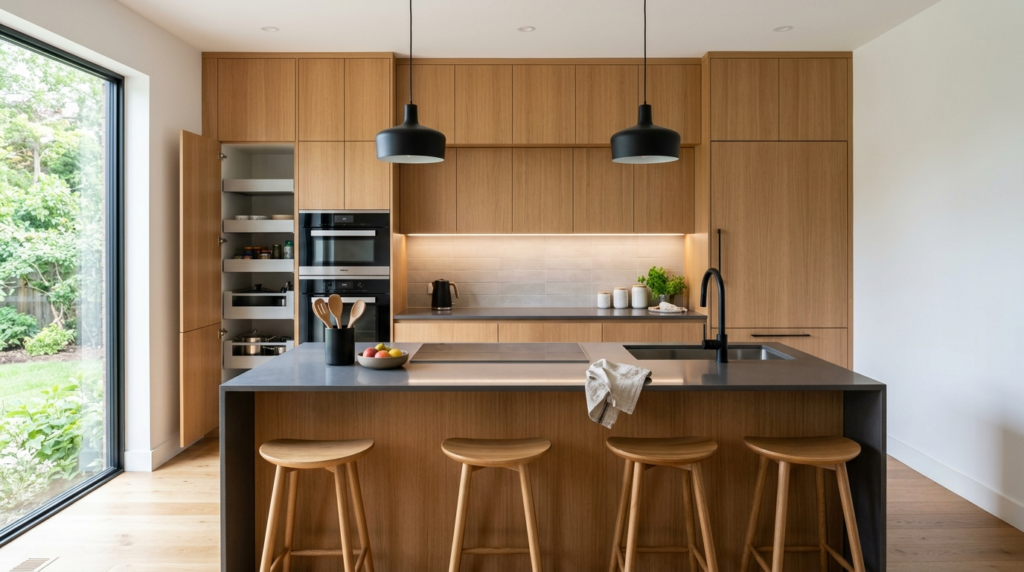
What A Cabinet Means
The word is commonly used for kitchen cabinets, bathroom cabinets, medicine cabinets, filing cabinets and display cabinets. Therefore, it is incorrect to say that every cabinet must be part of a fitted system.
In kitchen design, a cabinet normally refers to an individual unit within a planned layout. A kitchen may include base cabinets, wall cabinets, tall cabinets, corner cabinets and appliance cabinets. These units are designed to work together around worktops, appliances and available space.
The dictionary meanings also show that cabinet and cupboard overlap. Merriam-Webster defines a cabinet as a case or cupboard that normally has doors and shelves. This is why the two words are frequently used for similar products.Cupboard Vs Cabinet Differences By Feature
Design And Construction
The correct material depends on the room, moisture exposure, required finish, budget and expected use. The article should not describe one material as universally better without considering its grade, coating, thickness and intended application.Doors Drawers And Shelves
Cabinets offer the same range of options. Kitchen cabinets may include drawers, corner systems, waste bins, spice racks, appliance storage and soft-close hardware.
The internal features depend on the product specification rather than whether the unit is called a cupboard or cabinet.Built In And Freestanding Options
A built-in unit is measured and installed for a particular space. It normally creates a more integrated appearance and may use the available wall area more efficiently.
A freestanding unit can usually be moved or replaced more easily. It may suit rental properties, flexible room layouts and customers who do not require permanent installation.
The installation method should always be confirmed in the drawing and quotation.Cupboard And Cabinet Meanings In Different Countries
In the United States, cabinet is the standard word for fitted kitchen and bathroom storage. Kitchen suppliers commonly use terms such as base cabinet, wall cabinet, tall cabinet and pantry cabinet.
Cupboard is still understood, but it is more likely to describe a pantry-style unit, traditional furniture or general household storage.
In the United Kingdom, cupboard is widely used for enclosed storage throughout the home. People may refer to kitchen cupboards, airing cupboards, under-stairs cupboards and built-in bedroom cupboards.
Cabinet is also used, especially for bathroom cabinets, display cabinets and professionally manufactured kitchen units. However, kitchen cupboard remains a normal everyday term.
Australian English follows a pattern similar to British English. Cupboard is commonly used for kitchen and household storage, including units that are fitted into the room.
Cabinet is frequently used by designers, builders and manufacturers when discussing technical specifications or complete cabinetry systems.
For international orders, never depend on regional terminology alone. Describe the product, dimensions and intended use clearly.How To Choose Between A Cupboard And Cabinet
A freestanding cupboard may be suitable when you need flexible storage for food, linen, dishes or household supplies. It can also work well when you want furniture that can be moved later.
A fitted cabinet system is often more suitable when storage must work around worktops, appliances, plumbing or unusual room dimensions. You can explore Parlun’s custom kitchen cabinets for fitted kitchen layouts and its bathroom vanities for bathroom storage options.
Consider these points before choosing:
The best product is the one that fits the room and daily use. Its name is less important than its construction and specification.
If the main purpose is food and appliance storage, these corner pantry ideas can help you compare walk-in storage with fitted pantry cabinets.How To Specify Storage For A Manufacturer
Provide the following information:
Drawings are especially important for fitted kitchens and bathrooms. Parlun’s design service
can help buyers develop layouts and confirm important project details before production.
Ask the manufacturer to confirm all dimensions, finishes, hardware and internal arrangements in the final drawing. Do not approve production until the quotation, drawing and material specification match.
Buyers should review available materials, finishes, hardware and internal accessories before confirming an order. Product decisions should be based on the room conditions, budget, design and expected use.
Warranty conditions can vary by product, so buyers should check the current Parlun warranty information before placing an order.
Providing complete information at the beginning helps reduce misunderstandings and makes quotations easier to compare.Choosing The Right Storage For Your Project
For a simple household purchase, either term may be clear enough. For a custom kitchen, bathroom or international order, exact specifications are essential. Confirm the measurements, materials, finish, hardware, installation and internal features before production begins.
Parlun can assist with product selection, drawings and project planning for custom storage requirements.Cupboard vs Cabinet FAQs