Trends come and go, but white oak Shaker cabinets keep earning a place in the kitchens built to last. As homeowners prioritize longevity and natural materials, this pairing has become our most-requested finish for 2026 high-end remodels at Parlun Building—and the reasons are as much about how we live now as they are about how the kitchen looks.
Key Takeaways
Why white oak Shaker cabinets are a 2026 favorite:
White Oak Shaker Kitchen Cabinets: The Perfect Balance Between Minimalism and Nature
Shaker doors are built on straight, clean lines and a strong sense of function. White oak brings organic grain and soft warmth. Together, white oak Shaker cabinets don’t just look good—they answer a genuinely modern problem: information overload and visual fatigue.
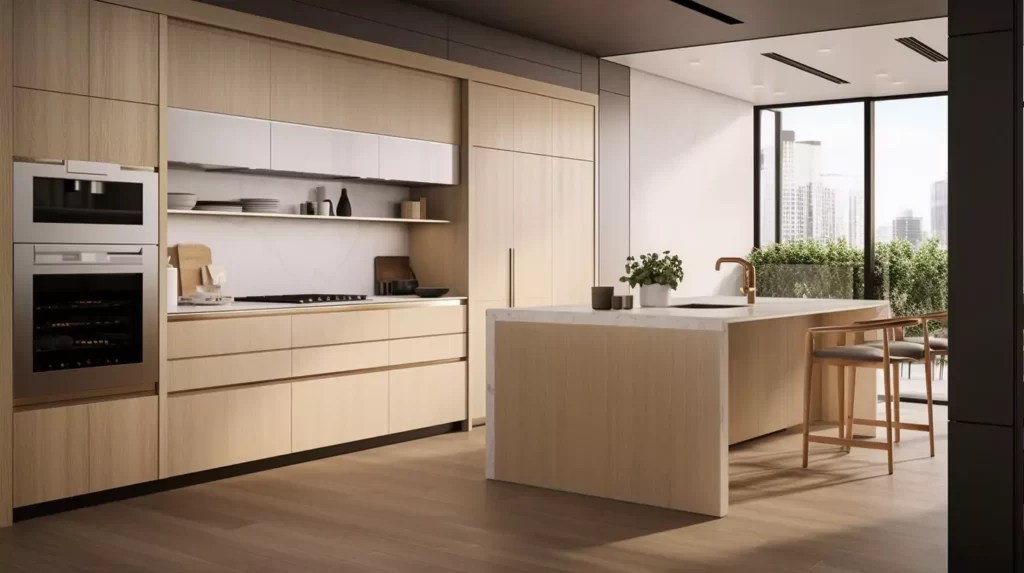
Compared with overly ornate carved doors or flatly reflective painted minimalism, Shaker doors strike a precise balance. Solid-color painted cabinets, such as pure white or deep navy, can cause eye strain over extended periods of time in the kitchen. White oak’s porous fiber structure diffuses light, creating a soft-focus effect across the whole space. That is minimalism at its most refined: it soothes rather than overwhelms.
White oak sits between light beige and soft brown in tone. It lacks the reddish cast of red oak and the heaviness of walnut, which makes it a genuinely neutral wood—bright, open, and quietly sophisticated.
There’s also a psychological dimension worth naming. The Shaker door is built on strict, man-made geometry; white oak carries organic textures and irregular growth patterns. This combination is sometimes called structured nature. It satisfies the human pull toward order while feeding our instinctive connection to natural materials. In a home, that reads as calm.
Exceptional Versatility Across Styles Showing in White Oak Shaker Cabinets
White oak Shaker cabinets are the design equivalent of a good white shirt. The Shaker frame keeps the cabinetry quietly structured, while the oak grain carries the warmth. That dual nature is why they adapt to so many styles. Their forgiving neutral base, neither too red nor too dark, gives you unusual freedom when styling the rest of the kitchen.
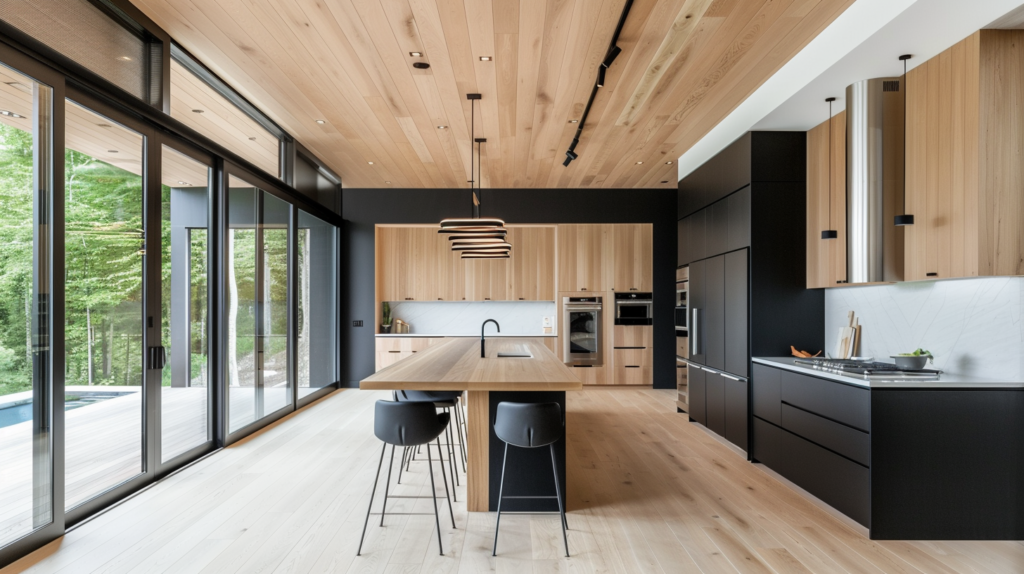
For an industrial edge, pair them with matte black hardware and dark, concrete-inspired countertops. The warmth of white oak softens the hardness of metal and stone, so the space reads cool without turning cold.
For a modern luxury atmosphere, combine them with brushed brass hardware and boldly veined marble like Calacatta. The subtle wood grain tempers the shine of the metal, producing understated elegance rather than overt opulence.
For Scandinavian or minimalist kitchens, white quartz countertops and slim-profile soft-close hardware create visual continuity, letting the light tone of white oak expand the space and lift the overall brightness.
The real advantage is the longevity of the design itself. Because white oak reads as a warm neutral, the cabinetry functions as a long-term canvas. You can completely refresh a kitchen’s look by swapping hardware—no need to replace the cabinets.
White oak Shaker also works comfortably in modern farmhouse kitchens (black pulls, apron-front sinks), Scandinavian interiors (light quartz, understated hardware), and Japandi spaces, where the natural character of the wood anchors a calm, meditative mood.
Durability and Long-Term Value of White Oak Shaker Kitchen Cabinets
White oak is a dense hardwood with excellent impact and wear resistance. Historically, it was used for shipbuilding and wine barrels for a reason: its closed-cell tyloses structure makes it significantly more moisture-resistant than red oak or maple.

In a kitchen environment full of water, heat, and steam, that’s a rare and genuinely valuable property—and it matters twice as much on a Shaker door, where the recessed center panel and framed construction have more joints and seams where moisture can stress lesser woods over time. White oak Shaker cabinets will outlast most engineered alternatives.
White oak also scores high on hardness ratings. Compared with MDF or softwoods that dent easily, it stands up to decades of everyday family use—a meaningful advantage on Shaker cabinets, where the visible flat rails and stiles take more direct contact (hands, rings, cookware handles) than the recessed panels of more ornate door styles.
And when painted cabinets chip, they just look damaged—whereas solid wood cabinets develop patina. Those subtle signs of age are read as character, adding depth, history, and resale value.
In the real estate market, solid wood or veneered white oak shaker cabinets have always been a strong selling point. Buyers recognize them instantly, which makes them far more resilient as an investment than short-lived trends like dopamine-colored cabinetry.
Rift-Sawn vs. Plain-Sawn: Why Grain Matters
With white oak, how the grain is presented matters more than color itself. The Shaker door is built on straight, architectural geometry—and the grain cut you choose either reinforces that geometry or works against it.

Rift-sawn white oak is currently the most sought-after option and represents the highest level of craftsmanship. A specialized cutting method produces straight, parallel, linear grain, eliminating the large cathedral or “mountain” patterns of plain-sawn wood. The result is a calm, architectural appearance with exceptional visual stability.
On a Shaker door, the parallel vertical grain echoes the rails and stiles of the frame itself, creating an almost seamless geometric harmony—exactly what modernist architects have reached for for decades.
Plain-sawn white oak does the opposite: against the strict geometry of the Shaker frame, its natural cathedral patterns create a pleasing tension between order and organic movement—ideal for projects going for a raw, organic, or modern rustic feel.
It also reveals white oak’s signature ray flecks, which catch light with a soft, silky shimmer. These organic patterns can’t be replicated by printed veneers, which is why they’re seen as the signature of real solid wood cabinetry.
Here’s the shorthand:
|
Cut |
Look |
Best for |
|
Rift-sawn |
Straight, parallel, architectural; no cathedral patterns |
Modernist, minimalist, high-end apartments |
|
Quarter-sawn |
Straight grain with visible ray flecks (silky shimmer) |
Craftsman, Arts & Crafts, heirloom pieces |
|
Plain-sawn |
Natural cathedral patterns and grain movement |
Modern rustic, farmhouse, organic schemes |
Grain consistency is also a craftsmanship test. Matching grain across a run of doors takes meticulous cutting and selection, and it’s one of the fastest ways to tell a premium cabinet shop from a budget one. Whether the piece is a structural panel or a decorative accent, we focus on the wood’s character—rift-sawn and quarter-sawn cuts give a straight, architectural grain that paint can never replicate. It’s the most honest form of luxury.
The Rise of the Slim Shaker in White Oak Cabinets
We’ve covered this trend in several previous posts on modern Shaker cabinetry, but it’s worth restating here because it’s reshaping how white oak reads in a kitchen.

Traditional Shaker frames are typically 2.5 to 3 inches wide. The dominant profile in 2026 is the ultra-narrow frame—just 0.5″ or 0.75″ wide, often called the Skinny or Slim Shaker. This isn’t a passing trend; it reflects how people actually live now. The design preserves the structural integrity of the original Shaker door while making it read lighter and more polished, pairing naturally with the warm minimalist aesthetic that defines this year’s kitchens.
In smaller homes or modern apartments, wider traditional frames can feel heavy or rustic. Slim Shaker shrinks the frame and enlarges the center panel, which lets the white oak grain do more of the visual work. The result reads more like fine furniture and less like bulk storage.
The style also bridges two eras. It combines the structural honesty of framed doors with the lightness of modern flat panels. That balance makes it a natural fit for remodels—it respects older architecture while bringing a modern sensibility to it.
One practical note: slimmer frames demand significantly higher manufacturing precision. Only top-tier factories can maintain structural stability and clean alignment at this level of refinement, which is worth asking about when you’re comparing quotes.
Sustainability and Biophilic Design in White Oak Shaker Cabinets
By 2026, kitchen design preference has moved beyond looking beautiful to supporting healthier ways of living. Biophilic design is now firmly mainstream.
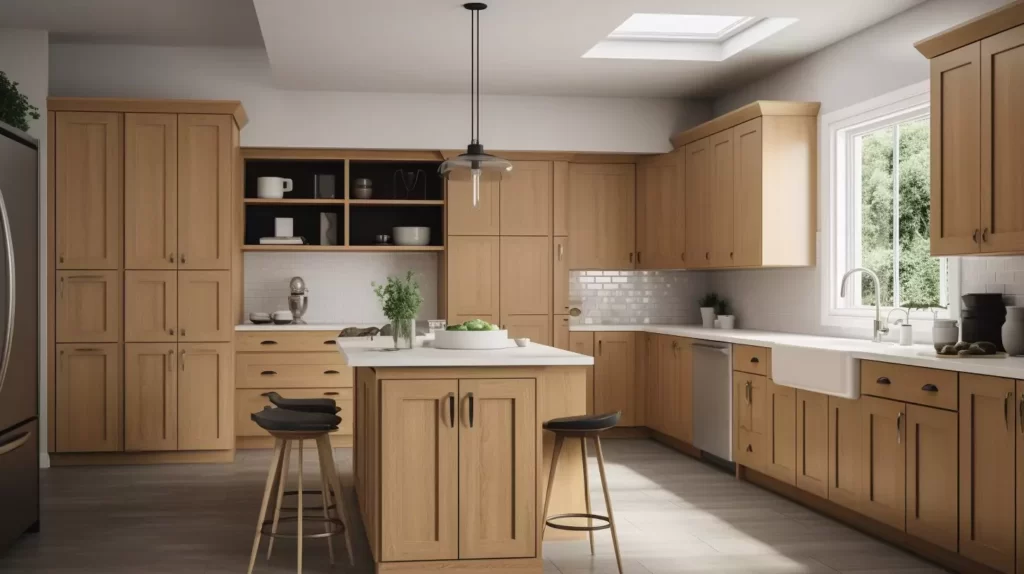
Consumers are increasingly conscious of environmental responsibility. White oak, with its long growth cycle and dense, durable structure, is widely regarded as a material worth lifetime use. It pairs effortlessly with indoor plants, natural daylight, and stone materials like marble or soapstone, which together ease the pressure of urban living.
The effects aren’t just aesthetic. Studies consistently show that exposure to natural wood in interiors lowers heart rate and stress. The tone of white oak resembles sunlight filtering through a forest canopy—subtle but a powerful source of psychological comfort.
As working from home becomes the norm, the kitchen is no longer just a place for cooking. It’s become a social hub and a space for decompression. The tactile warmth of natural wood helps people reconnect with something physical—a useful counterweight to screen fatigue.
Choosing white oak, then, isn’t only about selecting cabinetry. It’s about building a home environment that supports both physical and emotional well-being. A home should feel like a sanctuary, not just look modern. Real white oak brings an organic tone and visual interest that synthetic materials can’t replicate, and it creates a kitchen that doesn’t just photograph well, but genuinely improves everyday life.
The Shaker door, with its honest, unornamented geometry, is a quiet companion to this philosophy; it asks nothing of the eye, leaving the wood itself to do the emotional work.
How White Oak Shaker Cabinetry in 2026 Refines the Classic
The style itself remains fundamentally timeless—what’s changed are the details.
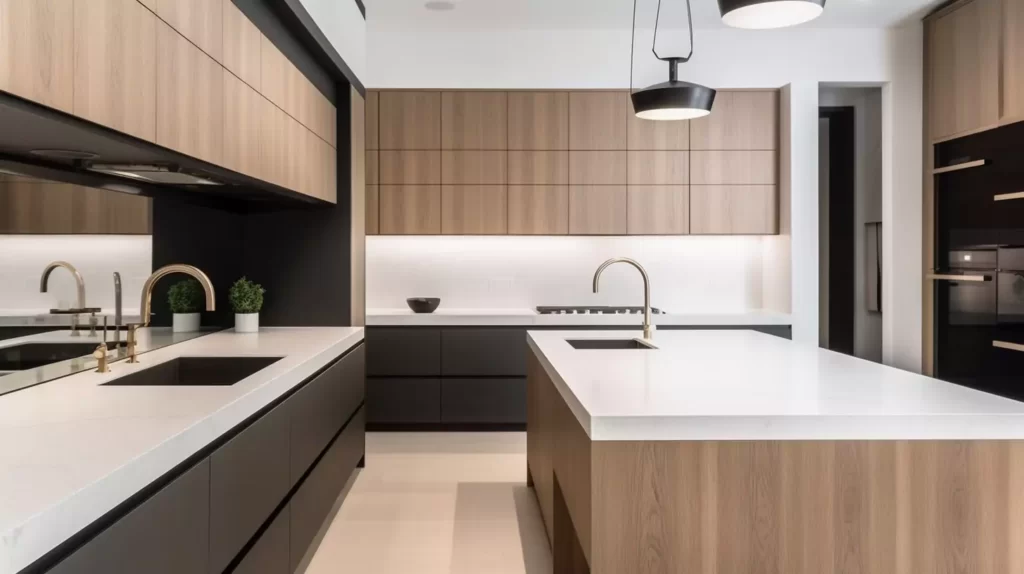
Near-raw matte finishes are now the preferred choice for most high-end projects. They preserve the wood’s original texture without the heavy, oily look of older varnishes. Slim Shaker frames continue to dominate, giving cabinets a more modern and architectural silhouette.
In premium projects, designers increasingly specify continuous vertical grain running across the full kitchen run—a detail that makes the cabinetry read as a single unified piece rather than a collection of individual doors. It’s subtle, expensive to execute, and one of the clearest current signals of a high-end kitchen.
Two Details Worth Specifying on Your Remodel with White Oak Shaker Cabinets
If you’re investing in white oak Shaker cabinets, two choices will do more than anything else to protect the long-term look:
The Takeaway: A Classic That Keeps Earning Its Place
White oak Shaker cabinets are more than a 2026 trend. They’ve become a classic part of modern interiors—versatile, durable, and carrying a layer of emotional and property value that painted alternatives can’t match. The simple architectural lines of Shaker cabinetry paired with the calm presence of natural wood are a combination that reads right in almost any kitchen, and will still feel current a decade from now.
Thinking about white oak Shaker cabinets for your own kitchen?
White oak Shaker is one of Parlun Building’s strongest specialties, from rift-sawn architectural grain to modern rustic plain-sawn runs. Whether you’re a homeowner planning a single remodel or a contractor specifying multiple projects, we can help you match the right cut, frame profile, and finish to your space—at pricing that stays competitive even for premium non-yellowing coatings.