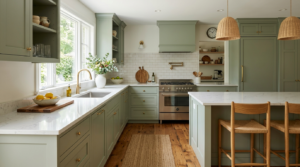
Modern Shaker kitchen cabinets are hard to get wrong. Their timeless appeal comes from a balanced mix of function, proportion, and long-term durability. Rooted in late 18th- and early 19th-century Shaker craftsmanship, the style was built around simplicity and practicality—values that have never gone out of fashion.
With Shaker-style cabinets, a kitchen doesn’t quickly fall out of place, even after 10 or 20 years. Instead of feeling dated, the design settles more naturally into a home over time. It is one of the most consistently requested styles we work with at Parlun Building—and the reasons become clear once you understand how the details actually work.
Key Takeaways
Why Modern Shaker Kitchen Cabinets Feel Timeless
The lasting relevance of modern Shaker kitchen cabinets starts with their construction. The structure is simple, consistent, and immediately recognizable—and that clarity is exactly what keeps it from feeling dated.
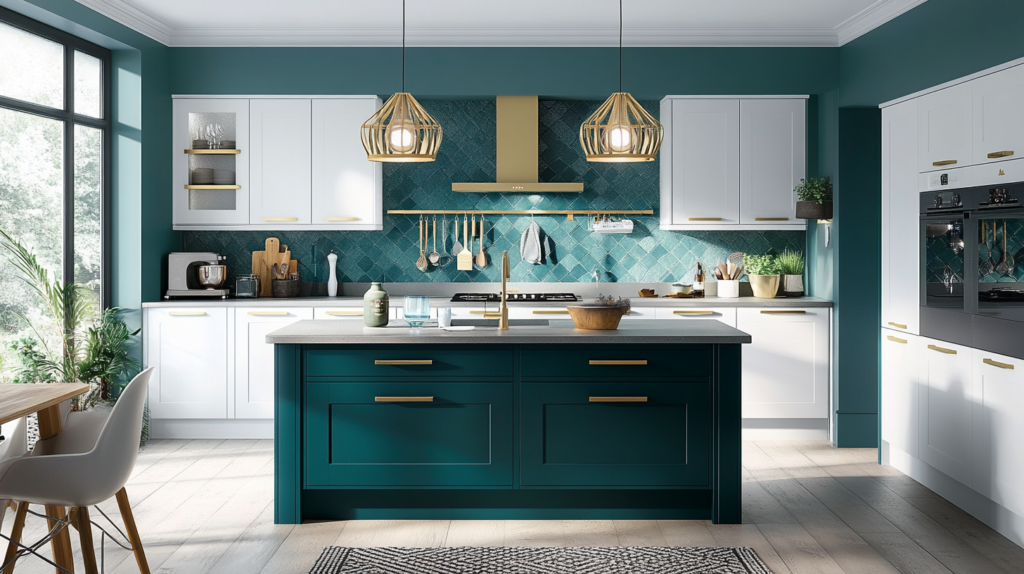
A typical Shaker cabinet door includes:
This five-piece construction produces a design built on straight edges and right angles. There are no curves or ornamental details competing for attention. The result is a clear visual order that works across different settings without being tied to any single trend.
Traditional Shaker doors use wider frames, usually around 60 to 75 mm, giving the cabinets a grounded, substantial presence. In more recent designs, the proportions have shifted. Slim Shaker and Micro Shaker styles reduce the frame width to 12 to 20 mm or narrower, producing a lighter, more refined look—especially effective in smaller kitchens or minimalist interiors.
This flexibility—the ability to pair with marble or wood, with matte black hardware or brass, with navy or white—is what makes modern Shaker kitchen cabinets a lasting choice, not a short-lived trend.
How Modern Shaker Kitchen Cabinets Fit Different Design Styles
Shaker cabinets adapt easily to a wide range of interiors because their structure stays consistent while the surrounding details do the work of defining the style. The same five-piece door can read as modern, rustic, warm, or bold depending on color, hardware, and surface choices.
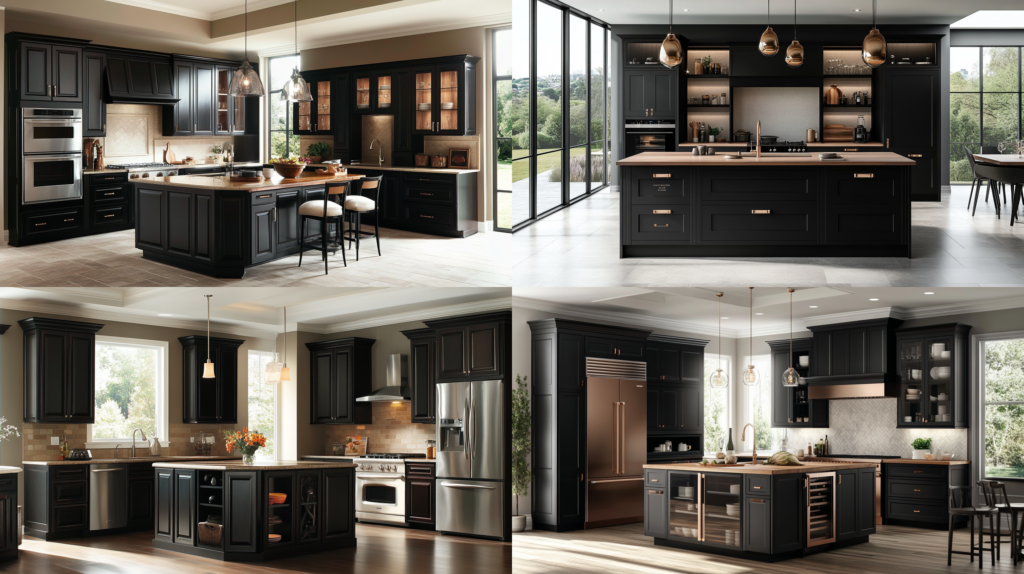
Modern Minimalist
A slim Shaker profile in a painted HDF finish, paired with matte black bar pulls and a solid quartz or sintered stone countertop, keeps the look sharp and controlled. The recessed panel adds depth without decoration, while the narrow frame keeps the eye moving across the surface rather than stopping at any one point. This combination works best for homeowners who prefer a kitchen that feels composed and quietly considered rather than visually busy.
Warm Transitional
Light oak tones or soft gray Shaker cabinets with brushed brass hardware and marble-pattern surfaces strike a balance between modern structure and natural warmth. A solid wood frame with a veneered center panel lets the grain show through, adding texture without disrupting the overall composition. This direction suits spaces that need to feel welcoming without looking overly traditional.
Farmhouse or Vintage
White Shaker cabinets with cup pulls, subway tile, and wood countertops remain a reliable starting point for farmhouse or vintage-inspired kitchens. The repeating pattern of Shaker doors organizes the rhythm of tile grout lines, while wood surfaces introduce warmth and natural variation. The look is familiar without feeling static—easy to refresh with small updates over time.
Bold Contemporary
Deep navy or forest green base cabinets paired with lighter upper cabinets create contrast without overwhelming the space. A waterfall-edge countertop extends the structured lines downward, reinforcing the architectural feel of the cabinet fronts. In this setting, Shaker doors act as a stable backdrop, letting color and material take the lead while keeping the overall composition in order.
Designing a Kitchen Layout with Modern Shaker Cabinets
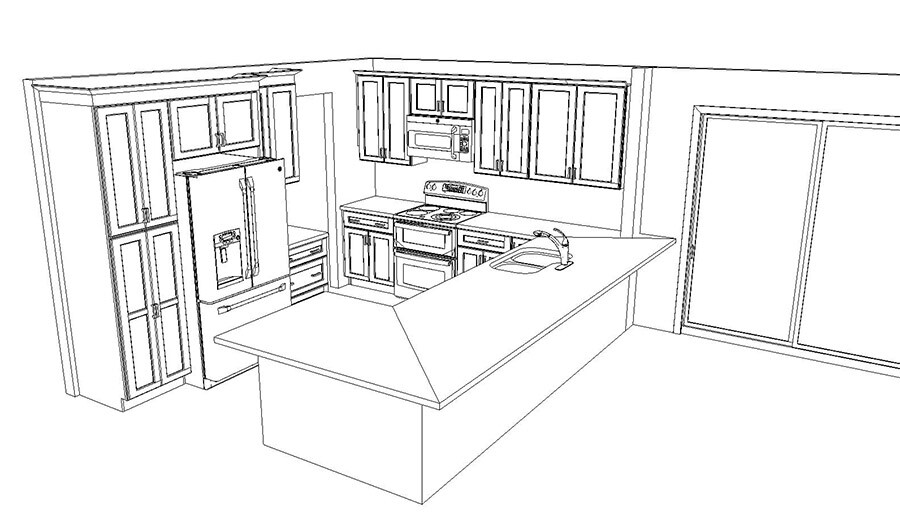
Once you have chosen a style direction, the next step is understanding Shaker cabinet behavior within the physical space. Their vertical and horizontal lines are not purely aesthetic—they actively shape a kitchen’s visual scale and sense of order.
Use Cabinet Lines to Define the Space
Shaker-style cabinet doors do more than provide storage. Their repeating lines help organize a kitchen visually and give the layout a clearer structure.
In smaller kitchens, full-height Shaker cabinetry draws the eye upward, making the space feel taller and more open. Adding crown molding at the top—a simple trim detail that bridges the gap between cabinet and ceiling—reinforces this vertical effect without adding visual weight.
In larger kitchens, symmetry becomes more noticeable. Centering cabinets around a range or hood and balancing both sides creates a stronger sense of order. The layout feels intentional without needing extra decoration.
The kitchen island adds contrast. An island in deep blue, forest green, or natural wood Shaker finish can anchor a neutral space and often reads like a standalone furniture piece rather than part of a continuous cabinet run.
Adjusting Proportions for a Modern Direction
To give Shaker cabinets a more contemporary direction, small changes in proportion make a clear difference. Traditional frames tend to feel heavier, while slimmer profiles bring a cleaner, more refined look.
Narrow-frame Shaker doors—commonly called slim or micro-Shaker—reduce the frame to around 12 to 20 mm. The recessed panel detail remains, but the overall lines appear sharper and lighter, which works particularly well in minimalist or contemporary kitchens.
Color offers another way to shift the feel. A two-tone approach is common: darker base cabinets paired with lighter upper cabinets, or a contrasting island set against a neutral perimeter. This adds depth without making the kitchen feel visually dense.
Glass inserts also provide another way to break up solid cabinet runs. Replacing a few upper doors with frosted or reeded glass softens the overall look, creates a practical display area, and introduces a sense of openness without disrupting the composition.
Materials and Hardware Set the Tone
Hardware is small, but it has an outsized influence on the overall direction of a Shaker kitchen. Even minor changes in finish or shape shift the style from modern to classic. Here are four combinations and the result each creates:
Countertops, panels, and surrounding finishes all work together with the cabinet structure. Even the simplest Shaker doors can take on very different expressions depending on what surrounds them.
Finishing Touches: Backsplash, Lighting, and Details
Backsplashes help set the overall tone. White subway tile remains a familiar pairing that stays in the background and lets the cabinet style lead. For a more contemporary result, extending the same countertop material up the wall as a backsplash creates a continuous surface that reduces visual breaks and balances the layered lines of the Shaker doors.
Lighting adds depth, especially in the evening. Soft LED strips under upper cabinets highlight the recessed panels and create gentle shadow transitions. The effect is subtle but noticeable—the space gains a layered quality without adding visual clutter. Panel-ready appliances take this further, allowing refrigerators and dishwashers to blend into the cabinet run and giving the kitchen a quieter, more residential feel.
Custom Shaker Kitchen Cabinets
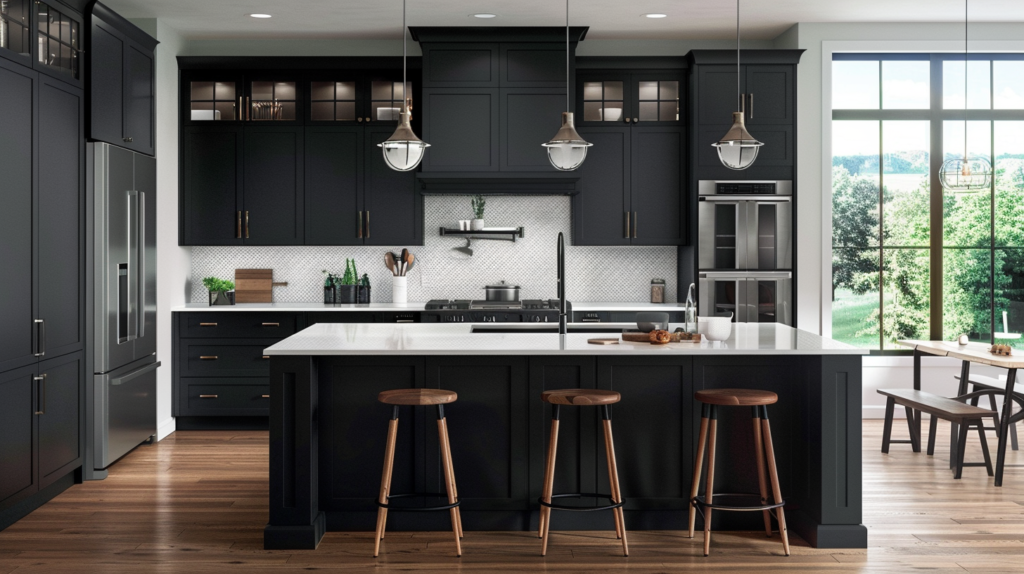
Custom Shaker cabinets give homeowners control over the details that stock options cannot offer—frame width, door edge profile, interior construction, and finish type. Each of these choices affects both how the cabinets look and how they perform over years of daily use.
Proportions Define the Overall Look
Frame width, in particular, determines the visual weight and presence of cabinets within a space. Traditional Shaker frames are typically around 60 to 75 mm, creating a solid and classic presence.
For a more modern direction, slimmer frames around 20 mm give the cabinets a lighter and more contemporary look. Frame width also needs to match the scale of the room—wider frames work well in larger kitchens where they add structure, while slim profiles reduce visual weight in smaller spaces.
At Parlun Building, we adjust frame proportions based on the specific kitchen layout and the client’s style direction. Getting this detail right upfront prevents the common issue of cabinets that look too heavy or too light for the room they are in.
| Frame Type | Width | Visual Effect | Best For |
| Traditional Shaker | ~60–75 mm | Solid, classic presence | Larger kitchens, classic or farmhouse styles |
| Slim / Micro Shaker | ~12–20 mm | Light, clean, modern | Smaller kitchens, minimalist or contemporary styles |
Choosing the Right Materials for Painted Finishes
Not all materials perform equally under painted finishes. Solid wood is widely considered premium, but it naturally expands and contracts with changes in humidity. In the long run, this movement can cause fine cracks along the joints of Shaker doors—a problem that becomes more visible on painted surfaces than on natural wood ones.
For a smoother and more stable painted surface, composite construction is often the better choice. A solid wood frame combined with an MDF or HDF center panel reduces movement while maintaining structural strength, giving the paint a cleaner and more consistent surface to adhere to.
This construction holds up better in kitchens, where temperature and moisture levels change throughout the day.
Small Details: Bevels vs. Sharp Corners
The inner edge of a Shaker door affects both appearance and practicality. Traditional designs use sharp 90-degree inner corners, which produce a crisp look but tend to collect dust and are slightly harder to wipe clean.
A subtle bevel—often around 15 degrees—softens this transition without changing the overall square shape of the door. Light moves more gently across the beveled surface, and the edges are easier to maintain with time.
Finish Quality Makes a Visible Difference
Hand-painted cabinet surfaces can look good initially, but they tend to wear unevenly over the years. Factory-applied finishes—using techniques such as multi-sided spray coating, UV curing, or electrostatic painting—create a denser, more even layer across the entire cabinet surface.
The result resists grease, moisture, and daily wear more effectively and feels smooth and integrated rather than simply coated on top.
Internal Construction Matters Just as Much
What sits behind the cabinet doors is just as important as what is visible. Well-built drawers use dovetail joinery, which strengthens as time passes rather than loosening.
Concealed soft-close runners allow drawers to open and close smoothly without noise or impact. These details may not stand out at first glance, but they determine whether cabinetry feels solid or starts to wear down after a few years of daily use.

In Summary
Modern Shaker kitchen cabinets have earned their place as one of the most enduring choices in residential design. Their structure is simple enough to disappear into a space, yet distinct enough to give it shape. With the right proportions, materials, and finish, they produce kitchens that feel complete—not assembled.
Their value extends beyond the kitchen as well. Used consistently across laundry rooms, mudrooms, or home offices, Shaker cabinetry creates a visual language that runs throughout the home. Spaces built around a single cabinet style tend to feel more intentional—and that perceived quality is difficult to achieve by any other means.
At Parlun Building, we work with homeowners to get these details right from the start—frame width, finish type, hardware selection, and interior construction. If you are planning a kitchen renovation or a whole-home cabinetry project, contact our team to discuss what works best for your space.