Quick Summary
Flat panel cabinets combine simplicity with design flexibility. Their appearance is defined not by decoration, but by materials, finishes, and engineering quality.
What Are Flat Panel Kitchen Cabinets
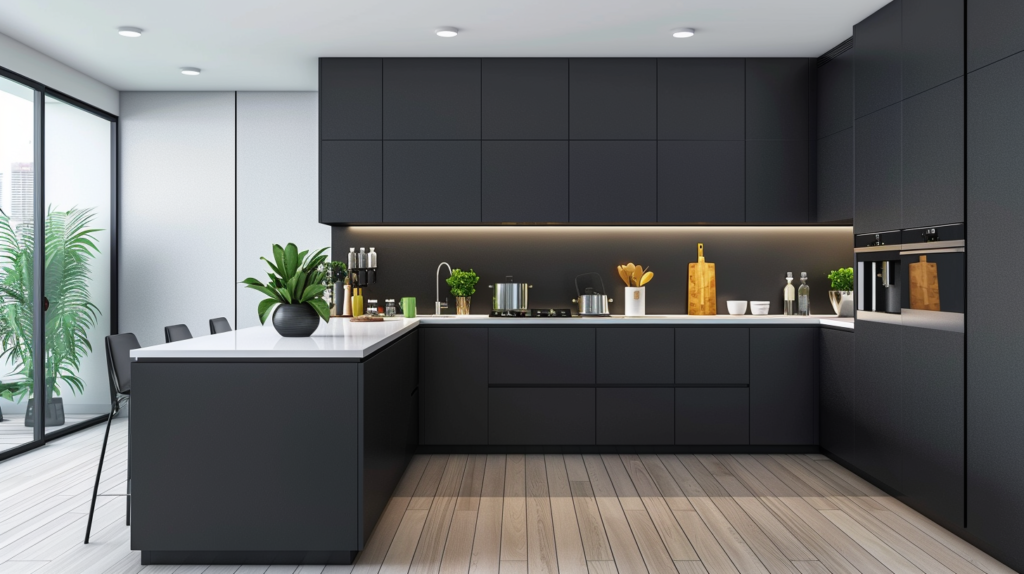
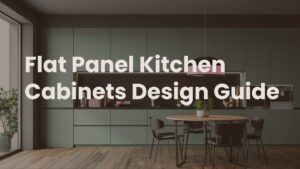
Flat panel kitchen cabinets, also known as slab cabinets, feature a single-piece door with a completely flat, frameless surface. Unlike shaker or raised-panel styles, they have no grooves or recessed detailing—making them easy to clean, visually minimal, and adaptable to a wide range of modern interior styles.
Flat Panel Cabinet Design Ideas
Flat panel cabinets may appear simple, but they offer surprising flexibility in materials, textures, and finishes.
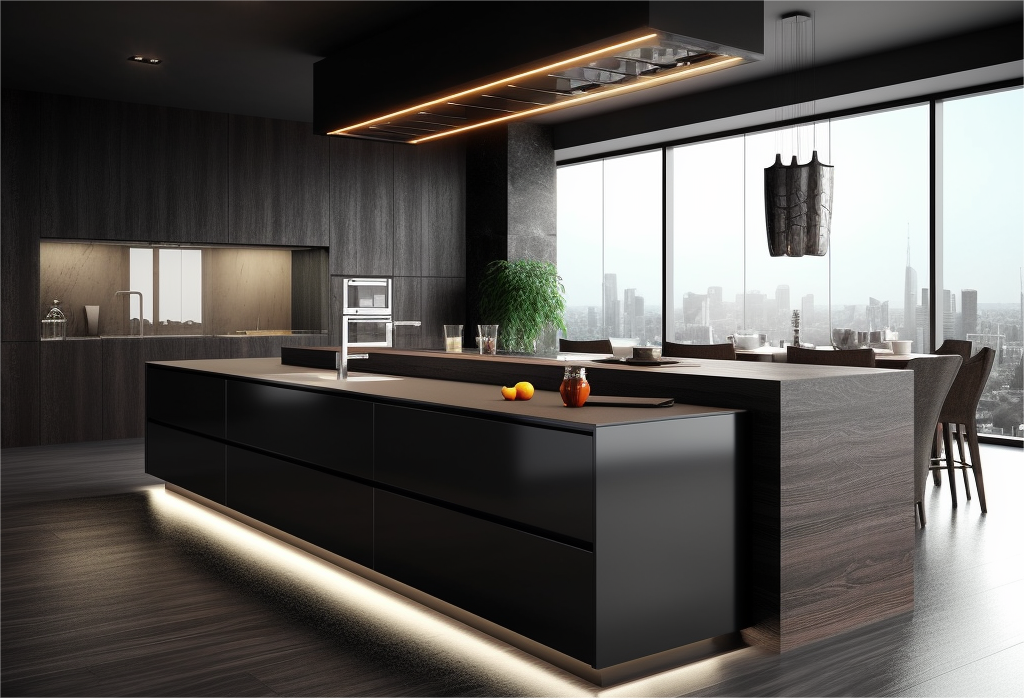
Materials & Texture
Wood veneer introduces natural warmth, especially when the grain flows continuously across cabinet surfaces. This creates a more unified, architectural look rather than a series of segmented units.
Matte finishes reduce reflection and soften the overall look, making them ideal for calm, modern interiors. High-gloss surfaces reflect more light, helping compact kitchens feel brighter and more open.
Handleless Systems
These solutions preserve surface continuity while reinforcing a clean, uninterrupted visual flow.
Color & Composition
Flat surfaces make color a defining design element.
Common approaches include:
The Two-Tone Strategy
A popular approach in modern cabinetry is the 60-30-10 rule.
Use a neutral wood veneer for 60% of the lower cabinets to ground the space, and a crisp matte white for 30% on the upper units to keep the ceiling feeling higher. The remaining 10% can be introduced as bold accents, such as a navy or forest green island, to create a focal point.
Gloss vs. Matte Textures
Don’t just mix colors—mix finishes. Pairing high-gloss upper cabinets to reflect light with matte black base cabinets creates a layered look that feels both airy and grounded, while helping hide scuffs at lower levels.
In kitchens with limited natural light, lighter tones such as light oak or soft grey help reflect light and brighten the space. In larger, open-concept layouts, deeper tones like graphite or walnut veneer add visual weight, helping define the kitchen zone more clearly.
Without frames or detailing, these color contrasts read more sharply, making the overall composition feel more deliberate and refined.
Thickness and Edge Details
Door thickness and edge detailing play a key role in both perceived quality and long-term durability.
The “Feel” of Quality
Standard 18mm or 19mm (3/4″) panels strike a practical balance between weight, rigidity, and long-term structural stability. For high-end custom projects, thicker 22mm or 25mm profiles are often used to create a more substantial, architectural presence, while also improving screw-holding strength for heavy-duty hinges and repeated use over time.
Advanced Edge Details
In flat panel design, the edge is often where craftsmanship becomes most visible.
Laser Edge Banding: A zero-joint technology that fuses the edge band to the panel, creating a seamless, painted-like finish while offering superior resistance to heat and moisture—especially important near ovens, dishwashers, and sinks.
Beveled Edges: Beyond the standard square edge, the subtle 1–2mm radius edges help soften the profile and reduce the “sharpness” that can lead to chipping in high-traffic areas.
Grain Matching
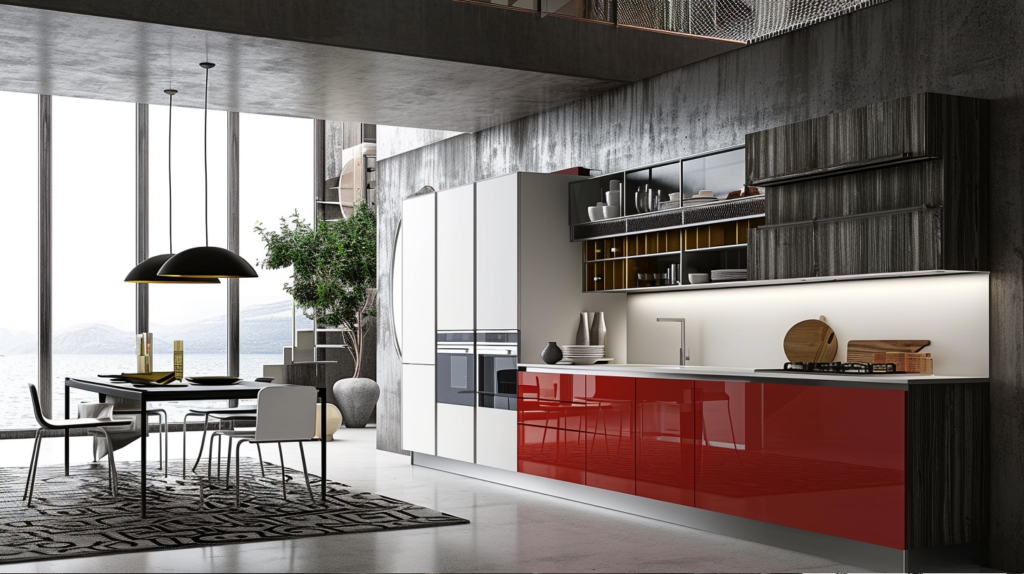
For wood veneer panels, edge detailing extends into grain matching. The grain is typically aligned vertically and flows continuously from upper to lower cabinets, allowing the entire wall to read as a single architectural surface rather than a collection of separate units.
Pros and Cons of Flat Panel Kitchen Cabinets
Pros
Cons
Flat Panel vs Shaker Cabinets
|
Flat Panel (Slab) |
Shaker Cabinets |
|
|
Best For |
Modern, Minimalist, Urban Lofts |
Transitional, Farmhouse, Classic |
|
Construction |
Single solid piece (MDF/Plywood/Veneer) |
Five-piece frame and panel construction |
|
Space Effect |
Creates an illusion of more space; very “quiet” |
Adds structural depth and visual interest |
|
Cleaning |
Wipe-and-go; no corners for grease |
Requires corner dusting; grease buildup in grooves |
|
Hardware |
Push-to-open, Gola, or minimal pulls |
Knobs, bin pulls, or classic handles |
|
Budget Tip |
High-end looks achievable with PET/Laminate |
Typically costs slightly more due to 5-piece assembly |
Hardware and Opening Systems
Because flat panel cabinets have no decorative detail to draw the eye, hardware and opening mechanisms carry more visual weight than in other cabinet styles.

Hinges are typically concealed European-style systems. Brands like Blum or Grass provide smooth operation and soft-close function, keeping the overall look clean and uninterrupted.
Drawer systems often use slim metal sides, maintaining the same clean lines and proportions seen across the cabinetry.
Opening methods influence both function and style:
Knobs are rarely used, as they interrupt the flat surface. In most cases, the goal is to keep hardware as subtle as possible so the cabinetry itself remains the focus.
Choosing the Right Material for Flat Panel Cabinets
Not all flat panel cabinets perform the same, and the material affects durability, cost, and finish quality.
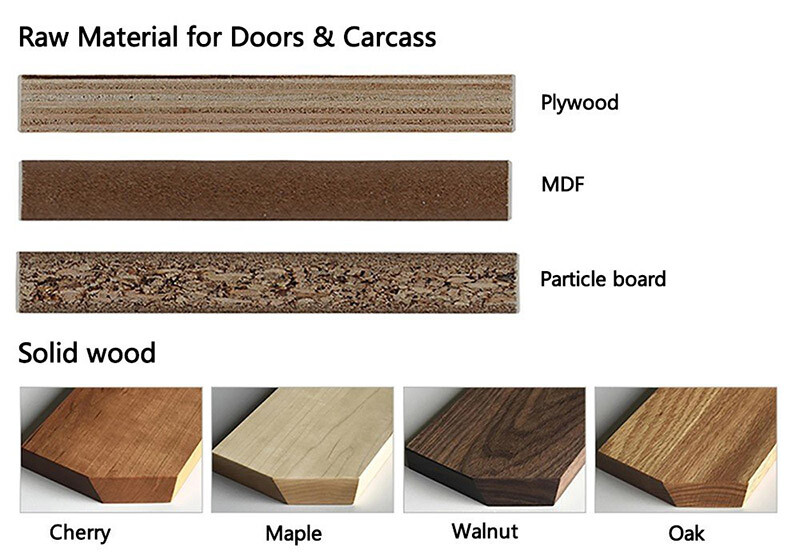
Here’s a quick comparison of common material options:
|
Material |
Best For |
Key Advantage |
Consideration |
|
MDF |
Painted cabinets |
Smooth surface, stable |
Lower moisture resistance |
|
Plywood |
Long-term durability |
Strong and moisture-resistant |
Higher cost |
|
Wood veneer |
Natural appearance |
Real wood texture |
Needs careful maintenance |
|
Laminate / PET |
High-use kitchens |
Scratch-resistant, easy care |
Less depth in texture |
While each material has its strengths, the real difference shows over time—how the kitchen performs with daily use. Flat panel doors, especially those built on a solid MDF core, offer greater dimensional stability than traditional solid wood frames.
They respond less to changes in humidity, reducing the risk of cracking or warping. This makes them particularly suitable for coastal or high-humidity environments. For this reason, MDF remains the industry standard for achieving a consistently smooth, long-lasting flat finish.
Durability and Lifespan
A cabinet’s lifespan is not determined by panel material alone, but by the engineering systems that protect and support it. At Parlun Building, we focus on two critical factors that define long-term performance:
Zero-Joint Integrity: Solving the Edge-Peeling Problem
The edge is the most vulnerable point in any slab cabinet system. To eliminate peeling and moisture ingress commonly seen in lower-grade products, PUR (Polyurethane) adhesive or laser edge banding is used to create a near-invisible, fully sealed bond.
This prevents long-term exposure to heat and steam, significantly extending the cabinet’s aesthetic lifespan to 15+ years.
Mechanical Longevity: The Cycle Count
Durability is also defined by how consistently a kitchen performs under daily mechanical stress. Premium hardware such as Blum soft-close hinges is tested for 100,000+ opening cycles, ensuring doors remain aligned and stable over years of use.
High-quality runners and hinge systems also help prevent sagging, misalignment, and uneven gaps that typically develop in aging kitchens.
Maintenance and Cleaning
Flat panel cabinets are designed for easy day-to-day maintenance. With no exposed grooves or joints, there are fewer areas for grease, dust, and bacteria to accumulate.
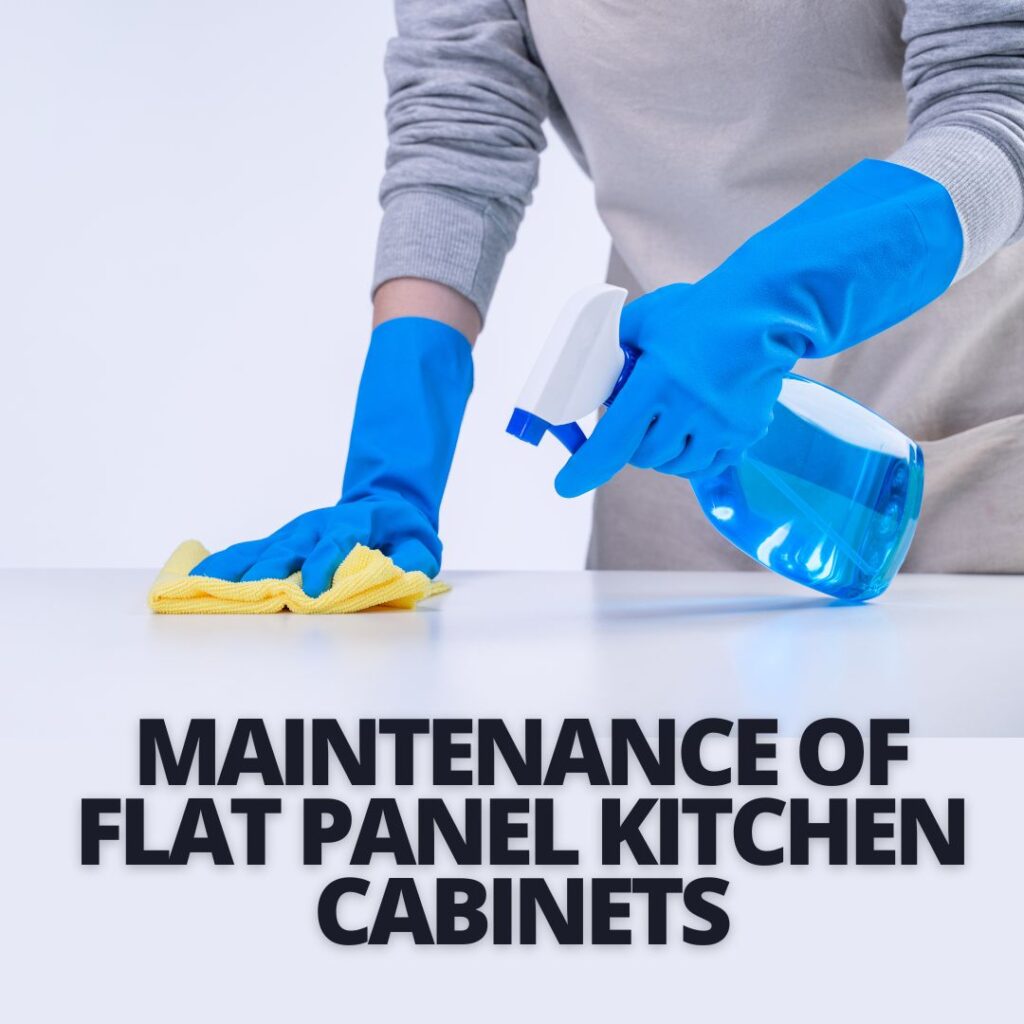
Matte finishes require gentle cleaning. Avoid oil-based cleaners, which may leave streaks. A mild solution of dish soap and warm water with a microfiber cloth is ideal for preserving the soft-touch surface.
Wood veneer should be treated like fine furniture. Always use a damp (not wet) cloth and wipe along the grain to maintain surface integrity and prevent moisture from penetrating the pores.
Gloss finishes can be maintained like glass surfaces, using a soft cloth and non-abrasive cleaner to preserve a clear reflective finish.
Pro Tips
To enhance long-term color stability, UV-resistant topcoats are commonly applied to lacquered and veneered panels. In kitchens with strong direct sunlight, sheer curtains can help preserve the depth and tone of natural wood surfaces.
To enhance long-term color stability, UV-resistant topcoats are commonly applied to lacquered and veneered panels. In kitchens with strong direct sunlight, sheer curtains can help preserve the depth and tone of natural wood surfaces.
Cost of Flat Panel Kitchen Cabinets
Flat panel cabinets are not defined by simplicity in design, but by the materials, finishes, and systems behind them. While the door style appears minimal, the overall cost varies significantly depending on specification.
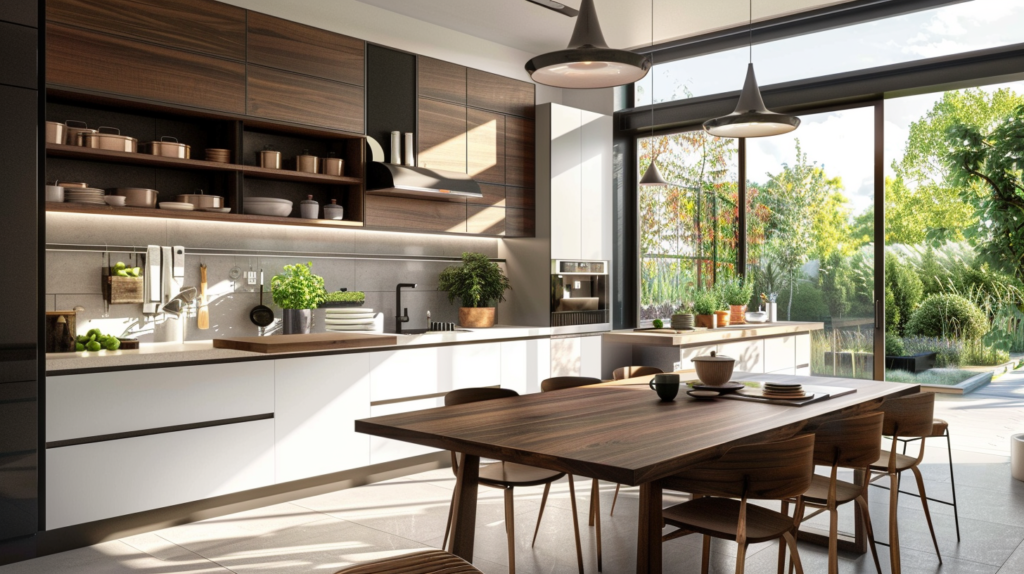
What really drives cost is the system behind the surface:
Budget Tips
Bringing Flat Panel Cabinets into Different Styles
Flat panel cabinets adapt naturally across different design languages. While often associated with European minimalism, their final expression is shaped entirely by materials, finishes, and spatial context.
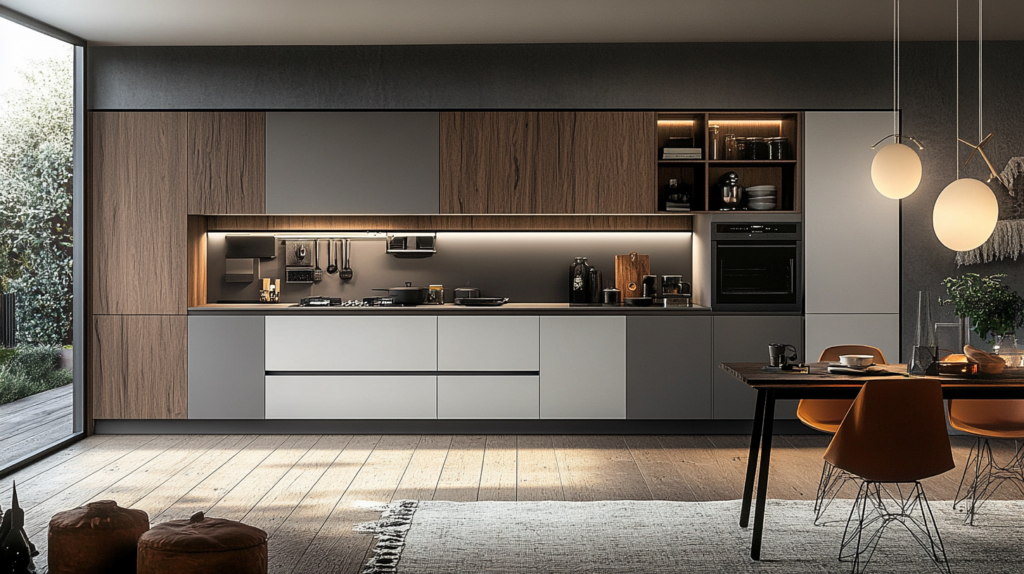
European Minimalism: Defined by clean, handleless surfaces using high-gloss or matte finishes, often paired with Gola profiles or push-to-open systems to create a streamlined, visually quiet kitchen environment.
Organic Modern: Blends the warmth of oak or walnut veneer with soft matte finishes. Combined with stone countertops, it creates a space that feels grounded, natural, and visually calm without excess detail.
Industrial Edge: Introduces darker tones such as matte black or graphite lacquer. When paired with exposed metal shelving and raw materials like concrete, the flat surfaces create a strong, architectural contrast.
Transitional & Mid-Century: Balances classic and contemporary influences through layered material contrast. A two-tone composition—such as matte white upper cabinets paired with wood veneer lowers—adds depth and structure while preserving a subtle retro character.
Is Flat Panel Right for You?
Flat panel cabinets are best suited to spaces where simplicity and visual clarity are intentional design choices.
They are a strong fit in several situations:
They are less suitable in interiors where decorative detailing and ornamental expression play a central design role, such as traditional or highly classical kitchen styles.
Ready to Plan Your Flat Panel Kitchen?
Flat panel kitchen cabinets offer a clean, low-maintenance surface that adapts naturally to a wide range of interior styles—without relying on decorative elements to make an impact.
At Parlun Building, every flat panel cabinet is produced to precise standards, from edge banding and hinge alignment to finish consistency across each surface. This ensures a stable, refined result regardless of kitchen size or layout complexity.
If you are planning a kitchen upgrade, the right combination of material and finish can significantly influence both budget and final appearance. Feel free to reach out to our team to discuss your layout, explore options, or request a quote. We support projects of all sizes and help you find the right balance between design and cost.