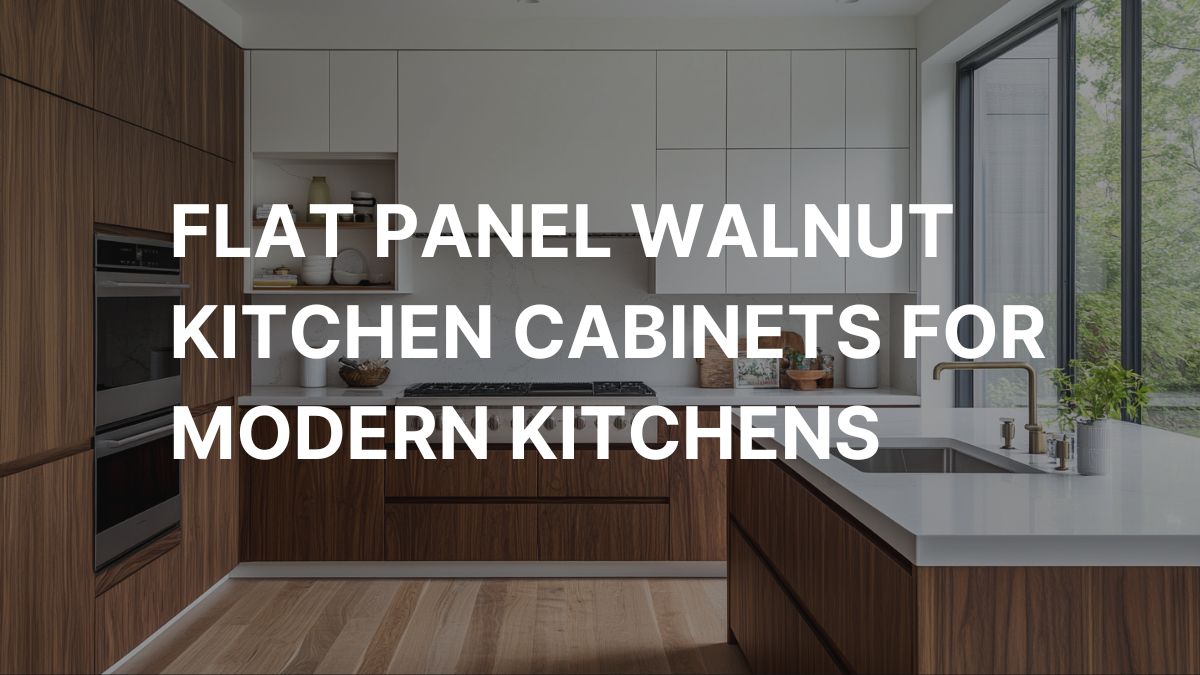
The kitchen design landscape has shifted decisively toward clean lines, organic textures, and functional minimalism. At the intersection of this movement sits one particular design favorite: flat panel walnut kitchen cabinets.
By stripping away the ornate profiling of traditional doors and letting the natural, undulating grain of premium walnut wood take center stage, this cabinetry style achieves an aesthetic that is simultaneously ultra-modern and timelessly warm.
If you are planning a high-end kitchen remodel, balancing sleek architecture with inviting textures is often the ultimate challenge. Below, we break down everything you need to know about integrating flat panel walnut cabinetry into your space—from material advantages and styling configurations to realistic cost expectations.
What are flat-panel walnut kitchen cabinets?
In kitchen manufacturing, flat panel cabinets are frequently referred to as slab kitchen cabinets or slab doors. Unlike traditional Shaker doors or raised-panel alternatives, a flat panel door consists of a single, smooth, un-profiled piece of wood or engineered core faced with premium wood veneer.
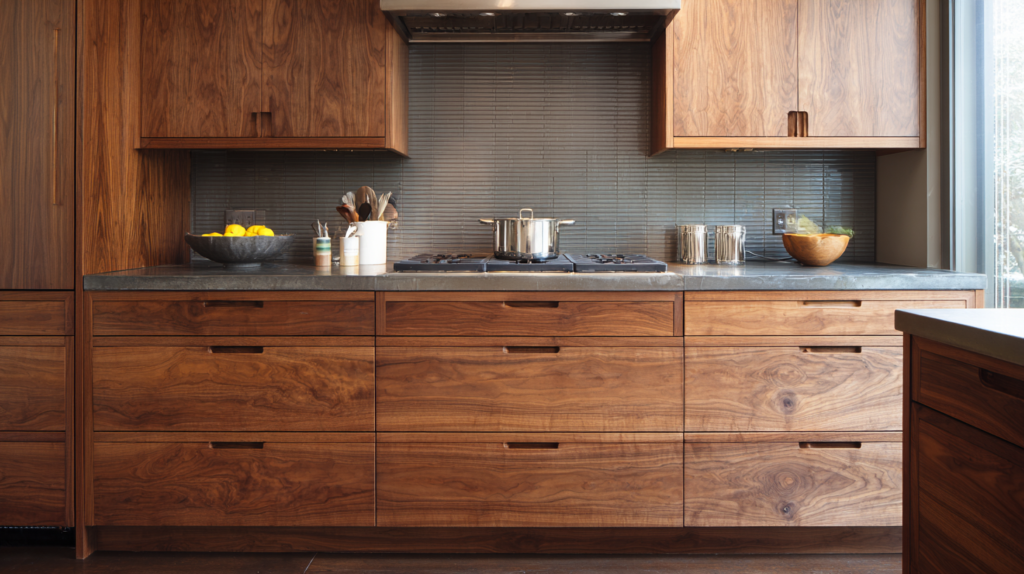
When built using walnut (Juglans nigra), these doors showcase the wood’s natural characteristics without interruption. Walnut is celebrated for its deep chocolate brown tones, rich undertones of gold and charcoal, and highly active, variable grain patterns.
Using a flat panel design eliminates visible frame joints. This allows the horizontal or vertical wood grain to flow seamlessly across your entire run of cabinetry, transforming your kitchen walls into continuous architectural features.
Why Flat Panel Walnut Works in Modern Kitchens
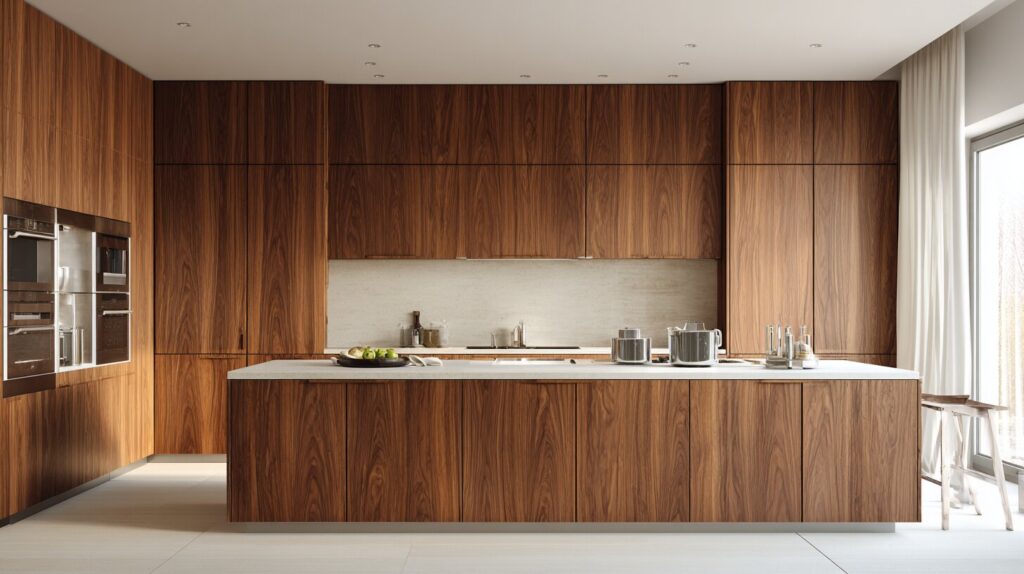
Modern kitchen design can sometimes risk feeling sterile, clinical, or overly cold due to its reliance on polished concrete, stainless steel, and stark white walls. Homeowners and architects frequently turn to modern walnut Kitchen cabinets specifically to solve this issue.
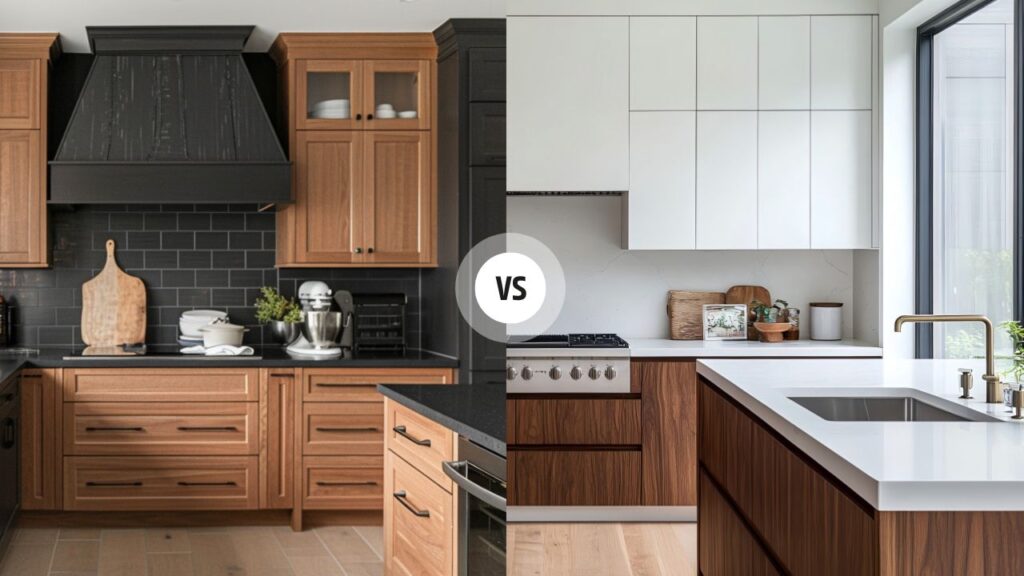
Flat Panel vs. Shaker Walnut Cabinets
Choosing between a flat panel profile and a classic Shaker door changes the entire design trajectory of your kitchen. Both styles utilize walnut beautifully, but they cater to entirely separate design priorities.
The Flat Panel Walnut Approach
Flat panel doors offer an ultra-clean, seamless aesthetic that perfectly complements minimalist, contemporary, and Mid-Century Modern spaces. Because the face of the door is entirely flat, you get an uninterrupted, continuous view of the wood’s natural grain lines. Maintenance is incredibly simple because there are no recessed ledges to trap dust or grease. This style pairs flawlessly with subtle finger pulls, edge pulls, or completely integrated touch-latches.
The Shaker Walnut Approach
Shaker doors feature a classic five-piece structure with a recessed center panel, making them ideal for transitional, traditional, or craftsman-style homes. The framed panels naturally break up the continuous flow of the wood grain, adding architectural depth and a sense of timeless craftsmanship. Because of the inner recessed frame, they do require a bit more attention during cleaning to prevent dust buildup in the corners. Shaker cabinets look best when accented with traditional knobs, long bar pulls, or classic bin pulls.
If your primary goal is a sleek, architectural space with minimal fuss, flat panel is the correct choice. If you prefer a homey, transitional look that leans slightly traditional, a Shaker structure may suit you better.
Handleless and Invisible-Handle Options
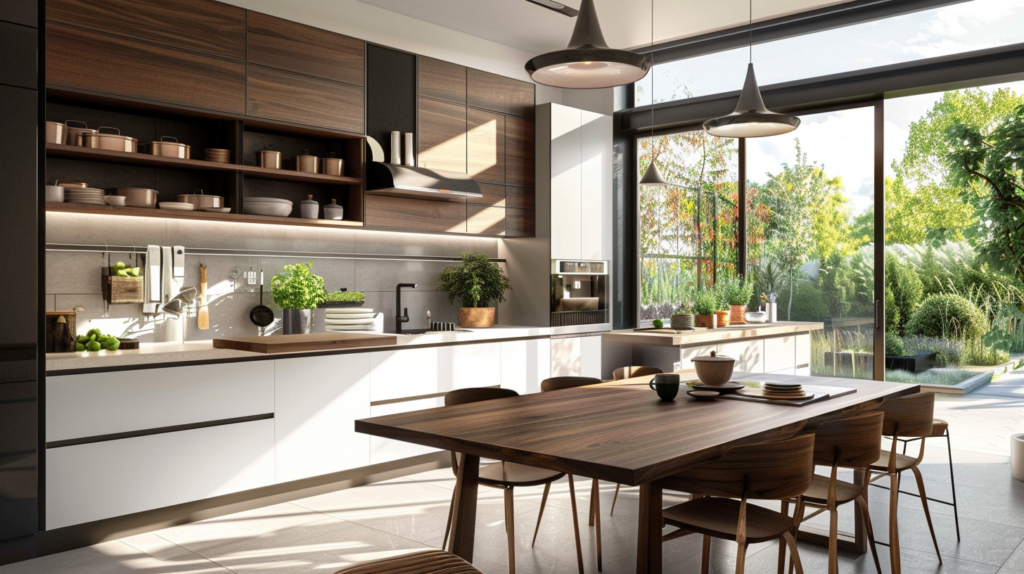
For those pursuing the ultimate minimalist design, pairing flat panel doors with integrated routing yields an incredible finish. Choosing handleless walnut kitchen cabinets entirely eliminates projecting hardware, resulting in a perfectly flush wall of rich wood grain.
Popular Integrated Hardware Approaches
Best Countertops for Flat Panel Walnut Cabinets
Because walnut features highly active linear and swirling grain lines, selecting the right countertop material is crucial to prevent the kitchen elements from visually competing with one another.
1. Solid White Quartz and Artificial Stone
Pairing your rich wood grains with walnut cabinets with white countertops is a classic, high-contrast design strategy. Solid white surfaces, or materials with light, muted marble-look veining, provide a clean visual boundary that makes the natural wood colors pop.
2. Deep Charcoal and Matte Black Slate
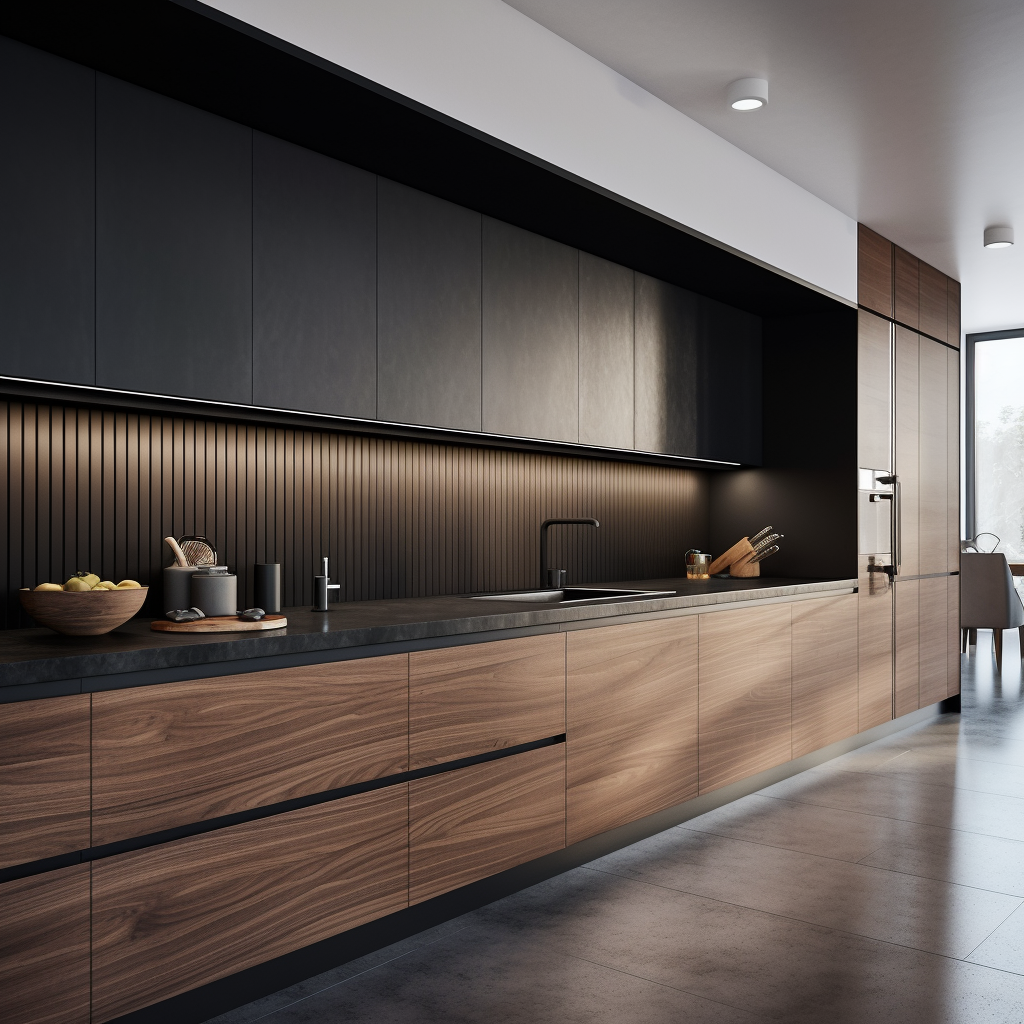
If you prefer a moody, industrial aesthetic, mixing flat-panel walnut with dark quartz or natural slate countertops creates an exceptionally luxurious, high-end environment.
3. Concrete-Look Composites
For ultra-modern homes, matte gray stone or artificial concrete surfaces ground the warm tones of the walnut, creating a sophisticated color palette inspired by nature.
Cost and Buying Considerations
A common question among luxury renovators is, “Are walnut slab cabinets expensive?”
Yes, walnut is universally positioned as a premium hardwood category. Because premium walnut trees grow relatively slowly and feature a smaller yield of heartwood (the dark center of the log) compared to oak or maple, the raw material cost is inherently higher.
Key Factors Driving the Price Tag
FAQs
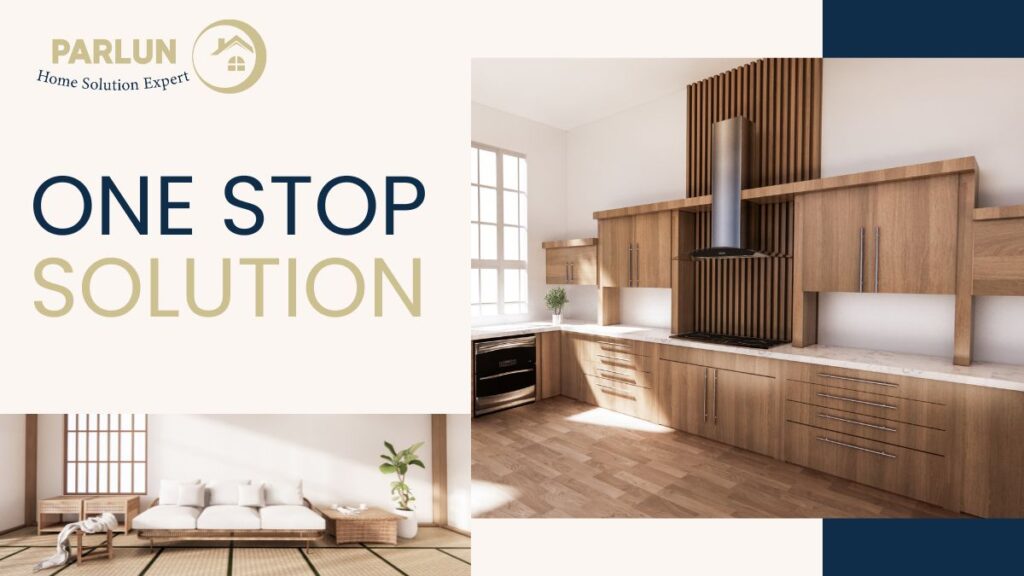
Ready to Design Your Dream Kitchen?
Flat panel walnut cabinetry brings an undeniable touch of architectural luxury, enduring style, and natural comfort into modern homes. Whether you intend to build a full wall of handless walnut storage or feature a dramatic, two-tone island centerpiece paired with premium countertops, our design team is equipped to bring your exact vision to life.
Contact our custom cabinetry experts today to schedule a design consultation or request an accurate material quote for your project.