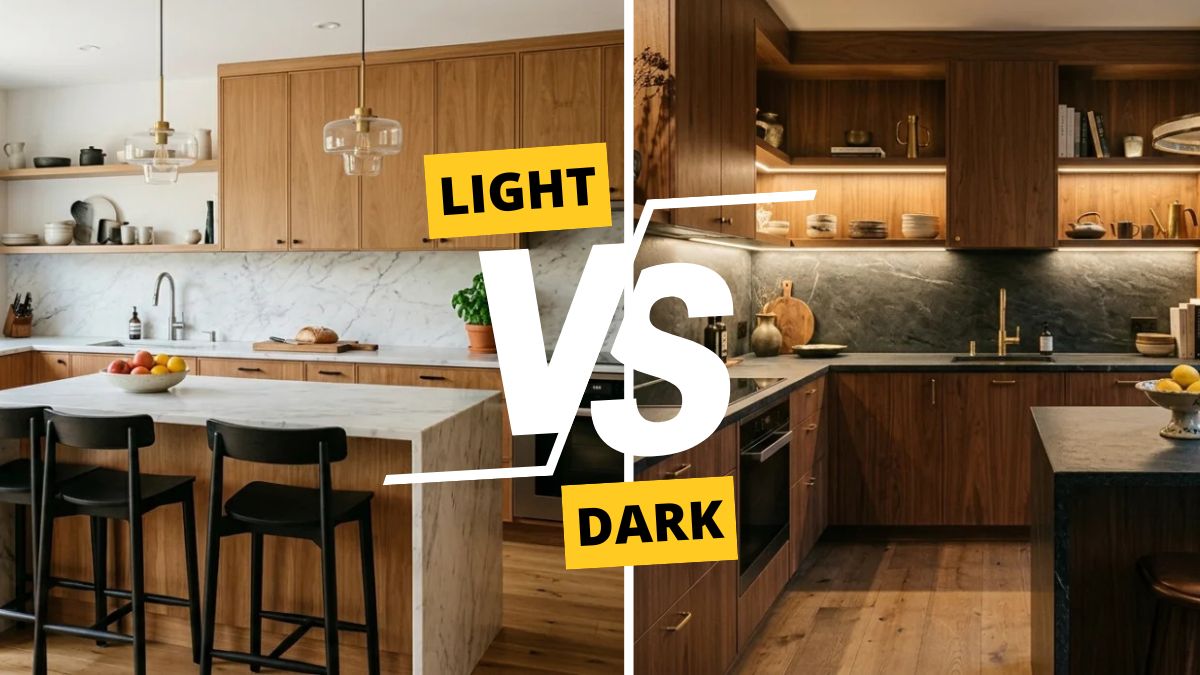
Interior designers universally praise walnut for its striking grain patterns and luxurious feel. However, when it comes to bringing this beautiful hardwood into a modern kitchen, homeowners often hit a major fork in the road: Should you choose light walnut or dark walnut cabinets?
The natural tone of raw walnut is already deeply complex, but the stains, finishes, and protective oils applied to it can dramatically shift its final look. The color depth you select will dictate the entire mood, lighting requirements, and material pairings of your kitchen.
To help you make the right choice for your home, we break down the design differences, room size dynamics, and ideal finish configurations for light and dark walnut cabinetry.
Light Walnut Cabinets
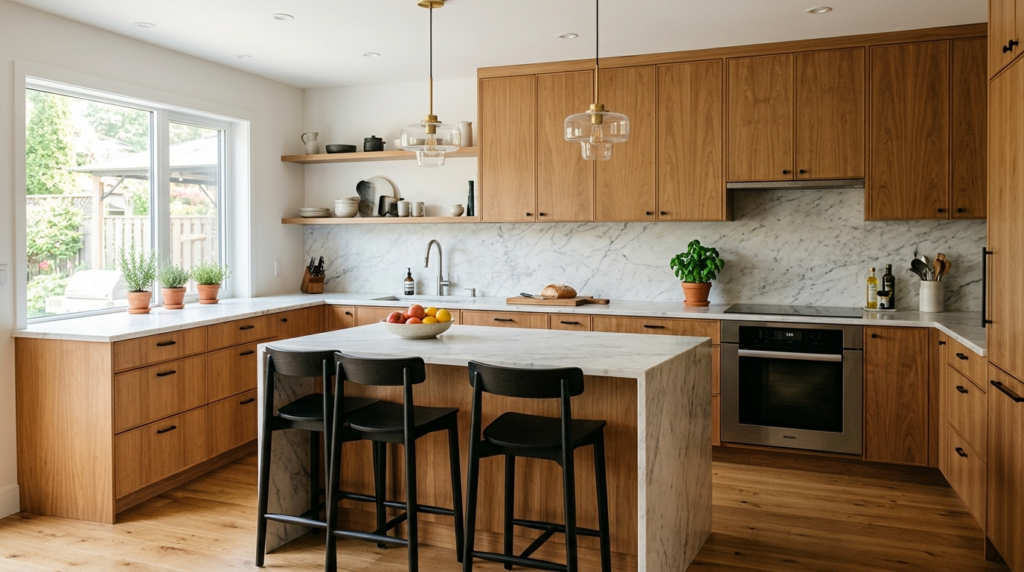
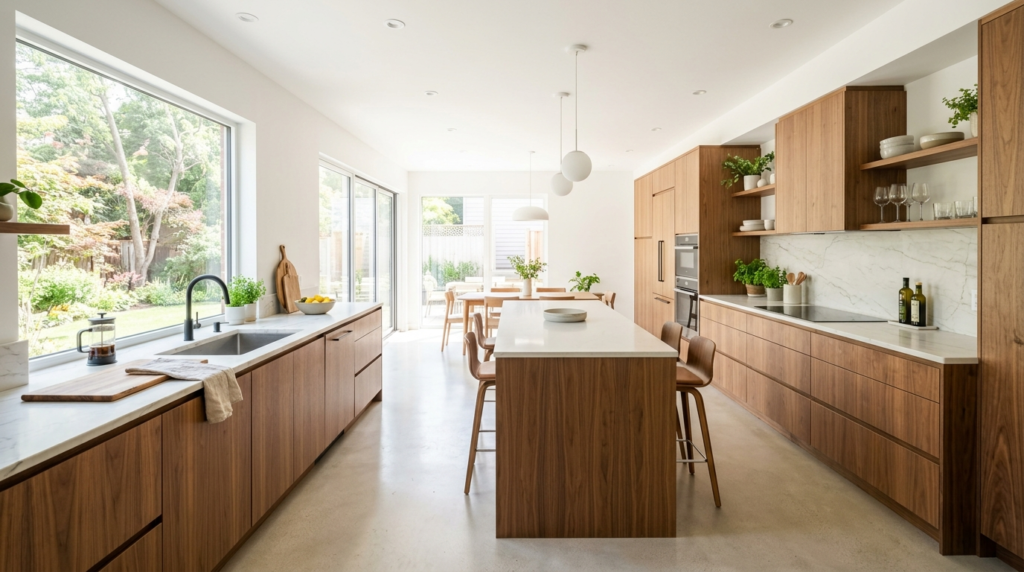
Light walnut cabinets lean heavily into the softer, sun-bleached, or honey-toned side of the hardwood spectrum. Natural walnut contains both dark heartwood (the center of the tree) and lighter sapwood (the outer layers). A light walnut finish often highlights these golden, amber, and tan undertones.
[Note] Design Vibe: Scandinavian Minimalism, Warm Contemporary, Mid-Century Modern
The Advantages of Going Lighter
Dark Walnut Cabinets
Dark walnut cabinets showcase the deepest, richest heartwood tones of the log. Often enhanced with deep espresso stains, charcoal tints, or rich oil finishes, dark walnut features an ultra-premium, velvety aesthetic dominated by rich chocolate and near-black wood grains.
[Note] Design Vibe: High-End Luxury, Industrial Chic, Moody Architectural Statement
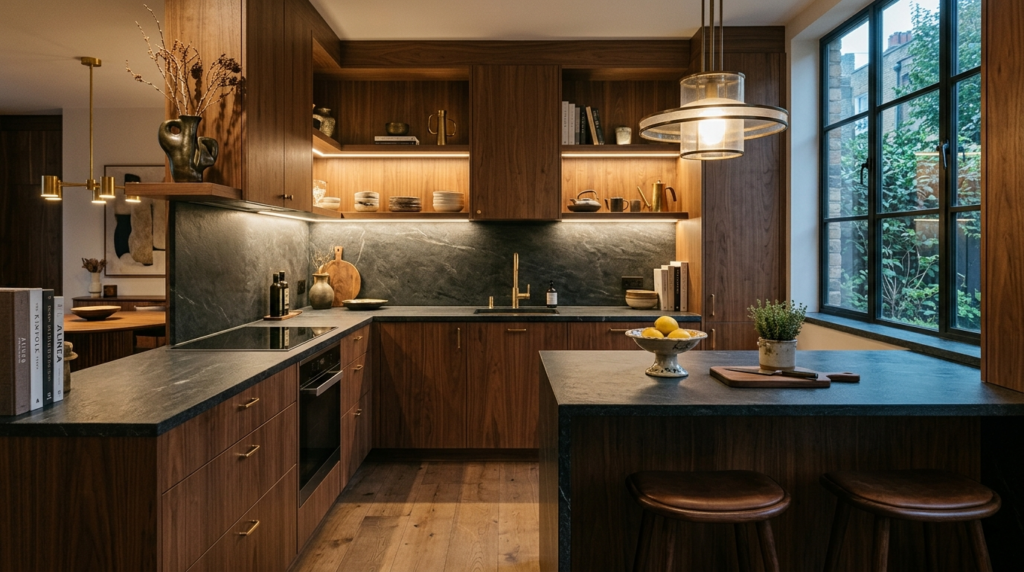
The Advantages of Going Darker
Which Finish Makes a Kitchen Look Larger?
If you are working with limited square footage or low ceilings, spatial dynamics should heavily influence your choice. Light walnut cabinets are the clear winner for making a kitchen feel larger, brighter, and more open.
Light wood colors reflect more natural ambient light, bouncing it back across the room to create the illusion of an expansive floor plan.
Designing with Dark Walnut in Smaller Spaces
You do not have to completely abandon dark walnut if your kitchen is small. Instead, avoid a heavy “wall of wood” look by implementing a two-tone kitchen layout.
Install dark walnut along your base cabinets or kitchen island to anchor the room, then choose bright white, open shelving, or soft cream cabinets for your upper walls. This keeps the sightlines clear and prevents the upper portion of the room from feeling cramped.
Best Countertops for Light Walnut
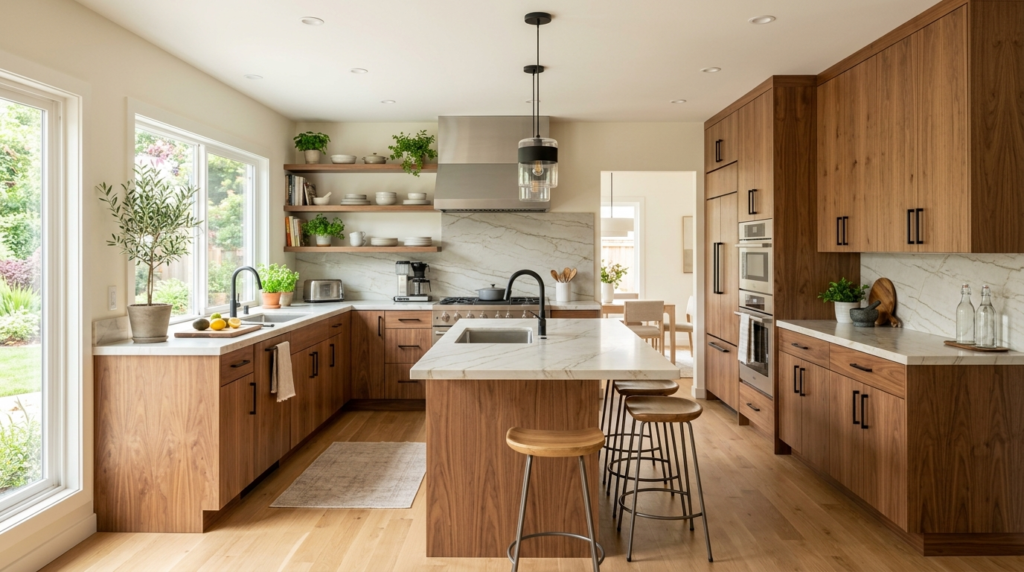
Light walnut thrives when paired with surfaces that mirror its breezy, bright, or mid-century energy.
Best Countertops for Dark Walnut
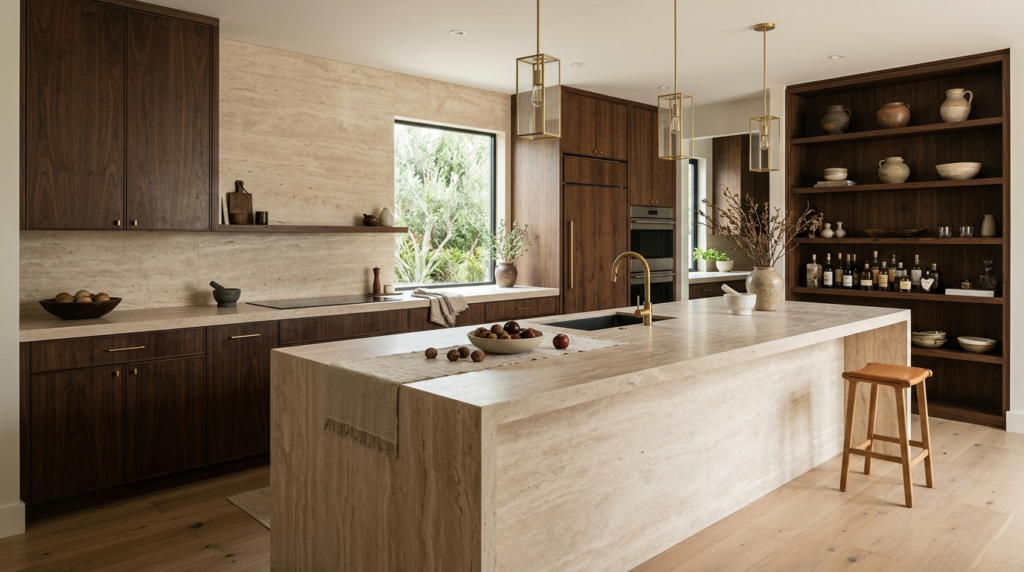
Dark walnut demands a countertop choice that either leans fully into dramatic luxury or offers a clean break from the deep chocolate tones.
Hardware and Backsplash Pairings
The right accents bridge the gap between your cabinetry and the rest of your kitchen infrastructure. Your choice of hardware metals and tile styles will either elevate the breezy nature of lighter wood or emphasize the rich drama of darker tones.
Styling Light Walnut Cabinets
Light walnut pairs exceptionally well with high-contrast hardware like matte black or oil-rubbed bronze, which cleanly outlines the modern edges of the cabinets. If you prefer a softer look, satin nickel provides a sleek, muted transition. For the backsplash, aim to keep the space bright and airy. Crisp white subway tiles, reflective zellige tiles, or a seamless continuation of a light quartz countertop slab work beautifully.
Styling Dark Walnut Cabinets
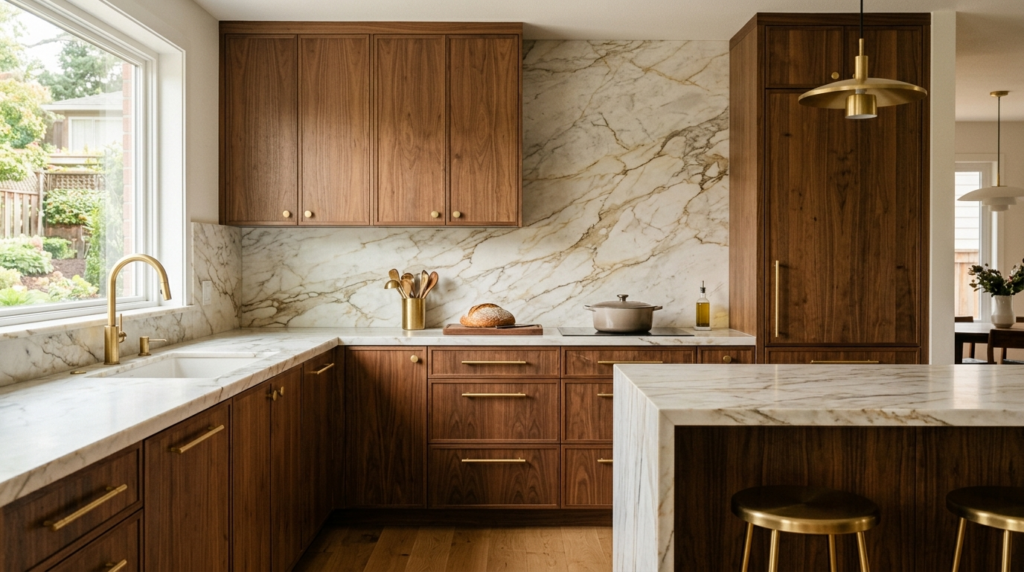
Dark walnut commands warm, high-end metallic hardware to bring out its deep golden undertones. Brushed gold, polished brass, and warm anodized copper pulls look striking against a deep chocolate background. To match this luxury aesthetic, opt for dramatic backsplash elements like large-format marble slabs or reflective glass mosaics. Alternatively, if you want a striking focal point, you can introduce contrasting white kitchen cabinets with brown countertops and an accent wall section.
FAQs
Ultimately, choosing between light vs. dark walnut kitchen cabinets depends on your home’s lighting, room size, and personal style goals. If you love a bright, airy space with an emphasis on natural wood loops, light walnut is your ideal match. If you prefer high-contrast drama, deep luxury, and bold architectural lines, dark walnut will deliver exactly what you are looking for.
Ready to see how different walnut tones look in person? Contact our design team today to request material samples and start planning your custom modern walnut kitchen cabinets project.