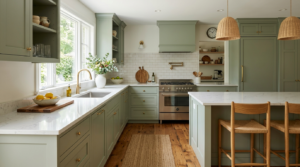
No cabinet door has stayed in demand as consistently as the shaker cabinet. For the past 30 years it has topped kitchen design polls, outlasted every passing trend, and appeared in both period farmhouses and sharp contemporary builds. The appeal comes down to restraint. A shaker door carries just enough detail to feel crafted, yet stays clean enough to pair with almost any worktop, handle, or colour.
Whether you are specifying classic shaker cabinets for a heritage renovation or shaker style kitchen cabinets for a new build, understanding the profile, the variations, and where to source them will save you time and money. This guide walks through all three.
What Are Shaker Cabinets?
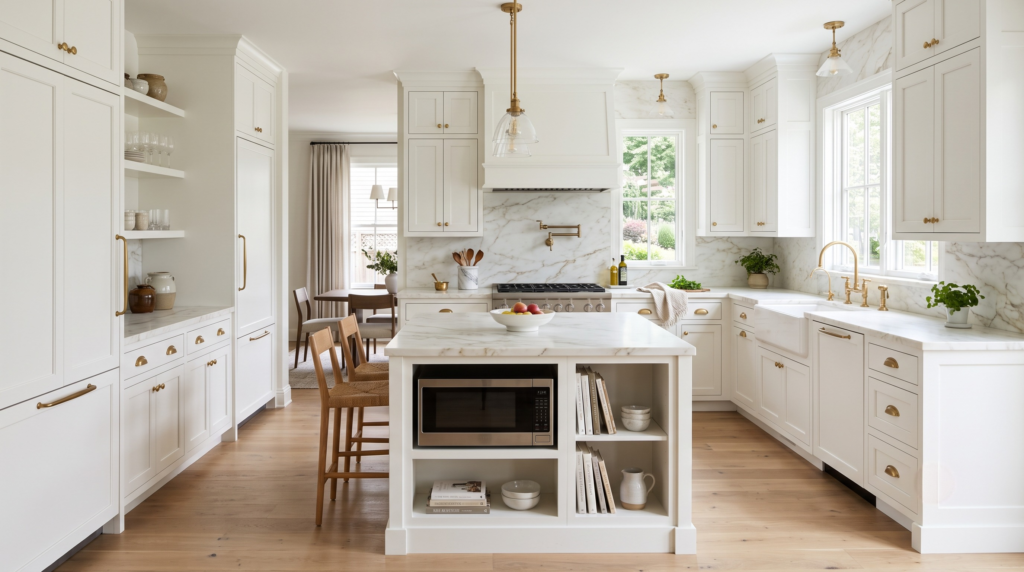
A shaker cabinet door is built from five pieces: four outer frame parts and one flat centre panel. The frame is made of vertical stiles and horizontal rails, and the recessed panel sits inside them. This five-piece construction is what gives shaker cabinet doors their square inner edge and quiet sense of depth.
The style takes its name from the Shakers, a religious community in 18th and 19th century America known for furniture that valued function over ornament. Their belief that good design meant nothing wasted produced pieces that were sturdy, honest, and quietly beautiful. The cabinet door that carries their name kept those same principles.
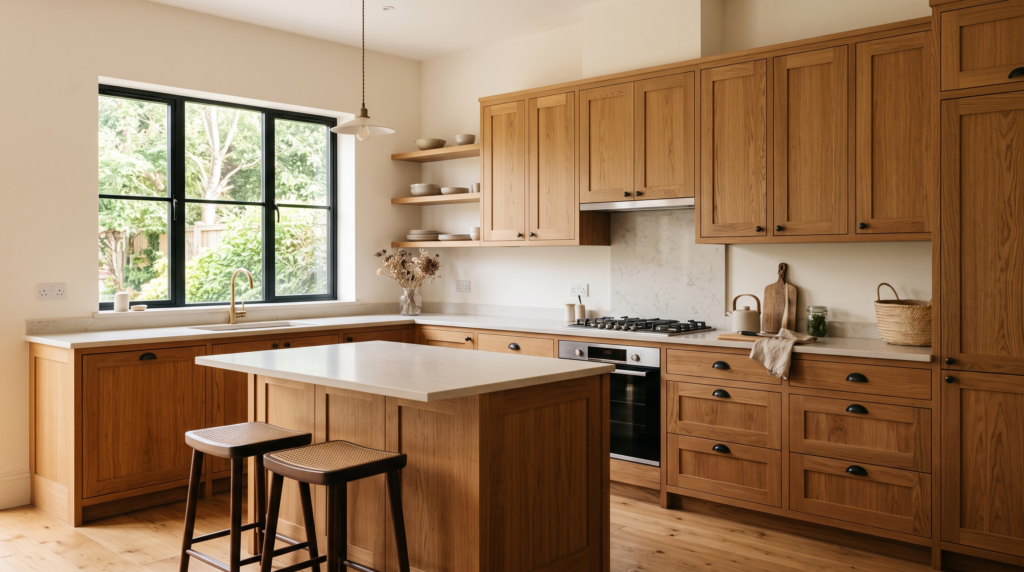
Material matters as much as the profile. Most painted shaker doors use a solid-wood frame around an MDF centre panel, which stays flat and resists the seasonal movement that can crack paint on all-timber doors. Full solid-timber shaker is available for buyers who want natural grain on show, usually stained or oiled rather than painted. Knowing which construction you are quoted on makes price comparisons between suppliers far more honest.
Today the shaker profile is the most widely produced cabinet door in the world. You will find it in mass-market flat-pack ranges, in mid-tier suppliers, and in fully bespoke joinery. That reach is part of the appeal. The same recognisable outline can be pressed cheaply into MDF or built to order in solid oak, so classic shaker cabinets and shaker style kitchen cabinets sit at almost every price point, which is rare for a design this well established.
Shaker Cabinet Styles: Modern, Classic, and Slim Frame
Not every shaker door looks the same. Frame width, panel reveal, and finish all shift the character of the kitchen, which is why white shaker kitchen cabinets can feel traditional or contemporary depending on the profile underneath. Three variations cover most of the market: classic, modern, and slim frame. Choosing between them usually comes down to the overall look you are building toward.
Classic Shaker Kitchen Cabinets
Classic shaker uses a wider stile and rail, usually around 60 to 75mm, with a deeper panel reveal that casts a soft shadow line. It is the profile most people picture when they hear the word shaker. Painted in white, cream, or a heritage tone, classic shaker cabinets suit traditional, farmhouse, and transitional spaces where warmth and detail matter most.
Modern Shaker with Flat Panel Detailing
A modern shaker kitchen tightens everything up. The frame is narrower, the reveal shallower, and the finish leans toward matt colours rather than glossy paint. Some ranges push the centre panel almost flush with the frame, borrowing from flat-panel design. This stripped-back version suits open-plan and contemporary interiors that want a hint of texture without fuss.
Slim Shaker Cabinets
Slim shaker sits between the two. The rail can drop to 40 or 50mm, so the frame is barely there. From a step back the door can look almost flat, with the reveal only visible up close. It is a popular choice for buyers who want inset shaker cabinets with a minimal footprint, or a gentle bridge into flat-panel territory.
Shaker vs Flat Panel Cabinets: Which Is Right for You?
The most common decision buyers face is shaker vs flat panel. Both are excellent, and neither is objectively better. They simply build different kitchens.
A shaker cabinet adds visual depth. The recessed panel and framed edge catch light and shadow, giving the door surface texture and a sense of craft. That detail is why painted shaker doors photograph so well, and why they anchor classic, transitional, and farmhouse kitchens with ease.
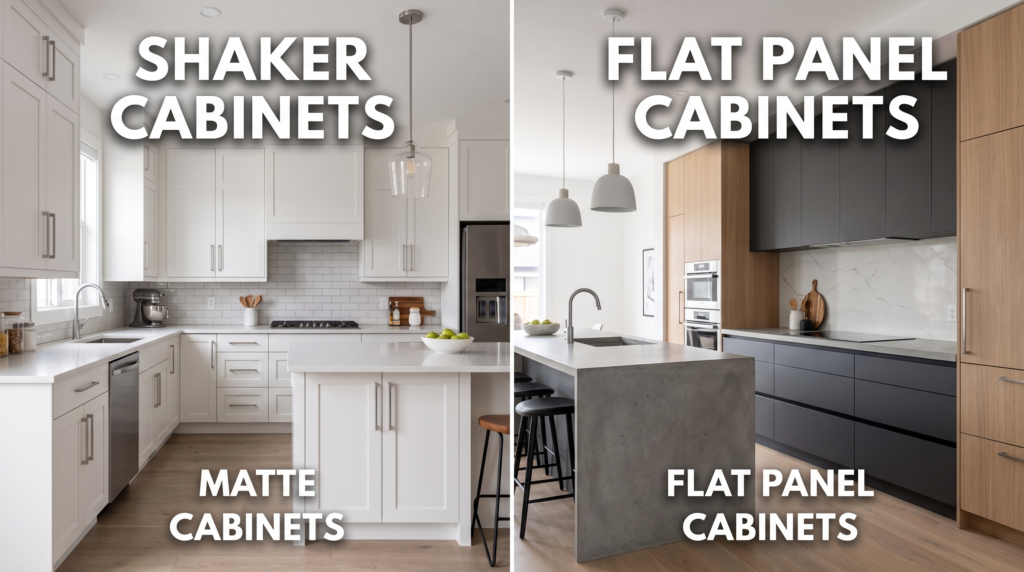
Flat panel does the opposite. The door is a single smooth slab with no frame, which produces a cleaner, more minimal surface. It reflects light evenly and keeps sightlines uninterrupted, making it the natural fit for contemporary, Scandinavian, and minimalist schemes.
The practical differences matter too. A shaker’s recessed panel has a flat inner ledge that gathers a little more dust and takes an extra moment to wipe down, while flat panel clears in a single pass. Neither point is a dealbreaker, but it is fair to weigh if you cook daily. On cost, a shaker door usually sits slightly above a flat equivalent because of the added machining, though the gap is small at most price points.
There is a longevity argument as well. Flat panel tracks closely with contemporary fashion, so a bold flat kitchen can date faster if the trend moves on. Shaker has already proven it can sit through decades of changing tastes, which makes it a safer specification on projects where resale value or long tenancy matters. For rentals, developments, and family homes meant to last, that stability is often the deciding factor.
You do not always have to pick one. A growing number of buyers run both in a two-tone layout: shaker on the perimeter for warmth and flat panel on the island for a modern edge, or the reverse. Combining the two is one of the simplest ways to get a kitchen that feels considered rather than off the shelf.
Best Hardware and Colours for Shaker Kitchen Cabinets
Part of why shaker style kitchen cabinets stay relevant is how well they take colour. The frame and panel give paint something to work with, so tones look richer than they would on a flat door.
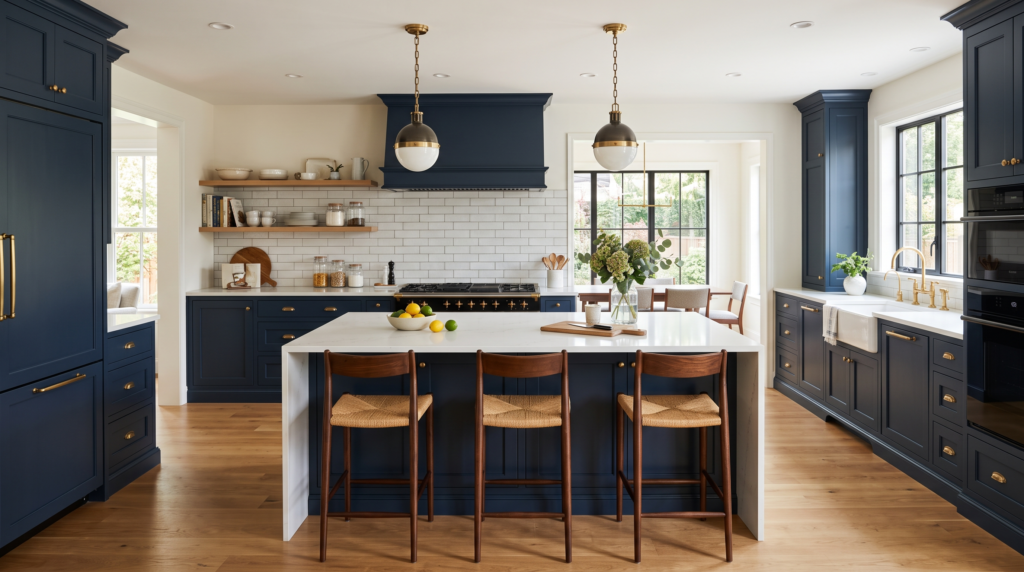
For colour, the dependable options are white and cream for brightness, warm greys for a soft neutral base, and natural timber for a Scandinavian or organic feel. If you want more character, sage green, forest green, and deep navy have all moved into the mainstream and pair beautifully with brass or matt-black fittings.
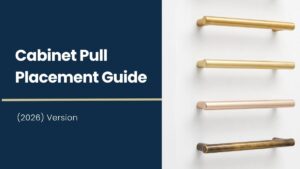
Shaker cabinet hardware is where you set the final tone. Cup pulls and round knobs lean traditional and suit classic, painted kitchens. Bar handles and long pulls sharpen the look for a modern shaker kitchen. And if you want the frame to speak for itself, push-to-open mechanisms let you drop hardware altogether while keeping the shaker outline visible.
Finish quality is worth a question of its own. A factory-sprayed, oven-cured paint is far more hard-wearing than a hand-brushed one, and it resists chips and yellowing around the hob and sink. If you are choosing a strong colour, confirm whether the finish is sprayed or brushed before you commit. Beyond that, the flexibility is the whole point: a single shaker door will happily wear an aged-brass cup pull in a country kitchen or a slim matt-black bar in a city flat, which is why builders and designers keep specifying it across such different projects.
Custom Shaker Kitchen Cabinets from Parlun
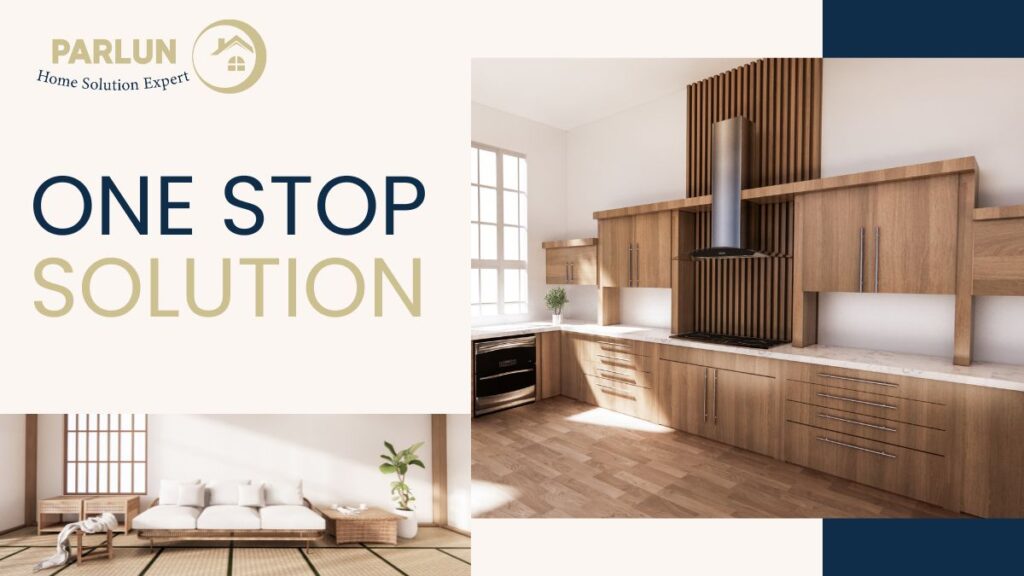
Parlun manufactures custom shaker cabinets to order, in any size, colour, and finish. Whether your project calls for a wide classic profile or a slim, modern frame, every shaker cabinet is built to your specification rather than pulled from a fixed range. That means true inset options, non-standard cabinet widths, and colour matching to a specific paint code are all achievable.
As a direct manufacturer, Parlun supplies kitchen cabinets from China at factory pricing, without the markup that usually sits between a workshop and a showroom floor. Every order includes a free design consultation and 3D rendering, so you can see the layout and finishes before anything is cut. Worldwide delivery means the same specification can ship to a single home renovation or an entire development.
If you are comparing suppliers, it is worth requesting a quote alongside your other options. For related styles, see our modern kitchen cabinets and handleless kitchen cabinets pages, both of which pair naturally with shaker in a two-tone kitchen.