Walnut kitchen cabinets bring a level of warmth, richness, and character that few other materials can match. As a premium natural wood with deep, expressive grain patterns, walnut suits a broad range of styles, from clean contemporary kitchens to transitional and classic designs. Whether you prefer the golden honey tones of a natural walnut kitchen or the drama of dark walnut, bringing these walnut kitchen cabinet ideas to life comes down to style choices, countertop pairings, and custom details.
Why Walnut Is One of the Best Woods for Kitchen Cabinets
Walnut has earned a consistent place at the top of high-end kitchen design for several practical and aesthetic reasons. Understanding what makes it well suited to kitchens helps clarify whether it is the right material for your project.
Hardness and durability. Walnut sits at around 1,010 lbf on the Janka hardness scale. That puts it comfortably ahead of most softwoods and in the same range as cherry. It handles the demands of a busy kitchen without denting or showing surface wear quickly, which matters in a space that gets used every day.
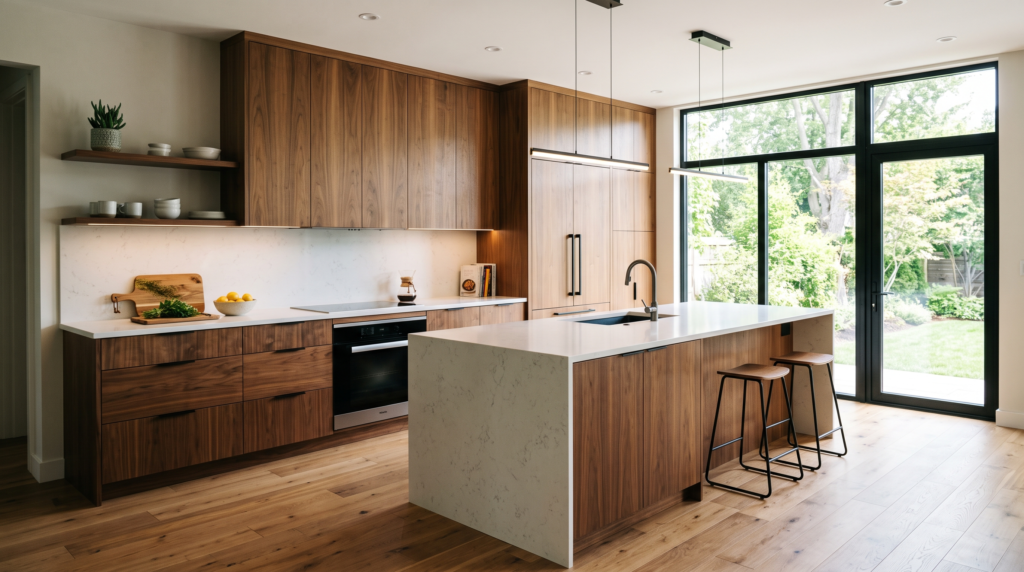
Natural grain variation. No two walnut cabinet fronts look exactly the same. The wood’s naturally wavy, interlocked grain creates movement and depth that paint or laminate cannot replicate. This variation is a feature, not a flaw. It is part of what gives walnut kitchen cabinets their handcrafted, premium feel even in a factory-produced door.
Finish versatility. Walnut accepts oil, lacquer, and varnish finishes exceptionally well. An oiled walnut surface develops a natural sheen over time and remains repairable at home with a simple top-up coat. A lacquered finish offers a more uniform appearance across a full run of cabinets while still allowing the natural walnut grain to read through.
Warmth. Unlike painted cabinets, natural walnut kitchen cabinetry introduces an organic element that softens modern spaces. The wood’s warm brown tones prevent an all-white or all-grey kitchen from feeling cold or clinical, while still looking refined and contemporary.
Range of tones. Walnut spans a wide tonal range within a single species. Light natural pieces sit in honey-brown territory, while dark walnut cabinets from black walnut trees approach near-espresso tones with intense grain contrast. That range makes walnut usable across kitchens with very different design directions, from pale Scandinavian-inspired schemes to bold, contrast-led interiors.
Walnut Kitchen Cabinet Styles
When exploring walnut kitchen cabinet ideas, the door profile you choose defines the entire tone of the space, shaping how the natural grain interacts with light, hardware, and layout.
Flat Panel Walnut Cabinets
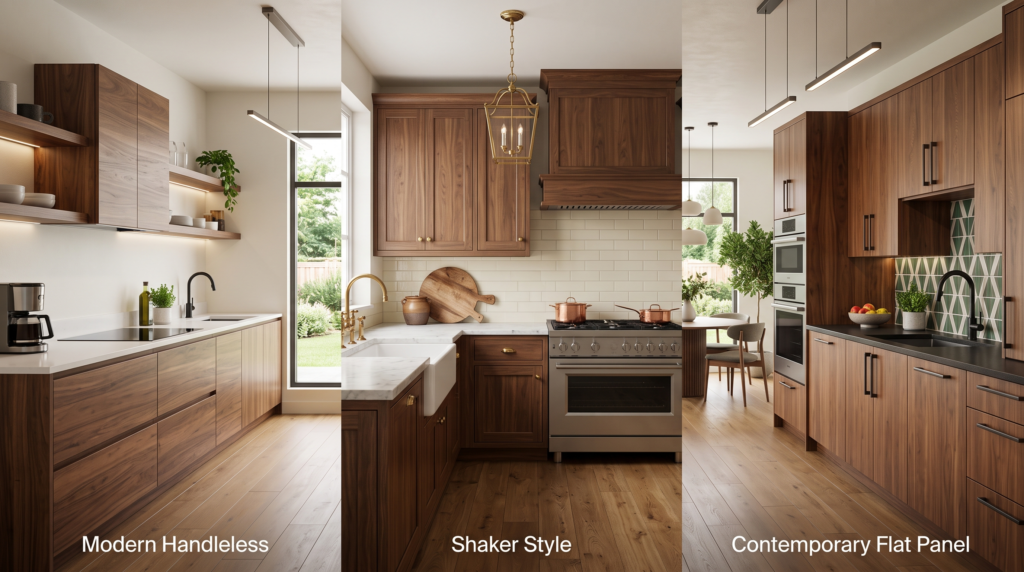
Flat panel walnut cabinets, also called slab doors, are the cleanest expression of the wood. With no frame or raised detail to interrupt the surface, the full walnut grain is visible from edge to edge across each door. This makes flat panel the right choice for contemporary and modern kitchens where texture and natural variation do the visual work.
Walnut flat panel cabinets pair especially well with integrated or push-to-open hardware, which removes any visual distraction from the wood itself. They also work well alongside minimal upper cabinetry or open shelving, which allows the lower cabinet run to appear as a single continuous surface.
Walnut Shaker Cabinets
Walnut shaker cabinets use a five-piece door construction with a recessed centre panel framed by rails and stiles. The added structure gives shaker doors a classic, grounded look that suits transitional and traditional kitchen styles without feeling heavy or fussy.
In walnut, the shaker profile is particularly effective because the grain runs through both the frame and the panel, creating a coherent look even though the door is constructed in pieces. Walnut shaker cabinets work well with both brushed brass and matte black hardware, and they pair naturally with stone countertops in lighter tones.
Handleless Walnut Cabinets
Handleless walnut cabinets, fitted with either a push-to-open mechanism or a routed J-pull profile along the top or side of the door, are among the most popular choices in contemporary European kitchen design. Removing hardware entirely lets the walnut grain dominate the composition from floor to ceiling.
This style works best in larger kitchens where an uninterrupted run of walnut across multiple cabinets creates a strong, cohesive visual statement. In smaller kitchens, the lack of hardware can make individual doors harder to read, so proportions matter.
Light Walnut vs Dark Walnut: Which Should You Choose?
The tonal range within walnut is wider than most buyers expect, and the choice between light and dark walnut is one of the first decisions to make before placing an order.
Light walnut cabinets sit in the warm honey-brown range. The colour is natural and unfussy, and it performs particularly well in smaller kitchens or rooms with limited natural light. Light walnut brings warmth without feeling heavy or enclosing. It pairs well with white or off-white countertops for a natural, balanced composition.
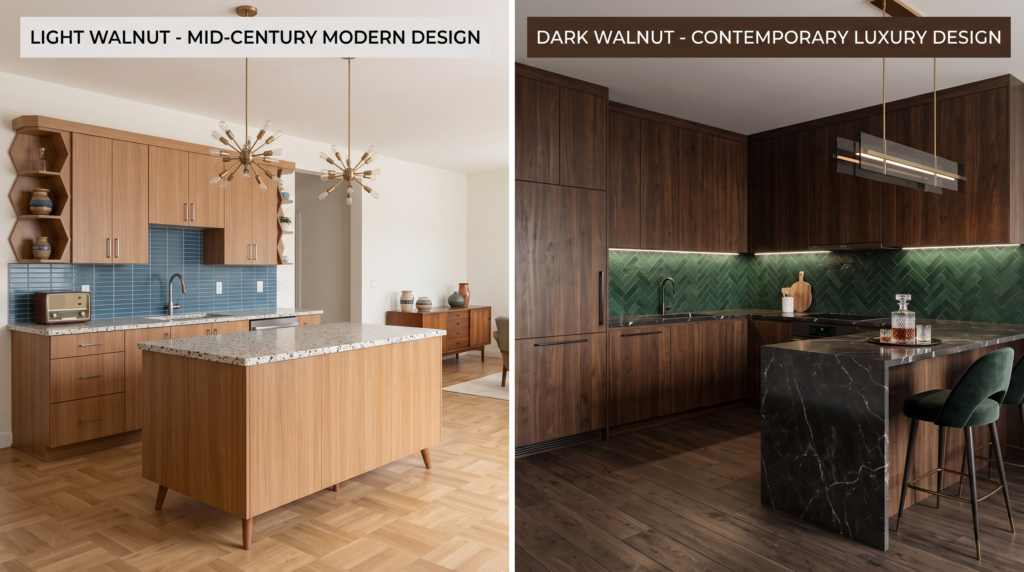
Dark walnut cabinets, including those produced from black walnut, shift toward near-espresso tones with strong, dramatic grain contrast, yielding an aesthetic that is both sophisticated and high-impact. A black walnut kitchen suits large, open-plan kitchens with good natural light. Without adequate light, very dark cabinets can make a space feel enclosed, so the room’s proportions and window layout should influence the decision. Paired with a pale countertop, the contrast is intentional and striking.
Stained walnut offers a middle ground. A mid-brown stain applied to walnut veneer can darken a naturally lighter piece to match a specific direction, or unify grain variation across a larger cabinet run. This gives designers and homeowners more control over the final tone while retaining the wood’s natural character.
If you are working from images or product pages, always request a physical sample before finalising. Light and dark walnut can appear quite different across devices, and the difference between a natural light walnut and a mid-stained walnut is significant in a finished kitchen.
Best Countertops for Walnut Kitchen Cabinets
Walnut is a forgiving base for countertop selection, and several materials complement it well.
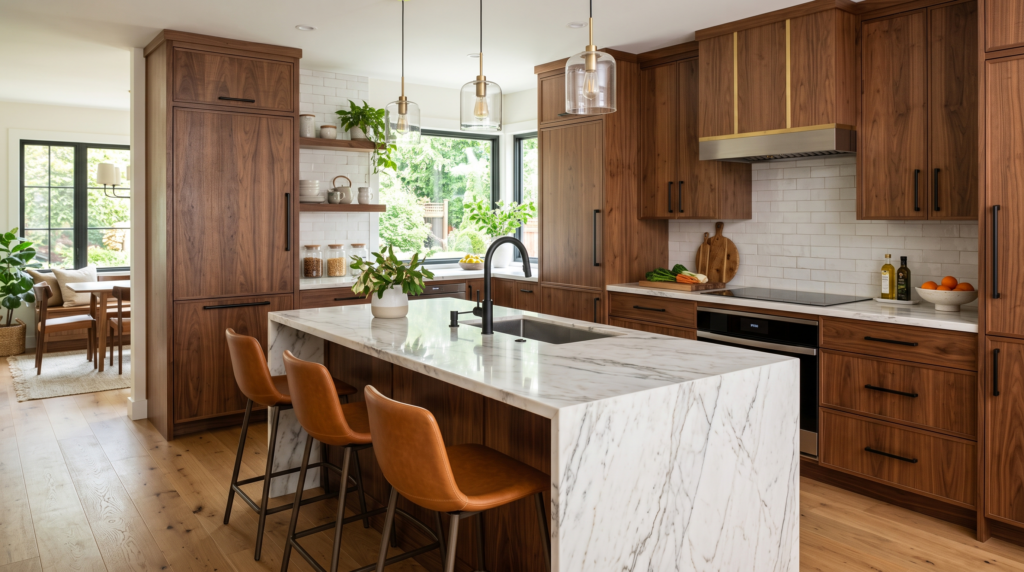
White quartz or marble-look stone is the most popular pairing for walnut kitchen cabinets. The contrast between the wood’s warm brown tones and a cool white or veined stone surface is striking without being harsh. A walnut and white kitchen offers a warm, clean, and contemporary aesthetic. This combination appears consistently in high-end residential kitchen design and remains the most requested pairing from interior designers working with walnut cabinetry. It suits both light walnut and dark walnut equally well, though the contrast is more dramatic with darker wood tones.
Dark countertops in charcoal quartz, black granite, or black soapstone create a tonal pairing with dark walnut cabinets. The look is cohesive and sophisticated, and the overall effect is intentionally moody. This combination is visually heavy, however, and works best in large kitchens with strong overhead lighting and a lighter wall colour to open the space.
Concrete or natural stone in mid-grey or warm beige tones pairs naturally with walnut’s organic character. This earthy, biophilic combination suits kitchens designed around natural materials throughout, including exposed wood shelving, stone splashbacks, and clay or linen-toned walls. It prevents the space from feeling too polished or showroom-like.
Butcher block or wood. Some designers pair walnut cabinets with an end-grain timber countertop in a contrasting species such as maple or white oak. Warm and distinctly tactile, it works particularly well in island configurations where the countertop sees food preparation rather than constant water exposure.
For most projects, a white or light-toned countertop is the more flexible and broadly appealing starting point.
Custom Walnut Kitchen Cabinets from Parlun
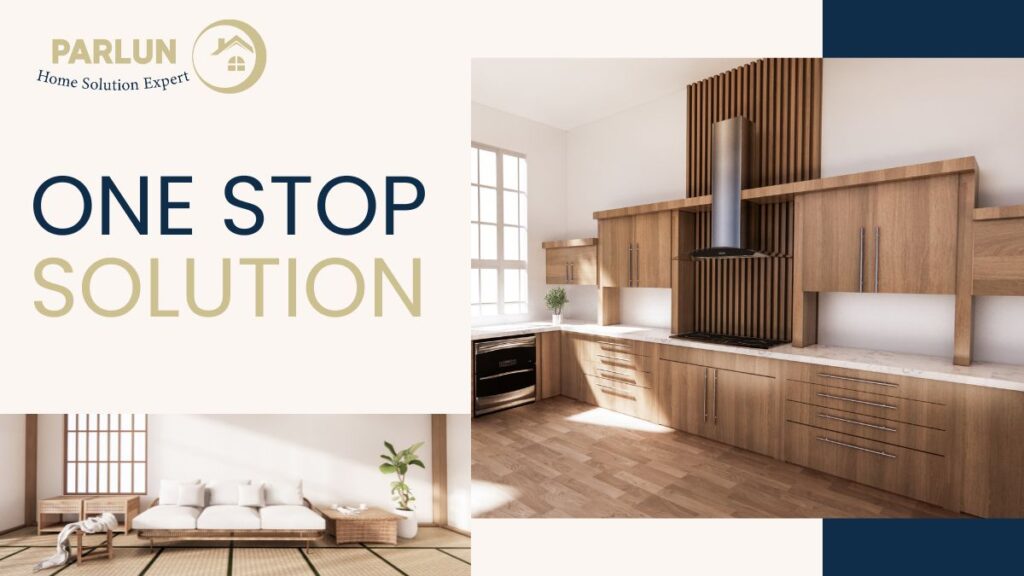
Parlun manufactures custom walnut kitchen cabinets for residential projects, kitchen designers, and builders worldwide. As a premier manufacturer providing high-end kitchen cabinets from China, Parlun builds all walnut cabinetry using real walnut veneer over engineered MDF or plywood carcasses, giving a consistent, stable door front that will not warp or check the way solid wood doors can in high-humidity environments.
Door styles include flat panel and shaker profiles, with several stain options across the full light-to-dark walnut range. Because every order is manufactured to specification, custom sizing is available for kitchens with non-standard dimensions or complex layout requirements.
There is no minimum order on most configurations. Parlun ships walnut kitchen cabinets globally. Both flat-pack and factory-assembled options are available depending on the project and installation method.
For mixed-finish projects, Parlun can combine walnut veneer cabinets with painted doors from a single order. This is a common configuration for kitchens with walnut lowers and white or painted uppers, which is one of the most requested walnut kitchen cabinet ideas among current buyers.