Cherry cabinets bring a warmth that few materials can match. The wood starts pale, with a pinkish-blonde tone, and deepens over months and years into a rich reddish-brown through a natural process called patina. That slow transformation is what makes cherry wood kitchen ideas so enduring: the kitchen improves with age rather than needing replacement to stay current. For homeowners, builders, and designers who want a classic, traditional kitchen with genuine material character, natural cherry cabinets remain one of the most compelling choices available.
What Is Cherry Wood and Why It Is Used for Kitchen Cabinets
Cherry (Prunus serotina) is a fine-grained hardwood native to North America. Fresh-cut cherry starts with a light, pinkish-blonde tone and subtle grain patterning, and cherry wood cabinet color shifts gradually toward a warm, rich reddish-brown as the wood is exposed to light and air. This transformation happens over months rather than days, continues for several years, and requires no intervention from the homeowner.
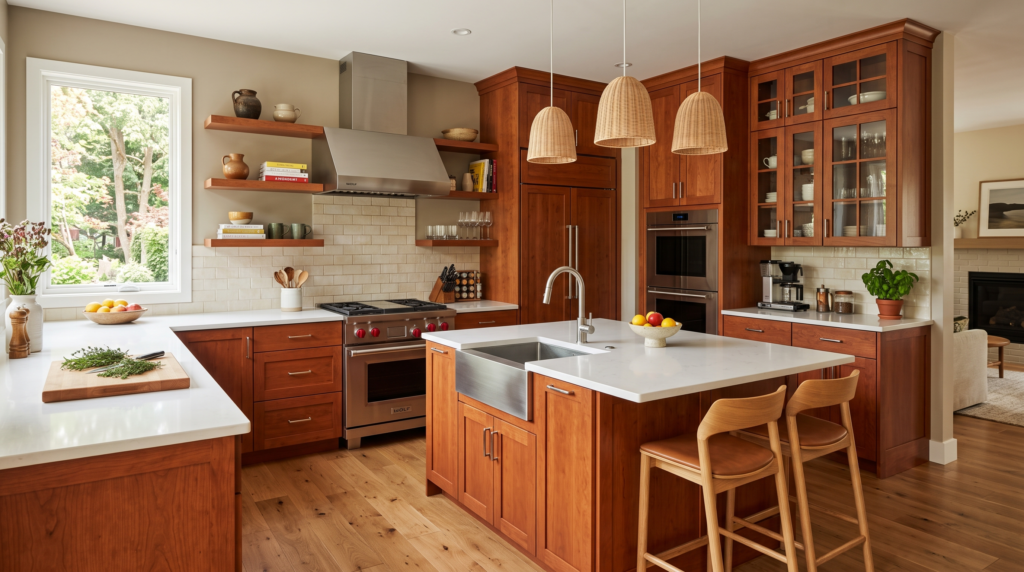
That color evolution is what distinguishes cherry from most other cabinet woods. Most hardwoods fade or yellow with age. Cherry deepens. For traditional and transitional kitchens, that characteristic is a genuine design asset: the material becomes more visually complex over time without additional staining or refinishing.
Natural cherry cabinets are also valued for their workability. The wood machines cleanly, holds routed profile detail well, and accepts stains and finishes smoothly. These properties make it well-suited to furniture-grade cabinetry where crisp edges and refined surfaces matter to the buyer. The grain is typically straight with occasional wavy figure, and the heartwood can display small gum pockets that add visual interest.
Cherry has been a furniture and cabinetry standard for centuries, particularly in American and European classical traditions. Its continued relevance in kitchen design comes down to three practical qualities: long-term durability, consistent workability across door styles and profiles, and an appearance that improves rather than degrades with age.
Cherry Cabinet Stain Options
Choosing a stain or finish is one of the most consequential decisions in a cherry cabinet project, because cherry’s natural color-shifting behavior interacts differently with each treatment. Understanding the options helps buyers set accurate expectations for how the kitchen will look at installation and how it will develop over time.
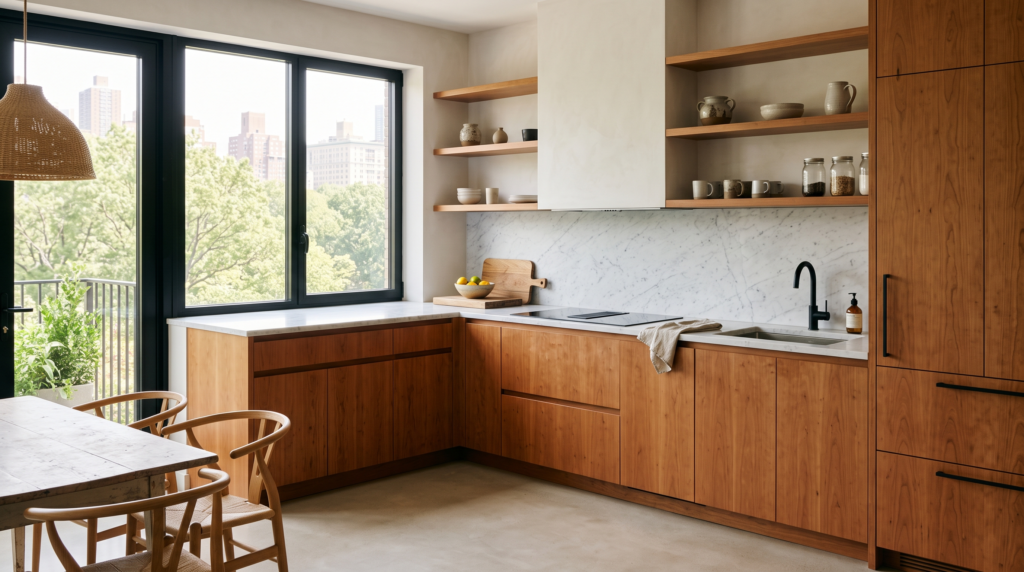
Natural Cherry Cabinets
A clear or lightly tinted lacquer lets natural cherry cabinets show their full color evolution. Fresh installation produces a light, warm tone with visible grain; over one to three years, the wood deepens on its own toward honey-amber and eventually reddish-brown. Rooms with consistent natural light accelerate the process. Cherry wood kitchen ideas that prioritize authenticity and organic character typically favor this approach, since the patina cannot be replicated with any stain.
Dark Stained Cherry Cabinets
A walnut-brown or espresso stain applied over cherry produces dark cherry kitchen cabinets with a more formal, deliberate appearance. The stain compresses natural color variation and creates a uniform, deep tone across all doors and frames. Cherry shaker cabinets work particularly well finished this way: the clean, recessed-panel profile of the shaker door balances the weight of a dark stain without looking heavy or oppressive. Stained cherry shaker cabinets are a strong option for buyers who want a polished, finished look from day one rather than waiting for patina to develop.
Painted Cherry Cabinets
Cherry is not the obvious choice for a painted finish, but the wood takes paint well because of its fine, tight grain and smooth surface. Painting opens up a range of modern cherry kitchen aesthetics, with white, sage green, and deep navy among the more common choices. The tradeoff is that paint covers the grain entirely, eliminating the natural beauty that makes cherry distinctive in the first place. For buyers drawn to cherry for its visual character, painting the cabinets removes the primary reason to choose the species over a less expensive substrate.
Cherry Cabinets with White Countertops
Cherry cabinets with white countertops are the most searched pairing in this category. White quartz or marble-look surfaces create a direct contrast with the warm reddish tones of cherry, and that contrast has a specific visual effect: it lifts the kitchen, brightens the overall palette, and prevents the warmth of the wood from making the space feel enclosed.
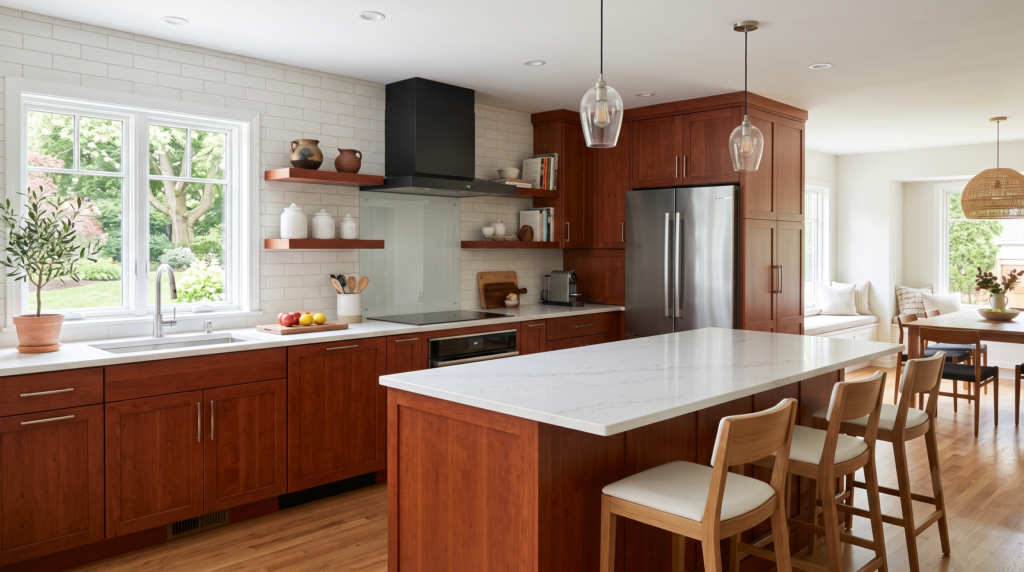
White quartz is the most practical choice. It is non-porous, requires no sealing, and its brightness stays consistent over years of daily use. A white quartz countertop alongside natural cherry cabinets produces a kitchen that feels simultaneously warm and fresh, with the stone keeping the composition from tipping into darkness as the wood deepens over time.
Marble-look slabs, whether natural marble or porcelain in a marble finish, add a more formal quality. The veining in white-and-grey marble introduces visual texture that works well against the smoother, more uniform grain of cherry. For cherry wood kitchen ideas that lean traditional or transitional, a honed Carrara-style surface or marble-look quartz creates a combination with genuine material depth.
For kitchens with enough ceiling height, a two-tone arrangement can work well: dark cherry kitchen cabinets on the lower run paired with lighter uppers, with the white countertop acting as the visual dividing line between the two. The contrast becomes a deliberate design choice rather than a problem to manage.
Backsplash tile choices matter in this pairing. White or off-white subway tile, or a soft grey mosaic, keeps the focus on the countertop and cabinet combination without introducing a competing visual layer.
Best Hardware and Wall Colors for Cherry Cabinets
Hardware finish and wall color each have a significant effect on how cherry cabinets perform in a finished kitchen. Both decisions should be resolved before committing to cabinetry, since they influence the overall tone of the space as much as the cabinet stain itself.
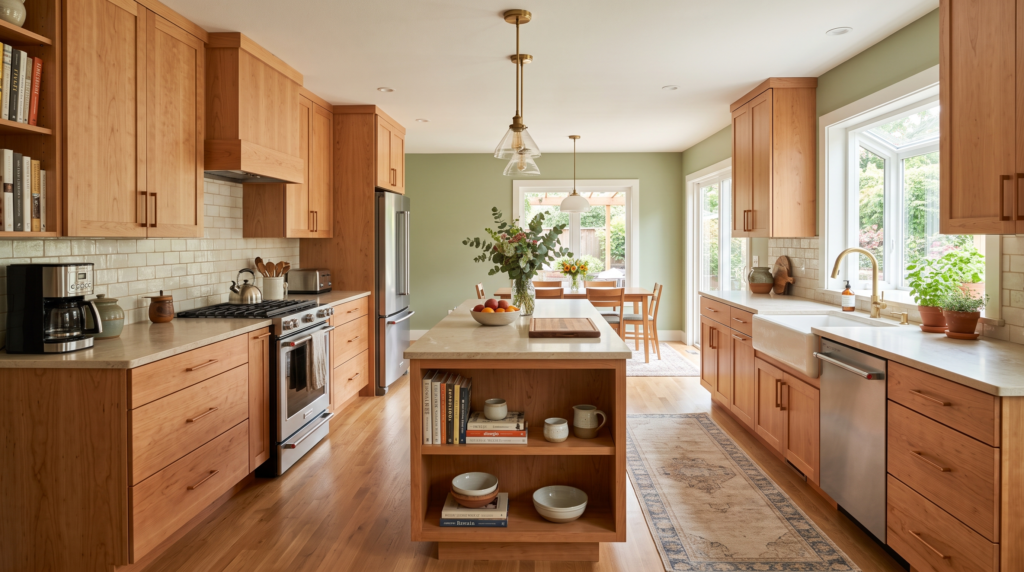
Cherry Cabinet Hardware
Oil-rubbed bronze is one of the most reliable finishes for cherry cabinet hardware. Its dark, slightly textured surface does not compete with the warmth of the wood, and the traditional character of the finish suits cherry’s classical associations. Antique brass and dark nickel are equally effective. Both finishes carry enough warmth or depth to complement rather than clash with cherry’s reddish tones.
Chrome is the main finish to avoid. Chrome’s cool, blue-tinted reflectivity works against cherry’s warmth and makes the combination feel tonally disconnected. Brushed nickel can run similarly cool depending on room light; if nickel is preferred for other reasons, opt for a warmer, more yellow-toned version or substitute with unlacquered brass.
In a modern cherry kitchen, minimalist bar pulls in oil-rubbed bronze or matte black update the hardware language while leaving the warmth of the cabinet intact.
Wall Colors
Cream, warm white, soft sage, and warm beige are the wall colors that perform best alongside cherry cabinets. Each of these supports the reddish warmth of the wood rather than working against it.
Grey is the main color to avoid. Cooler grey tones pull against cherry’s warmth and make the cabinets appear darker and heavier than they are. Rooms that already include grey flooring or grey stone countertops should compensate with warmer finishes on the walls rather than extending the cooler palette further.
Warm sage works because its green undertone sits adjacent to cherry’s reddish-brown in the color spectrum, making the two feel related. Cream and warm white simply let the cabinetry lead without introducing a contrasting palette.
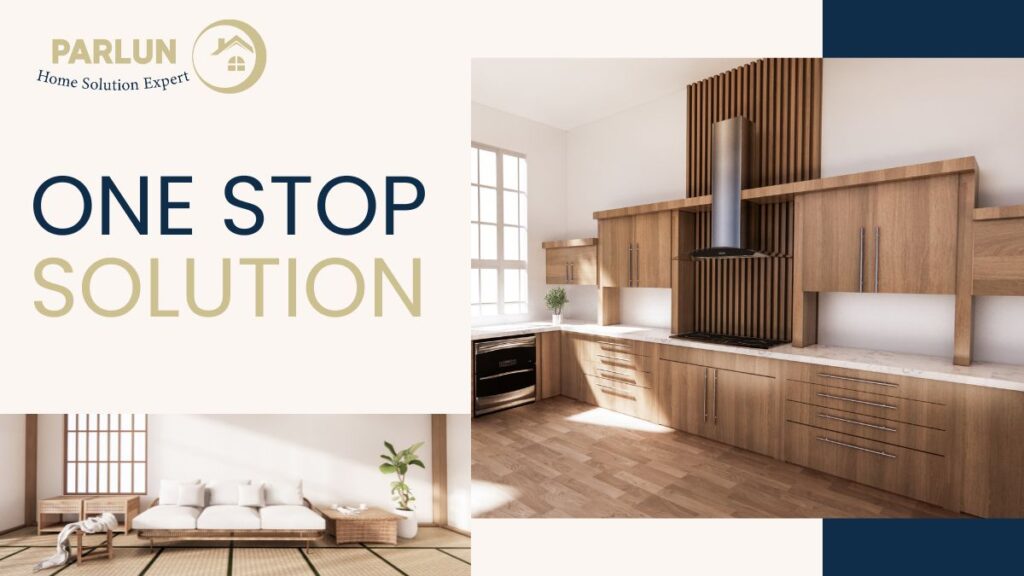
Custom Cherry Kitchen Cabinets from Parlun
Parlun manufactures cherry cabinets and cherry-look veneer cabinetry to fully custom specifications from its factory in China. Door profiles include shaker, flat panel, and raised panel options, each available in a range of finishes covering natural, medium walnut, and espresso stain tones.
For projects where solid cherry represents a budget constraint, Parlun’s cherry veneer cabinets use real wood veneer over a stable engineered substrate. The surface appearance is equivalent to solid wood, and the dimensional stability of the substrate reduces the risk of warping in climates with significant humidity variation across seasons.
Parlun produces custom kitchen cabinets built entirely to order, which means sizing is flexible across all cabinet runs. Standard, tall, and upper configurations are available, as are custom modifications for non-standard ceiling heights, appliance cutouts, or site-specific architectural constraints. For buyers sourcing kitchen cabinets from China, Parlun ships worldwide with full packaging engineered for container freight, and sample doors are available on request to confirm finish quality and wood appearance before committing to a full order.
For kitchen designers and builders working across multiple projects, Parlun supports project-level pricing and account management for recurring orders.
Contact Parlun directly for specification sheets, current lead times, and sample availability.