Corner cabinets are among the most debated spaces in any kitchen. The problem is not the corner itself. It is the dead space hiding behind closed doors where you reach in blindly and lose track of what you own. Every L-shaped or U-shaped kitchen has at least one corner, and most owners either fill it with rarely used items or leave it half empty. The right corner kitchen cabinet ideas can turn this neglected area into productive storage. This guide compares eleven proven mechanisms, from lazy Susans to magic corners and LeMans pullouts, so you can choose the solution that best suits your layout, budget and daily routine.
Quick Summary of Corner Kitchen Cabinet Ideas
The best corner kitchen cabinet ideas fall into three groups by access type. Rotating shelves, including full-circle and pie-cut lazy Susans, suit wide openings and tight budgets. Swing-out and pull-out units such as the magic corner cabinet and LeMans pullout maximise usable depth and are well suited to mid-range renovations. Corner drawers and open shelving work well in smaller kitchens where door clearance is limited.
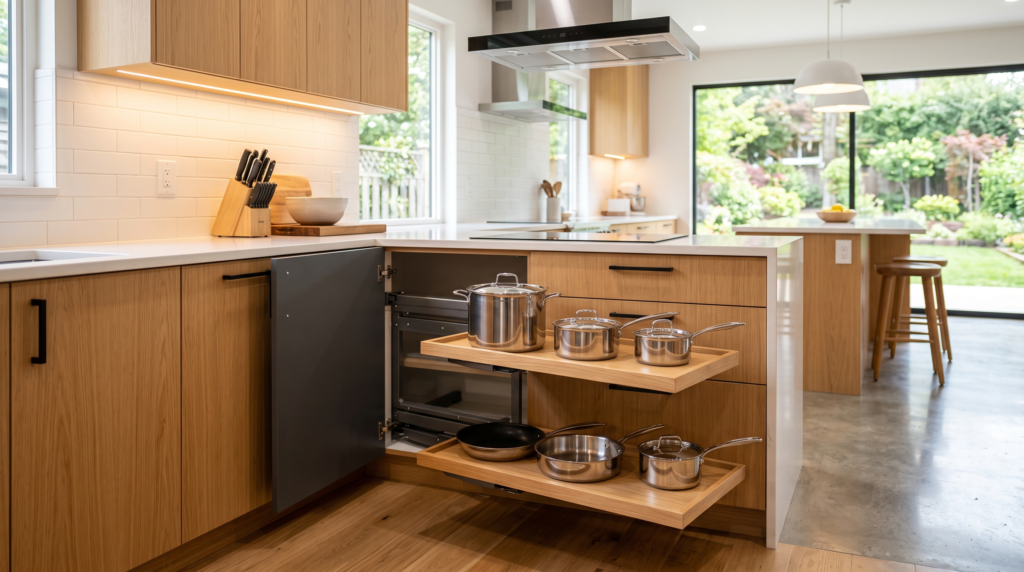
Your choice depends on your opening width, the size and weight of items you store, and your budget for hardware. A 900 mm base corner suits most mechanisms, but some pullout systems need up to 1,000 mm of opening width. Filler panels, door swing and appliance clearance all affect which solution fits.
Choose the right corner kitchen cabinet solution and the dead zone at the back of your kitchen becomes storage you rely on every day.
Why Kitchen Corners Waste Space
When two runs of cabinets meet at a right angle, the cabinetry on one side always blocks access to the other. This overlap creates a blind corner, a pocket of space that is technically inside the cabinet but almost impossible to reach without bending or turning.
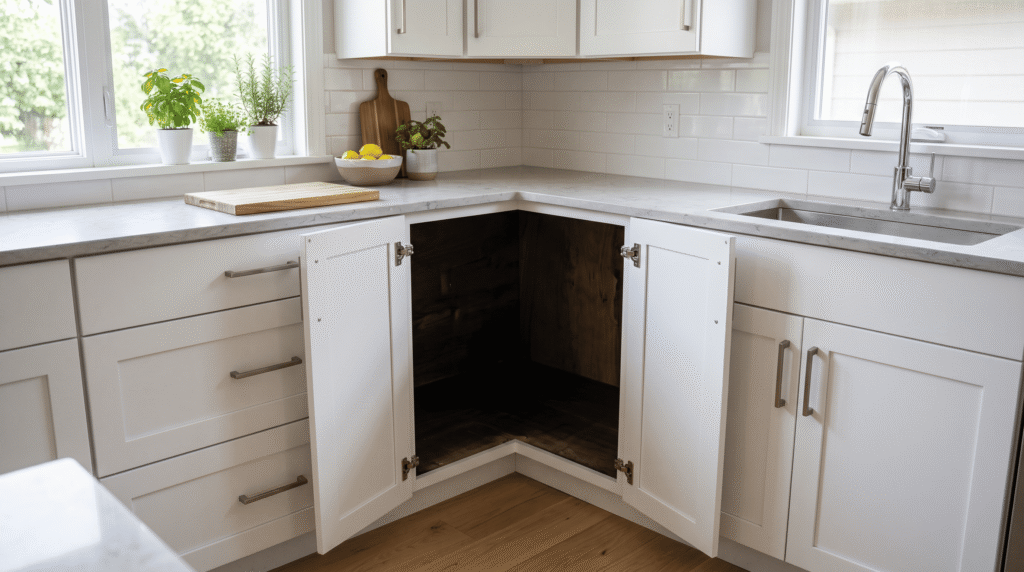
Bifold doors on standard base cabinets make this worse. Opening one door restricts access to the adjacent door, and items pushed to the back become invisible. Unlike straight runs, corner base cabinets often have two small angled doors where neither gives you a clear view inside.
You buy the square footage but cannot see or reach a significant portion of it. Improving corner storage starts with choosing a mechanism designed to bring the back of the cabinet forward, rather than expecting you to reach in and feel around.
Best Corner Kitchen Cabinet Solutions
Full Circle Lazy Susan
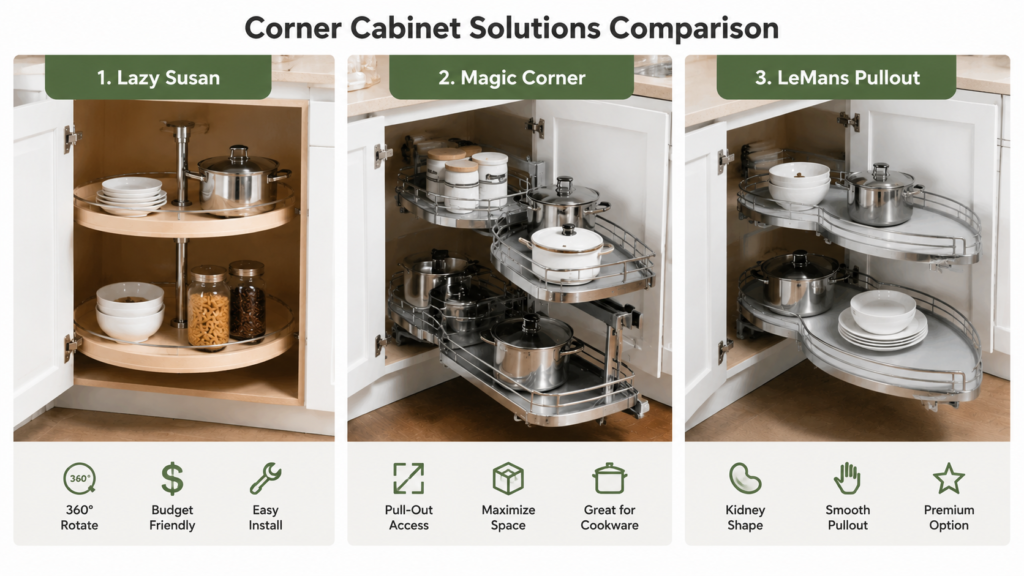
A full-circle lazy Susan uses two or three round rotating shelves mounted on a central pole. It fits a standard 900 mm corner base and costs less than most pullout systems. Items at the back rotate forward as you turn the shelf, though the central pole limits storage of awkward shapes like tall bottles.
Pie Cut Lazy Susan
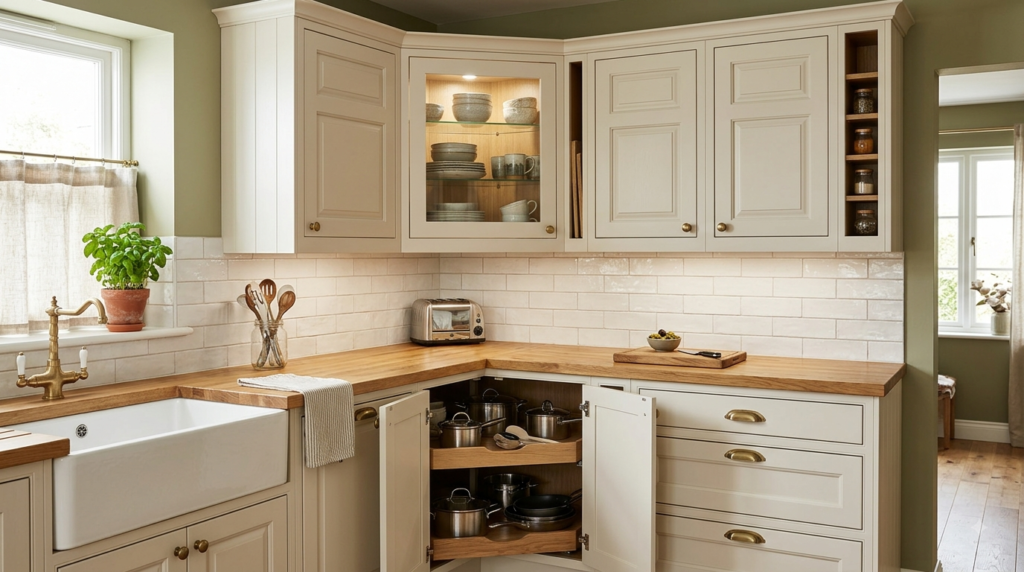
Pie-cut shelves are shaped like quarter circles and are attached directly to the inside of bifold doors. When you open the doors, the shelves swing out with them and bring everything into view. They work well in existing cabinets without requiring major structural changes.
Magic Corner Cabinet
A magic corner cabinet uses a two-tier folding frame inside the base unit. When you open the door, the front basket slides forward first, allowing the rear basket to glide sideways into view beside it, bringing everything in the blind corner within reach. Most units need at least 450 mm on the blind side to operate correctly.
LeMans Pullout
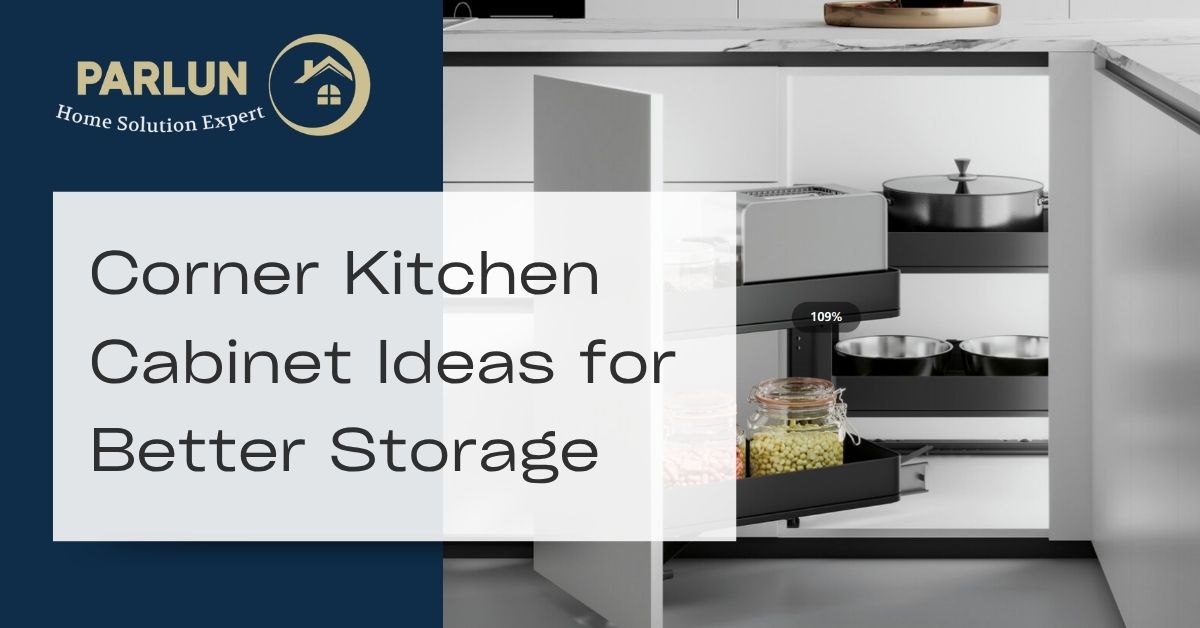
The LeMans cabinet uses crescent-shaped wire baskets mounted on a pivoting arm. Opening the door gives full access to the arc-shaped baskets, which pull out smoothly along their pivot arm. The system requires around 500 to 600 mm of internal depth and works best in corner bases with a generous opening width.
Blind Corner Drawers
Rather than opening into a deep cavity, some cabinet makers install wide drawers on the accessible side of the blind corner. The drawers do not reach the full corner depth, but they keep everyday items visible and reachable without any additional mechanism or hardware.
Diagonal Corner Cabinet
A diagonal or angled corner cabinet cuts across the corner at 45 degrees and replaces the blind area with a single wider door. The interior is easier to view and organise, and a simple rotating shelf or pull-out basket works well inside the wider carcass.
Corner Drawers
Corner drawers are mitred at 45 degrees and open independently from both sides of the corner. Each drawer is a different shape, but together they use the corner space without a central pole or folding frame. They are more expensive to build than standard mechanisms but suit contemporary kitchen designs well.
Open Corner Shelving
Removing the cabinet doors and fitting floating shelves in the corner creates an open display area. This works well for cookbooks, baskets or decorative items. It lightens the visual weight of the room and is one of the more affordable corner kitchen cabinet solutions to retrofit.
Appliance Garage
A tall narrow corner cabinet with a roll-up or pocket door can house a stand mixer, toaster or kettle at counter height. This keeps worktop appliances accessible without taking up bench space elsewhere and is one of the more practical corner kitchen cabinet ideas for regular cooks.
Corner Sink
Fitting the sink in a corner is less common but efficient. The corner position frees up counter space on both adjacent sides and can simplify plumbing when the drain stack is in that wall. It is worth considering during a full kitchen renovation if your layout allows for it.
Tall Corner Pantry
A tall corner pantry cabinet runs floor to ceiling and uses the full height of the corner. When designed as part of a complete kitchen build, it can draw on depth from both walls and provide substantial dry storage without taking any floor space from the working area.
Lazy Susan Compared with Magic Corner and LeMans
Three of the most popular mechanisms each solve the corner problem in a different way. The right choice depends on how you cook, what you store and how much you want to spend on hardware and installation.
|
Metric |
Lazy Susan |
Magic Corner |
LeMans Pullout |
|---|---|---|---|
|
Access type |
Rotating shelves |
Folding slide-out |
Pivoting arc |
|
Usable space |
Moderate |
High |
High |
|
Key dimension |
900 mm base |
450 mm blind side |
500–600 mm depth |
|
Installation cost |
Low |
Mid to high |
Mid to high |
|
Maintenance |
Straightforward |
Moderate |
Moderate |
|
Best suited to |
Budget builds, heavy cookware |
Full depth corner access |
Ergonomic, smooth-glide use |
A lazy Susan suits buyers who prioritise cost and simplicity. A magic corner makes far better use of deep corners and is easier to see into once open. A LeMans unit offers smooth, ergonomic access but needs a generous cabinet depth to allow the pivoting arm to sweep correctly.
Corner Cabinet Ideas for Small Kitchens
Small kitchens demand efficient solutions that do not compromise on door swing or aisle width. In a compact layout, a large bifold door that swings 90 degrees on each side can block the walkway while you are retrieving something from the corner.
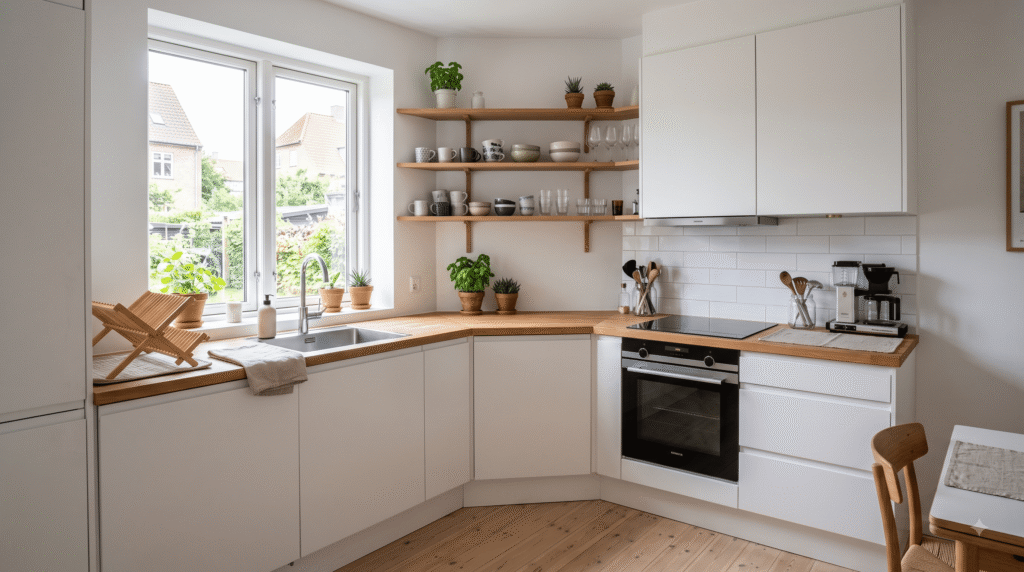
Corner drawers are a strong option in tighter spaces because they open straight out with no wide swing arc. Open corner shelving is another practical choice. Removing the doors reduces visual weight and makes the corner feel less enclosed. A pie-cut lazy Susan fitted to existing bifold doors is the most cost-effective improvement for a small kitchen without major cabinet work.
A diagonal corner cabinet limits the swing to a single door at 45 degrees, making it one of the best blind corner cabinet ideas for narrow kitchens or galley extensions. When planning any of these, measure the aisle clearance from the fully open door to the opposite cabinet before committing to a mechanism.
Planning Dimensions and Door Clearances
Getting the dimensions right before ordering saves significant cost and avoids rework on site.
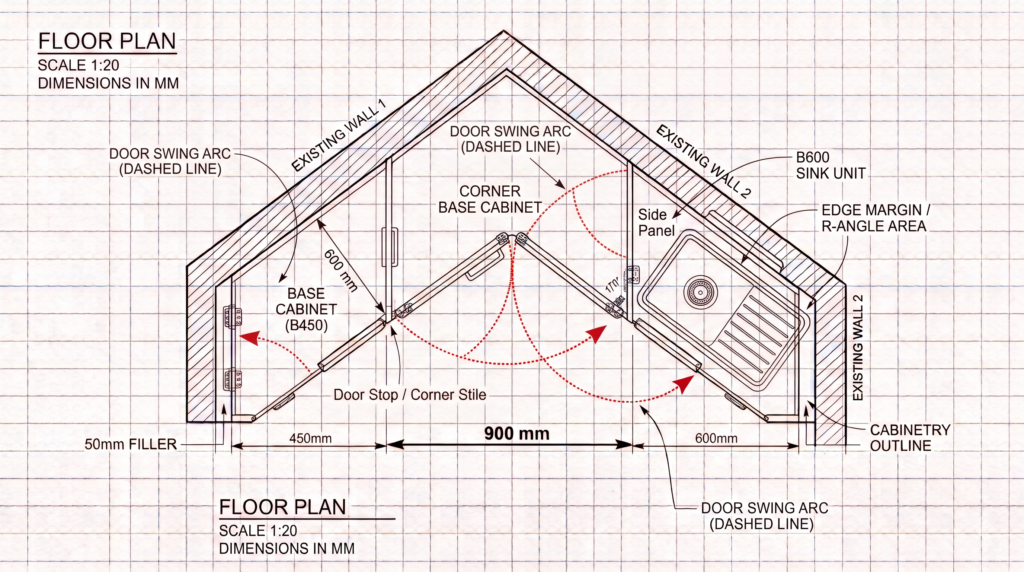
Standard corner base dimensions to verify before ordering:
Door clearance deserves careful attention. A standard 600 mm door swings through a wide arc and can knock against adjacent appliance handles, walls or protruding fixtures. Filler panels of 50 to 100 mm between cabinet runs resolve tight clearances without a complete layout change.
For L-shaped kitchen cabinets with a corner run, check that upper wall cabinet doors can open freely without catching on the corner base below. If in doubt, ask your supplier to confirm clearances against your dimensioned plan before placing an order.
How to Choose the Right Corner Solution
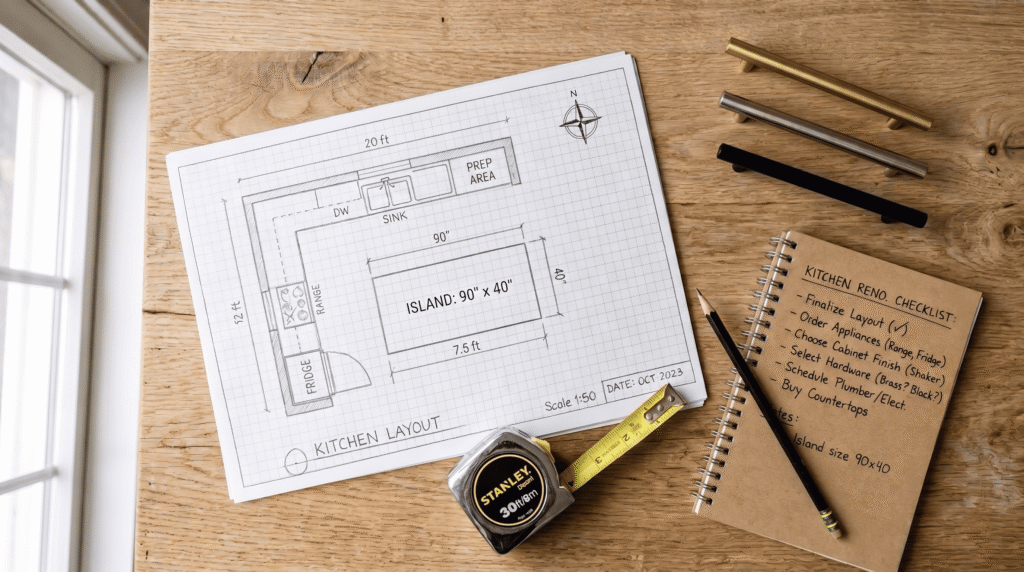
Work through this checklist before deciding on a corner mechanism.
Custom Corner Cabinets from Parlun
Standard corner mechanisms work well for most kitchens, but off-the-shelf sizing does not always suit unusual layouts, angled walls or large-scale project builds. Parlun Building manufactures custom kitchen cabinets factory-direct from Foshan, covering a full range of corner configurations including L-shaped kitchen designs, diagonal corners, tall corner pantry units and blind corner pullout systems.
All cabinet boxes, hardware mounting positions and door dimensions are specified to your project drawings, which removes the guesswork around filler panels and clearances. For homeowners, designers or contractors planning a full renovation or new build, request a free quote or design consultation to discuss your corner cabinet requirements in detail.