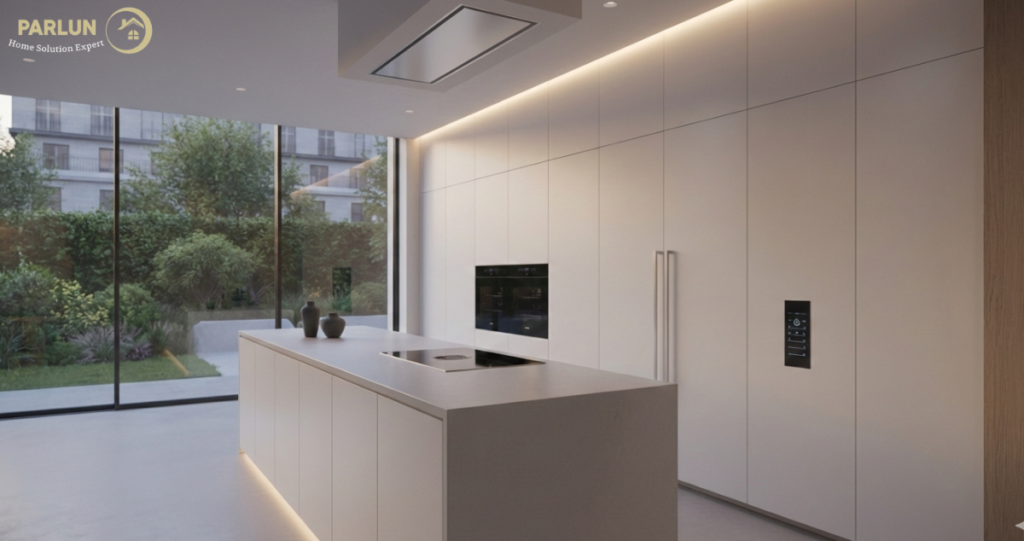
Explore the Invisible Kitchen Trend 2026. Learn about hidden appliance cabinetry, stealth kitchen technology, costs, layouts, and materials.
The Invisible Kitchen Trend 2026 is redefining what modern kitchens look like—and more importantly, how they function. As open-plan living dominates contemporary homes, homeowners are moving away from visually busy kitchens toward clean, seamless spaces where appliances, storage, and even work zones disappear entirely.
Hidden kitchen design is no longer a luxury concept seen only in design magazines. In 2026, modern hidden kitchens are becoming practical, highly engineered spaces powered by advanced technology, precision cabinetry, and smart automation.
This guide explores what invisible kitchens are, why hidden kitchens are trending in 2026, the technology behind hidden appliance cabinetry, and whether a stealth kitchen is the right choice for your home.
Who Is the Invisible Kitchen Trend 2026 For?
The Invisible Kitchen Trend 2026 is perfect for homeowners and designers who want style, functionality, and seamless spaces. This includes:
- Apartment Owners – Maximize limited space while keeping a clean, modern look.
- Open-Plan Homes – Conceal the kitchen to maintain a visually calm living and dining area.
- Luxury Renovations – Add a high-end, furniture-like kitchen feature that impresses buyers and guests.
- Small-Space Kitchens – Make compact kitchens appear larger and less cluttered.
What Is an Invisible Kitchen?
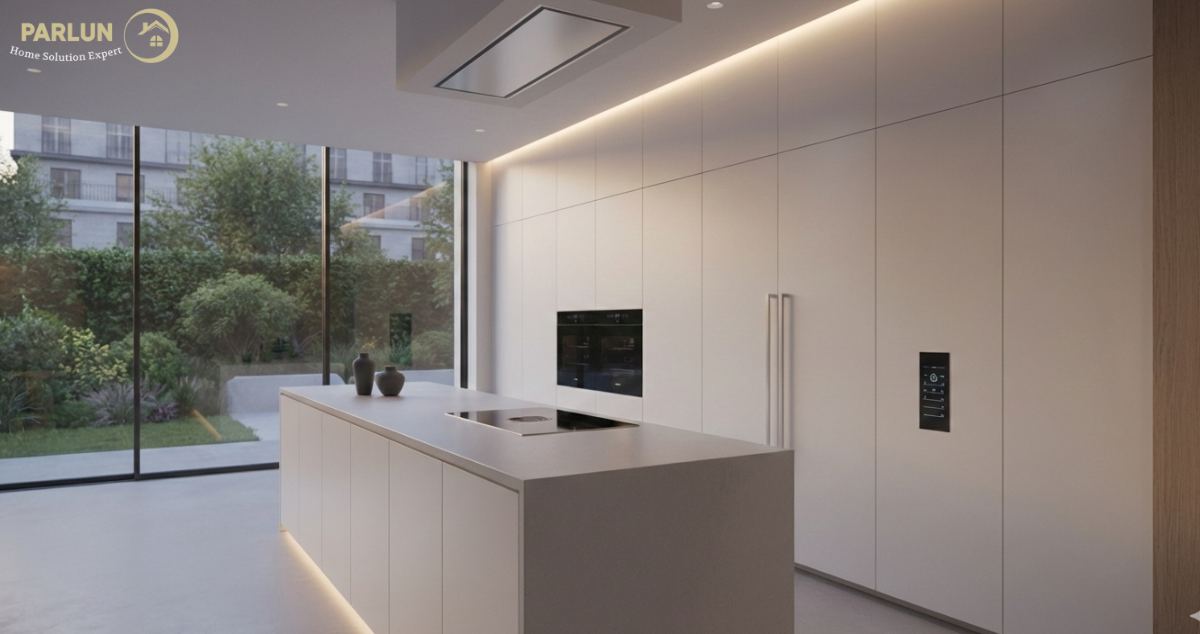
An invisible kitchen—also known as a hidden kitchen or stealth kitchen—is a kitchen designed so that appliances, storage, and sometimes even worktops are concealed behind cabinetry panels, sliding walls, or retractable systems.
When closed, the kitchen looks like:
- A wall of cabinetry
- A minimalist living space
- A seamless architectural feature
When opened, it functions as a fully equipped modern kitchen.
The invisible kitchen trend 2026 focuses on:
- Visual calm
- Integrated design
- Multi-functional living spaces
This approach is especially popular in apartments, luxury homes, and open-plan layouts where the kitchen must blend into the living area.
Why Is the Invisible Kitchen Trend Growing in 2026?

Several lifestyle and design shifts are accelerating the rise of hidden kitchen 2026 concepts.
Open-Plan Living Needs Visual Control
Modern homes increasingly combine:
- Kitchens
- Living rooms
- Dining areas
Visible appliances, cluttered countertops, and exposed storage disrupt visual flow. Invisible kitchens solve this by concealing functional zones when not in use.
Minimalism Has Evolved
Minimalism in 2026 is no longer cold or empty. It’s:
- Warm
- Intentional
- Technology-driven
A modern hidden kitchen keeps the space minimal without sacrificing function.
Design Longevity
Trends change fast—but architectural integration lasts longer. Hidden kitchens age better than trendy open shelving or bold appliance finishes.
This is why the invisible kitchen trend 2026 is considered a future-proof design strategy, not just a style choice.
Hidden Appliance Cabinetry: The Core of Invisible Kitchens
At the heart of every invisible kitchen is hidden appliance cabinetry.
This involves custom-built panels that fully conceal:
- Refrigerators
- Dishwashers
- Ovens
- Microwaves
- Coffee machines
How Hidden Appliance Cabinetry Works
Appliances are installed behind:
- Full-height cabinet doors
- Pocket doors that slide away
- Lift-up or bi-fold panels
From the outside, these appliances are completely invisible—matching the cabinetry finish, wall panels, or architectural cladding.
Why This Matters in 2026
Hidden appliance cabinetry:
- Eliminates visual noise
- Creates a furniture-like appearance
- Blends kitchens into living areas
In modern hidden kitchens, cabinetry quality is more important than ever because it carries both aesthetic and mechanical responsibility.
The Technology Behind Stealth Kitchens (What Makes Them Work)
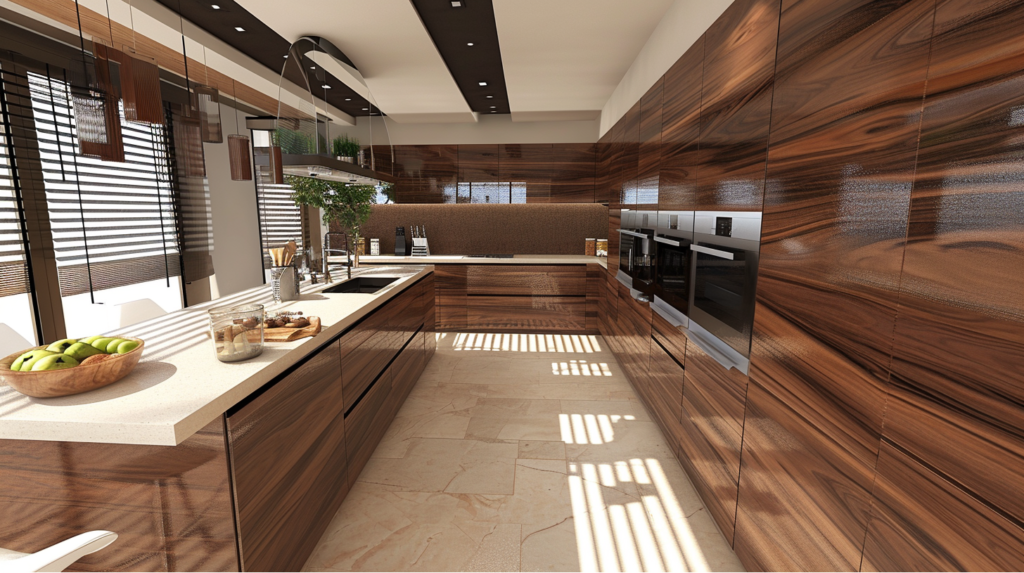
The invisible kitchen trend 2026 is powered by advanced kitchen technology. Without it, hidden kitchens would be impractical.
Soft-Close & Push-to-Open Systems
Modern stealth kitchens rely on:
- Touch-latch opening
- Motorized push systems
- Silent soft-close hinges
This allows large cabinet fronts to open smoothly without visible handles—maintaining a clean, uninterrupted look.
Pocket Door & Sliding Wall Technology
Pocket doors slide into cabinet cavities, fully hiding the kitchen when closed and disappearing completely when open.
In high-end hidden kitchen 2026 designs:
- Entire kitchen walls slide away
- Work zones vanish behind panels
- Appliances become accessible only when needed
This technology is essential for compact apartments and luxury open-plan homes.
Integrated Ventilation & Downdraft Systems
Traditional range hoods break the invisible effect. Instead, modern hidden kitchens use:
- Downdraft extractors
- Integrated induction ventilation
- Ceiling-flush extraction systems
These solutions remove the need for visible hoods while maintaining performance.
Smart Kitchen Automation
The tech behind the stealth also includes smart features such as:
- App-controlled appliances
- Voice-activated lighting
- Automated cabinet opening
In 2026, invisible kitchens are not just hidden—they’re intelligent.
Modern Hidden Kitchen Layouts Explained
Not all invisible kitchens look the same. The trend includes multiple layout styles.
Wall-Integrated Hidden Kitchens
The kitchen appears as a flat wall panel system.
- Appliances hidden behind tall units
- Worktops concealed behind lift-up doors
Best for minimalist apartments.
Island-Based Stealth Kitchens
Kitchen islands double as:
- Dining tables
- Storage units
- Visual anchors
Appliances are hidden inside the island structure, maintaining a clean perimeter.
Full Concealment Kitchens
Everything—including sinks and cooktops—can be hidden.
This is the purest form of the invisible kitchen trend 2026.
Pros and Cons of Invisible Kitchens
Advantages
- Clean, uncluttered appearance
- Ideal for open-plan homes
- Increased property appeal
- Seamless integration with interiors
Considerations
- Higher upfront cost
- Requires precision planning
- Not ideal for users who prefer visible storage
Understanding these factors helps homeowners decide if a modern hidden kitchen suits their lifestyle.
Planning a modern hidden kitchen in 2026?
A custom layout ensures appliances stay completely invisible while preserving smooth workflow, accessibility, and everyday usability.
How Much Does an Invisible Kitchen Cost in 2026?
The cost of an Invisible Kitchen Trend 2026 setup varies widely depending on cabinetry quality, technology, and level of concealment. Below is a realistic breakdown to set correct expectations and build trust with readers.
Entry-Level Hidden Kitchen (Budget-Friendly)
Estimated cost: Lower-to-mid range
Best for apartments and small homes
Includes:
- Partial hidden appliance cabinetry
- Basic push-to-open systems
- Standard integrated appliances
- Limited concealment (appliances hidden, worktops visible)
This option delivers the hidden kitchen 2026 look without full automation and is ideal for compact spaces.
Mid-Range Modern Hidden Kitchen (Most Popular)
Estimated cost: Mid range
Best for open-plan homes
Includes:
- Fully integrated hidden appliance cabinetry
- Pocket doors or sliding panels
- Soft-close and handle-less systems
- Integrated ventilation solutions
This is the most common choice for homeowners adopting the modern hidden kitchen trend in 2026—balancing design, durability, and cost.
High-End Stealth Kitchen (Luxury Segment)
Estimated cost: Premium
Best for luxury renovations and villas
Includes:
- Full concealment of appliances, sink, and cooktop
- Motorized cabinetry and automated opening systems
- Advanced ventilation and smart kitchen technology
- Custom architectural finishes
This is the purest expression of the tech behind the stealth, where the kitchen fully disappears when not in use.
What Impacts Invisible Kitchen Pricing the Most?
Key cost drivers include:
- Custom cabinetry complexity
- Level of automation and smart features
- Hardware quality and concealed mechanisms
- Appliance integration depth
- While upfront costs are higher, invisible kitchens often increase perceived property value and long-term design relevance.
Materials That Make Invisible Kitchens Work
The success of the Invisible Kitchen Trend 2026 depends heavily on material selection. Because everything is concealed, materials must balance durability, aesthetics, and precision engineering.
Matte Laminates
Matte laminates are one of the most widely used materials in modern hidden kitchens.
Why they work:
- Non-reflective, perfect for seamless surfaces
- Highly scratch- and moisture-resistant
- Cost-effective for large concealed panels
They help maintain the calm, uniform look essential to invisible kitchens.
Lacquered MDF Panels
Lacquered MDF offers a premium, refined finish for hidden appliance cabinetry.
Key benefits:
- Ultra-smooth appearance
- Custom color matching
- Ideal for handle-less and push-to-open systems
In 2026, soft-matte lacquer finishes are preferred over high-gloss for a more architectural feel.
Wood Veneer Panels
Wood veneer panels add warmth to stealth kitchens without breaking minimalism.
Why designers use them:
- Natural texture with modern refinement
- Perfect for open-plan and luxury homes
- Elevates invisible kitchens from minimal to premium
Wood veneers are often used on outer panels so the kitchen blends into living spaces.
Aluminum Frames & Internal Structures
Behind the clean surfaces, aluminum plays a critical role.
Used for:
- Structural reinforcement
- Sliding and pocket door systems
- Long-span concealed panels
Aluminum ensures durability while keeping large hidden elements lightweight and smooth to operate.
Fingerprint-Resistant Finishes (Essential in 2026)
Because invisible kitchens rely on touch-based opening systems, fingerprint resistance is essential.
Advantages:
- Keeps surfaces clean longer
- Reduces maintenance effort
- Preserves the “invisible” look daily
This material upgrade significantly improves real-world usability.
Why Invisible Kitchens Define 2026 Design
The Invisible Kitchen Trend 2026 is not about hiding functionality—it’s about elevating it. Through hidden appliance cabinetry, smart automation, and advanced design technology, modern hidden kitchens deliver beauty without compromise.
If you want a kitchen that disappears when you don’t need it—and performs flawlessly when you do—stealth kitchens are the future of modern living.
Why Materials Matter More in Hidden Kitchens
In a stealth kitchen:
- Materials replace visual handles and hardware
- Surfaces must perform mechanically, not just visually
- Poor material choices break the illusion of invisibility
That’s why material quality is one of the biggest factors in the long-term success of a hidden kitchen 2026 design.
Who Should Choose a Hidden Kitchen in 2026?
Invisible kitchens are ideal for:
- Apartment owners
- Luxury homeowners
- Minimalist design lovers
- Developers targeting premium buyers
They may not suit:
- Heavy daily cooks who prefer open access
- Traditional kitchen layouts
Maintenance & Durability of Hidden Kitchens
One common concern is maintenance.
In reality, modern hidden kitchens:
- Use durable hardware
- Protect appliances from dust
- Reduce visible wear
High-quality hidden appliance cabinetry actually extends appliance lifespan by shielding them from daily exposure.
Is the Invisible Kitchen Trend Worth It in 2026?
From a design and investment perspective—yes.
The invisible kitchen trend 2026 aligns perfectly with:
- Smaller urban homes
- Luxury living
- Smart home integration
- Long-term design value
Stealth kitchens photograph beautifully, add architectural interest, and increase perceived home value.
Future of Hidden Kitchens Beyond 2026
Looking ahead, hidden kitchens will become:
- More automated
- More affordable
- More modular
As technology evolves, invisible kitchens will move from luxury homes into mainstream residential design.
Common Mistakes to Avoid With Invisible Kitchens
Even though the invisible kitchen trend 2026 focuses on clean aesthetics, poor planning can quickly turn a stealth kitchen into a frustrating space. Avoid these common mistakes to ensure long-term usability and performance.
Poor Ventilation Planning
Hidden kitchens still generate heat, steam, and odors. Relying on weak or poorly placed ventilation can trap smells behind closed panels. Integrated downdraft or ceiling-flush extraction is essential.
Choosing Cheap Hardware
Invisible kitchens depend heavily on hinges, tracks, and sliding systems. Low-quality hardware leads to sagging doors, noisy operation, and early failure—breaking both function and design.
Ignoring Daily Workflow
Over-focusing on appearance can result in awkward layouts. Cooking, cleaning, and storage zones must remain intuitive, even when concealed.
Over-Concealment
Hiding everything isn’t always practical. Frequently used appliances or work zones should remain easily accessible to avoid constant opening and closing of panels.
Avoiding these mistakes ensures your modern hidden kitchen remains functional, durable, and visually seamless for years.
FAQs
Are invisible kitchens practical for daily use?
Yes. When designed properly, hidden kitchens function like traditional kitchens—just without visual clutter.
Do hidden kitchens cost more?
Initial costs are higher due to custom cabinetry and technology, but they offer long-term design and resale value.
Can hidden kitchens work in small apartments?
Absolutely. In fact, small homes benefit the most from hidden kitchen 2026 layouts.
Designing a future-ready kitchen?
Invisible kitchens combine architectural aesthetics, smart technology, and long-term design value—making them a strategic choice for modern homes.