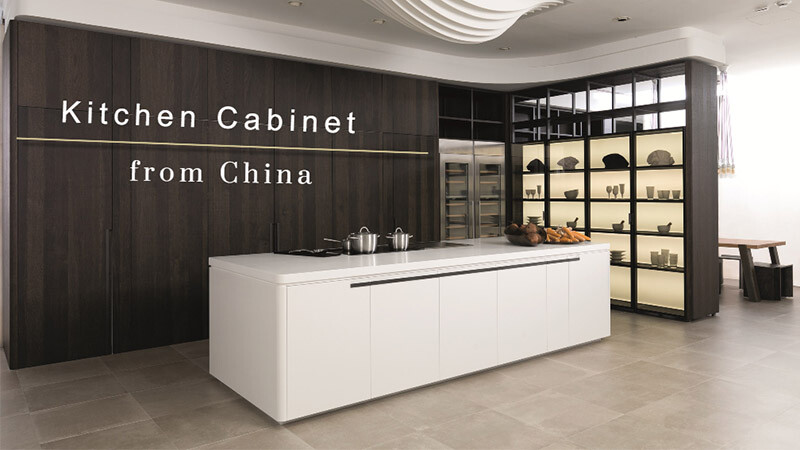
Buying kitchen cabinets from China can provide more design choices and competitive factory pricing, but the order must be treated as a complete project. A low cabinet price can become expensive when drawings are unclear, materials are not verified, inspections are skipped or freight and import charges are left out.
This guide explains how to compare cabinet construction, prepare specifications, verify suppliers, inspect quality, calculate landed cost, agree on payment and shipping terms and plan customs and installation. It is written for homeowners, builders, contractors, designers and developers considering a custom or project-based cabinet order.
Last updated: September 2026.
Key Facts Before Buying Kitchen Cabinets From China
China has major cabinet manufacturing clusters in Guangdong, Zhejiang, Shandong and Fujian. Foshan and the wider Pearl River Delta are especially important for custom cabinetry because board materials, hardware, finishes and production services are available within the same manufacturing region.
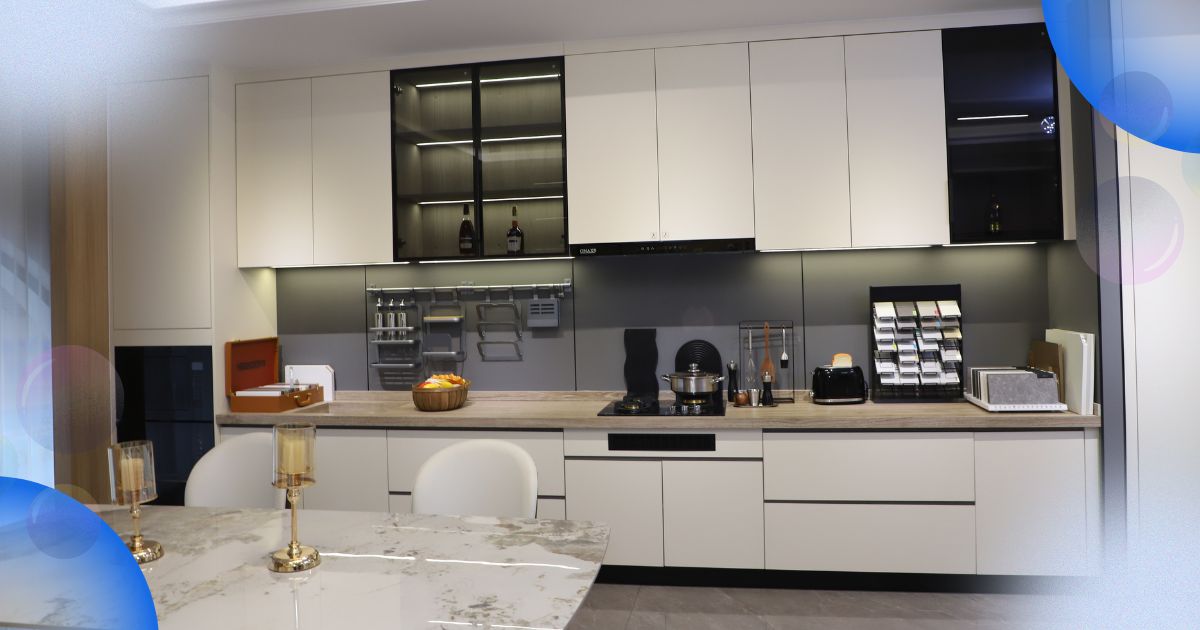
Before ordering, decide whether you need RTA or assembled cabinets, confirm every material and measurement, verify the actual manufacturer and approve physical samples. Your budget should include the cabinets, inspection, packaging, freight, insurance, import duties, taxes, customs clearance, local delivery and installation. The contract should also define payment stages, inspection rights, defect remedies and warranty responsibilities.
For a wider sourcing overview, read Parlunbuilding’s guide to importing building materials from China.
Kitchen Cabinet Types Available in China
Understanding the main product categories helps buyers compare quotations on a like-for-like basis.
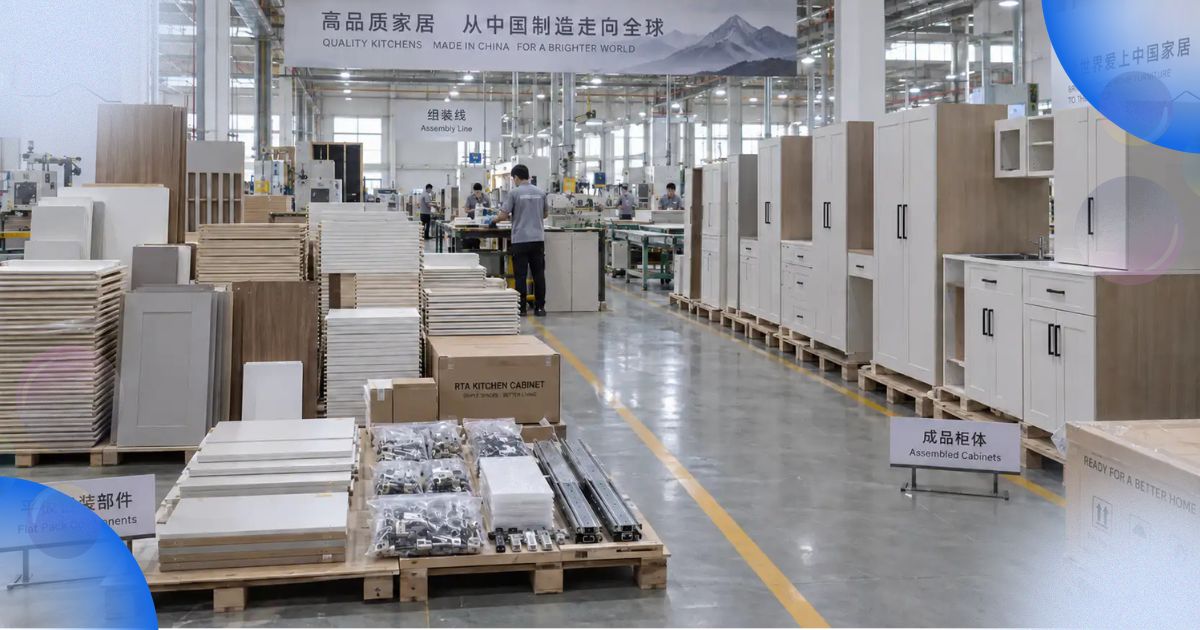
RTA (ready-to-assemble) cabinets ship flat-packed for on-site assembly. They use container space efficiently and work well when reliable local assembly is available.
Assembled cabinets arrive with the boxes already built. They require more shipping volume but reduce on-site assembly work.
Frameless, or European-style, construction is widely offered by Chinese export factories. Without a face frame, concealed hinges mount to the cabinet side panels, leaving a wider usable opening. Face-frame construction is also available for markets such as North America.
Common cabinet-box materials include plywood, MDF and particleboard. Plywood offers strong screw holding and better tolerance of incidental moisture, while particleboard is economical and dimensionally consistent. MDF is common in painted and routed doors; solid wood is used more often for doors, drawer fronts and face frames than complete cabinet boxes.
Common door and finish options include HPL, high-gloss acrylic, spray lacquer, PVC-wrapped MDF, real wood veneer and UV-cured finishes. Final materials and colours should be confirmed with approved physical samples before production.
See Parlun Building’s China kitchen design guide for a finish comparison.
How to Plan Cabinet Specifications
A complete specification is the basis of the quotation, shop drawings and production requirements. Missing details can lead to pricing differences, production errors and disputes.
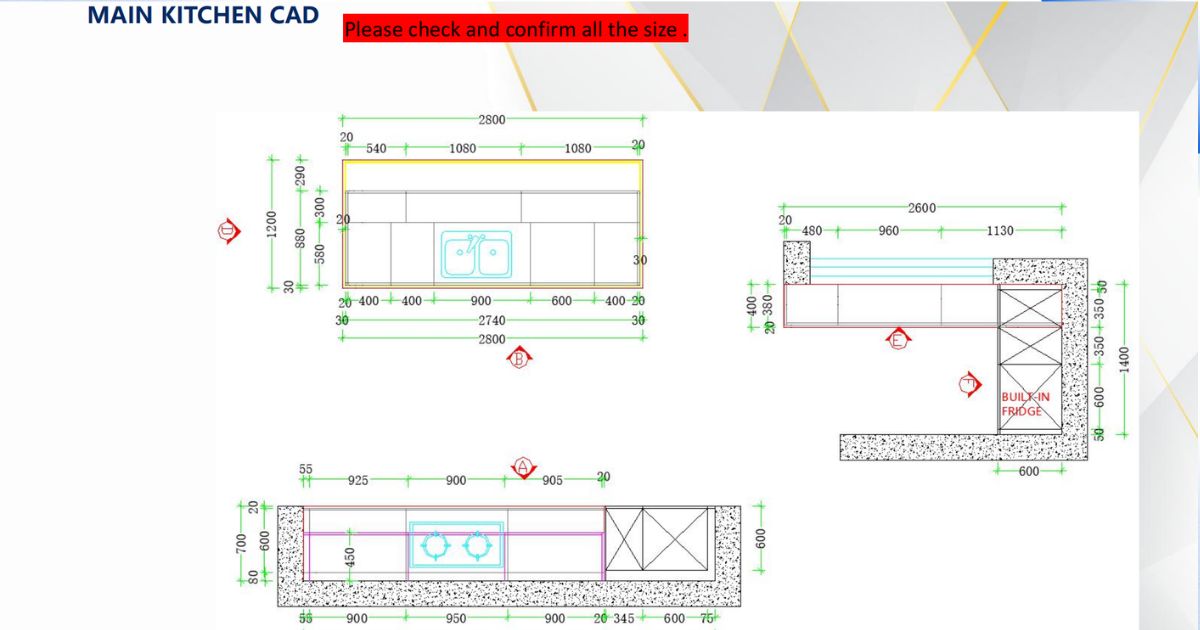
Cabinet specification checklist:
Shop drawings should include the plans, elevations, sections and construction details needed for manufacture and installation. Final drawings and critical materials, finishes, hardware and appliance requirements should be approved in writing before production is released.If you need help converting a floor plan into a cabinet layout and production brief, review the Parlunbuilding design service.
How to Find and Verify a Cabinet Supplier
A manufacturer and a trading or sourcing company serve different roles, but neither model guarantees quality. For custom projects, what matters most is who actually makes the cabinets, which processes are handled in-house or subcontracted, and who ultimately takes responsibility for the finished order.
Buyers can also review the Parlunbuilding factory to understand the company’s production facilities and manufacturing capabilities.

Where to find suppliers:
Verification steps before placing an order:
For a verified list of Chinese cabinet suppliers, see Parlun Building’s kitchen cabinet manufacturers directory. For a more detailed review of supplier risks and due diligence, see Is Importing Kitchen Cabinets From China Safe?
How to Verify Cabinet Quality
Quality checks should occur at several stages so problems are found before the order is complete and costly to correct.
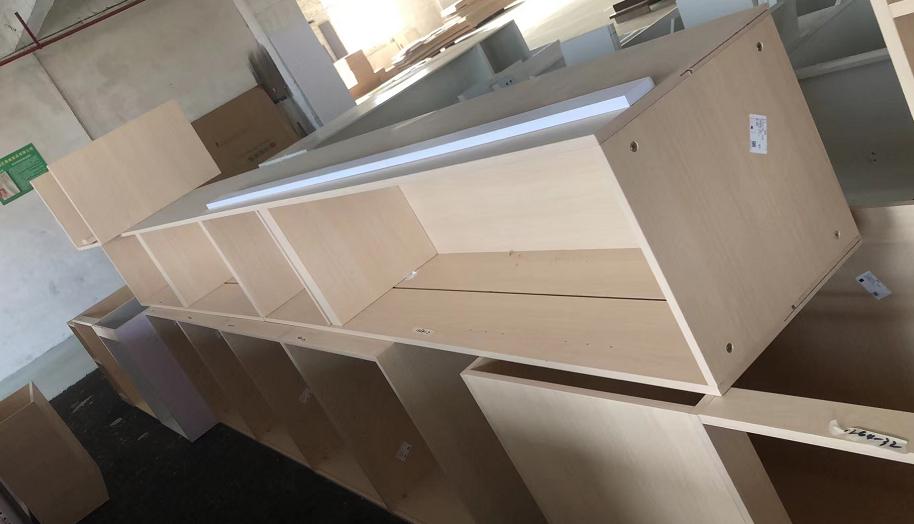
Sample door or finish sample: Approve a physical sample in the specified material, profile, finish and colour before mass production. For projects where construction or hardware also needs verification, consider a prototype cabinet or sample unit.
Initial production check: Check the board type and thickness, hardware, edge banding, finishes and first completed components early in production, while problems are still easier to correct.
During-production inspection: Check dimensions, assembly, finishes, edge banding, hardware installation and production progress once enough units are available to assess consistency.
Pre-shipment inspection (PSI): When production is substantially complete, verify quantities, critical dimensions, finish quality, hardware function, labelling, packaging and visible defects against the approved specification.
Where statistical sampling is appropriate, an AQL-based plan such as ISO 2859-1 may be used. Critical dimensions, quantities, finishes and specified hardware may still warrant 100% verification.
Third-party companies such as SGS, Bureau Veritas, Intertek and QIMA can provide factory audits and production inspections. Get a quote for your specific project before booking.
The Parlunbuilding quality standards page provides more information about material checks and production quality requirements.
Kitchen Cabinet Costs and Landed Cost Planning
Build your budget around the full landed cost, not just the factory price.
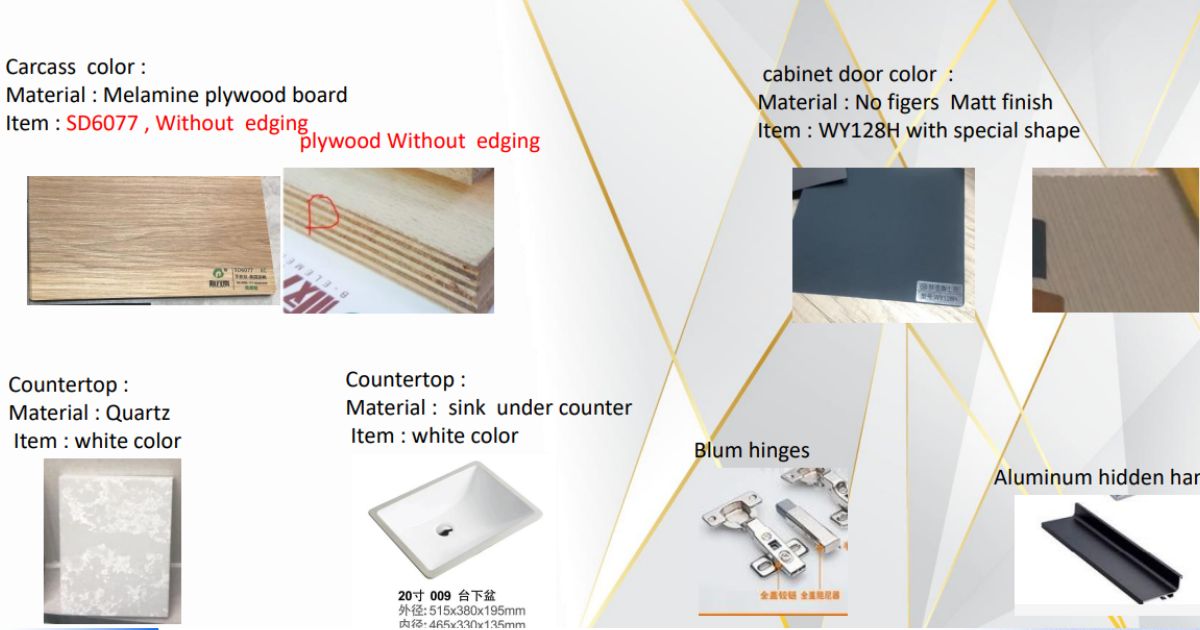
Comparing Factory Prices
Chinese cabinet manufacturers may quote by linear metre, individual cabinet, cabinet set or complete project. Linear-metre pricing is difficult to compare because inclusions vary.
For custom projects, request itemised quotations or a bill of quantities based on the same specification. Compare box materials, doors, finishes, hardware, accessories, packaging and commercial terms on a like-for-like basis.
Each quotation should state the Incoterm and exact named place or port so logistics responsibilities can be compared consistently.
Landed Cost Components
|
Cost item |
What to confirm |
|
Product cost |
Cabinet price based on the approved specification and quotation |
|
Export packaging |
Cartons, pallets, crates, corner protection and other export packaging |
|
Pickup and export handling |
Loading, factory pickup and export clearance where these are not included in the agreed Incoterm |
|
Domestic freight |
Transport from the factory to the export terminal or consolidation warehouse |
|
Inspection |
Sample approval, production inspections and pre-shipment inspection if commissioned |
|
International freight |
FCL or LCL freight based on route, container size and current carrier rates |
|
Marine insurance |
Coverage level and premium quoted for the shipment |
|
Import duty |
Based on destination, customs classification, origin and any applicable trade measures |
|
VAT or GST |
Calculated according to the destination country’s import-tax rules |
|
Customs clearance |
Broker, documentation and import-processing charges |
|
Port and terminal charges |
Destination handling, terminal and related charges |
|
Local delivery |
Transport from the destination port or warehouse to the project site |
Installation labour is normally separate from landed cost. Calculate both the landed cost of the imported cabinets and the total delivered-and-installed project cost.
Get current quotes for freight, local charges and inspections instead of relying on a fixed percentage.
Import Duties by Destination
Import Duties by Destination
Import duties depend on the product classification, construction materials, country of origin and destination. Cabinet boxes, doors, countertops, hardware and separately imported components may not use the same tariff code.
United States
Complete wooden kitchen cabinets may fall under HTSUS 9403.40.9060, but the correct classification depends on the actual products being imported. The 2026 Federal Register amendment continued the 25 percent Section 232 tariff during 2026 and scheduled an increase to 50 percent from January 1 2027 unless the policy changes or a relevant agreement applies.
Section 301 duties and antidumping or countervailing duties may also apply to some Chinese cabinet products. Ask a licensed US customs broker to confirm the tariff classification, current rates and scope of any trade-remedy orders before approving the project budget.
Australia
Eligible Chinese-origin wooden kitchen furniture can generally qualify for preferential duty treatment under ChAFTA when the rules of origin and documentation requirements are satisfied. The Australian Government ChAFTA guide explains the use of a Certificate of Origin or Declaration of Origin.
Australian GST is generally calculated using the value of the taxable importation, not only the factory invoice. Confirm the classification, origin documentation, GST and import charges with an Australian customs broker.
European Union
Wooden kitchen furniture is generally classified within CN 9403 40, but the final code depends on the product and how it is imported. Check the current rate through the European Union TARIC database. Import VAT varies between EU Member States.
Wooden furniture may also fall within the EU Deforestation Regulation. The European Commission EUDR guidance explains the relevant products, due diligence requirements and implementation dates.
United Kingdom
Wooden kitchen furniture within the relevant 9403 40 classifications generally carries a 2 percent third-country customs duty, while the standard UK VAT rate is 20 percent. Use the UK Trade Tariff to confirm the current commodity code and duty rate.
Import VAT is normally based on the customs value together with applicable duty and certain additional costs. Confirm the final calculation with a UK customs agent.
Tariffs, tax rules and trade measures can change. Always confirm the current commodity code, origin rules, duty rate and tax treatment before ordering.
Contracts Payment Terms and Incoterms
The International Chamber of Commerce Incoterms rules explain how delivery, transportation costs, customs responsibilities and risk are divided between the buyer and seller. They do not define product quality, payment security, ownership, warranty terms or dispute resolution.
Every quotation and contract should state the exact Incoterm, the named delivery place or port and the 2020 version. For example, write CIF Port of Los Angeles Incoterms 2020 rather than simply writing CIF.
Common terms encountered in cabinet imports from China include:
EXW (Ex Works): The seller makes the goods available at the named place; the buyer generally arranges pickup, export formalities and onward transport. The seller is not normally required to load the collecting vehicle.
FCA (Free Carrier): The seller delivers the goods to the buyer’s nominated carrier at the agreed place and handles export clearance. FCA often suits containerised shipments.
FOB (Free on Board): The seller clears the goods for export and delivers them on board the nominated vessel. Risk transfers once the goods are on board; FCA may be more appropriate where containers are handed to the carrier earlier.
CIF (Cost, Insurance and Freight): The seller pays ocean freight and required insurance to the named destination port, but risk transfers when the goods are loaded at the port of shipment.
DDP (Delivered Duty Paid): The seller bears transport and import-clearance responsibilities to the agreed destination, including applicable duties and taxes. Before choosing DDP, make sure the seller can legally handle import clearance in your country.
Always state the exact named place or port and the applicable version, for example, FCA Foshan Factory, China, Incoterms® 2020.
Payment Terms
Payment terms vary by supplier, order value and working relationship. A staged structure may include:
Make each payment milestone clear in the contract; payment before shipment is not the same milestone as payment against shipping documents after shipment.
For larger or higher-risk orders, buyers and suppliers may also agree on a letter of credit or another documentary payment method, balancing added protection against bank fees and documentation requirements.
Alibaba Trade Assurance can add protection for eligible orders placed and paid through Alibaba.com. Record detailed specifications, quality requirements and shipment dates in the online order.
What the Contract Should Include
The written contract should specify the approved product specification, including cabinet materials, emission requirements in the destination market, hardware brand and series, finish references and approved samples.
It should also state:
Warranty coverage should be written into the purchase contract before the deposit is paid. Review Parlunbuilding’s warranty information and confirm which defects, replacement parts, transport costs and claim periods apply to your order.
Packaging and Shipping
Packaging should protect finished surfaces and edges from handling, loading and international transport.
Common measures include protective film or foam, reinforced cartons, corner and edge protection, separators and extra protection for long or fragile parts. Stone countertops may require reinforced crates or purpose-designed racks.
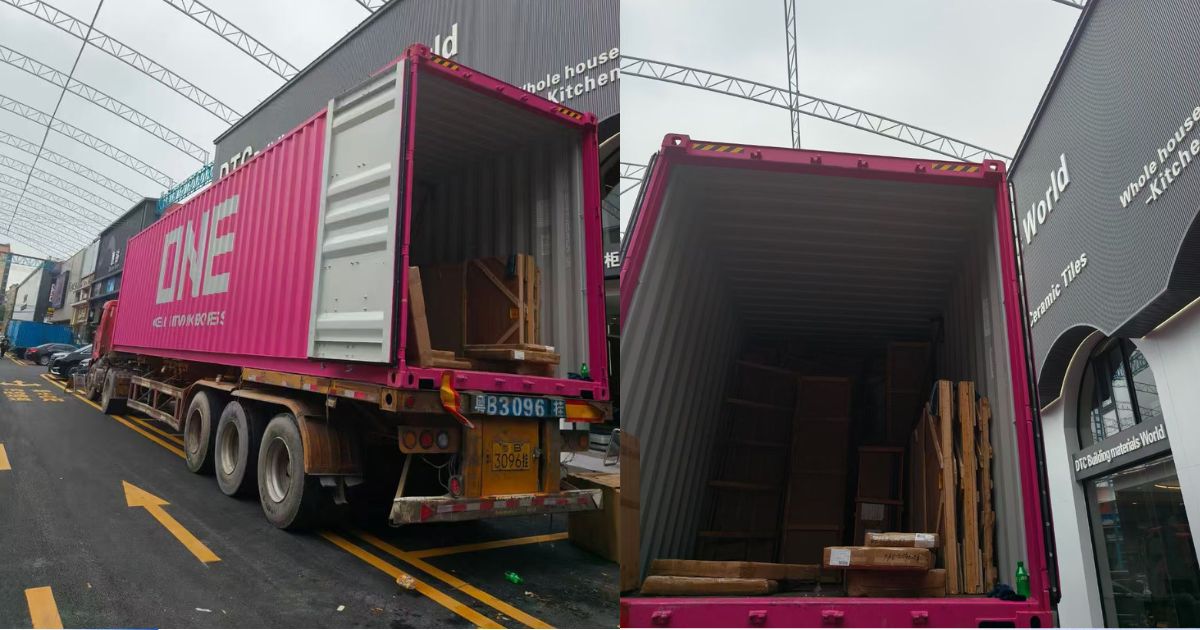
Each package should match the packing list using clear item numbers and quantities. Buyers can also request packing photographs or a container-loading inspection before the container is sealed.
Container Options
FCL (Full Container Load): A dedicated 20-foot or 40-foot container is generally more suitable for larger orders. A standard 20-foot container offers roughly 33 m³ of internal capacity, while a 40-foot container provides about twice that volume; actual usable capacity depends on the packing plan.
RTA cabinets use container space more efficiently than assembled cabinets. Ask for total packed CBM, carton dimensions, gross weight and a proposed loading plan before booking freight.
LCL (Less than Container Load): Suitable for smaller orders, but consolidated cargo may undergo more handling, making robust packaging especially important.
Production Lead Time
Production schedules vary with order size, construction, finishes, hardware, custom profiles and factory workload. Once the final drawings and finishes are approved, ask the supplier to confirm the production completion date in writing. Any later changes should be reflected in the schedule.
Shipping Transit Time
Ocean transit varies by port pair, carrier, route, transshipment and current shipping conditions. Use the freight forwarder’s current sailing schedule when booking, and remember that port-to-port transit excludes factory pickup, export handling, customs clearance and final delivery.
For more information about export packing, shipping documents and international delivery support, review Parlunbuilding’s delivery and shipment service.
Customs Delivery and Installation Planning
Customs classification: Complete wooden kitchen furniture commonly falls under HS 9403.40 at the international six-digit level, but destination-specific tariff codes and separately imported parts, countertops or hardware may differ. Confirm the applicable codes and trade measures with the customs broker before shipment.

Compliance checks before shipment:
Installation Planning
Before delivery, recheck critical site dimensions and confirm that the installation area is dry, accessible and ready for cabinetry, including floor levels, walls, services, appliance positions and fixing points. Allow extra time in the schedule for possible freight, customs and local delivery delays.
Where stone countertops are fabricated locally, install and level the base cabinets first, then template, fabricate and install the countertop before final plumbing and appliance connections.
If countertops are manufactured overseas and shipped with the cabinets, accurate dimensions become even more important because final on-site templating before fabrication may not be possible.
Installation requirements should be discussed before production because cabinet construction, fixing points, filler panels and countertop details can affect site work. Parlunbuilding’s installation guide explains the available support.
Common Importing Mistakes
Releasing production before written approvals. Approve final drawings and critical specifications before production; document later changes through a written change order.
Approving finishes only on screen. Use a physical sample to confirm colour, gloss, grain and texture before mass production.
Comparing quotes on vague specifications. Define materials, thicknesses, finishes, hardware and destination compliance so suppliers quote the same product.
Budgeting from factory price alone. Include freight, duties and taxes, clearance, local delivery and installation using current project-specific quotations.
Using vague payment milestones. Tie staged payments to clearly defined events such as order confirmation, approvals and inspection.
Omitting defect remedies. Define acceptance criteria, claim deadlines and remedies such as rework, replacement or credit.
Scheduling from production time alone. Allow for approvals, inspection, freight, customs, local delivery and installation.
How Parlunbuilding Supports Cabinet Buyers
Parlunbuilding manufactures and supplies custom kitchen cabinets for international residential and commercial projects.
Support can include cabinet planning, technical drawings, custom materials and finishes, quality checks, export packaging and international delivery.
To receive a useful quotation, send your floor plan, destination country, preferred cabinet style, material requirements, appliance models and expected delivery date. Clear information allows the team to prepare a more accurate layout, specification and project quotation.
Explore custom kitchen cabinets or contact Parlunbuilding to discuss samples, drawings and production requirements.
Frequently Asked Questions

Final Thoughts
Buying kitchen cabinets from China can provide strong design flexibility and competitive value when the order is managed carefully. The safest approach is to prepare a complete specification, verify the manufacturer, approve physical samples, inspect production and calculate the full delivered and installed cost.
Do not choose a supplier only because the first quotation is lower. Compare materials, construction, hardware, packaging, inspection rights, warranty coverage and delivery responsibilities on the same basis.
If you are preparing a residential or commercial cabinet project, Parlunbuilding can review your floor plan and requirements before preparing a custom cabinet proposal.