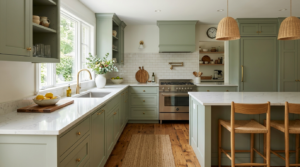
White kitchen cabinets with brown countertops can feel bright without looking bare. The cabinets provide a light background, while the countertop introduces colour, grain or natural pattern.
The challenge is choosing the right combination. A creamy cabinet door can look comfortable beside one brown surface and too yellow beside another. A backsplash that looks attractive in the showroom may compete with the countertop once everything is installed.
Already have brown granite in your kitchen? You may be able to update the surrounding finishes and keep the countertop. Start with the materials you have, then build the rest of the room around them.
White Cabinets With Brown Countertops at a Glance
A balanced white and brown kitchen starts with the countertop’s undertone and pattern. Compare cabinet samples against that surface, then choose a backsplash, wall colour and floor that work with both. Granite offers natural variation, engineered quartz provides another range of patterns, and butcher block introduces wood grain. Cabinet style, hardware and lighting shape the final appearance, while material specific care and a clear renovation budget help you make a practical choice.
Start With the Brown Countertop You Have or Want
Brown is a broad colour family. Your countertop might contain honey tones, reddish flecks, grey veining or almost black areas. Those smaller colours can influence the rest of the kitchen as much as the main brown shade.
Look at the surface in daylight and under your evening lighting. If you are keeping an existing countertop, check it beside the floor and any finishes that will remain.
For a new countertop, ask to see a larger sample or the actual slab where possible. A small sample may not show the pattern variation that will appear across an island.
Before choosing anything else, establish three points:
- Whether the countertop looks warmer or cooler beside your existing finishes.
- Whether its pattern is quiet or visually prominent.
- Whether you want the countertop or another feature to lead the design.
A heavily patterned surface often benefits from quieter surroundings. A more uniform brown countertop gives you greater freedom to introduce interest through tiles, cabinet details or accessories.
Choose a White Cabinet Shade That Works With Brown
White cabinet finishes can lean towards cream, grey, pink or a cleaner neutral white. The difference becomes easier to see when samples sit beside each other.
Compare several door samples against the countertop. Include the backsplash and floor samples in the same arrangement, rather than approving each material separately.
Sherwin-Williams explains that colour comparisons help reveal undertones and that lighting affects how those undertones appear. Check your samples at different times of day before making a final choice.
With a golden brown countertop, a soft white is worth testing. With a brown surface containing grey or black details, compare a more neutral white as well. Neither approach is a fixed rule. The other finishes in your kitchen still matter.
Browse the available white cabinet styles and finishes to narrow down your options before requesting physical samples.
Also separate colour from construction. A white painted door, a laminated door and another coated finish can have different specifications even when their colours look similar.
Compare Brown Countertop Materials Before Choosing
A brown appearance does not tell you how a countertop will perform. Natural stone, engineered quartz, solid wood and laminate require different questions before purchase.
|
Material |
Appearance to consider |
Questions to ask |
|
Brown granite |
Natural mineral pattern and variation |
Does this particular stone need sealing |
|
Brown engineered quartz |
Product specific patterns and finishes |
What heat precautions and cleaners are recommended |
|
Butcher block |
Visible wood grain and tonal variation |
Which finish is used and how is it maintained |
|
Brown laminate |
Wood effect or stone effect designs |
How should joints edges and sink cutouts be protected |
Compare the actual products, not just the material names. Ask for written care instructions and an installed quotation that identifies the chosen finish.
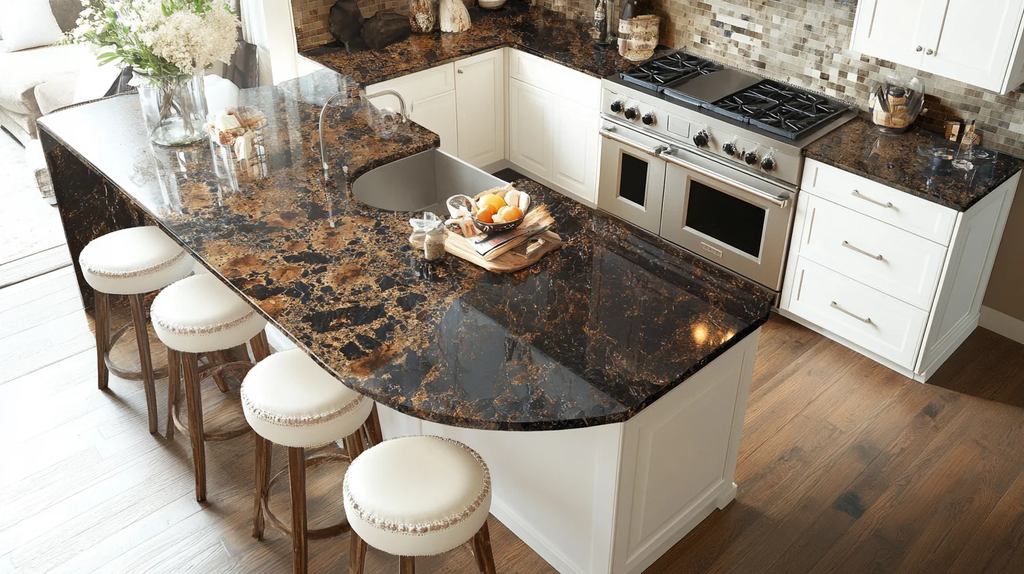
White Cabinets With Brown Granite Countertops
Brown granite can become the main feature of a white kitchen, particularly when the slab has noticeable flecks or movement.
For a quieter result, compare simple cabinet doors and a restrained backsplash. If you prefer more detail, introduce it in one area rather than making every surface equally prominent.
Ask the supplier whether your particular stone requires sealing. The Natural Stone Institute explains that some stones do not need it and that a sealer improves stain resistance rather than making stone stain proof.
When retaining existing granite, examine its condition before planning the renovation. Your installer should assess any proposed cabinet changes, sink replacement or alterations to the support beneath it.
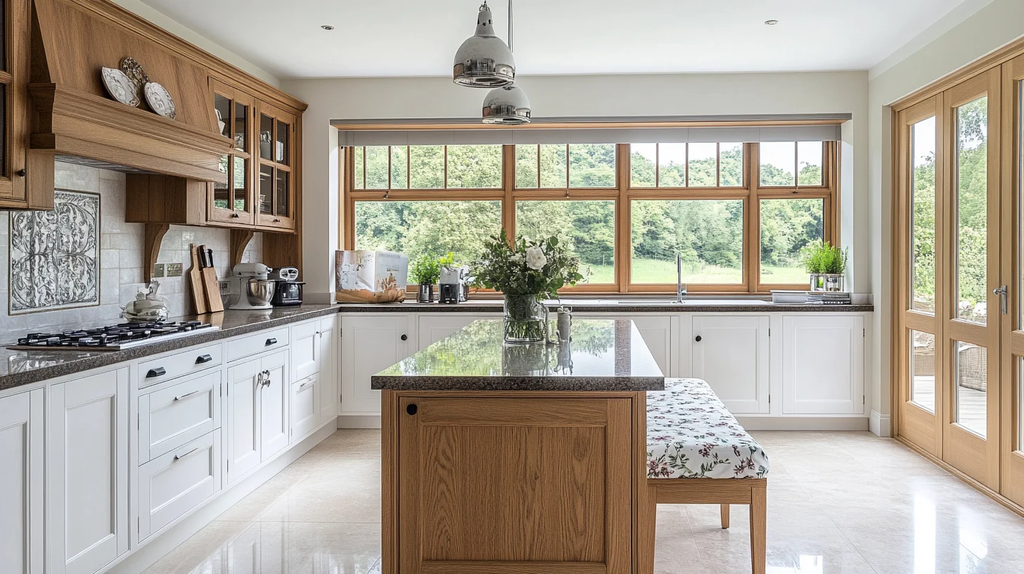
White Cabinets With Brown Quartz Countertops
Brown engineered quartz is worth comparing when you want a particular colour distribution or a more controlled pattern.
Look beyond the showroom sample. Ask how the design will appear across larger pieces, where seams may fall and whether different batches have noticeable variation.
For care, follow the selected manufacturer’s instructions. Caesarstone recommends protecting its quartz and mineral surfaces from hot cookware with trivets or hot pads and using approved cleaning methods.
A polished and a textured finish can also look different under the same lighting. Compare both if they are available in the product you prefer.

White Cabinets With Butcher Block Countertops
Butcher block introduces wood grain that can make a white kitchen feel more layered.
Choose the wood appearance alongside your flooring. A reddish countertop and a pale golden floor may work together, but the relationship should be intentional.
Check whether the countertop has an oil finish or another coating. John Boos provides different care categories for its countertop finishes, with ongoing oil care specified for its oil finished surfaces.
Ask how the supplier recommends detailing the sink area and maintaining the surface. A wood countertop should suit the amount of care you are comfortable providing.

Choose a Backsplash for White Cabinets and Brown Countertops
The backsplash sits between the cabinets and countertop, making it an important part of the colour relationship.
Start by holding tile samples directly against both surfaces. A tile can look neutral on its own and unexpectedly yellow, grey or pink in the complete arrangement.
|
Backsplash direction |
When to consider it |
What to check |
|
Soft white tile |
You want the countertop to remain prominent |
Whether the tile white suits the cabinet white |
|
Cream or beige tile |
You prefer a softer transition |
Whether it becomes too yellow beside the counter |
|
Muted grey tile |
Grey appears elsewhere in the palette |
Whether the grey looks too cool |
|
Subtle textured tile |
You want interest without another strong pattern |
Appearance under worktop lighting |
|
A coordinated slab surface |
You prefer larger continuous areas |
Material suitability and fabrication details |
A backsplash does not have to match the countertop exactly. Tile supplier Country Floors describes using different materials and colours to introduce interest alongside granite.
For a brown countertop with prominent flecks, begin with a quieter tile and see whether the room needs anything more. For a simple wood worktop, you may have room to introduce a more noticeable tile layout.
Explore these beige backsplash colour combinations if you want a warmer transition between the two main surfaces.
Remember to include grout in your sample arrangement. Contrasting grout makes the tile layout more visible, while a closer colour match creates a less pronounced pattern.
Find Wall Colours That Connect the Kitchen
Wall paint should support the fixed finishes you have already chosen.
A soft white can keep the palette light. Pale beige or taupe can introduce a warmer background. A muted green may provide a more noticeable contrast if it works with the countertop and adjoining rooms.
Test paint on more than one wall. A colour near a window may look different from the same colour beside tall cabinetry.
In an open plan home, view the proposed kitchen paint from the living or dining area too. The kitchen should make sense as part of the wider space.
Avoid choosing paint from a countertop photograph alone. Camera settings and screens can change the colours you see. Use the actual countertop and cabinet samples for the final decision.
Design Ideas for a White Cabinets and Brown Countertops Kitchen
The same colour pairing can support several styles. Choose the direction that suits your home, then use the existing images as examples of specific combinations.
White Shaker Cabinets With Brown Granite
Start with a simple framed door, a brown granite surface and a restrained backsplash.
For a softer appearance, compare warm metallic hardware. For more visible contrast, test darker handles against the cabinet sample.
The door proportions matter too. A wide frame can feel different from a slimmer one, especially across a small kitchen.
Compare these white Shaker cabinet door designs when deciding how much detail you want around the countertop.
White Flat Panel Cabinets With Dark Brown Countertops
A smooth door front allows the countertop colour and pattern to take a more prominent role.
Keep the surrounding finishes considered. A dark brown surface, pale backsplash and understated handles can create a clear arrangement without requiring decorative details on every unit.
Review the flat panel cabinet materials guide when comparing door construction and finish options.
Check the edge profile of the countertop alongside the cabinet design. A highly decorative edge may produce a different effect from the cleaner lines you intended.
White Cabinets With a Brown Wood Island Countertop
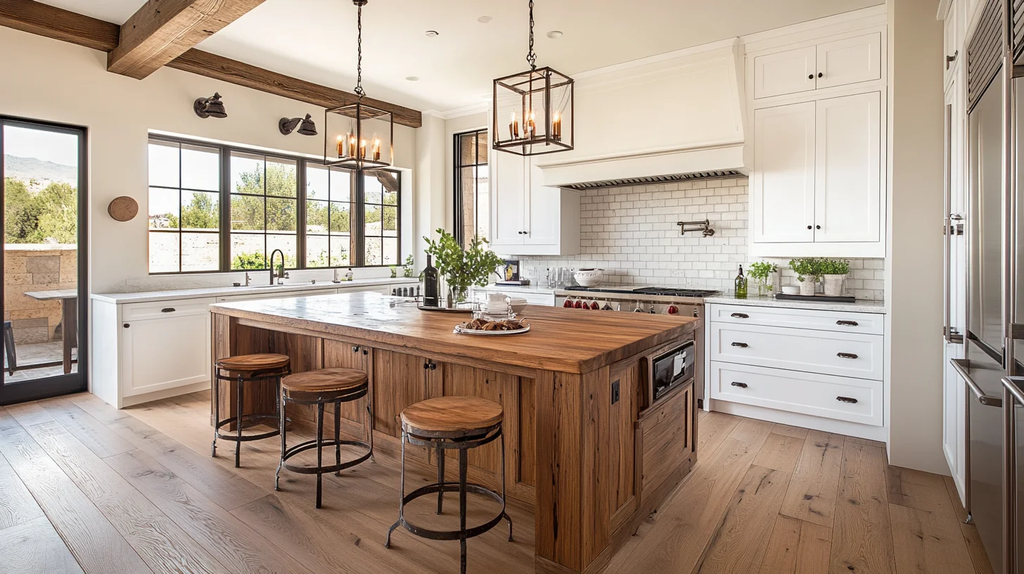
If you want wood in the kitchen but prefer another material around the sink, consider using it on the island.
This creates a distinct area for seating or gathering. Repeat its wood tone in one or two nearby details, such as stools or shelving.
Avoid introducing several unrelated wood finishes before checking them together. The floor, countertop and furniture do not need to be identical, but their relationship should look deliberate.
Warm White Cabinets With Light Brown Countertops
A lighter brown surface creates a gentler contrast than a deep chocolate shade.
Compare pale wood, cream toned tiles and restrained hardware to develop the palette. If everything feels too similar, introduce a clearer difference through the handles or lighting fixtures.
This direction is worth testing when you prefer a light kitchen with some visible warmth.
White Cabinets With a Brown Countertops and Coloured Island
A coloured island can provide another focal point within the white cabinetry.
Test muted blue, green or another preferred colour beside the countertop before ordering. Keep the palette connected through a repeated handle finish, backsplash colour or seating detail.
If the countertop already has a strong pattern, begin with an understated island colour. You can add stronger accents through items that are easier to change later.
White Cabinets With Brown Countertops in a Small Kitchen
In a compact room, plan the storage and lighting alongside the colour scheme.
Keep frequently used preparation areas clear and avoid letting decorative items occupy the only useful worktop. Compare a simpler backsplash if several other finishes are already visible.
A brown countertop does not need to be ruled out because the kitchen is small. Judge it with the cabinet layout, daylight and lighting rather than treating colour as the only factor.
Coordinate Flooring Without Matching Every Surface
The floor takes up a large part of the room, so compare it with the countertop early.
A lighter floor can provide a noticeable difference beneath a darker brown counter. A deeper wood tone can create a richer palette, but you may want more contrast elsewhere.
If you want a timber appearance from tile, compare wood look porcelain flooring options against the cabinet and countertop samples.
Check the pattern as well as the colour. Strong wood grain, heavily flecked granite and patterned backsplash tiles can compete when all three sit close together.
If you are keeping the existing floor, treat it as a starting point. Choosing compatible new finishes is often more practical than trying to hide a mismatch afterwards.
Choose Hardware That Suits the Cabinet Design
Hardware gives you a relatively small area in which to add contrast.
Brass or another warm metal can support a warmer palette. Black handles can outline white doors more clearly. Brushed nickel or stainless finishes may connect with appliances and other fittings.
Compare physical samples because metallic finishes vary between suppliers.
Then check comfort. Can you grip the handle easily? Does it suit the drawer size? Will the placement interfere with another door or appliance?
Use this cabinet handle placement guide when planning the arrangement before drilling.
Plan Lighting Around the Worktops
Judge the palette under the lighting you will actually use.
Ceiling lights help illuminate the room, while focused lighting is useful around preparation areas. A pendant above the island should also suit the way that surface is used.
Check for reflections from polished countertops and visible light sources. Look at the room while standing at the counter and while seated nearby.
Compare these kitchen task lighting options when discussing fixture positions with your installer.
Plan wiring access before new cabinets are fitted. It is easier to accommodate lighting when the cabinet and electrical layouts are considered together.
Update an Existing Kitchen With Brown Granite
Keeping an existing countertop can be worth considering if its condition, layout and appearance still suit your needs.
Begin with an assessment rather than a shopping list. Check whether the cabinet boxes are sound, whether the storage works and whether the countertop can remain safely supported during the proposed work.
Then prioritise the changes that solve a clear problem:
- Compare a new cabinet finish against the granite and floor.
- Replace an incompatible backsplash if it is affecting the palette.
- Improve lighting over poorly lit work areas.
- Update uncomfortable or damaged hardware.
- Reduce worktop clutter through better storage.
If you are replacing the cabinets beneath existing stone, have the installer assess the work before proceeding. Retaining the countertop does not automatically make every cabinet change straightforward.
Avoid changing several finishes at once without samples. You may find that one well chosen update provides the improvement you wanted.
Compare Renovation Costs Using the Same Specification
here is no useful single price for every white cabinet and brown countertop kitchen.
The scope can change significantly with cabinet construction, countertop material, room size, installation conditions and the amount of existing work to remove.
Ask each supplier to identify the same items:
- Cabinet quantities and construction.
- Door material and finish.
- Hinges and drawer fittings.
- Countertop material and thickness.
- Edge details and proposed seams.
- Sink and appliance cutouts.
- Delivery and installation.
- Removal of existing materials.
- Plumbing or electrical work included separately.
This makes quotations easier to compare.
For a smaller budget, establish what can remain before choosing new products. For a larger renovation, put practical storage and worktop use alongside appearance in your spending priorities.
Care for the Countertop and Cabinet Finish
Care should follow the selected material and coating.
For natural stone, the Natural Stone Institute recommends suitable cleaners, prompt attention to spills and protection beneath hot items. Ask your supplier about the needs of the actual stone and finish.
For engineered quartz, use the manufacturer’s approved cleaning guidance. Caesarstone advises wiping spills and protecting its surfaces from hot cookware. Its instructions also explain that care needs can differ between polished and textured finishes.
For butcher block, establish the finish before applying maintenance products. Follow the supplier’s instructions rather than treating an oil finished surface and a coated surface in the same way.
White cabinet doors also need finish specific care. Ask which cleaners are approved and how to deal with marks around handles.
Keep the product names and care sheets after installation. They will be more useful than general advice if you need maintenance or a repair later.
Plan Your Kitchen With Parlunbuilding
Prepare a clear brief before requesting a cabinet proposal.
Include room measurements, window and door positions, appliance sizes and photographs. Identify the countertop, flooring and other finishes you intend to keep.
Add your preferred cabinet style, storage priorities and sample combinations. The kitchen design planning service can provide a starting point for discussing the layout and finish direction.
When comparing proposals, ask for clear specifications and confirmation of the scope of supply. Establish which parts of delivery, fabrication and installation need separate arrangements.
Once your brief is ready, request a cabinet quotation for your project from Parlunbuilding with those details.
Questions About White Cabinets and Brown Countertops
Do White Cabinets Go With Brown Countertops
Yes, the combination can provide a light background with warmth or contrast from the worktop. Compare the cabinet white with the countertop’s undertones, flooring and backsplash before choosing the finish.
What Backsplash Goes With White Cabinets and Brown Granite
Soft white, cream, beige and muted grey are useful options to test. With strongly patterned granite, begin with a quieter tile. Compare the tile and grout samples directly against the cabinet and countertop.
What Wall Colour Goes With White Cabinets and Brown Countertops
Soft white, pale beige, taupe and some muted greens can work, depending on the fixed finishes. Test paint in the room during daylight and evening use rather than choosing from a photograph alone.
How Can I Update a Kitchen With Brown Granite Countertops
Assess the condition and layout first. If the countertop can remain, compare changes to cabinet finishes, backsplash, lighting and hardware. Have an installer evaluate any work that changes the support beneath the stone.
Does Brown Granite Need Sealing Every Year
There is no universal annual schedule. Some stones need sealing and others may not. Ask the stone supplier about the specific slab, finish, sealer and usage conditions.
Are White Cabinets With Brown Countertops Outdated
The colour pairing alone does not determine whether a kitchen looks dated. Cabinet design, backsplash, hardware, lighting and the relationship between finishes shape the result. Choose a coordinated scheme that suits your home instead of relying on a trend label.