The base tone of a kitchen sets the emotional temperature of a home. Wood cabinets, in particular, can either bring warmth or make a space feel heavy.
Modern kitchens lean toward clean lines, matte finishes, and a sense of openness. When wood cabinets feel outdated, it’s rarely the material itself—it’s the color, finish, and detailing that no longer fit the space.
In most cases, modernizing wood cabinets comes down to updating the finish, hardware, and key design details, without replacing the entire structure.
At Parlun Building, we’ve seen that updating wood cabinets doesn’t require a full renovation. With the right color adjustments and a few targeted upgrades, a kitchen can shift from dated to calm, minimal, and refined.
Key Takeaways
Why Modern Wood Cabinets Feel Right for Today’s Kitchens
Modern kitchen design has moved in a clear direction over the past decade. The shift isn’t only about appearance—it reflects people’s living today.
Daily routines are faster, and mental space matters more than ever. Traditional kitchens often lean on darker finishes and decorative details that visually crowd the space. Over time, that kind of environment can feel heavy.
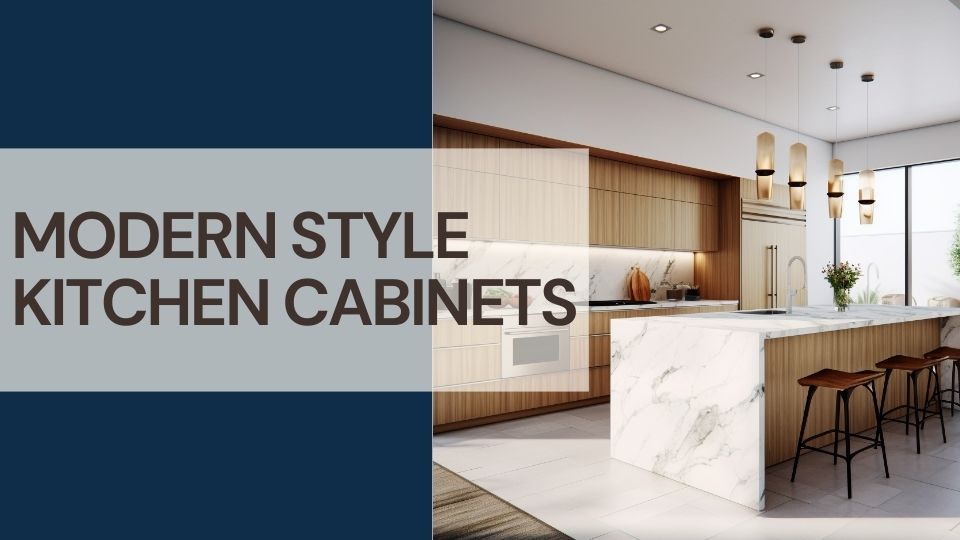
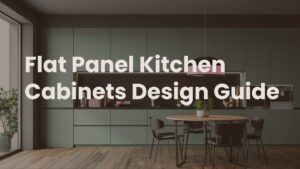
Modern wood cabinets take a lighter approach. Flat panel doors, softer tones, and minimal detailing reduce visual noise and create a space that feels easier to be in.
There’s also a shift in the purpose of the kitchen. Instead of being separate work areas, they now connect with living and dining spaces. Cabinets are now part of the interior, like furniture, not just storage.
Surface finishes also affect the overall impression of cabinets. Smooth finishes with fewer seams are easier to maintain. This matters in homes with limited time. For many households, that simplicity adds a quiet sense of comfort.
Light is another key factor. Matte finishes, lighter wood tones, concealed handles, and integrated lighting all help open up the space. Even smaller kitchens can feel brighter and more relaxed.
Why Keeping Wood Cabinets Often Makes More Sense
There’s no need to rush into replacing your wood kitchen cabinets. Oak cabinets, honey oak, and other natural wood styles still have strong potential; they just need the right updates.
Solid wood remains one of the most durable materials used in kitchen cabinetry. Many older homes feature cabinets made from oak, maple, or cherry, materials that are now significantly pricier than they used to be. Often, the structure is still in excellent condition.
What often makes these cabinets feel outdated is not the wood itself, but the finish applied years ago. Heavy stains and glossy coatings tend to darken the space and emphasize grain patterns.
Once that layer is removed, wood cabinets immediately feel lighter and more current.
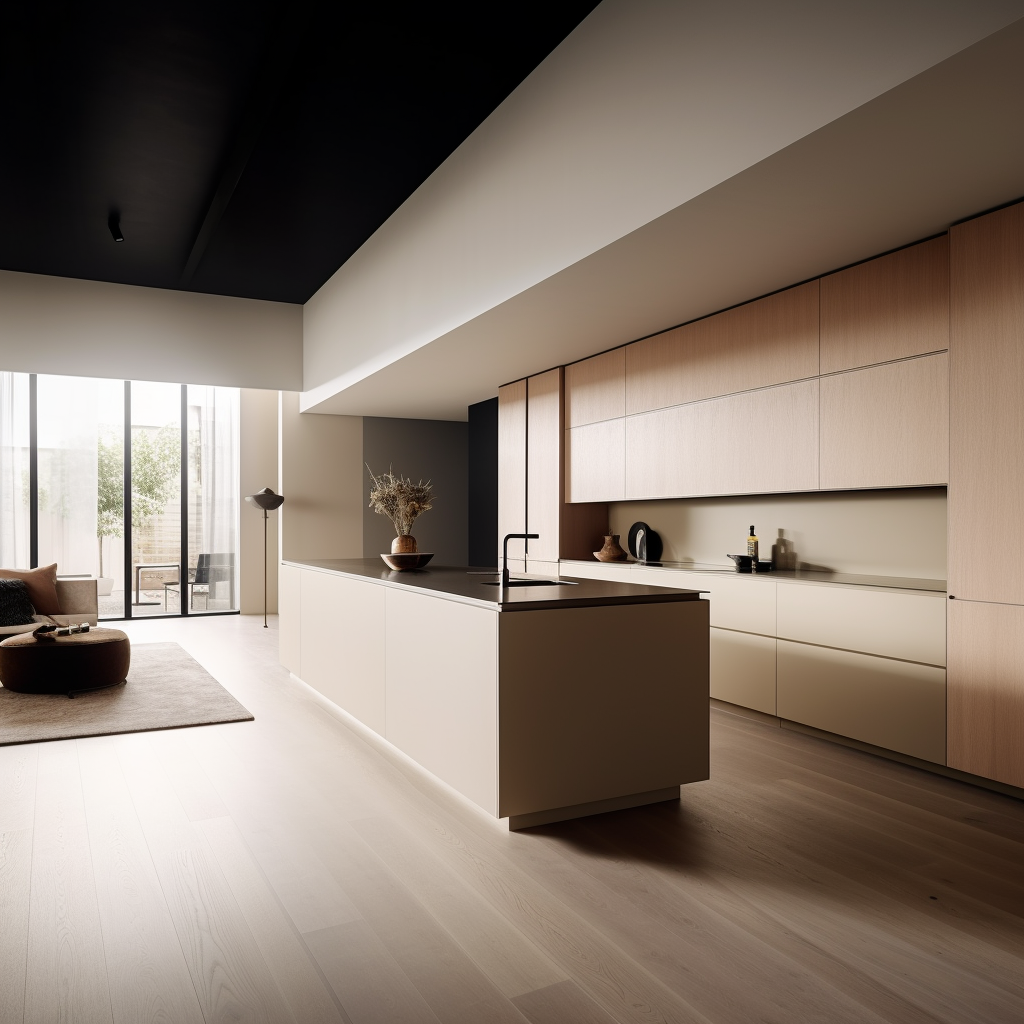
Key Ways to Update Existing Wood Cabinets
Older oak cabinets often show strong grain patterns. When painted directly, this can leave a rough surface that feels uneven. Applying a grain filler helps level the pores, allowing the finish to appear smooth and more refined.
Another approach is to work with the natural grain instead of hiding it. Techniques such as light washing or cerused finishes soften the contrast, creating a more relaxed, modern organic look.
Tannin bleed is another detail that shouldn’t be overlooked. In woods like oak or cherry, natural tannins can rise through paint and cause yellowing over time. A high-quality sealing primer—either oil-based or shellac-based—helps prevent this and keeps the finish stable.
What to Check Before Updating Wood Kitchen Cabinets
Before making any changes, start by evaluating the existing situation. Many solid wood cabinets are built better than other available materials today, so replacing them isn’t always the best move.
Key Things to Look At
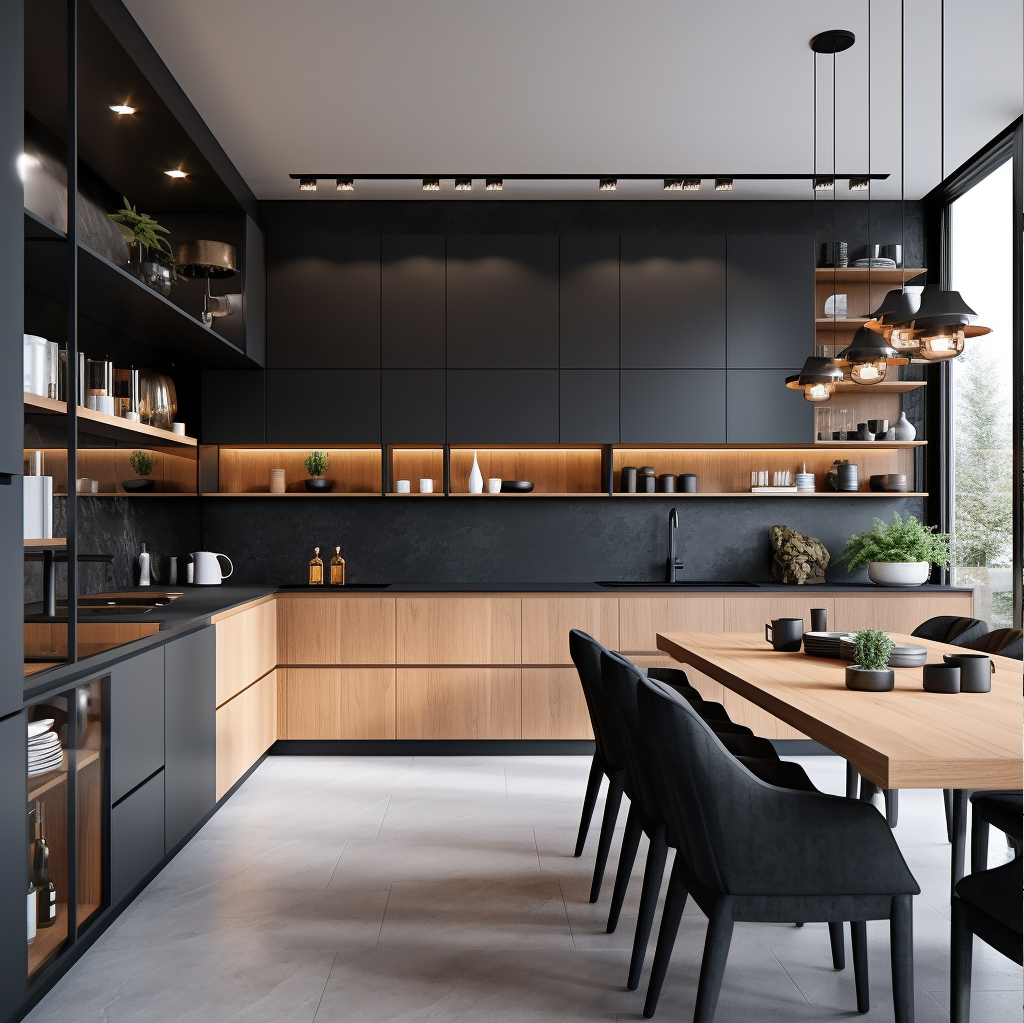
Cabinets made from maple or cherry are especially suitable for modern matte finishes. Their smooth surface allows paint to sit evenly, creating a clean and refined look.
Oak or ash requires a different way. If a minimalist finish is the goal, grain filling becomes necessary. Another option is to keep the texture but soften its appearance, allowing the wood to feel warmer without becoming visually burdened.
Pay close attention to the joints between rails and stiles. Wood responds to humidity, expanding and contracting over time. When joints begin to separate, it often points to deeper structural or environmental issues that paint alone cannot fix.
Usually, cabinets that look worn are simply covered in aged varnish. Once removed, the original wood can regain depth and clarity, often exceeding the look of newer materials.
Door design matters. Raised panels and decorative profiles can sometimes be reshaped to reduce visual weight. In some cases, replacing the center panel with glass can make the entire kitchen feel lighter and more open.
At Parlun Building, we’ve found that well-maintained solid wood frames often remain more stable than newer alternatives. With the right adjustments, the goal isn’t to replace the kitchen but to bring it forward.
How to Combine Wood Cabinets with Modern Kitchen Design
Painting everything white doesn’t automatically make a kitchen feel modern. The key is balance—keeping the warmth of wood while introducing cleaner, more restrained elements.
One approach is to remove dark, heavy finishes and bring out the natural tone of the wood. A lighter, more neutral surface allows the material to feel fresh rather than dated.
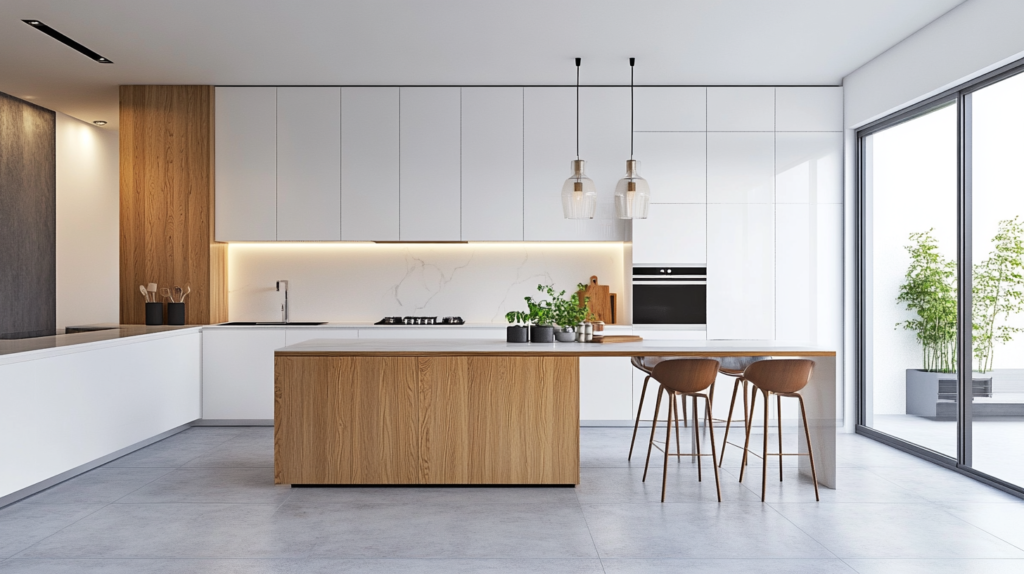
This look pairs naturally with styles like Japandi, where warm wood tones meet soft neutrals and simple forms. Black metal hardware or slim profiles can add contrast without overwhelming the space.
Wood is vital in balancing materials. In kitchens with concrete, stone, or stainless steel, it softens the overall feel and prevents the space from becoming too cold or rigid.
Simple Ways to Balance Wood and Modern Elements
There isn’t a single way to modernize wood cabinets. Choose a direction that fits your space and the feeling you want: minimal, warm, or slightly rustic.
How to Modernize Wood Kitchen Cabinets (7 Practical Ideas)
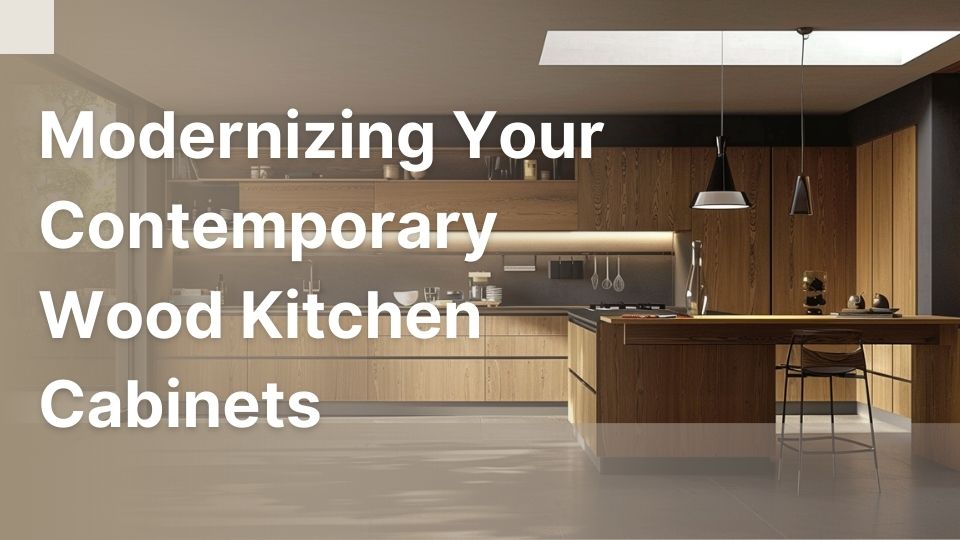
Before diving into a full renovation, small updates can completely change the look and feel of wood cabinets.
Quick Ways to Modernize Wood Cabinets
Updating the Color of Wood Kitchen Cabinets
One of the fastest ways to modernize wood cabinets is to update the finish. Outdated kitchens often come from glossy orange tones or dark brown stains that weigh down the space.
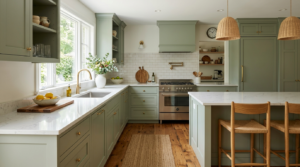
Switching to softer, muted colors can immediately change the overall look. Shades like warm greige, sage green, or milk tea tones create a calm, modern feel. For a stronger contrast, deep navy or charcoal paired with light countertops adds a sharper, more defined look.
If you prefer to keep the natural wood, lighter finishes or whitewashed effects can make the space feel more open without hiding the grain.
For DIY projects, cabinet-grade paints are usually enough to achieve a smooth, professional result. The key steps include proper cleaning, light sanding, and applying a bonding primer to ensure the paint adheres well.
We often recommend products like Benjamin Moore Advance or Sherwin-Williams Emerald Urethane. Their self-leveling properties help reduce brush marks and create a more even finish.
Natural wood grain is still a strong design choice. When combined with clean lines and simple forms, it feels both warm and contemporary. Pairing wood cabinets with materials like quartz, marble, or light stone surfaces can further balance the overall look.
Upgrade the Cabinet Hardware
One of the easiest ways to modernize wood cabinets is to update the hardware. Replacing outdated knobs and handles can instantly change how the entire kitchen feels.
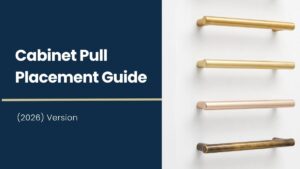
Older cabinets often feature round wooden knobs or ornate brass handles that make the design feel busy. Swapping them for simpler options—such as matte black, brushed nickel, or slim bar pulls—creates a cleaner and more contemporary look.
For a more minimal approach, finger pulls installed along the edge of cabinet doors offer a subtle, low-profile solution. They reduce visual clutter while maintaining full functionality.
If the cabinet construction allows, handle-free designs are another excellent option. Push-to-open mechanisms create a smooth, uninterrupted surface and reinforce a modern aesthetic.
When choosing hardware, keep consistency in mind. Stick to one finish and measure carefully before drilling to ensure proper alignment and spacing.
Creating a Shaker-style look
Converting wood cabinet doors to a Shaker style is one of the most effective ways to modernize their appearance. It works especially well when flat doors feel plain or existing detailing looks outdated.
Shaker cabinets strike a balance between classic and modern design. Their simple frame and clean lines fit easily into both contemporary and transitional kitchens.
If your cabinet doors are flat, you can create this look by adding a thin frame around the edges. Lightweight plywood strips about 0.6 cm thick and 5 to 7.5 cm wide can be cut and attached to form a recessed panel effect.
Once painted, the result closely resembles professionally made Shaker cabinets. The added depth makes the doors feel more refined without introducing unnecessary ornamentation.
Adding Open Shelving
Adding open shelving is a simple way to lighten the look of wood cabinets. It works especially well in kitchens with a crowded or enclosed feel.
Many older kitchens rely on continuous rows of upper cabinets, which can make the space feel crowded. Removing the doors from one or two cabinets, or replacing a section entirely with open shelves, helps break that visual block.
Open shelving also creates space for everyday items. A few well-chosen pieces, such as mugs, ceramics, or small plants, can make the kitchen feel more relaxed and lived-in without adding clutter.
Removing Visual Weight
Reducing decorative details is very effective. Many older designs include ornate carvings, curved valances, or heavy crown molding, adding unnecessary visual bulk.
Removing these elements or replacing them with simpler trim can immediately clean up the overall look. Even leaving certain areas without molding can create a more open and balanced feel.
Modern cabinet design focuses on flat surfaces and clean edges. Letting go of excessive ornamentation allows the structure of the cabinets to stand out, giving the space a lighter and more contemporary feel.
Updating Wood Cabinet Doors with Glass
Adding glass cabinet doors works well to modernize wood cabinets without replacing the entire structure. Even swapping just a few upper cabinet doors can noticeably lighten the overall look.
Glass panels give a light mood by breaking up solid surfaces. They let light pass through, opening up the kitchen and softening the contents inside.
Reeded or fluted glass, with its subtle vertical texture, is especially popular in modern kitchens. It adds visual interest while still maintaining a clean and controlled appearance.
This method plays quite nicely when updating traditional wood cabinets, helping them feel lighter, more refined, and better aligned with contemporary design.
Ambient Lighting and Cabinet Lighting
Improving cabinet lighting is also a great idea. In many kitchens, the issue isn’t the cabinetry itself—it’s the lack of layered lighting.
Adding LED strip lighting under upper cabinets or along the base creates depth and makes the cabinets feel lighter. This subtle glow helps define edges and creates a floating illusion. That’s quite an intriguing design.
Lighting affects the way we perceive colors and materials. Warmer tones bring out the natural character of wood, while overly cool lighting can make the space feel harsh.
If hardwiring isn’t possible, rechargeable LED bars with motion sensors offer a simple alternative. They can be installed without tools and still provide a noticeable upgrade.
For most modern kitchens, a color temperature around 3000K works best. It keeps the space warm while maintaining a clean, modern look.
In Summary
Modernizing wood cabinets doesn’t always require drastic measures. Thoughtful updates to color, hardware, structure, and lighting are enough to completely transform a kitchen’s look and feel.
Solid wood cabinets, especially in older homes, often have a level of durability and character that newer materials struggle to match. With the right adjustments, they can move naturally into a more modern and refined direction.
If you’re unsure about your cabinets—whether it’s the wood type, surface condition, or suitability for refinishing—it can help to get a closer assessment. Even small details can influence the final result.
At Parlun Building, we work closely with solid wood cabinetry and can offer practical guidance based on material and structure. If needed, you’re welcome to share photos of your cabinets for a quick evaluation and suggestions.