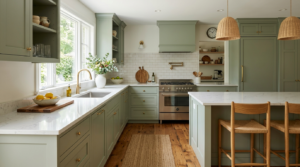
Laminate cabinets are one of the most practical and versatile choices for a modern kitchen. Available in hundreds of colours and patterns, including realistic wood grain effects, they deliver the look of premium materials at a fraction of the price. Whether you are gathering laminate kitchen cabinet ideas for a rental refresh or a full renovation, the wide range of laminate cabinet finishes makes it easy to match almost any style or budget.
What Is Laminate? (HPL vs LPL Explained)
Laminate is a decorative surface material bonded onto a board substrate such as MDF or particleboard. Two types dominate the market, and the difference has a direct effect on price and laminate cabinet durability.
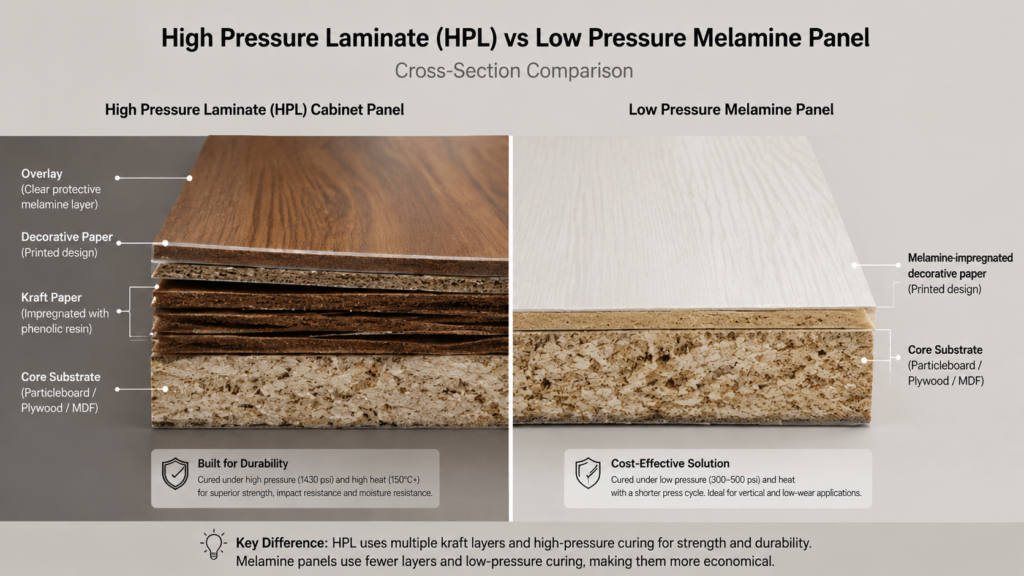
High pressure laminate, or HPL, is built from multiple layers of resin-soaked paper fused together under intense heat and pressure. This process creates a hard, dense surface that stands up well to scratches, moisture, and daily wear. High pressure laminate cabinets are widely used in commercial settings and premium residential kitchens because they keep their finish for many years, even in busy spaces.
Low pressure laminate, or LPL, is more commonly known as melamine. It uses a single decorative layer pressed directly onto the board with less heat and pressure. LPL costs less and works well for light-use or budget projects, but the coating is thinner and shows wear faster than HPL. When buyers compare laminate cabinets for a kitchen that gets heavy daily use, HPL is usually the stronger long-term choice.
Both types can be finished with matching edge banding that seals the door edges and helps prevent moisture from creeping into the board. On cost, both stay well below solid timber, though HPL sits a little higher than melamine because of the extra layers and pressure used to make it. That small price difference often pays off in a kitchen, where the surface has to cope with heat, spills, and constant handling.
Laminate vs Wood Cabinets
The laminate vs wood cabinets decision usually comes down to budget, maintenance, and the feel you want in the room. Both materials have a clear place, and neither is simply better than the other.
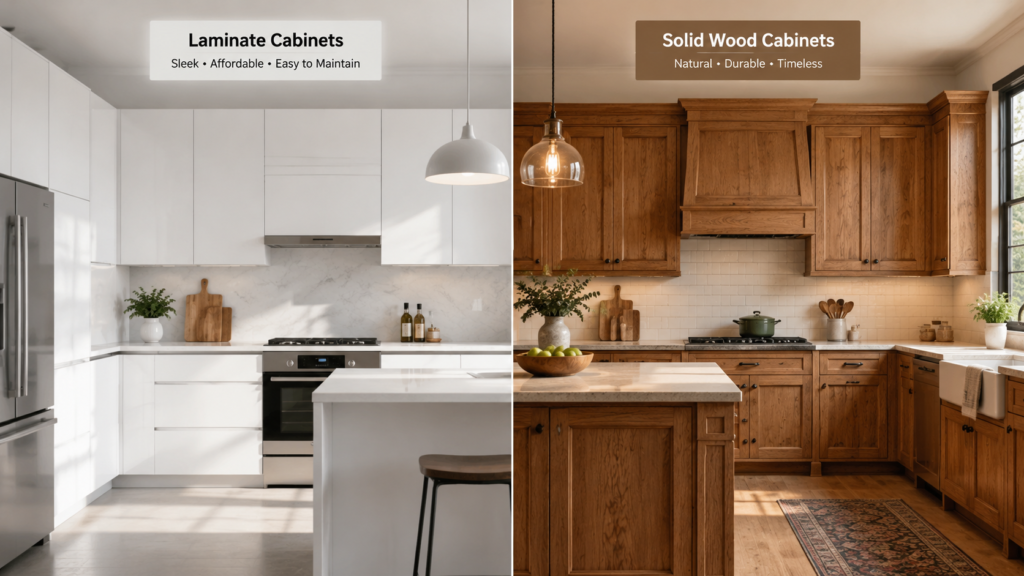
Laminate cabinets give you consistent colour and texture across every door and panel, with none of the natural variation you have to match by hand. The surface resists moisture, so it will not warp, swell, or shrink the way solid timber can in a humid kitchen. Cleaning takes a quick wipe, ongoing upkeep is minimal, and the price sits well below real wood, which is a large part of the appeal for cost-conscious projects.
Solid wood brings natural grain, warmth, and character that many buyers still prefer. It can be sanded and refinished if it gets scratched, or recoloured later if your taste changes, and it tends to add more resale value in higher-end homes. That flexibility comes at a higher upfront cost and requires more care over time.
For rental units, budget renovations, and high-volume builds, laminate cabinets are usually the smarter spend. For a premium kitchen where natural material and long-term resale matter most, solid wood or a real wood veneer earns its extra cost. Many kitchens also blend the two, running laminate across the main cabinetry and adding a wood island or open shelving as an accent.
On price, laminate typically costs a good deal less per unit than solid wood or wood veneer, which is why it wins so often on larger projects where every cabinet adds up. When you multiply that saving across a full kitchen, or across several units in a development, the gap between laminate cabinets and solid wood becomes hard to ignore.
Laminate vs Thermofoil Cabinets
Thermofoil is often confused with laminate, yet the two behave very differently once they are installed. In a thermofoil vs laminate comparison, the construction is the detail that matters most.
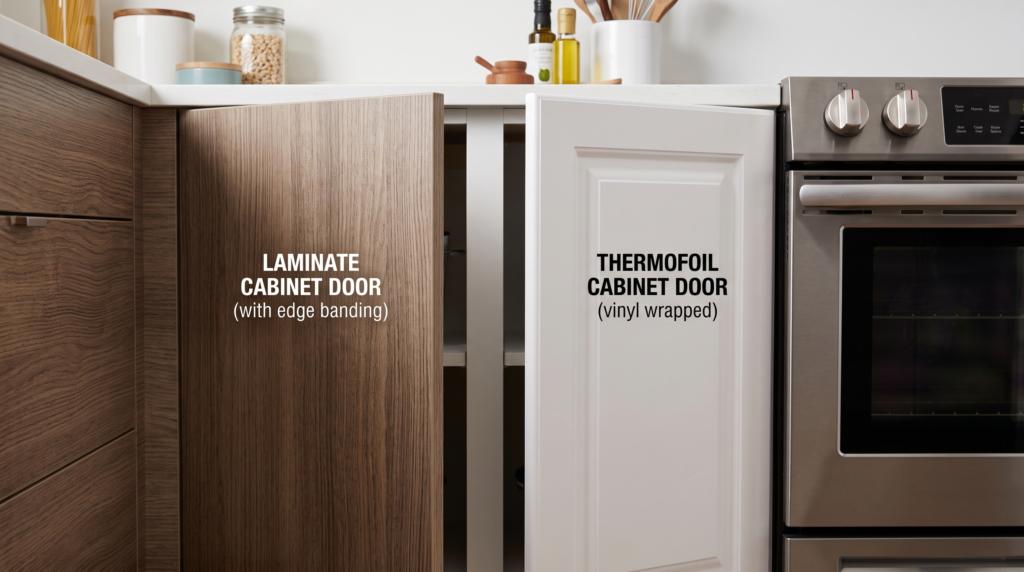
Thermofoil is a thin vinyl film heat-sealed over an MDF core. It is inexpensive and produces a smooth, seamless look, but the film is prone to peeling and lifting over time, especially around ovens, dishwashers, and other heat sources. Once the film starts to separate from the door, a clean repair is difficult and often means replacing the piece, which can wipe out the money you saved at purchase.
HPL laminate cabinets use a much thicker, harder surface bonded under high pressure, so they handle heat and constant contact far better. For a kitchen that sees real cooking, steam, and everyday knocks, HPL laminate clearly outperforms thermofoil in both longevity and heat resistance. Thermofoil can still suit low-traffic areas or short-term fit-outs where price is the only priority, but for a space you plan to keep for years, laminate cabinets are the more dependable investment. It is also worth checking ventilation and clearances around appliances, since good airflow reduces the heat build-up that shortens the life of any film-wrapped door. That single detail can make a noticeable difference to how long a cheaper finish lasts.
Laminate Kitchen Cabinet Pros and Cons
Before you commit, it helps to weigh the trade-offs honestly. Every cabinet material has strong points and weak points, and laminate is no exception. The list below covers the practical strengths and limits behind most laminate kitchen cabinet ideas, so you can judge whether it fits how you actually use your kitchen.
Pros
Laminate offers a huge colour range, including wood grain and stone effects that convincingly mimic pricier materials. The surface is moisture and scratch resistant, easy to wipe clean, and needs no sealing or oiling to stay looking good. Finish quality stays consistent across every door, and strong laminate cabinet durability means the surface holds its appearance for years with almost no maintenance required.
Cons
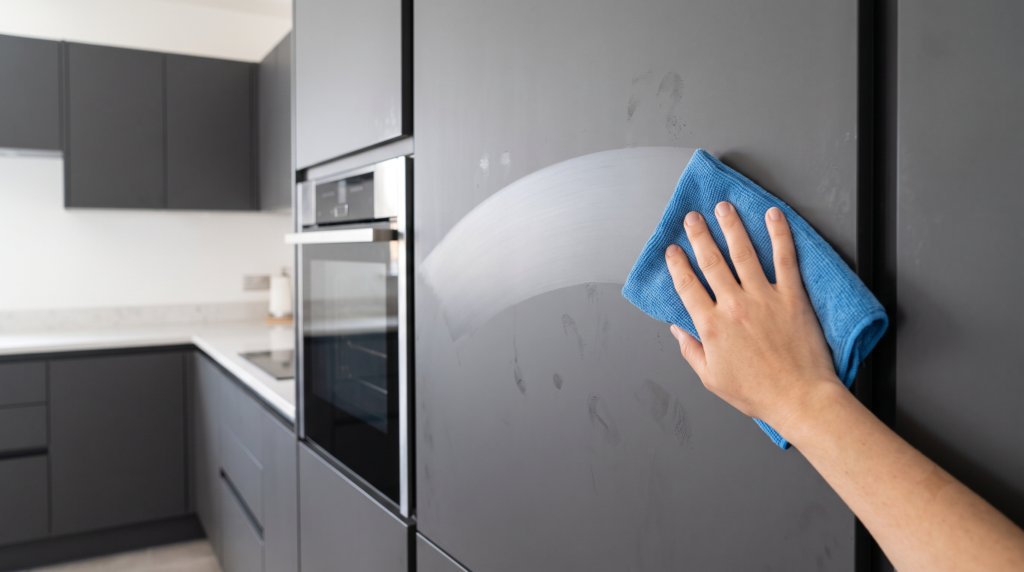
Laminate cannot be easily refinished once the surface is damaged, so deep scratches or chips are hard to disguise. Edges can chip if they take a hard knock, and high-gloss versions tend to show fingerprints and smudges more readily. You also cannot repaint laminate if you change your colour scheme later, which makes your initial finish choice an important commitment.
Laminate Cabinet Finishes and Colors
Laminate cabinet finishes fall into a few main categories, and each one suits a different look and lifestyle.
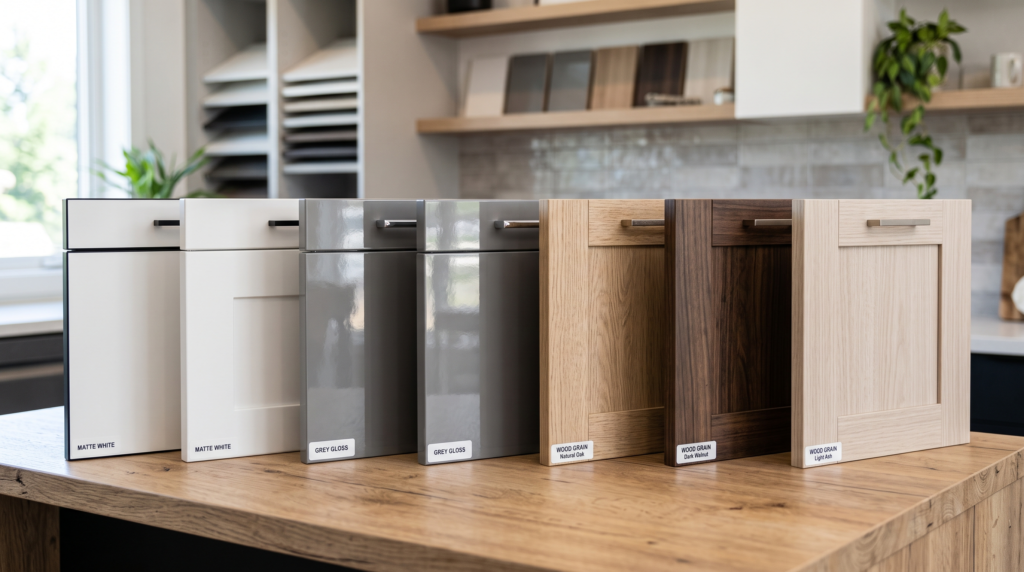
Matte laminate cabinets have a soft, non-reflective surface that hides fingerprints and light smudges, which is a big reason they have become so popular in contemporary kitchens. Gloss finishes do the opposite, bouncing light around the room to make a small or dark kitchen feel brighter and more open. Textured and wood grain laminate cabinets add tactile depth and serve as the most realistic wood alternative available, while stone-effect surfaces bring the look of marble or concrete without the weight or the cost.
Colour choices tend to follow a few reliable directions. A crisp white laminate kitchen stays clean, timeless, and easy to pair with almost any worktop, which keeps it in steady demand year after year. Grey and off-white sit close behind as flexible neutrals that work in both warm and cool schemes, and warm wood grain tones remain a favourite for anyone who wants natural character without natural-wood upkeep. Across global projects, white, grey, off-white, and wood grain are consistently the most requested laminate cabinet finishes, so choosing within that group keeps a kitchen both current and broadly appealing.
Beyond colour, the surface texture shapes both the look and the price. Flat matte and standard gloss panels tend to sit at the accessible end, while deeply textured wood grain and stone-effect finishes usually cost a little more for the extra realism they add. It is worth ordering physical samples before you decide, since a finish can look very different under showroom lighting compared with the daylight and task lighting in a real kitchen.
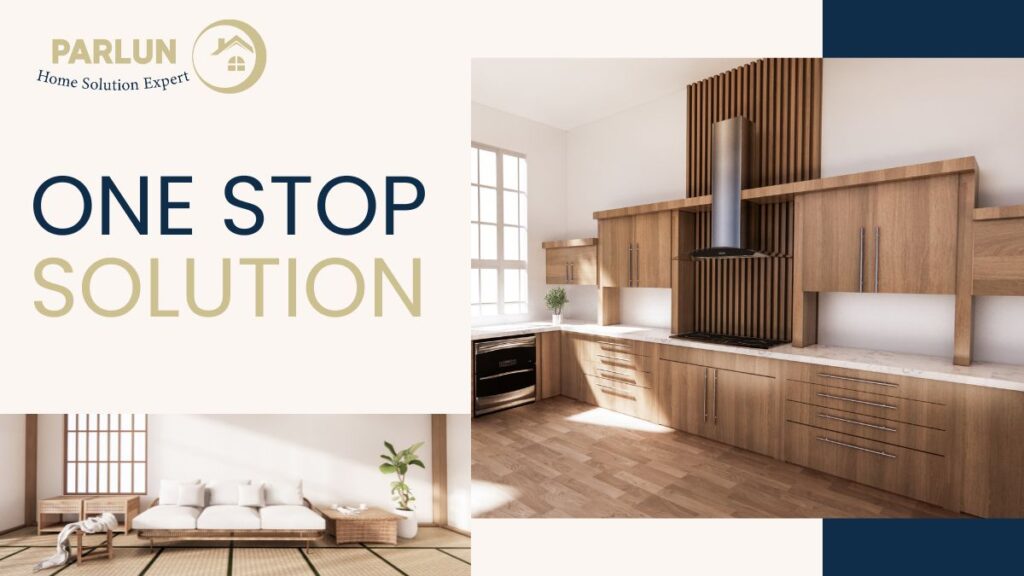
Laminate Kitchen Cabinets from Parlun
Parlun manufactures HPL-finished laminate cabinets in a wide range of colours and textures, from clean matte neutrals to realistic wood grain and stone effects. Both matte and gloss surfaces are available, and every order can be custom sized to fit your exact kitchen layout.
As a supplier of kitchen cabinets from China, Parlun pairs factory-direct pricing with worldwide delivery, which makes it a strong fit for builders, interior designers, and homeowners sourcing at volume. If you are comparing materials, HPL laminate is a natural step up from melamine for buyers with a slightly higher budget who want better durability without moving all the way to solid wood. Ordering direct also lets you lock in consistent finishes across a whole project, which matters when you are fitting out multiple kitchens or matching a repeat design.