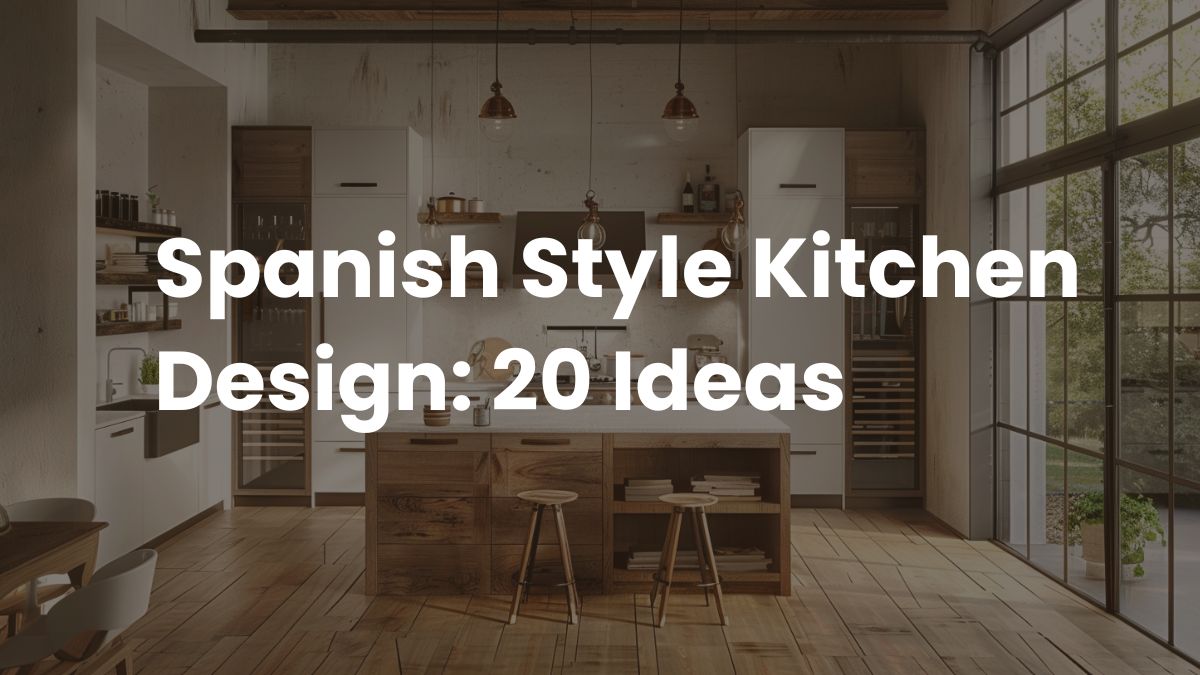
A Spanish style kitchen brings sun-soaked warmth into the heart of the home, where terracotta floors, honey-toned wood, and gently arched doorways set a relaxed, hacienda mood. Textured plaster walls and hand-painted tile add depth you can almost feel. If you love Spanish kitchen design ideas rooted in Mediterranean kitchen design, this guide walks through 20 ways to build that rich, earthy character, from color and cabinetry to the small decorative details that pull it together.
What Is a Spanish Style Kitchen?
A Spanish style kitchen draws on centuries of Mediterranean and hacienda tradition, blending rugged natural materials with graceful, hand-crafted detail. The look traces back to Moorish and Colonial Spanish architecture, where thick plaster walls, cool terracotta floors, and carved timber helped interiors stay comfortable through long, hot summers. Those same practical materials became the visual language of the style, and they still define it today.
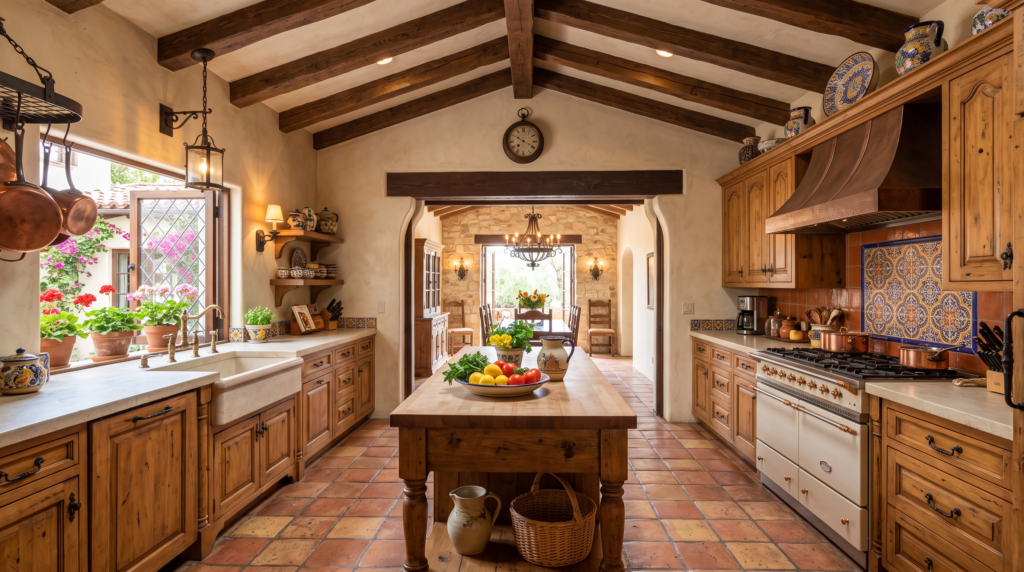
At its core, this kind of kitchen leans on natural stone, warm wood, wrought iron hardware, and hand-painted tile. Surfaces feel handmade rather than machine-perfect, and the palette stays earthy and grounded instead of bright or glossy. Arched openings, exposed beams, and textured walls do much of the decorative work, so even a simple layout takes on real character.
It helps to know two close cousins of the style. A hacienda style kitchen tends to be heavier and more rustic, with chunky timber beams, deep window reveals, and a sense of old-world weight. A Spanish revival kitchen is usually more refined, keeping the arches, tilework, and warm tones but pairing them with cleaner surfaces and a lighter touch. Both sit comfortably under the same umbrella.
For builders, designers, and homeowners, the appeal is easy to understand. A Spanish style kitchen feels warm, timeless, and welcoming, and it works just as well in a sunny new build as it does in a period property. The foundation never really changes: honest materials, earthy color, and details that look made by hand. It also ages gracefully, since worn wood, patinated iron, and handmade tile only look better with time. That durability, both visual and practical, is a big part of why the style keeps its appeal across very different homes and budgets.
Key Elements of Spanish Kitchen Design
A handful of core elements carry most of the character in Spanish kitchen design. Get the flooring, the cabinetry, and the decorative tile right, and everything else falls into place around them. The three areas below are where your first design decisions should focus. Layer several of these ideas together and the room feels authentically Spanish long before you add furniture or accessories.
Terracotta Tiles and Warm Earthy Colors
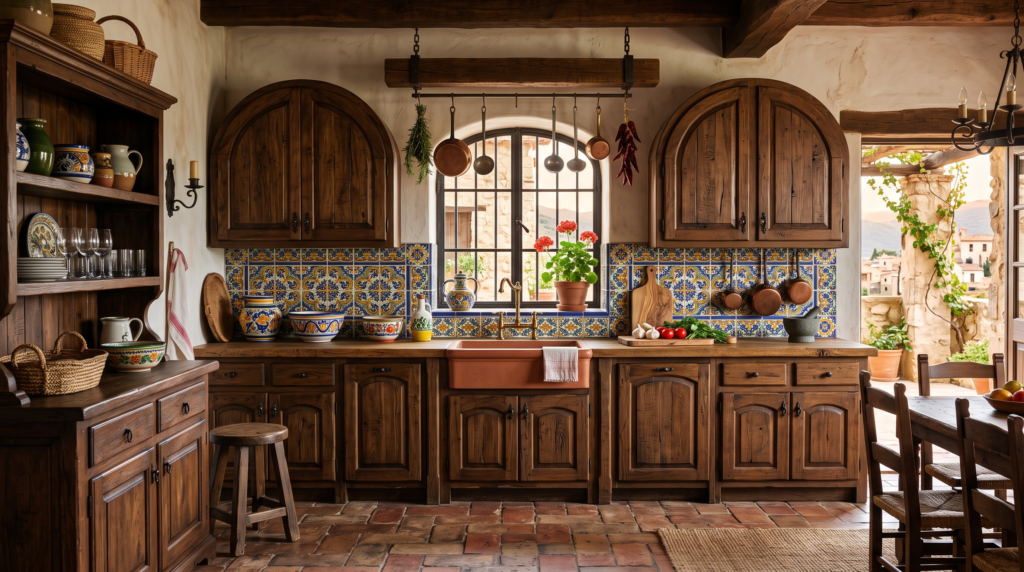
Terracotta is the signature of any terracotta kitchen. Warm clay floor tiles anchor the room, then the tone climbs the walls through ochre paint, soft adobe plaster, or creamy limewash. For extra texture, run terracotta along a countertop border or use it as a rough, handmade backsplash. Small clay accents like exposed brick around a range hood or an arched niche deepen the effect. These earthy layers give the space its grounded, sun-warmed feeling and set the stage for every other material in the room.
Spanish Cabinet Styles and Wood Tones
Spanish kitchen cabinets are typically solid wood with arched or raised panel doors and a substantial, hand-built feel. Some are stained dark to show off a rich grain, while others are painted in off-white, cream, or a muted sage that softens the whole room. Look for chunky frames, visible joinery, and traditional profiles rather than flat, minimalist fronts. A freestanding hutch, a furniture-style island, or open shelving in the same warm timber reinforces the look. The goal is cabinetry that feels crafted and rooted in tradition, not mass-produced.
Decorative Details: Arches, Wrought Iron, and Patterned Tiles
Details are what turn a plain room into a rustic Spanish kitchen. Arched openings, doorways, and wall niches soften the architecture, while wrought iron pendant lights, cabinet handles, and pot racks add dark, sculptural contrast. Hand-painted Talavera tiles are the classic centerpiece of a Spanish tile kitchen, whether stacked behind the range, framing a window, or lining an alcove. Carved corbels under a hood, a heavy timber shelf, and a rough plaster range surround finish the picture. These accents carry the pattern, color, and old-world charm that make the style instantly recognizable.
Spanish Style Kitchen Colors
Color is what makes a Spanish style kitchen feel warm the moment you step inside. The core palette stays earthy and sun-baked: terracotta, warm ochre, cream, soft adobe red, and muted sage green. These tones echo clay, stone, and dry Mediterranean landscapes, so the room feels relaxed and lived-in rather than cold or clinical. Most schemes work best when you let one or two of these shades lead and keep the rest as quiet support.
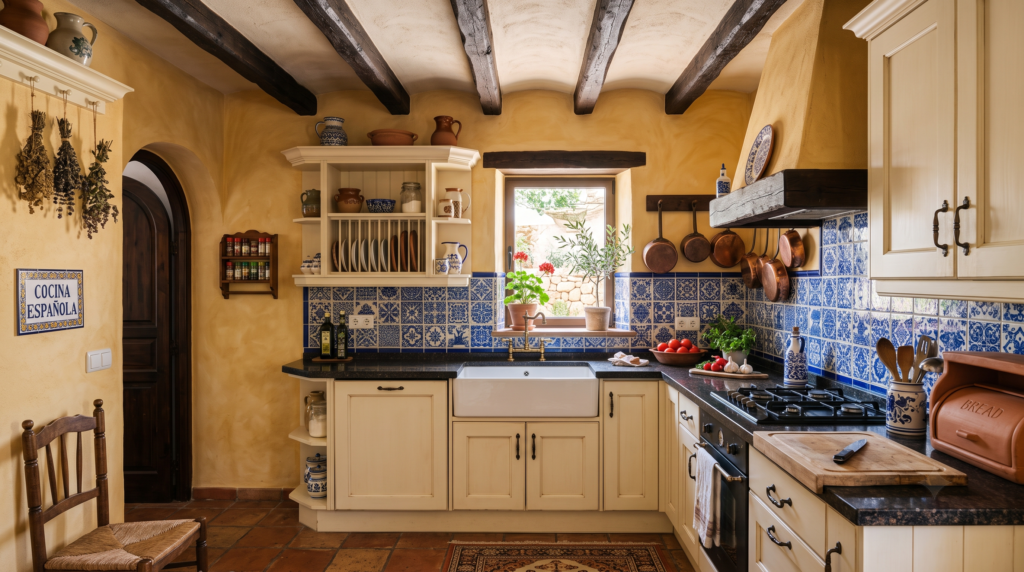
Accents are where the style earns its personality. Cobalt blue Talavera tiles bring a jolt of pattern against warm plaster, and black wrought iron grounds the brighter clay tones with a bit of weight. A splash of mustard, deep green, or burnt orange in tile, pottery, or textiles keeps the palette from feeling flat. Used sparingly, these pops of color feel collected over time rather than decorated all at once.
Wood choices reinforce the mood as much as the paint does. Walnut, dark stained oak, and solid pine each bring depth and rustic warmth to Spanish kitchen decor, whether on cabinetry, ceiling beams, or open shelving. Pair darker timber with lighter plaster walls so the room stays warm without turning heavy or dim.
When you plan where each color lands, think in layers. Keep the large surfaces like walls and ceilings in soft, warm neutrals, then save the saturated clay reds, cobalt blues, and deep greens for tile, pottery, and smaller accents. This keeps a rich palette feeling calm and collected instead of overwhelming. Natural light plays a part too, since warm afternoon sun makes terracotta and ochre glow, so it pays to orient your boldest colors and patterned tile where the light hits them best.
One guideline holds across almost every project: skip cool greys and glossy, high-contrast modern tones. They work against the warmth that defines authentic Mediterranean kitchen design. Keep everything anchored in earth, clay, and natural wood, and the palette does the heavy lifting for you.
How to Get a Spanish Style Kitchen with Modern Cabinetry
You do not need a historic villa to get a Spanish style kitchen. Modern custom cabinetry can carry the entire look while giving you the storage, layout, and function a working kitchen actually needs. The aim is to choose shapes and finishes that reference tradition without turning the room into a museum piece.
Start with the doors, since they set the tone. Arched panel fronts, or subtle arch inserts on upper cabinets and glass-front units, immediately signal Spanish and hacienda style kitchen influence. Warm wood tones in walnut or stained oak keep the cabinetry rich and grounded, while a cream or terracotta painted finish lightens the effect for a fresher, more current space. Either direction pairs beautifully with natural stone countertops, which complete the material story and add another layer of texture.
Hardware and small touches handle the rest. Swap sleek modern pulls for wrought iron or dark bronze handles, add a plaster or tiled range hood, and carry the warm palette through the backsplash and flooring. These moves let a clean, well-built kitchen still feel authentically Spanish.
Layout is where old character meets modern convenience. A large central island in warm timber gives you prep space and casual seating while echoing the furniture-style feel of a traditional Spanish kitchen. Tuck pantries, appliance garages, and deep pan drawers behind arched or paneled fronts, so the room keeps its handmade look without giving up everyday storage. Open shelving styled with a few ceramic pieces and terracotta pots adds display space and reinforces the rustic, collected character that buyers respond to. Even hard-working appliances can disappear behind custom panels, letting the warm materials and craftsmanship stay in focus.
This is where the right manufacturer makes the difference. Parlun can produce arched panel doors and traditional-style Spanish kitchen cabinets built to your exact dimensions, so the character stays true while the layout suits how you really cook and entertain. Combining hand-crafted detail with precise, modern construction gives you a Spanish style kitchen that feels both timeless and practical, a look that suits builders, designers, and homeowners alike.