This guide compares 27 Chinese window and door manufacturers and brands, from Foshan-based aluminium system suppliers to timber-aluminium specialists and companies with published export ranges. It brings together locations, products, customisation and available export and certification evidence, alongside specific systems and manufacturing features. Importers, developers, contractors, architects, distributors and procurement teams can use these differences to build a project shortlist.
What Global Buyers Should Know About China Window Manufacturers
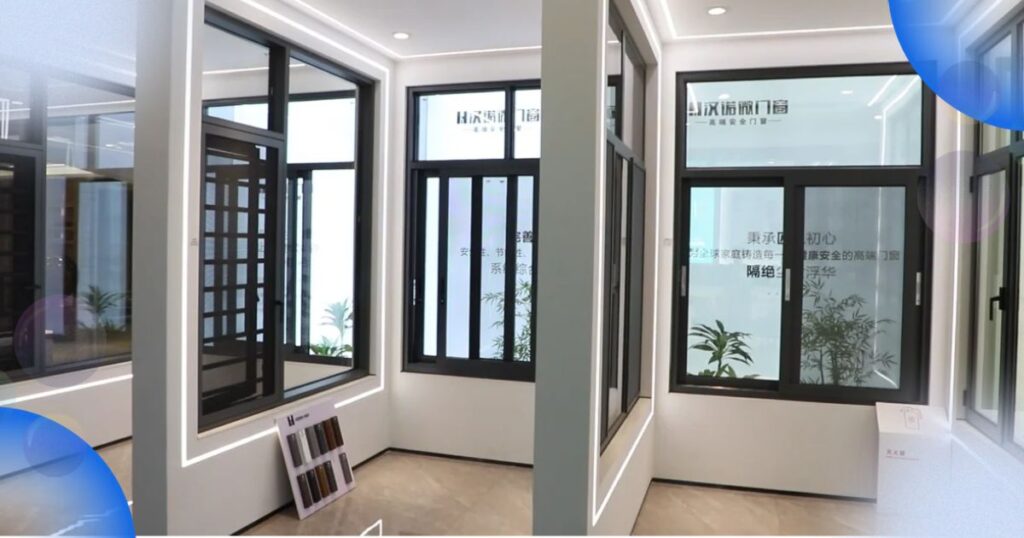
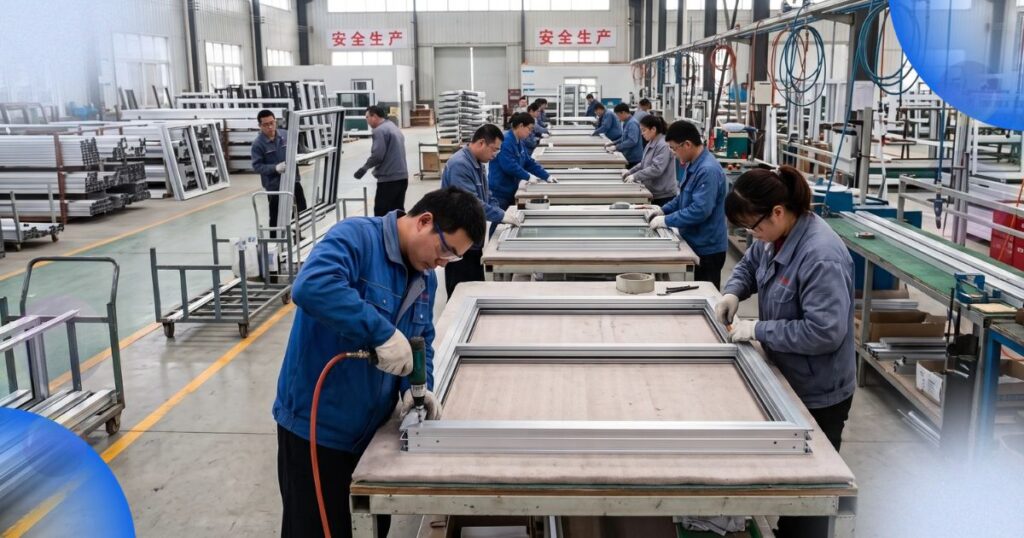
Chinese window suppliers combine brand management, system development and finished-window production in different ways. Sinpolo’s published factory network separates aluminium windows and doors from interior and entrance doors. Within the Haomei group, Bucalu provides window systems and Kejian fabricates windows for overseas project and retail customers. A brand, its system developer and the factory producing a finished window may therefore be different entities.
Profile mills supply frame sections, hardware makers supply operating components, and façade contractors deliver building-envelope work; those roles alone do not make a business a finished-window manufacturer. A trading company may arrange supply from a separate producer, while an installer’s principal role is fitting the products on site.
How We Selected Window Manufacturers in China

The shortlist prioritises Chinese brands with identifiable manufacturing operations and a relevant range of finished windows or doors. Official company websites, product catalogues, corporate filings and third-party records provide the basis for the locations, business roles and products described here. Company-reported export activity and certification claims are distinguished from certification issuer records. Marketplace listings and promotional articles serve as research leads rather than sufficient evidence of manufacturing capability.
China Window and Door Manufacturer Comparison
Minimum order quantity (MOQ) depends on the quoted series, finish and specification. Certification references include Conformité Européenne (CE) marking, the National Fenestration Rating Council (NFRC) and the Passive House Institute (PHI).
|
Company and location |
Products and materials |
Customisation and MOQ |
Export and compliance notes |
Potential fit |
|---|---|---|---|---|
|
PHONPA (皇派门窗); Foshan, Guangdong |
Aluminium system windows, doors and sunrooms |
Custom residential systems |
CE marking and StandardsMark certification reported by company |
Residential glazing with acoustic specifications |
|
Xinhaoxuan (新豪轩门窗); Foshan marketing headquarters; Xinxing, Guangdong manufacturing base |
System windows, doors, sunrooms and curtain walls |
Whole-home customisation |
Export capability not established in cited sources |
Coordinated residential window and door packages |
|
Paiya (派雅门窗); Foshan, Guangdong |
Aluminium system windows, doors and sunrooms |
Configured residential systems |
Export capability not established in cited sources |
Villa and apartment window packages |
|
Hennissy (轩尼诗门窗); Foshan, Guangdong |
Aluminium windows and doors |
Custom window and door systems |
Australian and Dubai presence reported by company |
Residential projects and export enquiries |
|
Leawod (良木道); Guanghan, Sichuan |
Aluminium, timber-aluminium and aluminium-clad timber windows |
Non-standard sizes and configurations |
Overseas markets and certifications reported by company |
Projects comparing aluminium and timber window systems |
|
Sayyas (森鹰); Harbin, Heilongjiang |
Aluminium-clad timber windows |
Series-based sizes and configurations |
PHI lists PASSIVE 120S-P, component ID 2105wi03 |
Passive House and low-energy timber window specifications |
|
Milux (米兰之窗); Beijing |
Aluminium-clad timber and aluminium window systems |
Configured window systems |
US and European exports stated by company |
Timber interiors and mixed-material window projects |
|
Mylch (美驰门窗); Beijing |
Timber, aluminium and aluminium-clad timber windows |
Multiple frame systems |
Overseas company contacts published |
Projects comparing timber and aluminium finishes |
|
EEHE (亿合门窗); Foshan, Guangdong |
Aluminium windows, doors, sunrooms and curtain walls |
Custom residential packages |
International marketing activity reported by company |
Whole-home window and door packages |
|
Sinpolo (圣保罗整体门窗); Foshan, Guangdong |
Aluminium windows, timber doors and entrance doors |
Coordinated whole-home products |
Export capability not established in cited sources |
Combined interior door and exterior window orders |
|
Deioux (帝奥斯门窗); Foshan, Guangdong |
Aluminium system windows, doors and sunrooms |
Configured products and finishes |
Export capability not established in cited sources |
Residential window and door packages |
|
Alpes (阿尔卑斯门窗); Foshan, Guangdong |
Aluminium system windows, doors and courtyard systems |
Whole-home systems |
Export capability not established in cited sources |
Custom residential glazing and outdoor structures |
|
Oezer (欧哲); Foshan, Guangdong |
Aluminium windows, doors, sunrooms and curtain walls |
Custom architectural systems |
Export capability not established in cited sources |
Architect-designed homes and villas |
|
Freeri (飞宇门窗); Guanghan, Sichuan |
Aluminium system windows and doors |
Residential configurations |
US villa project published by company |
Residential window and door projects |
|
Fuxuan (富轩门窗); Foshan, Guangdong |
Aluminium windows and doors; unplasticised polyvinyl chloride (uPVC)-aluminium systems |
Whole-home customisation |
Export capability not established in cited sources |
Orders comparing aluminium and uPVC-aluminium options |
|
Redoak (红橡树门窗); Foshan, Guangdong |
Aluminium system windows and doors |
Custom residential systems |
CE marking and NFRC certification reported by company |
Residential system window packages |
|
Simbor (新标门窗); Guangzhou, Guangdong; Sihui manufacturing base |
Aluminium windows, doors and integrated home products |
Coordinated home products |
Export capability not established in cited sources |
Coordinated windows, doors and home finishes |
|
Bucalu (贝克洛) / Kejian (科建); Qingyuan, Guangdong |
Aluminium window and curtain wall systems |
System development with affiliated fabrication |
Group filing identifies Kejian as fabricator for overseas and retail customers |
Engineered window packages with a named fabricator |
|
Joydon (正典系统); Yingkou, Liaoning |
Aluminium system windows, doors and sunrooms |
Window systems and components |
Export capability not established in cited sources |
System-based residential window specifications |
|
Lundeng (伦登国际门窗); Foshan, Guangdong |
Aluminium windows, folding doors and sunrooms |
Custom dimensions and designs |
Export capability not established in cited sources |
Custom villa glazing and sunrooms |
|
Parlun Building (铂麟建材); Foshan, Guangdong |
Aluminium windows and doors; timber doors |
Custom sizes, finishes, glazing and accessories; MOQ by quotation |
Overseas building-materials projects reported by company |
Projects combining windows and doors with other building materials |
|
Jijia (极加门窗); Foshan, Guangdong |
Aluminium system windows, doors and sunrooms |
Custom residential products |
Export capability not established in cited sources |
Residential windows, doors and sunroom packages |
|
Rolansini (罗兰西尼门窗); Foshan, Guangdong |
Aluminium windows, doors, sunrooms and curtain walls |
Project customisation; MOQ by quotation |
Company-reported projects in North America, Australia and the Middle East; NFRC and AS 2047 certification claims |
Custom aluminium window and door packages |
|
SIMTO (新多); Yongkang, Zhejiang |
Steel security doors, steel-and-timber armoured doors and cast-aluminium doors |
Custom door designs and specifications; MOQ by quotation |
Door exports to the US, UK and other markets reported by company |
Residential entrance doors and security-door packages |
|
ROPO; Fuzhou, Fujian |
uPVC and aluminium windows and doors |
Custom sizes, colours and glazing |
Australian, New Zealand, US and European exports reported by company |
uPVC and aluminium export orders |
|
WONLY (王力智能门窗); Yongkang, Zhejiang headquarters |
Smart windows and doors; steel security doors and timber doors |
Standard and non-standard products; MOQ by quotation |
Window-specific export markets and international certifications not established in cited sources |
Residential projects combining windows and entrance doors |
|
Derchi; Foshan, Guangdong |
Aluminium windows and doors |
Custom project designs |
NFRC certification, AS 2047 compliance and CE marking reported by company |
Custom export window and door packages |
Window Manufacturing Locations in China

Foshan, Guangdong, is the most represented location in this comparison, particularly for aluminium window and door brands. Paiya describes manufacturing operations there, and Derchi identifies a factory in Sanshui District. The Guangdong entries also extend to Guangzhou and Sihui for Simbor, and Qingyuan for Bucalu / Kejian.
Outside Guangdong, Leawod and Freeri publish addresses in Guanghan, Sichuan, while ROPO lists Fuzhou, Fujian. Sayyas is based in Harbin, Heilongjiang. Milux and Mylch list Beijing addresses, and Joydon is based in Yingkou, Liaoning. WONLY and SIMTO are based in Yongkang, Zhejiang.
Headquarters and manufacturing sites are not always in the same city. Xinhaoxuan identifies a Foshan marketing headquarters and a manufacturing base in Xinxing, Guangdong. For broader sourcing information, see our windows from China buying guide.
Chinese Window and Door Manufacturer Profiles
PHONPA (皇派门窗)
Jingjie range approaches noise control through the glass, frame and seals together. It describes unequal-thickness laminated insulating glass, multi-chamber profiles filled with sound-absorbing material and multiple Z-shaped acoustic sealing paths. The range includes inward-opening windows and outward-opening designs with integrated insect screens.
Xinhaoxuan (新豪轩门窗)
Offers distinct approaches to window appearance through its Slim and Hanover series. Slim is presented with minimalist Italian-style glazing bars, while Hanover uses a concealed sash to bring opening and fixed sections closer together visually.
Paiya (派雅门窗)
Its catalogue distinguishes screen-integrated windows by operating style: the Lijie 103 series opens inward with tilt-and-turn operation, while Lijie 101 opens outward. Wider window range includes lift-and-slide and compression-sliding designs. These sit within its 5A Deep Comfort framework, which groups acoustics, thermal comfort, safety, appearance and smart operation.
Hennissy (轩尼诗门窗)
English-language catalogue separates Australian and North American system ranges and lists casement, awning, hung, sliding and tilt-and-turn windows. Its export sales site also describes remote technical support by email, video and WhatsApp, together with factory-to-port logistics coordination.
Leawod (良木道)
R7 fabrication process uses laser welding to join all four frame and sash corners, with rounded corner details forming part of the design. It also describes polyurethane foam filling inside profile cavities and a recessed drainage chamber with a one-way flap.
Sayyas (森鹰)
PASSIVE 120S-P is an inward-opening timber-aluminium system listed by PHI for cool, temperate climates. The record specifies 51 mm triple glazing in a 5/18/5/18/5 build-up, a glass-fibre warm-edge spacer and insulated frame sections. PHI lists a whole-window U value of 0.80 W/(m²K) for the documented assembly.
Milux (米兰之窗)
Combines aluminium-clad timber construction with a tilt-and-slide opening mechanism. In its published description, the sash tilts inward for ventilation or moves inward and then slides across the fixed section, avoiding the swing space of an open casement. It also describes automated production for its aluminium-clad timber systems.
Mylch (美驰门窗)
Differentiates its timber range through named architectural families. The M68 is presented as a German-style solid-timber window, while M146 uses an American-style aluminium-clad timber construction. Published examples include M68 windows in a Chinese classical residential design and M146 windows at a Beijing housing project.
EEHE (亿合门窗)
Organises its residential offer around a branded “three protections, three isolations” framework. This covers protection against typhoons, water leakage and falling components, alongside separation from noise, temperature extremes and insects. It pairs these six priorities with its installation and delivery programme in a “6+1” approach, placing installation alongside product design in its domestic service model.
Sinpolo (圣保罗整体门窗)
Combines a specialised factory network with a domestic window-replacement programme launched in 2019. Its published production allocation separates aluminium windows and doors from timber doors, wall panels and metal entrance doors. This supports a coordinated home-renovation offer spanning exterior glazing and interior finishes, while the replacement programme gives the brand a focus on existing homes as well as new installations.
Deioux (帝奥斯门窗)
Xinshuo inward-opening system combines flush frame-and-sash surfaces on both sides with a central sealing gasket, concealed drainage and triple glazing. The broader catalogue includes outward-opening and side-compression designs, allowing different operating layouts within its residential product families.
Alpes (阿尔卑斯门窗)
Annacy lifting window uses vertically moving glazing with a separate horizontally sliding insect screen. Published product diagrams show the lifting mechanism, guided panel movement and screen arrangement as distinct parts of the assembly. Annacy sits alongside the brand’s inward-opening, outward-opening and conventional sliding systems.
Oezer (欧哲)
S100-PW parallel-opening window moves the sash outward while keeping it parallel to the frame. Product page describes manual and electric operation, a concealed drive and wind-and-rain sensing. Its P90-PSW range offers a separate tilt-and-slide concept with an insect screen.
Freeri (飞宇门窗)
J20 outward-opening window places hardware within the inner groove and uses a customised P-shaped handle with a short spindle. Product announcement also describes a design that separates water drainage from the air-sealing path.
Fuxuan (富轩门窗)
U8 concealed-sash system combines uPVC and aluminium with inward tilt-and-turn operation. Published specification for this model lists 3 mm profile walls, 2 mm steel reinforcement and low-emissivity (Low E) double glazing with a warm-edge spacer. Welded corners and optional insect screens complete the published configuration.
Redoak (红橡树门窗)
Emphasises noise control through multi-chamber profiles and sealing designs. Says it was established in Beijing in 2006 and moved to Foshan’s Nanhai district in 2011. Company materials describe automated workshop production, while its September 2026 news reports participation in Big 5 Construct Nigeria.
Simbor (新标门窗)
Panoramic curtain wall windows form part of a broader focus on large glazed elevations. Company history also identifies integrated insect-screen designs and different interior and exterior frame colours as product developments.
Bucalu (贝克洛) / Kejian (科建)
RSW113P sliding-window system specifies stainless-steel tracks, multi-point locking and additional seals at the ends of the interlocking stiles. Drainage design includes a stepped lower frame and a separate exterior track. Within the Haomei group, Kejian fabricates windows for overseas project and retail customers, connecting the system brand to an identified finished-window producer.
Joydon (正典系统)
Describes development and production of thermal-break profiles and system components alongside window design, production and testing. Catalogue includes inward-opening, outward-opening, folding-and-sliding and screen-integrated systems. The range also includes sunrooms, railings and canopies.
Lundeng (伦登国际门窗)
Published window construction sheet shows a window-and-screen assembly with a multi-chamber thermal-break profile and argon-filled Low E insulating glass. Its catalogue also separates casement windows, narrow-frame products and sliding doors.
Parlun Building (铂麟建材)
Window-planning options including mushroom-head locking points, acoustic glazing and integrated roller shutters. Computer-aided design (CAD) and 3D home design services, with windows, doors and interior materials available.
Jijia (极加门窗)
Offers a Morandi-style palette of low-saturation colours, including muted pink, blue, grey and green. Published design approach extends this palette across windows, heavy sliding doors, door surrounds and skirting.
Rolansini (罗兰西尼门窗)
C5 compression-sliding window with composite gasket seals, 7 mm of lateral compression space and a two-track, eight-roller arrangement. N5 tilt-and-turn window with a 39 mm ribbed, multi-chamber thermal-break strip and a 90 mm frame depth.
SIMTO (新多)
Steel-and-timber armoured construction with an internal steel structure and timber-faced outer panels. Single-stage door-frame forming with a 1,900-tonne press, described in SIMTO’s manufacturing presentation.
ROPO
Publishes technical sheets for uPVC hand-cranked windows and folding windows. These include frame sections and panel arrangements. The folding-window sheet illustrates a three-panel outward-opening assembly, with an internal elevation and sectional details showing the frame and sash construction.
WONLY (王力智能门窗)
Order-driven, flexible production for standard and non-standard products, supported by individual digital product records. Its 2025 annual report also describes participation in GB/T 42047-2023, China’s standard for intelligent control systems for windows and doors.
Derchi
S6 casement system combines a folding concealed insect screen, six-point locking across four sides and three surrounding sealing layers, according to its product description. Its wider export presentation also advertises nail-fin installation and technical installation guidance.
Window Materials and Glazing Systems
The shortlist includes aluminium systems from brands such as Paiya and Deioux, timber and aluminium-clad timber ranges from Mylch and Milux, and uPVC options from ROPO. Fuxuan’s U8 adds a uPVC-aluminium construction. Our comparison of PVC and aluminium windows explains the frame-material trade-offs in more detail.
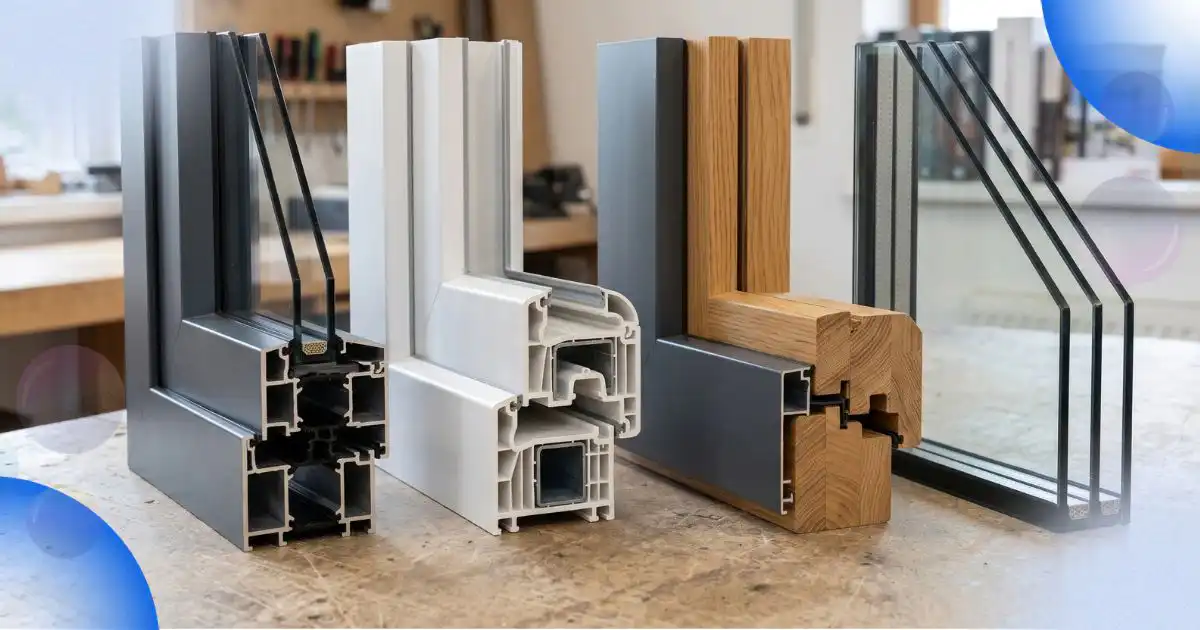
Aluminium supports slim sightlines and large openings, but conducts heat readily. A thermal break places a low-conductivity barrier between the inner and outer aluminium sections. uPVC has lower thermal conductivity; reinforcement depends on the system design, dimensions and structural loads. Aluminium-clad timber combines a timber frame with protective exterior aluminium cladding. Material choice influences appearance and maintenance, while the complete frame and glass assembly determines performance.
Thermal figures are comparable only when their units, rating methods and product scope are consistent. Reference size and configuration also matter: the PHI figure quoted for Sayyas applies to the documented assembly.
Certifications Testing and Destination Requirements
Destination requirements concern the supplied product and its intended use. An export project may need evidence for air leakage, water penetration, structural resistance, energy performance and safety glazing, with different standards addressing different properties.
Certification to ISO 9001, the International Organization for Standardization’s quality management standard, concerns management processes. Aluminium Stewardship Initiative (ASI) certification concerns responsible aluminium production and sourcing within its certified scope; membership alone is not certification. Neither establishes finished-window performance.
Verify performance and certification documents with the issuing body or laboratory. The document number, named manufacturer and site, product series, standard and edition, test date and certification status should be traceable. Its coverage must include the quoted frame, glazing, hardware, opening type and permitted size range. Test evidence need not reproduce the exact dimensions of every ordered unit, provided its permitted coverage includes the supplied construction and sizes.
The NFRC Certified Products Directory covers certified energy ratings; air, water and structural certification requires a separate check through the relevant scheme. Certificate expiry and report acceptance follow the programme’s rules, so age alone does not determine whether a report is usable. Where the seller and named manufacturer differ, documented traceability connects the proposed order to the evidence.
MOQ Customisation and Lead Times
Customisation in this comparison ranges from ROPO’s sizes, colours and glazing options to Leawod’s non-standard configurations and the coordinated home products offered by Sinpolo. Adapting an established series is different from developing new profiles or changing a system’s structure.

Standard series and stock finishes may accommodate smaller orders. Custom colours, new extrusion tooling and specialist glass can introduce minimum batch sizes or setup charges. MOQ may be expressed in units, square metres or order value, so the unit and any small-order surcharge belong in the quotation.
Production timing begins from an agreed milestone, often deposit receipt, drawing approval or sample approval. A useful schedule separates:
Design revisions, colour matching and specialist glass or hardware can extend factory time. Transport, customs clearance and final delivery add separate stages. Our how to buy windows from China guide covers the complete procurement process.
Factory Audits Quality Control and Shipping
Start with the supplier’s Chinese legal name, Unified Social Credit Code, registration status and business scope in the National Enterprise Credit Information Publicity System. Establish the actual production entity and factory address, including their relationship to the seller. A registered office may differ from the production site.

A factory visit or live video tour should cover cutting, machining, assembly, hardware fitting, glazing and packing as relevant to the order. Extrusion, coating and glass processing may be outsourced; a finished-window manufacturer does not need to perform every upstream process itself. Production and inspection records should belong to the plant making the order. For a trading-company purchase, the manufacturer and each party’s responsibilities need to be identified.
Use the specification and inspection plan to set the requirements before production and assess the finished order:
Physical inspection covers dimensions, squareness, joints, drainage openings, glazing, seals, opening and locking operation, surface finish and visible glass defects. An independent inspection company can assess these agreed requirements before final payment and dispatch. Inspection does not replace performance testing or certification.
Packaging needs to suit the units’ size, weight and transport route. Suitable crates or racks, finish-compatible protection, corner guards, separation and secure restraint reduce movement damage. Moisture exposure and safe unloading also belong in the packing plan. Labels should match the window schedule, with packing and loading photos documenting the shipment.
Solid wood crates, pallets and dunnage may require treatment and marking under International Standard for Phytosanitary Measures No. 15 (ISPM 15). Packaging made wholly from processed wood such as plywood is exempt from that standard; any solid wood components remain subject to the applicable destination rules.
Defect handling belongs in the contract: notification periods, evidence, repair, replacement or credit, response times, and responsibility for replacement freight and site labour. For logistics and customs planning, see our guide to importing building materials from China.
How Parlun Building Supports Window Projects
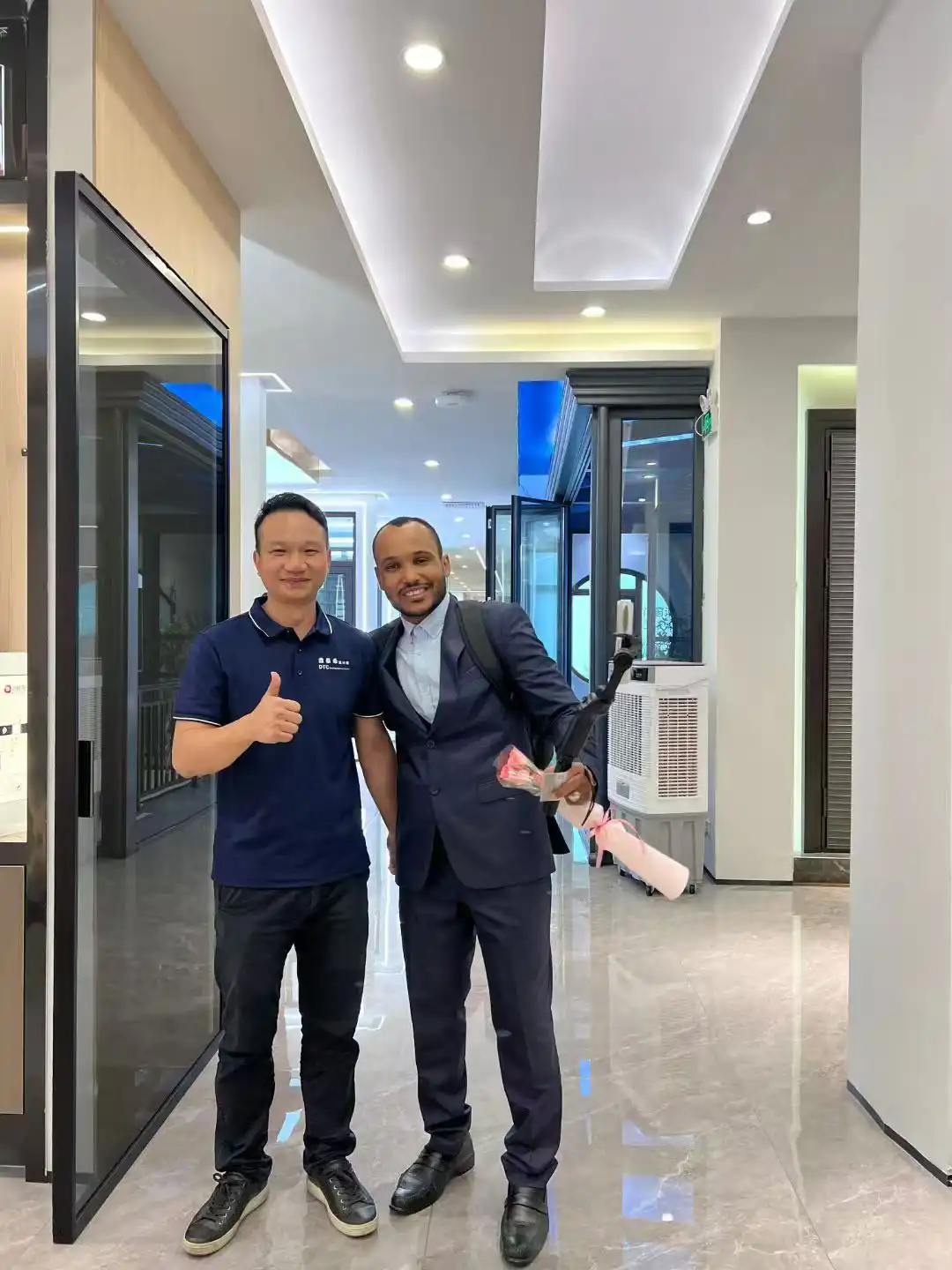
Parlun Building is based in Foshan and provides window selection and quotation support for international buyers. We help align frame materials, dimensions, opening types, glazing and accessories with the project brief so quotations describe a comparable scope.
Explore Parlun Building windows and send your drawings or window schedule, destination market, target performance, budget and delivery requirements to discuss suitable options.
Frequently Asked Questions
Final Thoughts
PHONPA’s acoustic windows, Sayyas’ aluminium-clad timber systems and SIMTO’s security doors illustrate the range available from Chinese manufacturers. Product specialism, documented performance and the scope of supply help buyers narrow these 27 companies to a shortlist suited to their project.