Melamine cabinets are among the most widely used cabinet finishes in the world, found in apartments, commercial kitchens, and large fit-outs across every price bracket. They are affordable, available in virtually any colour, and considerably more durable than many buyers expect. Understanding the full melamine kitchen cabinets pros cons picture helps you decide whether this finish is the right match for your kitchen project and budget.
What Is Melamine and How Is It Used on Cabinets?
Melamine is a hard, durable resin used to produce one of the most widely adopted cabinet finishes in manufacturing today. The process begins with a decorative paper printed in the desired colour or pattern. That paper is then impregnated with melamine resin and bonded to a substrate, most commonly MDF or particleboard, under high heat and pressure. The heat causes the resin to cure and fuse permanently with the board surface. This is what gives thermally fused melamine cabinets their name: the decorative layer becomes chemically integrated with the substrate rather than simply coated on top of it.
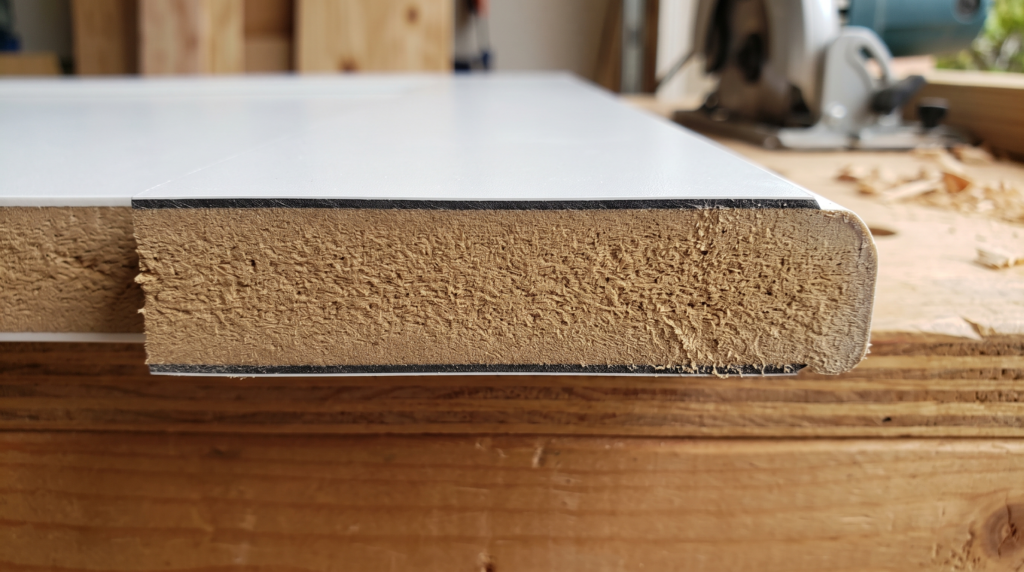
The surface that results is smooth, consistent, and free of the texture variation that can affect painted or lacquered doors. Because the colour is embedded in the paper before fusion, it resists fading, yellowing, and the surface crazing that older painted finishes develop over time.
It is worth distinguishing thermally fused melamine from the older process in which melamine-coated sheets were bonded to boards using contact adhesive. The adhesive method was prone to delamination at edges and corners, particularly in humid environments. Thermally fused melamine has effectively replaced this process in modern cabinet production, delivering superior adhesion, a cleaner edge profile, and consistent quality across large production runs.
Melamine cabinets today use the thermally fused method as standard, which is why a well-made melamine cabinet performs very differently from the budget melamine products that earned the finish a mixed reputation in earlier decades.
Melamine vs Wood Cabinets: Key Differences
Melamine vs wood cabinets is one of the most common material decisions in kitchen design, and it rarely has a universal right answer.
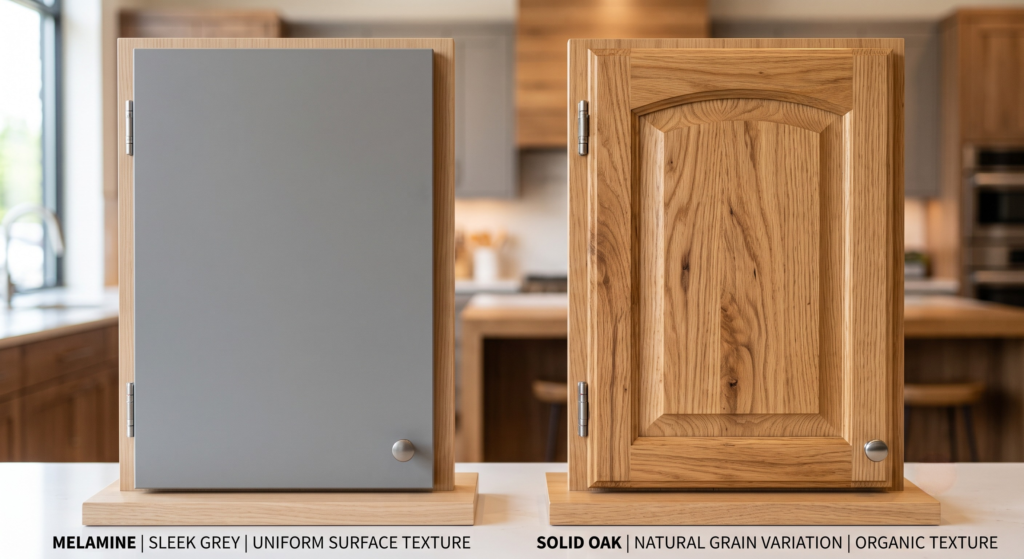
Melamine cabinets offer consistent colour and texture across every door in the kitchen. There is no grain variation, no knots, and no tonal difference between doors or batches, which makes colour-matching straightforward for large projects or when extending an existing installation. The surface is moisture-resistant, handling the condensation and splash exposure typical of kitchen environments better than untreated or poorly sealed wood. Melamine is also dimensionally stable: unlike solid wood, it does not expand and contract with seasonal humidity changes, which can cause door misalignment over time.
Solid wood and wood-veneered cabinets offer what melamine cannot: genuine natural grain, warmth, and material depth. The character of a solid oak or walnut door develops over time as the grain responds to light and use. Solid wood can also be sanded and refinished if the surface sustains damage, extending the usable life of the kitchen considerably. For premium residential installations, or any project where the tactile quality of the kitchen is as important as the price, wood-veneered or solid wood doors carry a material impression that manufactured finishes do not replicate.
For rental properties, children’s kitchens, commercial staff kitchens, and projects where a clean and consistent appearance within a tight budget is the priority, melamine cabinets are the practical choice. For premium residential builds, bespoke hospitality installations, or buyers who want the option to refinish the kitchen at a later stage, solid wood or veneer is worth the additional investment.
Melamine vs Laminate Cabinets
Melamine and laminate are frequently used interchangeably, but they are different products with meaningfully different performance characteristics.
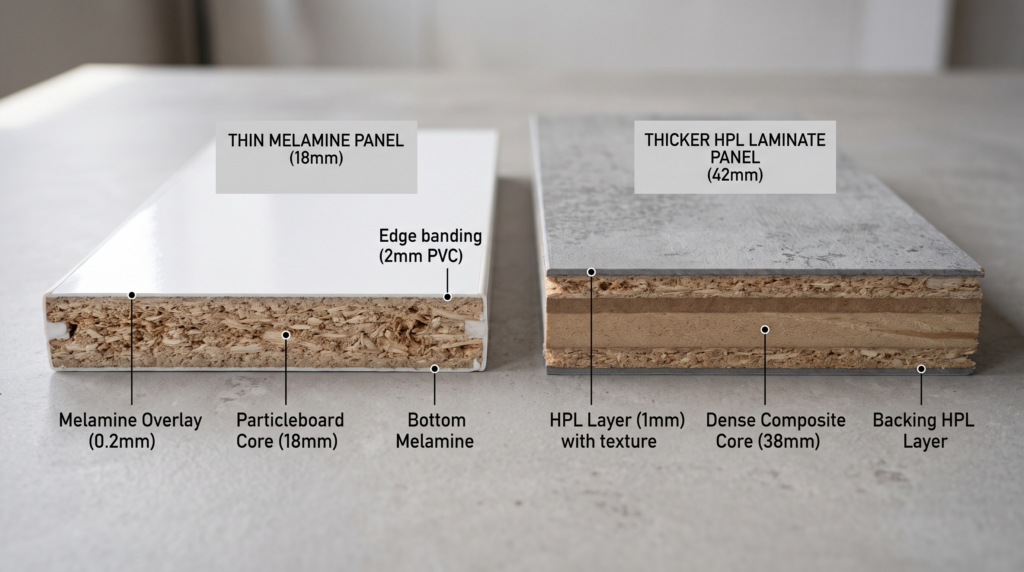
Both use paper-based coatings over a substrate, but the similarity ends there. Melamine is a relatively thin decorative finish, typically around 0.1 to 0.2mm, produced by thermally fusing a resin-impregnated paper directly to the board during manufacture. High-pressure laminate (HPL), by contrast, is a composite panel produced by compressing multiple layers of resin-saturated paper under very high pressure, creating a rigid sheet that is then applied to a substrate with adhesive. HPL thickness typically runs from 0.7mm to over 1mm.
The practical implication of this structural difference is that in the melamine vs laminate comparison, laminate is the more durable surface. HPL resists impact, abrasion, and scratching more effectively than melamine, which is why it is commonly specified for commercial countertops, laboratory worksurfaces, and high-traffic commercial cabinetry.
For standard residential kitchens with moderate daily use, melamine cabinets provide a surface that is entirely adequate at a considerably lower price point. The cost difference between melamine and HPL laminate can be substantial at project scale, making melamine the default finish for budget-conscious residential and rental property builds. Laminate is worth the upgrade where the kitchen will see particularly intensive use or where edge impact resistance is a genuine priority.
Pros and Cons of Melamine Kitchen Cabinets
Like any cabinet finish, melamine performs well within its design parameters and asks for compromise in others. Here is a balanced view of melamine kitchen cabinets pros cons.
Pros
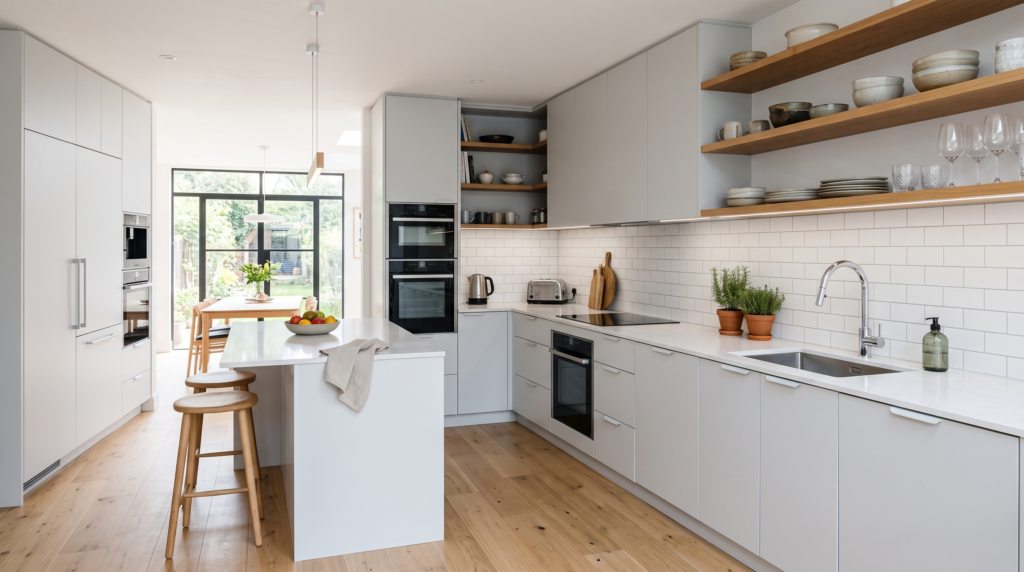
The most immediate advantage of melamine cabinets is cost: this is one of the most affordable finishes available without compromising on a clean, professional appearance. The colour range is extensive, from solid tones to woodgrain effects and concrete finishes. Melamine cabinet cleaning is straightforward: the non-porous surface wipes clean with a damp cloth and resists most household stains. The finish is also highly consistent, with no tonal variation between doors.
Cons
The principal weakness of melamine cabinet durability is the edge. Where the fused surface meets the raw board at the door edge, chipping can occur without adequate edge banding. Quality ABS edge banding resolves this, but budget cabinetry without proper sealing is at risk. The surface scratches more readily than high-pressure laminate, and painting melamine cabinets is not straightforward: it requires specialist adhesion primer and rarely matches a factory finish.
How Much Do Melamine Kitchen Cabinets Cost?
Melamine cabinet cost sits at the lower end of the kitchen cabinet spectrum, which is one of the main reasons the finish has achieved global market share across residential, commercial, and rental sectors.
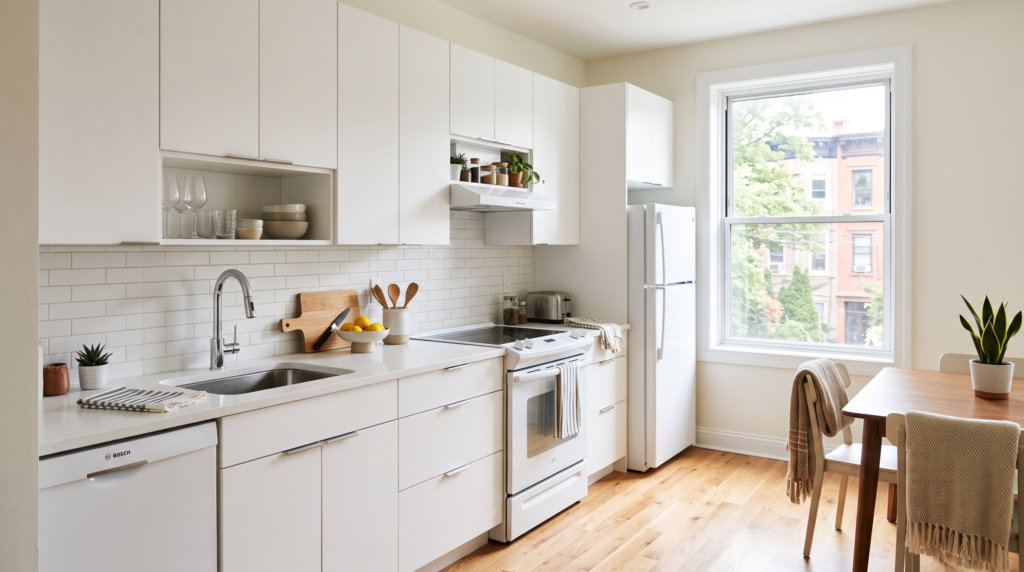
Pricing within the melamine category is broad. Entry-level cabinetry with a particleboard substrate and basic hardware sits at the most accessible price point and is typically found in flat-pack retail formats. Mid-range melamine kitchen cabinets use higher-density MDF as a substrate, which is dimensionally more stable and less prone to moisture damage than particleboard, and include ABS edge banding and better-specified hardware. At the upper end of the melamine category, the finish is applied to premium substrates with precision-cut carcases, soft-close hinges, and full-extension drawer systems, delivering a result that competes with entry-level lacquered cabinetry on appearance while remaining less expensive.
For buyers sourcing custom cabinetry through factory-direct channels, melamine cabinet cost represents a particularly strong value proposition. Factory-direct manufacturing eliminates the retailer and distributor margin that substantially inflates the price of European and North American branded cabinetry. Custom dimensions, colour selection, and hardware specification are all available at a price point that would typically purchase only a stock flat-pack kitchen in domestic markets.
Freight costs and lead times are the variables to account for in any factory-direct sourcing decision. For large projects such as multi-unit residential developments, commercial fit-outs, or whole-building hospitality projects, the total cost advantage of factory-direct melamine cabinetry is significant.
Parlun and Melamine-Finish Cabinets
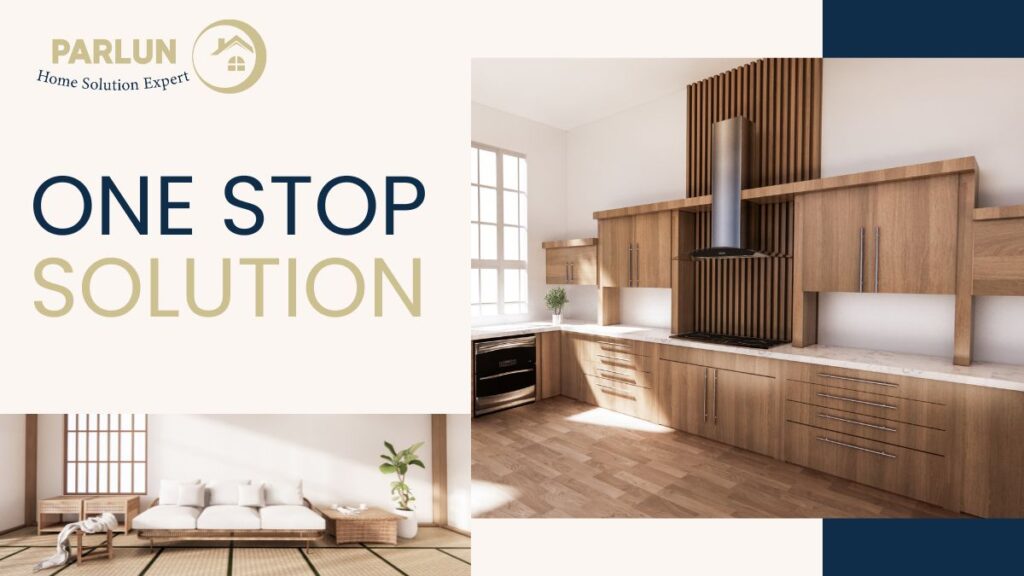
Parlun manufactures kitchen cabinets from China for residential and commercial clients worldwide, offering melamine, lacquer, veneer, acrylic, and other finish options across a full range of carcass configurations and door profiles.
Parlun’s melamine cabinets are built to a specification designed to address the points where lower-grade melamine cabinetry typically underperforms. Substrates are selected for density and moisture resistance; ABS edge banding is applied to all exposed door and panel edges as standard, eliminating the chipping risk that affects lower-specification production. Hardware is sourced from established manufacturers including Blum and Hettich, with soft-close mechanisms available across all door and drawer configurations.
Factory-direct pricing from Parlun means projects of any scale can access a quality melamine cabinet finish at a cost advantage over European or domestic custom cabinetry suppliers. Delivery is available to project sites worldwide, with shipping coordinated through Parlun’s established logistics network.
For product specifications, colour and finish options, or a project quotation, contact the Parlun team directly or download the current product catalogue.