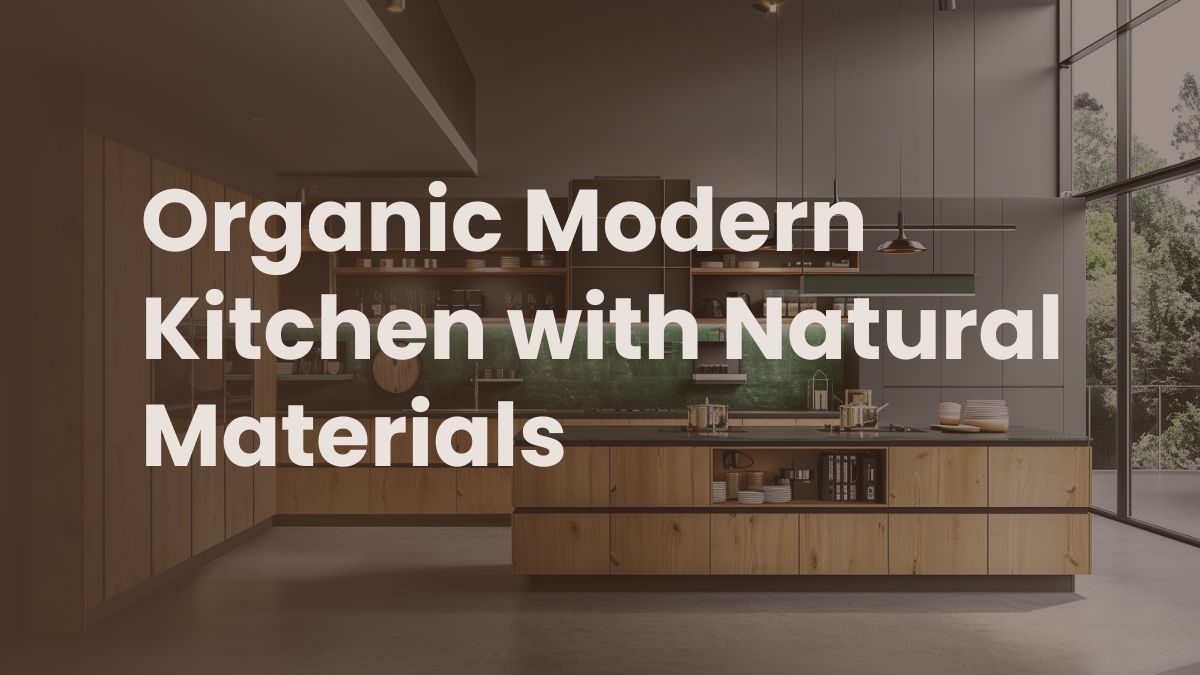
The organic modern kitchen is one of the most liveable directions in contemporary design. It takes the precision of modern architecture and softens every edge with natural materials, warm tones and honest texture. Where standard minimalism can feel cold, the organic modern approach brings warmth through white oak grain, honed stone and the quiet geometry of flat panel doors. The look appeals to homeowners who want a kitchen that feels curated without feeling sterile. Whether you are renovating a large open-plan space or refreshing a compact galley, this guide covers every decision from colour palette to cabinet material, surface finish and biophilic detail.
Quick Summary of Organic Modern Kitchen Design
Organic modern kitchen design merges contemporary clean lines with natural materials, warm neutrals and genuine textural depth.
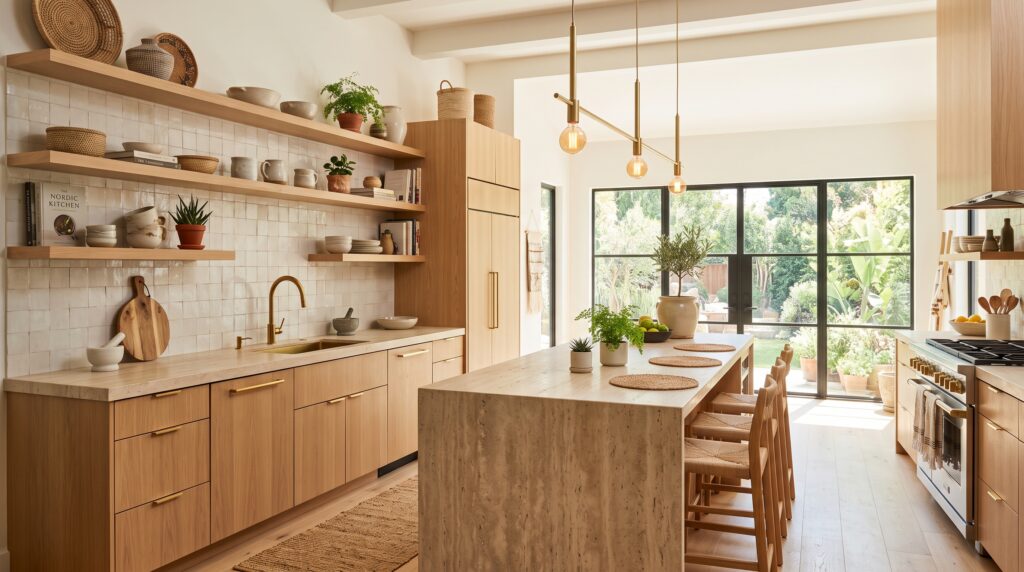
The colour palette centres on warm white, oatmeal, sand, clay and sage, with undertones that always lean warm rather than cool. Cabinet choices favour flat panel and slim shaker doors in white oak or walnut, finished in natural oil or a matte painted tone. Countertops work best in travertine, honed limestone, warm quartz or quartzite. Backsplashes suit plaster tile, elongated stone or handmade zellige.
Natural light is central to the layout, supplemented by pendant lighting in aged brass or matte black. Indoor plants, ceramic vessels and linen textiles complete the palette without adding clutter. The main mistakes to avoid are mixing cool and warm undertones, choosing glossy surfaces and layering too many similar neutrals. Getting undertones right is the single most important decision in the whole scheme.
What Organic Modern Kitchen Style Means
The term “organic modern” describes a kitchen that is disciplined in its architecture but soft in its materials and palette. It is not rustic. There are no exposed brick walls, no distressed wood and no apron sinks with a farmhouse character. It is also distinct from Japandi, which runs cooler, emptier and more monochrome. Organic modern allows more warmth, more textural layering and a fuller material palette than Japandi permits.
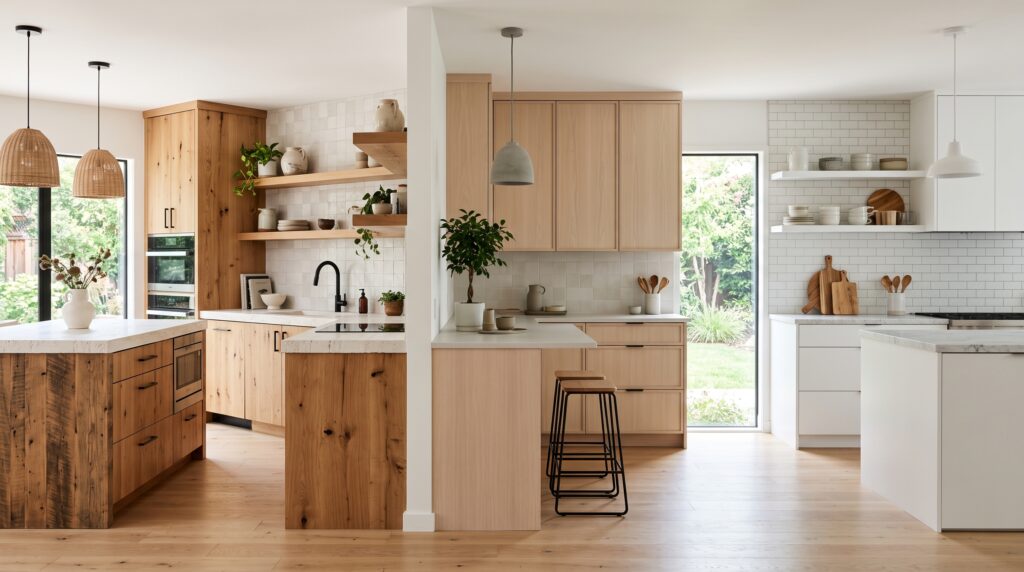
Compared with Scandinavian design, the organic modern kitchen is less white and less reliant on pale painted surfaces. Both share an honest material ethic, but organic modern expresses it through earth tones and tactile surfaces rather than bright, airy simplicity.
Standard minimalism strips everything back to flat, smooth and often cold surfaces. Organic modern keeps that clean spatial structure but introduces grain, variation and warmth at every layer. Curved forms at the island edge or in ceramic vessels add softness without adding ornament. Think of it as modernist architecture dressed in natural materials rather than concrete and glass.
|
Design Element |
Organic Modern |
Japandi |
Scandinavian |
Standard Minimalism |
|---|---|---|---|---|
|
Palette |
Warm earth tones |
Cool greige and white |
White and pale wood |
White, grey, black |
|
Texture |
Medium-high |
Low |
Low-medium |
Low |
|
Wood finish |
Natural oil, raw grain |
Matte lacquer |
Painted or light stain |
Rarely featured |
|
Plants |
Central element |
Occasional accent |
Occasional |
Rare |
|
Warmth |
High |
Medium |
Medium |
Low |
Organic Modern Kitchen Colour Palette
Colour choice is where the organic modern kitchen diverges most sharply from standard contemporary design. The palette is built on warm neutrals, never cool ones. Warm white, oatmeal, sand, taupe and clay form the backbone. Sage, muted olive and dusty green appear as accents without taking over.
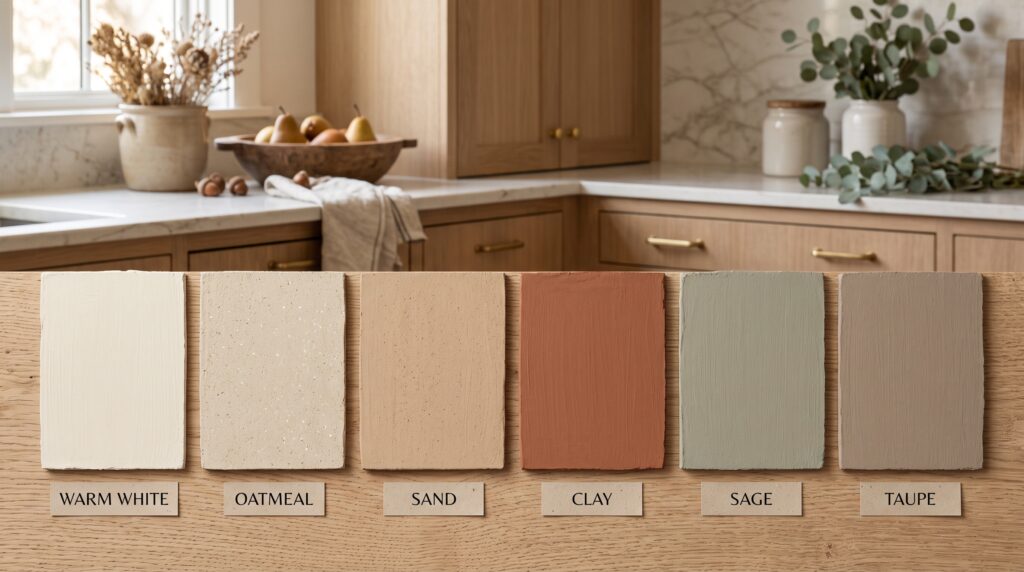
Understanding undertones matters more here than in any other kitchen style. A cool greige or blue-leaning white can undermine the whole direction. Look for whites with a yellow, pink or red undertone. Good benchmarks include Farrow and Ball’s Drop Cloth, String and Elephant’s Breath, or Benjamin Moore’s White Dove and Swiss Coffee.
Black or very deep charcoal appears occasionally as a grounding accent on a feature cabinet, a range hood or a light fitting. Use it as a full stop in the scheme rather than a major tone. Anything over ten percent of the visual surface area risks tipping the look toward industrial territory.
A limited palette of three to five tones, all with matching undertone direction, produces the most cohesive result. Earthy kitchen colours work best when they are distinct enough in value to sit as separate layers rather than blending into one flat plane.
Best Cabinet Materials and Door Styles
The cabinet choice defines the look of an organic modern kitchen more than any other single decision.
White Oak
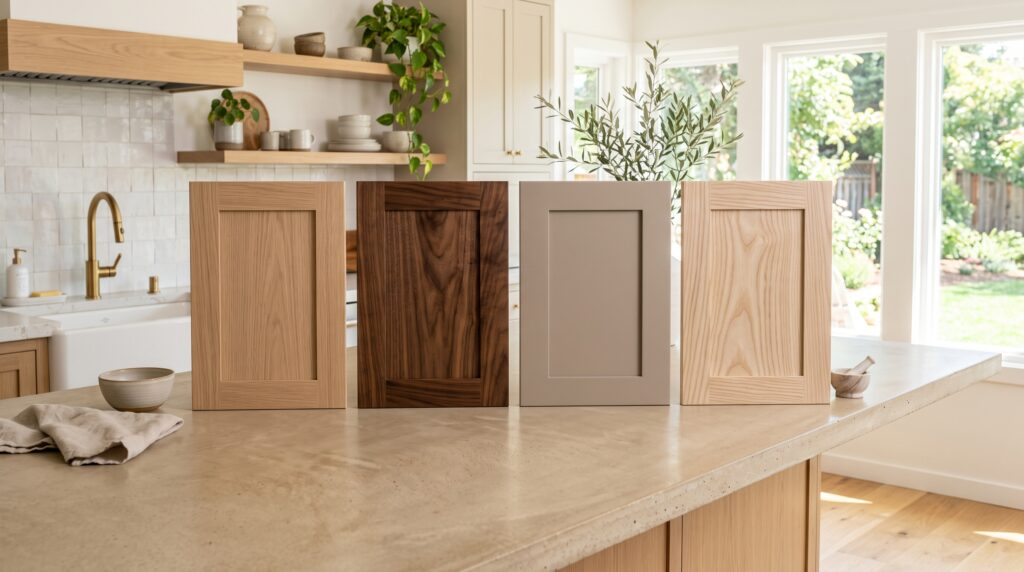
White oak is the signature timber of this style, carrying a straight, even grain that suits both vertical and horizontal layouts. The ideal finish is a penetrating natural oil or hardwax oil, which lets the true texture show. Avoid polyurethane coatings; they give oak a plastic sheen that removes the organic quality entirely. More on pairing and finish options in the white oak kitchen cabinets guide.
Walnut
Walnut brings deeper warmth and a more dramatic grain. It works well as an island colour, an accent panel or a full kitchen where the space is large enough to carry the richness. Pair walnut kitchen cabinets with warm white or plaster-toned uppers to balance the depth. A matte oiled finish prevents the timber from overpowering the room.
Ash
Ash is a lighter alternative to oak with a slightly more open grain and a pale quality that suits smaller kitchens. Ash kitchen cabinets take both oiled and painted finishes and pair naturally with warm stone countertops.
Painted Warm Neutrals
Matte painted doors in oatmeal, clay, warm taupe or muted sage all hold the organic character. A flat matte finish is essential. Satin and semi-gloss surfaces reflect too much light and undercut the warmth the style depends on.
Flat Panel and Slim Shaker Door Profiles
Flat panel doors keep the surface completely uninterrupted and let the cabinet material speak. Slim shaker adds a narrow routed frame that introduces quiet geometry without veering into traditional territory. Handleless configurations suit both profiles and reinforce the clean, warm modern line.
Countertops Backsplashes and Natural Texture
Surface selection is where the organic modern kitchen earns its texture. The countertop and backsplash are the two highest-impact surfaces and they should work as a pair, either matching in material or harmonising tonally.
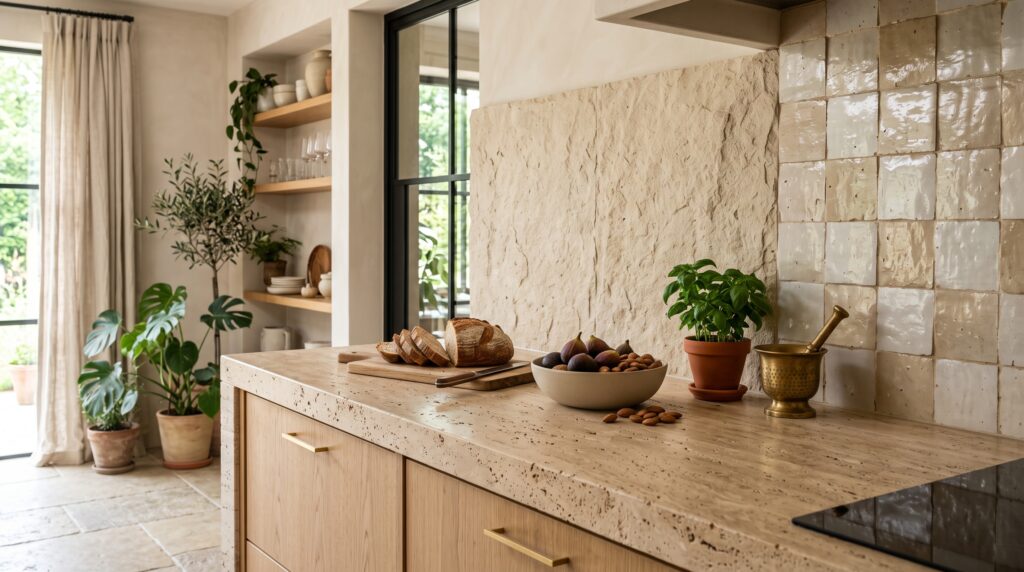
Travertine is the most popular countertop choice for this aesthetic. Its warm, cellular surface and natural variation suit the organic brief directly. The practical consideration is porosity. Honed travertine is easier to maintain than unfilled, and a professional-grade sealer applied annually addresses most concerns for a domestic kitchen. For a full material guide, see the travertine countertops overview.
Limestone is a quieter alternative with less variation and a smoother face. It pairs particularly well with white oak cabinetry and warm plaster walls.
Warm quartzite and quartz offer improved durability without sacrificing warmth. Quartzite in White Macaubas or Taj Mahal reads close to natural stone while being considerably harder-wearing. Warm quartz in oatmeal, sand or beige tones is the most practical choice for high-use kitchens.
For backsplashes, elongated stone tile, handmade zellige, plaster-painted tile and stacked travertine slab all sit comfortably within this style. Avoid mirror tile, high-gloss subway tile and anything with a metallic sheen. The backsplash should add texture rather than reflect light back into the room.
Marble works if the veining is warm and the finish is honed. A cool-toned white marble with heavy grey veining will work against the palette rather than with it.
Layout Lighting and Biophilic Design
An organic modern kitchen breathes when the layout is designed around natural light. Wide sightlines, uncluttered window sills and glazing that reaches high on the wall contribute more to the finished atmosphere than any single material choice.
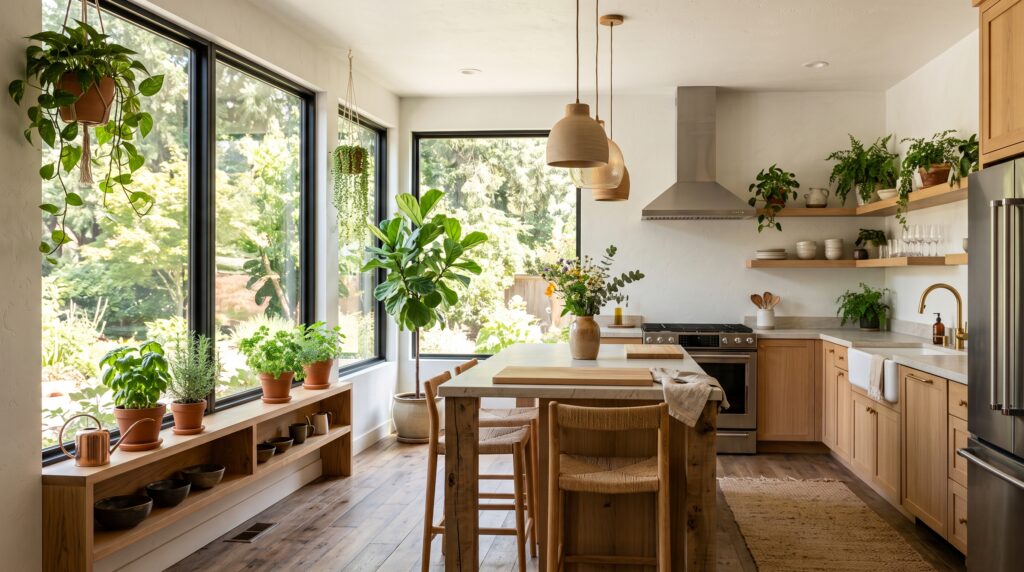
Biophilic design in a kitchen does not require a conservatory or a green wall. Practical steps include a potted herb shelf above the worktop, a trailing plant on top of a tall cabinet, a vase of cut stems on the island and one larger specimen plant near the dining zone. These additions bring life to the palette without competing with the architecture.
Artificial lighting should be layered. Pendants over the island in aged brass, matte ceramic or matte black anchor the scheme and provide focused task light. Recessed ceiling lights supply ambient fill. Under-cabinet LEDs in warm white at 2700K to 3000K are essential for workability and sustain the warmth of the material palette after dark.
Avoid cool-toned LEDs. They flatten natural wood tones and make even the richest timber look institutional. Install a dimmer on every circuit. Shifting between full midday work light and low evening ambient is one of the cheapest tools this style offers.
A well-positioned window above the sink keeps the space anchored in the natural world and reinforces the biophilic character through the day.
Furniture Hardware and Styling
The organic modern kitchen earns its quiet luxury through the pieces placed beyond the cabinets and surfaces.
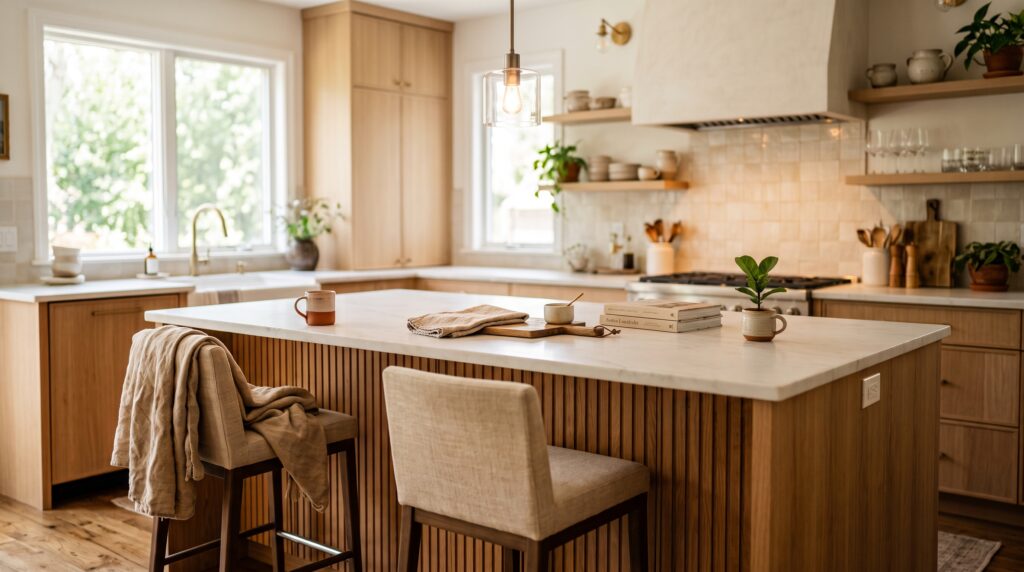
Bar stools at the island work best in natural rattan, woven leather or textured linen rather than moulded plastic or polished chrome. Legs in natural wood or a matte powder-coated metal keep the warmth of the overall palette.
Hardware sits between aged brass and matte black. Unlacquered or brushed brass holds the warmer end. Integrated channel pulls preserve the flat panel look without any hardware visible. Avoid polished chrome and brushed nickel; both run too cool for this style and undercut the earthy warmth that holds the scheme together.
Decorative objects should be few and purposeful. A ceramic bowl on the island, a cluster of vessels in varied heights on an open shelf and a single trailing plant on a high surface are sufficient. Linen or cotton runners and a natural fibre mat underfoot add warmth without visual noise.
Restraint is the discipline here. One considered object outperforms five mismatched ones every time.
Organic Modern Kitchen Material Palette Checklist
Get Samples or a Direct Factory Quotation from Parlun Building
Parlun Building manufactures flat panel and slim shaker kitchen cabinets factory-direct in natural white oak veneer, walnut veneer and a full range of matte painted warm tones suited to organic modern design. Cabinet samples are available to order. Contact the team for a full catalogue or a direct factory quotation for your project.
Organic Modern Kitchen Mistakes
Most organic modern kitchens fall short not through a single bad choice but through accumulated small missteps.
Too much beige. Stacking oatmeal, sand and warm white throughout the scheme without sufficient contrast produces a flat, washed-out look. Introduce at least one darker anchor. A charcoal island base, a sage feature cabinet or a mid-tone floor can provide this.
Fake texture. Vinyl or laminate that mimics wood grain undermines the style’s core premise. If real timber is beyond budget, a quality matte painted door is far more in the spirit of this aesthetic than a simulated wood surface.
Glossy finishes. Any high-gloss surface breaks the warmth of the palette. This covers gloss tile, polished stone countertops and lacquered cabinet doors. Matte or natural finishes apply across every surface.
Clutter. The organic modern aesthetic depends on editing. A crowded open shelf or a bench covered in small objects removes the calm that makes this style work. Keep all surfaces deliberate and spare.
Mismatched undertones. Cool grey walls against warm oak create a visual tension that no amount of styling can resolve. Always check undertones in natural light before committing to paint or stone.