Introduction to Doors
Most homeowners don’t think about their doors until a door replacement or home renovation is necessary. That is when technical details like standard door sizes, rough openings, and precise measurements become critical.
A door is more than a functional entryway; it is a vital component for soundproofing, thermal insulation, and security. When a door frame installation lacks precision, issues like drafts, uneven gaps, or “ghost swinging” appear immediately.
Here’s a simple, quick-to-scan guide to doors:
This guide covers the essential door materials and installation techniques to help you avoid costly mistakes and ensure a perfect, long-lasting fit.
Types of Doors
Doors are quite different; some are easier to install, while others offer more flexibility in design or better performance in specific spaces. Check these door types.
Interior Doors
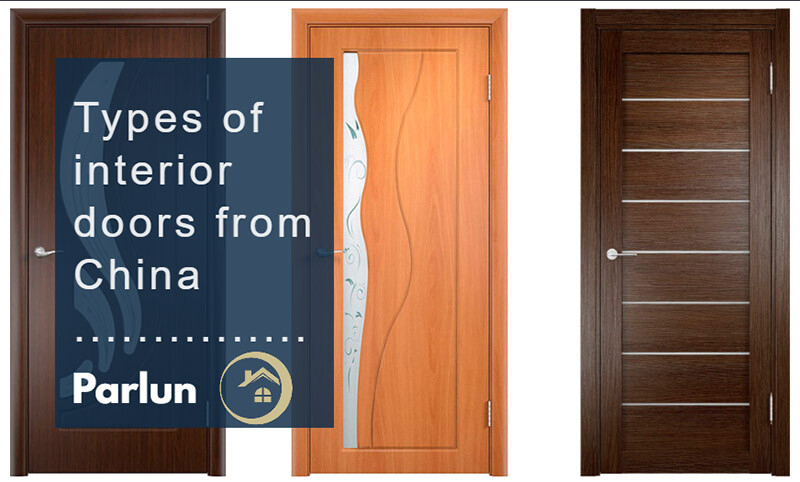
Interior doors define a home’s character while providing privacy and sound insulation. They are typically lighter and thinner than exterior doors and come in various styles to suit any decor.
From minimalist Shaker interior doors to grand double interior doors, the right choice improves both flow and function. For a DIY-friendly and budget-conscious upgrade, affordable interior prehung double doors provide a complete, ready-to-fit solution for large room transitions.
Common Styles Include:
Exterior Doors
Exterior doors are engineered for maximum durability, security, and curb appeal. Unlike interior doors, they are thicker and reinforced to provide a thermal barrier and protect against forced entry.
Materials commonly used:
To ensure long-term performance, high-quality exterior doors must include multi-point locking systems, energy-efficient cores, and high-performance weather-stripping to prevent air and water infiltration.
Sliding Doors
Sliding doors operate horizontally along a track, making them the ultimate space-saving solution. Whether integrated into a sliding door floor plan to save swing space or used to create a seamless indoor-outdoor transition, they offer both style and functionality.
Versatile Applications:
Technical Specifications:
To ensure smooth operation, high-quality sliding door rollers are essential for effortless gliding. While custom sizes are available, most projects follow a standard sliding door size (typically 6’ 8’’ height with widths of 5’ or 6’) to simplify installation and reduce costs. For more standard door sizes, you can continue scrolling down.
Prehung Doors
A prehung door comes as a complete unit, already mounted within a frame with hinges attached. It’s easier to install, particularly for new openings or full-frame replacements. With the hinges and frame already aligned, there’s less chance of gaps or misalignment.
Best for:
Slab Doors
A slab door is simply the door panel itself, without hinges, frame, or hardware. It offers more flexibility but requires precise measurements and additional work during installation.
You’ll need to cut hinge slots, align the door within the existing frame, and ensure everything fits properly.
Best for:
Folding (Bi-Fold) Doors
Folding doors consist of multiple panels that fold and stack to one side when opened. They are commonly used for closets or to open up larger spaces.
Best for:
French Doors
Consisting of two hinged door panels that open from the center, French doors are defined by their expansive glass panes. They are engineered to flood interiors with natural light while creating a seamless visual connection between spaces.
Design & Aesthetics:
Installation & Use:
French doors require a wider rough opening and more swing clearance than single doors. Accurate measurements are critical to ensure both panels operate smoothly without obstruction.
Best For:
Pocket Doors
Pocket doors are the ultimate space-saving variation of sliding doors, designed to disappear into a concealed wall cavity. Because they require a built-in “pocket,” they must be integrated into the sliding door floor plan during the early stages of construction or renovation.
Design & Hardware Options:
Best For:
Door Materials
Door materials differ in weight, strength, and resistance to moisture and temperature, which affects durability and fit over time. Interior doors tend to be lighter, while exterior doors need to handle weather and wear.

1. Solid Wood
Solid wood doors are valued for their natural appearance and structural strength. They offer a premium look and can be customized in a wide range of styles and finishes.
However, wood can expand or contract with changes in humidity, which may affect fit over time.
Best for:
2. MDF (Medium Density Fiberboard)
MDF doors are engineered from compressed wood fibers, creating a smooth and consistent surface that works well for painted finishes. They are more stable than solid wood and less prone to warping.
They are typically used for interior applications, as they are not as resistant to moisture as other materials.
Best for:
3. Plywood
Plywood doors are made from layers of wood veneer bonded together, which improves strength and dimensional stability. Compared to solid wood, they are less likely to warp or crack. Besides, they are often used as a core material with a veneer or laminate finish.
Best for:
4. Steel
Steel doors are known for their strength, security, and durability. They often include an insulated core, which improves energy efficiency. They require less maintenance than wood but may be prone to dents or surface damage.
Best for:
5. Fiberglass
Fiberglass doors are durable, low-maintenance, and resistant to moisture and temperature changes. They can convincingly replicate the texture of natural wood without the risk of warping, rotting, or heavy wear.
Best for:
Installation Advantage:
A professional fiberglass front door installation is typically faster than solid wood because these doors are dimensionally stable and often come in precision-engineered prehung systems. This ensures a tight seal and long-term structural integrity right from day one.
6. Hollow Core
Hollow core doors are lightweight and typically made with a thin outer layer over a honeycomb or grid-like core. This construction keeps costs low while making the door easy to handle and install.
They’re lighter and offer less strength and sound insulation than solid or solid-core doors but work well for low-traffic interior areas.
Best for:
Door Materials Comparison
| Material | Typical Use | Key Characteristics |
| Solid Wood | Interior / Entry | Strong, natural look, but can react to humidity |
| MDF | Interior | Smooth surface, stable, ideal for paint |
| Plywood | Interior | Better strength and stability than MDF |
| Hollow Core | Interior | Lightweight, cost-effective, limited strength and sound insulation |
| Steel | Exterior | Strong, secure, low maintenance |
| Fiberglass | Exterior | Resists moisture, stable, low maintenance |
Standard Door Sizes
In the construction industry, door dimensions typically adhere to standardized specifications. Understanding these measurements can help you avoid costly customization fees and ensure that the doors are proportionate to the overall space.

1. Standard Interior Door Sizes
Interior room doors (for bedrooms and bathrooms) typically come in three standard heights, the most common being 80 inches.
Standard Height:
80″ (also referred to as a “6/8 door,” meaning 6 feet 8 inches).
Note: In high-end residences, 84″ (7/0) and 96″ (8/0) heights are becoming increasingly popular to complement high ceilings.
Standard Widths:
2. Standard Exterior Door Sizes
Entry doors are typically thicker and wider than interior doors to ensure security and ease of passage.
3. Closet & Specialty Doors
Standard Door Size Chart
| Door Type | Standard Widths | Standard Heights | Common Use |
| Small Interior | 24″, 28″ | 80″ | Closets, Pantries, Small Baths |
| Standard Interior | 30″, 32″ | 80″, 84″ | Bedrooms, Home Offices |
| Main Entry | 36″ | 80″, 96″ | Front Doors, Garage Entry |
| Double Doors | 60″, 64″, 72″ | 80″ | Master Bedroom, French Doors |
Rough Opening for Doors
A “Rough Opening” (RO) refers to the raw space left within a wall’s structural framing, whether wood or steel studs, prior to the installation of a door frame.
Many people mistakenly believe that the wall opening simply needs to be the exact same size as the door frame; however, in reality, walls are rarely perfectly plumb. The purpose of leaving a Rough Opening is to provide the necessary clearance for “shimming”—the process of using shims to make fine adjustments.

The Golden Rule
To ensure a smooth installation, North American and most international standards typically adhere to the following formula:
Note: This 2-inch allowance accounts for the 3/4-inch thickness of the door jamb on both the left and right sides, as well as the remaining clearance for adjustment.
Standard Size Chart
| Nominal Door Size (W x H) | Rough Opening Width | Rough Opening Height | Common Application |
| 24″ x 80″ (2/0) | 26″ | 82.5″ | Small Closets / Half-Baths |
| 28″ x 80″ (2/4) | 30″ | 82.5″ | Standard Bedroom / Pantry |
| 30″ x 80″ (2/6) | 32″ | 82.5″ | Standard Interior Doors |
| 32″ x 80″ (2/8) | 34″ | 82.5″ | Utility Rooms / Entry Doors |
| 36″ x 80″ (3/0) | 38″ | 82.5″ | Main Entry / ADA Accessible |
3 Practical Tips to Avoid Pitfalls During Installation
A. Consider the Finished Floor Height (FFH)
We notice that this is the most common mistake made by beginners. If your flooring has not yet been installed (e.g., you still plan to add thick carpeting or solid hardwood), you must calculate the Rough Opening (RO) height based on the *final* floor level; otherwise, the door will scrape against the floor once installed.
B. Check the King Studs and Trimmer Studs
Within the RO framing structure:
Ensure that both of these studs are plumb, straight, and free of twisting; otherwise, the door jamb will be subjected to uneven pressure during installation.
C. Calculations for Double Doors
If you are installing double doors, the width formula changes to: (2 x Door Slab Width) + 2.5 inches. The extra half-inch is included to allow for the necessary clearance gap between the two door slabs.
Door Frame Components
Before diving into the installation process, it is crucial to understand every component of the door frame. A door frame is not merely four pieces of wood; it is a precise geometric system.
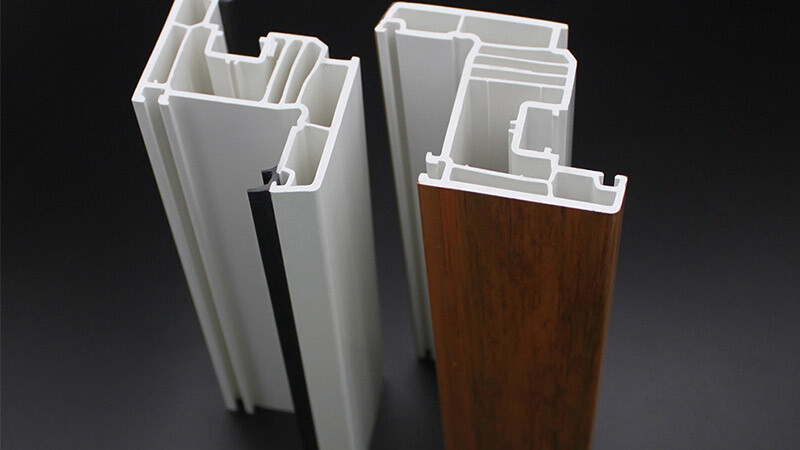
The Structural Skeleton
Door Frame Installation and the “Alignment Logic” of High-End Cabinetry
As experts in Custom Cabinetry, we believe that the underlying logic governing door frame installation is entirely identical to that of cabinet installation. This mindset of “Alignment” is the key to achieving a truly top-tier finish:
The Law of Plumb: In high-end cabinetry, if the cabinet box is not perfectly plumb (vertical), drawers will automatically slide open. The same applies to door frames—if the Hinge Jamb is not absolutely plumb, the door slab will exhibit a phenomenon known as “Ghost Swinging.”
Consistency of the Reveal: In Slim Shaker or Slab cabinet designs, the uniform gap (typically 1/8″) between the door panel and the frame is the source of that premium aesthetic. When installing door frames, we likewise strive for perfect alignment of this “Reveal“—a precision achieved through the micro-adjustment of shims, much in the same way cabinet hinges are fine-tuned.
Load-bearing Integrity: While cabinets rely on mounting brackets or ledger boards for support, door frames depend on long screws driven through the jamb and anchored into the wall’s trimmer studs. This logic of “leveraging structural support” ensures that heavy solid-wood doors—much like the base cabinets supporting heavy quartz countertops—will not shift or sag over years of use.
The Finishing Touch
Casing / Trim: Decorative moldings used to cover the gap between the door frame and the wall surface.
Brickmould: Used exclusively for exterior doors; serves to bridge the gap between the door frame and the exterior brickwork or siding.
During the door installation process, the precision of the door frame directly determines your experience of the door leaf over the next decade. If the frame is installed askew, not even the most expensive hardware can salvage the tactile feel.
Door Hardware
Door hardware includes the essential components that control movement, security, and ease of use.
Hinges & Movement
Hinges support the door’s weight and ensure a level swing.
Locks & Latches
Locks control access and privacy. Common types include passage (non-locking), privacy (for bathrooms), and deadbolts for maximum exterior security. Proper alignment between the latch and strike plate is critical for a secure, rattle-free closure.
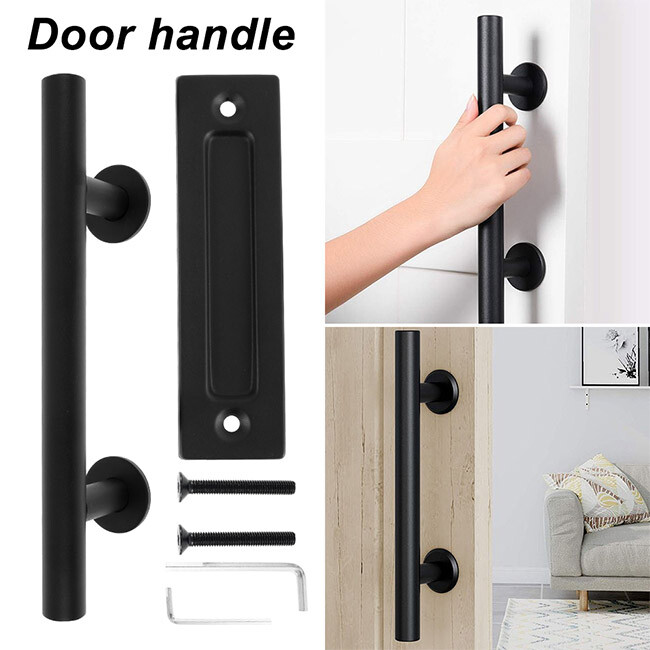
Handles, Knobs & Pulls
Handles are the primary touchpoints of a door, balancing ergonomics with aesthetics. Choosing the right door hardware finish—from the organic warmth of wood door handles/knobs to the timeless character of vintage door handles—defines your interior style.
Design & Aesthetics
Functional Solutions
Technical Specifications (Installation Standards)
To ensure a professional fit, following industry standards for the door handle hole size and placement is critical:
Core Door Hardware Summary
| Hardware | Primary Role | Key Considerations |
| Hinges | Support & Rotation | Weight capacity, bearing type (e.g., ball-bearing for smooth movement), and rust resistance. |
| Locks | Security & Privacy | Security grade (ANSI/BHMA), cylinder type, and backset compatibility. |
| Handles (Levers) | User Interaction | Ergonomics, ease of use (ADA compliance), and durability of the finish. |
| Knobs | Aesthetics & Space | Style matching, grip comfort, and clearance from the door jamb. |
Quick Terminology Tip for Your Projects
When you do modern home design, you might also encounter these specific terms when detailing a door hardware schedule:
Door Installation Process
Installing a door, especially a pre-hung door, is akin to fitting a piece of precision furniture into a wall. The following is the standard installation process:

Phase 1: Preparation & Inspection
Verify the Rough Opening: Measure the width and height of the wall opening, and use a spirit level to check that the trimmer studs on both sides are plumb.
Level the Floor: If the floor is uneven, you may need to trim the bottom of one jamb (door frame side piece) or insert shims under the lower side to ensure the head jamb (top piece) remains absolutely level.
Phase 2: Positioning & Shimming
Dry Fit the Door Frame: Insert the entire door unit, including both the door slab and the frame, into the rough opening.
Secure the Hinge Side First: This is the most critical step. Insert shims near the hinge locations.
Use a spirit level to ensure that the jamb on this side is plumb. Just like adjusting cabinet door hinges, the vertical alignment of the hinge side determines whether the door slab will drift open or closed on its own.
Tacking: Drive two nails through the shims into the wall studs (do not drive them in completely yet) to temporarily hold the frame in position.
Phase 3: Fine-Tuning & Alignment
Set the Reveal: Close the door and observe the reveal between the top of the door slab and the head jamb.
Adjust the shims on the strike side to ensure the reveal at the top is consistent across the entire width (typically maintained at 1/8 inch).
Check for Square: Measure the two diagonal distances across the door frame; if the measurements are equal, your frame is perfectly square.
Phase 4: Final Securing
The Long Screw Trick: Remove one short screw from the center of each hinge and replace it with a long screw (2.5 to 3 inches in length).
Ensure these screws pass through the jamb and the shims, anchoring directly into the wall studs. This prevents heavy solid-wood doors from sagging over time.
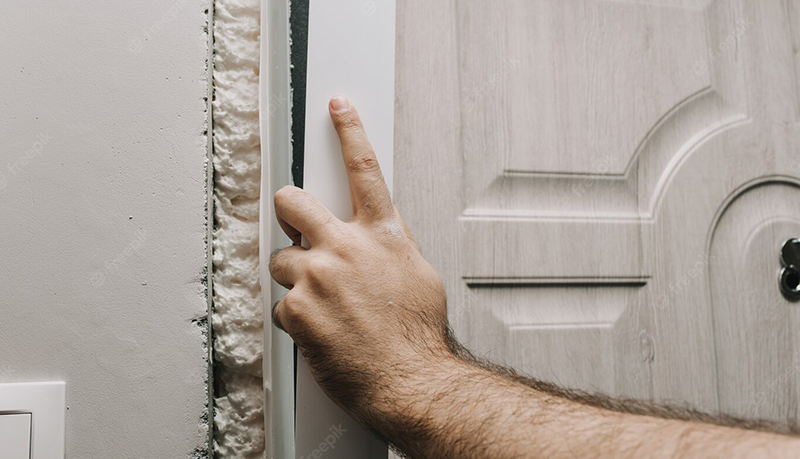
Fill & Seal: Spray low-expansion foam into the gaps between the door frame and the wall studs. Important: Using standard (high-expansion) foam will likely distort and warp the door frame.
Pro Alignment Tips
| Installation Step | Cabinetry-Grade Precision Tip |
| Plumb Check | Use a Laser Level instead of a standard bubble level for maximum accuracy, just as you would when installing high-end Base Cabinets. |
| Shim Placement | Always place Shims directly behind the load-bearing points (Hinges and Strike Plate) to prevent the jamb from bowing under pressure. |
| Reveal Consistency | Much like checking the margins on Cabinet Doors, use a 1/8″ (3 mm) spacer or shim to ensure the Reveal is perfectly uniform all the way around. |
If you find that the door does not close tightly during the installation process, please refer to “Common Installation Mistakes” for a solution.
Common Door Installation Mistakes
Even if you possess the best hardware, if you commit the following errors, the installation results will be significantly compromised:

1. Ignoring Floor Levelness
2. Incorrect Shim Placement
3. Using Only the Factory-Supplied Short Screws
4. Over-reliance on Expanding Foam
5. Neglecting Reveal Consistency
Common Door Installation Mistakes & Solutions
| The Mistake | The Consequence | The Professional Fix |
| Not Plumbing the Jamb | Ghost Swinging (The door opens or closes by itself) | Use a level or laser to ensure the Hinge Jamb is perfectly vertical. |
| Gaps Too Tight | Binding (The door rubs or gets stuck against the frame) | Maintain a standard 1/8″ (3 mm) Reveal around the entire door slab. |
| Poor Fastening | Sagging (The door drops over time, hitting the floor or sill) | Replace one short screw in each hinge with a 3-inch Long Screw into the wall stud. |
| Incorrect Shim Placement | Jamb Bowing (The frame curves, causing the latch to miss the strike plate) | Place Shims directly behind the hinges and the Strike Plate for solid backing. |
| Wrong Backset | Latch Failure (The door won’t stay closed or the lock won’t align) | Verify the 2-3/8″ or 2-3/4″ backset measurement before drilling for hardware. |
Door Cost Guide (2026)
When selecting a door, the price depends not only on the door leaf itself but is also influenced by the materials, hardware, and complexity of the installation.

Material Cost Breakdown
| Door Material | Estimated Price | Pros | Cons |
| Hollow Core | $50 – $150 | Very lightweight and the most budget-friendly option. | Poor sound insulation and easily damaged. |
| Solid Core | $150 – $400 | Excellent sound insulation with a solid, sturdy feel. | Heavier than hollow doors; requires high-quality hinges. |
| Solid Wood | $500 – $2,000+ | Naturally beautiful with a premium look and feel. | Prone to expansion and contraction with humidity; higher maintenance. |
| Steel | $200 – $600 | Very secure and highly weather-resistant. | Can dent easily and conducts heat. |
| Fiberglass | $500 – $1,500 | Mimics wood grain without rotting; low maintenance. | Relatively expensive. |
Hidden Installation Costs
Beyond the cost of the door slab itself, you will also need to budget for the following expenses:
When to “Invest” and When to “Save”
Cost vs. Value Summary Table
| Factor | Budget Option | Premium Option | Impact on ROI |
| Core Type | Hollow Core (MDF) | Solid Core / Solid Wood | Acoustic privacy & long-term durability. |
| Hardware | Basic Zinc Knobs | Solid Brass / Designer Levers | Daily tactile experience & security. |
| Frame (Jamb) | Primed MDF Jambs | Solid Wood / Kerfed Jambs | Structural stability & paint longevity. |
| Installation | DIY (Free) | Professional ($250+) | Precision of the “Reveal” & smooth operation. |
Door Maintenance and Repair
A properly installed door requires regular maintenance to ensure it continues to open and close smoothly and effortlessly. Below are expert recommendations tailored to different materials and common issues:

1. Preventative Maintenance
2. Common Repairs
A. Fixing a “Ghost Swinging” Door
B. Dealing with Door Swelling
C. Door Latch Misalignment
Maintenance Summary Table
| Issue | Technical Cause | Professional Solution |
| Squeaking Hinges | Metal-on-metal friction | Apply Dry Graphite or Silicone spray; avoid grease. |
| Door Sagging | Loose hinge screws or weight stress | Replace hinge screws with 3″ long screws into the stud. |
| Door Binding | Seasonal humidity / Wood expansion | Check humidity levels; lightly sand and reseal the edges. |
| Finish Fading | UV exposure (especially exterior) | Apply a fresh coat of UV-resistant topcoat every 2-3 years. |
| Loose Handle | Set screw vibration | Tighten the set screw with an Allen wrench; apply Loctite if needed. |
In Summary
That pretty much covers the door installation. As a professional manufacturer of cabinetry and hardware, we understand that details determine success. If you have any technical inquiries regarding custom door frames or premium hardware, we invite you to contact the expert team at Parlun Building.