A walnut kitchen can feel warm without looking busy. The difference comes down to a few choices: the shape of the doors, the way the grain runs, and how much wood you balance with lighter surfaces.
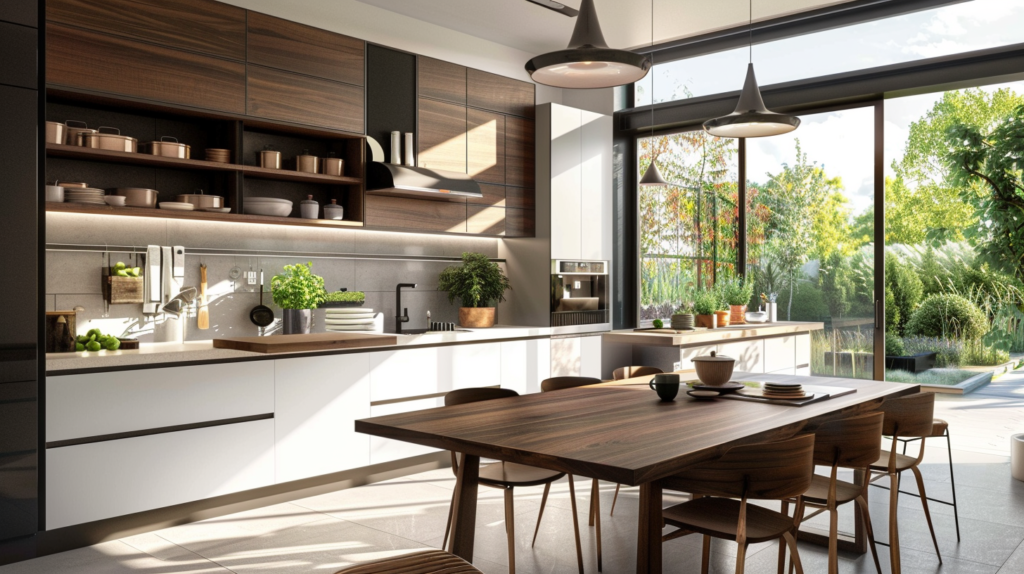
Modern walnut kitchen cabinets bring those choices together through simple fronts and visible wood texture. You might want a full walnut cabinet wall, a two tone kitchen with pale upper units, or a walnut island that becomes the centre of the room. Start with the look you enjoy, then check the materials and practical details that will make it work in your home.
Modern Walnut Kitchen Cabinets at a Glance
Modern walnut kitchen cabinets combine warm brown tones with simple door profiles, including slab fronts and handleless designs. Before choosing a collection, compare solid walnut, real walnut veneer and walnut look surfaces, then confirm the cabinet construction, grain arrangement and protective finish. White countertops create a brighter contrast, while grey and darker surfaces offer a more tonal palette. Plan the backsplash, flooring, hardware, lighting and storage together so the kitchen works for everyday cooking. The collection and guide below will help you compare designs, choose suitable materials, understand the factors affecting cost and prepare a clear request for a custom quotation.

Explore Our Walnut Kitchen Cabinet Collection
Look through the collection with your own room in mind. Notice how each design uses tall cabinets, drawer banks, island panels and contrasting surfaces. A photograph can help you choose a direction, but the final specification should explain the materials behind that appearance.
Save the designs you like and identify the details you want to carry into your project. These might include horizontal grain, a pale countertop, concealed appliance fronts or a particular walnut shade.


Choose Between Solid Walnut and Walnut Veneer Cabinets
Before comparing prices, find out what “walnut” means in each cabinet specification. Similar looking doors can have very different construction.
|
Material option |
What you are choosing |
What to confirm |
|---|---|---|
|
Solid walnut components |
Walnut timber used in specified parts |
Which components are solid and how they are constructed |
|
Real walnut veneer |
Natural walnut over a supporting panel |
Substrate, panel thickness, edge treatment and finish |
|
Walnut look surface |
A decorative reproduction of walnut grain |
Surface material, texture, edge construction and care instructions |

For a practical comparison of decorative alternatives, explore our laminate cabinet material guide.
The better choice depends on the complete product. Look beyond the face material to the cabinet boxes, hinges, drawers, finish and installation requirements.
Find the Right Walnut Cabinet Door Style
A door profile changes how the whole kitchen feels. Walnut grain already brings movement, so the amount of detail around it deserves careful thought.

Flat Panel Walnut Kitchen Cabinets
Pay attention to the proportions of the doors and drawers. A long drawer bank can emphasise horizontal lines, while tall pantry doors can create a more vertical rhythm. The same walnut finish can look quite different in these two arrangements.
Our flat panel walnut door guide explains this profile in more detail.
Handleless Walnut Kitchen Cabinets
Compare the opening approaches in our handleless cabinet collection.
Walnut Shaker Kitchen Cabinets
Remember that frameless describes cabinet construction, rather than the decorative door profile. Our frameless cabinet construction overview explains that distinction.
Plan the Walnut Grain Across Doors and Drawers
Two kitchens can use the same walnut shade and still look very different because of their grain arrangement.
Start by choosing the direction. Horizontal grain can emphasise the length of a cabinet run. Vertical grain can suit tall doors and full height storage. Neither direction automatically guarantees continuity between neighbouring fronts.
Next, discuss how the veneer is matched. Book matching places alternating veneer leaves in a mirrored arrangement. Slip matching keeps successive leaves facing the same way. These describe how veneer is assembled within a surface; coordination between separate doors and panels needs its own specification.
If you want the grain to continue across a drawer bank or cabinet wall, ask for a drawing showing the intended arrangement. Identify the fronts that belong together and include exposed island ends.
Also decide how much natural variation you enjoy. Some buyers prefer a consistent colour range, while others want lighter streaks and stronger figure. Make that preference clear before production, using approved samples and photographs as references.
Compare Natural Light and Dark Walnut Finishes
Walnut is not one uniform brown. American black walnut can have creamy sapwood and heartwood ranging from light brown to chocolate brown, sometimes with darker streaks. The wood can also show straight, wavy or curly grain.
That variation makes a physical sample especially useful.
Natural walnut cabinets let much of the wood’s character remain visible. Ask what coating is used because a clear finish can still affect the appearance.
Light walnut kitchen cabinets can create a softer palette alongside warm white walls and pale surfaces. Check whether the name refers to a selected veneer, a stain or a walnut look décor.
Dark walnut kitchen cabinets can give a room greater depth. Test the sample with your planned lighting and countertop so you can judge the complete combination.
Colour and sheen are separate decisions. A dark door can have a matte finish, while a natural toned door can have more shine. Veneer cut is another separate specification and should not be listed as a finish.
For additional comparisons, see our light and dark walnut finish guide.
|
|
Light Walnut Cabinets |
Dark Walnut Cabinets |
|
Mood |
Airy, warm, Scandinavian |
Rich, moody, luxurious |
|
Best countertops |
White quartz, pale marble-look, soft grey stone |
Warm white stone, grey stone, brown/taupe stone |
|
Best flooring |
Light oak, pale microcement, warm beige tile |
Mid-tone oak, warm grey, or deliberate light-floor contrast |
|
Best in |
Smaller or lower-light kitchens |
Larger, well-lit, or open-plan kitchens |
|
Watch out for |
Can read flat without grain contrast |
Needs lighting; pair with light surfaces to balance |
Pair Walnut Cabinets With the Right Countertops
The countertop occupies a large part of your view, so choose it alongside the cabinet sample.
If you’re unsure, default to a white or pale stone for contrast. Reach for grey or brown stone only when you specifically want a quieter, more tonal scheme.
Walnut Wood Finishes Explained
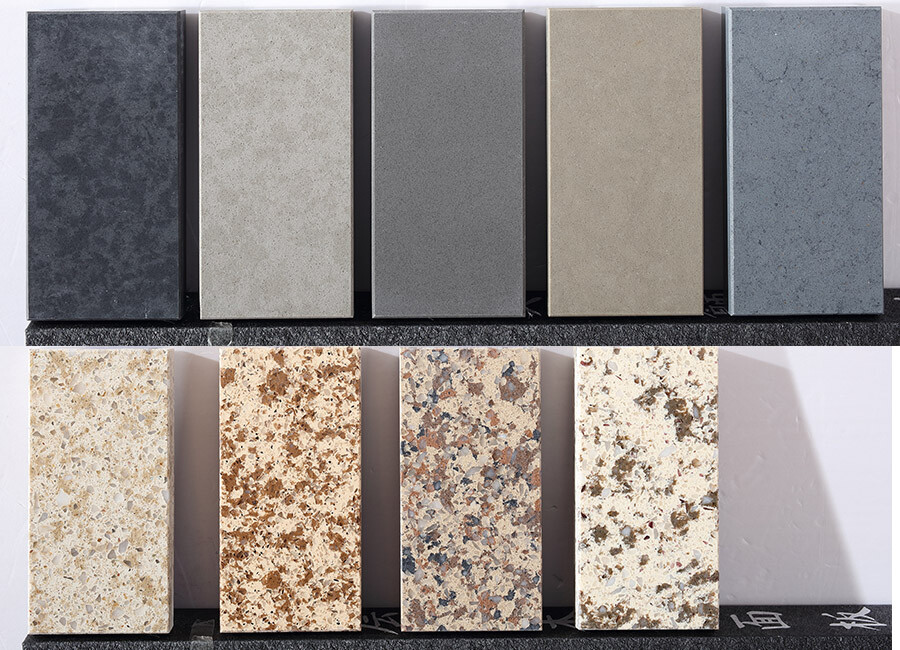
| The defining characteristic of this material is its visible figuring. See how we showcase the texture in our wood grain walnut cabinets gallery. |
|
Finish |
Tone |
Grain character |
Best for |
|
Light walnut |
Honey / warm tan |
Soft, open grain |
Bright, airy modern kitchens |
|
Natural walnut |
Mid brown |
Classic, balanced grain |
Most flexible all-rounder |
|
Dark walnut |
Deep brown / espresso |
Bold, rich grain |
Dramatic, high-end schemes |
|
Smoked walnut |
Cool deep brown / grey-brown |
Muted, contemporary |
Modern dark kitchens that avoid red tones |
|
Rift-cut walnut |
Even mid brown |
Straight, uniform grain |
Clean, architectural slab fronts |
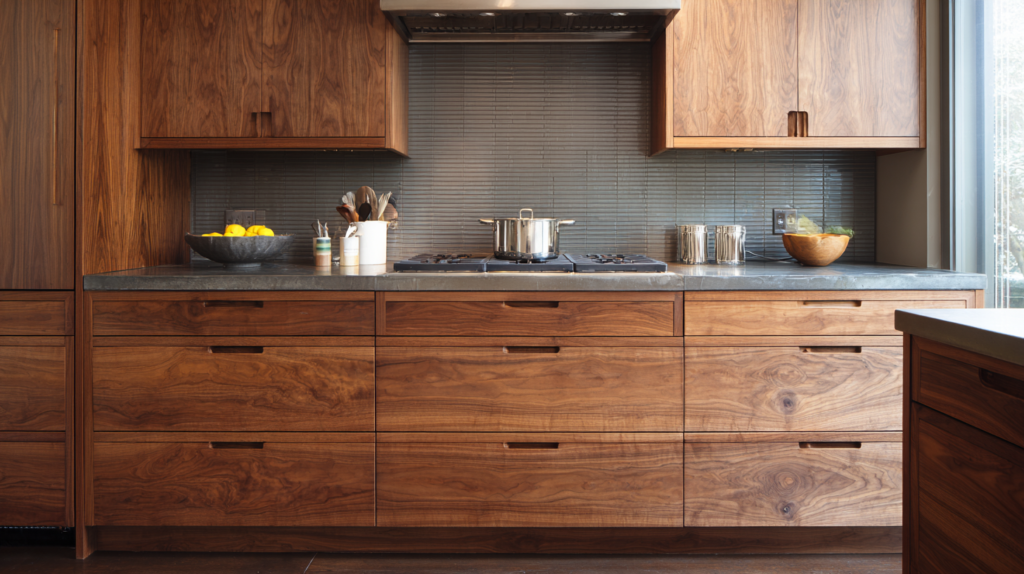
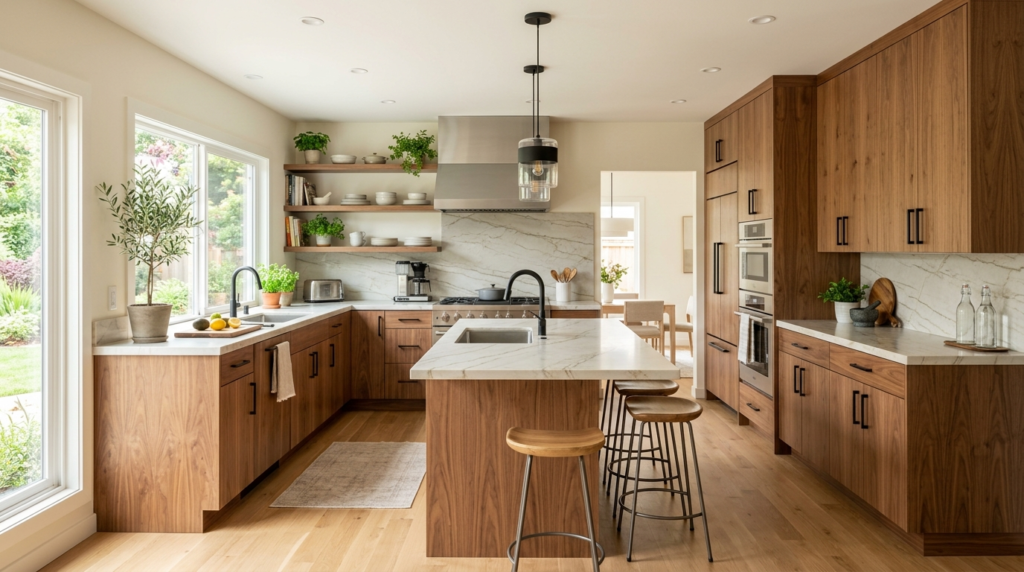
Walnut Kitchen Cabinet Image Gallery




Select Hardware That Looks Good and Feels Comfortable
Hardware changes both the appearance and the way you use the kitchen.
Matte black pulls can add definition. Brushed brass can introduce another warm tone. Nickel or stainless steel finishes can connect the cabinetry with appliances and fittings.
Beyond colour, check the grip. Can you comfortably open the drawer without your fingers rubbing the front? Does the handle project into a walkway? Will neighbouring doors clear one another?
Choose placement before drilling, particularly when you want the hardware to follow a consistent line across several units. Our cabinet pull positioning guide can help you review those details.
If you choose handleless fronts, confirm that the opening hardware works with the specified door dimensions, weight and drawer system. Ask which features are included and which are optional.
Use Walnut Cabinets in Islands and Smaller Kitchens
You can introduce walnut without using it on every cabinet.
A walnut kitchen island can become the room’s main wood feature, surrounded by lighter perimeter cabinetry. It is also worth testing walnut base cabinets with pale upper units if you want the wood texture closer to eye level without covering the whole wall.
For an island, plan the visible sides as carefully as the working side. Confirm the finish on seating panels, exposed ends and any surfaces facing the living area. These details affect the view you will see most often.
In a smaller kitchen, the amount of walnut matters alongside its shade. One tall run or a limited bank of lower cabinets may give you the warmth you want while leaving other surfaces lighter.
Avoid removing essential storage just to make the photograph look more open. A few shelves can be attractive, but they should suit the items you actually use and the cleaning routine you prefer.
Before deciding on an island, peninsula or additional tall units, work through our kitchen cabinet layout planning steps.
Design Storage Around the Way You Cook
The outside of the kitchen gets most of the attention, but the inside determines whether it is pleasant to use
.
Think about where you prepare food, unload the dishwasher and reach for everyday ingredients. Put frequently used items where they are easy to retrieve.
Deep drawers may suit pots and dishes. Adjustable shelves can help accommodate changing storage needs. A pull out waste unit can be useful near preparation space, while pantry fittings should suit the height and weight of the items you store.
Explore our kitchen storage fittings when preparing your cabinet schedule.
Ask for the usable internal dimensions rather than relying only on external cabinet widths. Confirm drawer load ratings, access clearances and whether fittings remain accessible around hinges and plumbing.
Cabinet Finish
The finish you choose can greatly affect the overall look of walnut cabinets. A natural or clear finish highlights the beautiful walnut grain and color variations, creating a warm and organic feel. Darker stains offer a deeper, more dramatic appearance, while matte finishes are often preferred in modern kitchens for their subtle and sophisticated look.
Kitchen Layout
Your cabinet layout should be designed to maximize both functionality and visual balance. Whether your kitchen follows an L-shaped, U-shaped, or open-concept layout, modern walnut cabinets can be arranged to suit the space. Many homeowners also incorporate walnut cabinetry on a kitchen island or combine walnut with lighter perimeter cabinets to create contrast.
Hardware and Handle Style
Hardware plays an important role in defining the final design. Sleek bar handles, slim pulls, or handleless designs are commonly used with modern walnut cabinets to maintain a clean and contemporary aesthetic. Matte black, brushed nickel, or stainless steel hardware often complements walnut tones particularly well.
Storage and Functionality
Practical storage solutions are essential for a well-designed kitchen. Consider features such as deep drawers, pull-out shelves, soft-close hinges, and built-in organizers to improve usability. These modern storage options help keep the kitchen organized while maintaining the streamlined appearance that modern walnut cabinetry is known for.
Customization Options for Modern Walnut Kitchen Cabinets

Cabinet Doors
Choosing the right door style helps define the look of modern walnut kitchen cabinets. Flat panel or slab doors are the most common choice, creating a clean and minimalist design that highlights the natural walnut grain.

Finishes
Different finishes can enhance the beauty of walnut in various ways. Clear finishes highlight the natural grain and color variations, while darker stains create a richer and more dramatic appearance.

Hinges
Modern walnut cabinets often use soft-close and concealed hinges. These hinges allow doors to close smoothly and quietly while keeping the hardware hidden for a sleek, streamlined look.

Storage Systems
A variety of storage options can improve both function and organization. Pull-out drawers, corner organizers, and adjustable shelves help maximize cabinet space and keep the walnut kitchen efficient and tidy.
Understand What Affects Walnut Kitchen Cabinet Cost
A useful walnut cabinet quotation describes the kitchen being supplied. A price attached only to a wood name gives you very little to compare.
The total can change with the number of cabinets, door construction, veneer selection, grain matching, finish, hardware and storage accessories. Tall units, decorative end panels and customised island details also need to be included in the schedule.
When comparing quotations, check that both suppliers have allowed for the same components.
|
Quotation item |
What to check |
|---|---|
|
Cabinet fronts |
Material, finish and thickness |
|
Cabinet boxes |
Board specification and construction |
|
Visible panels |
Island ends, fillers and appliance surrounds |
|
Hardware |
Hinge and drawer system details |
|
Storage fittings |
Included accessories and load ratings |
|
Other costs |
Countertops, transport, taxes and installation |
If the budget needs adjustment, consider limiting walnut to selected visible areas or simplifying decorative details. Request a revised quotation so you can see the actual saving.
Avoid assuming that veneer is always inexpensive or that solid wood always produces a better cabinet. The complete specification is what you are buying.
Care for Walnut Cabinets According to Their Finish
Start with the care instructions supplied for your specific cabinet finish.
For routine cleaning, use a soft cloth and the approved cleaning method, then dry the surface. If the finish instructions permit mild soap and water, use a lightly dampened cloth rather than soaking the doors or edges.
Clean spills promptly and avoid leaving wet towels hanging over cabinet fronts. Manufacturer guidance for wood and premium veneer cabinetry supports gentle cleaning, thorough drying and protection from prolonged moisture. Care and Cleaning for Kitchen Cabinetry
Do not treat vinegar, stain removers or furniture polish as suitable for every walnut cabinet finish. Check approval before applying them. Avoid abrasive pads and aggressive scrubbing.
For scratches or damaged edges, ask for a finish compatible repair method. Keep the cabinet specification and finish reference so that later maintenance can be matched to the original product.
Prepare a Clear Custom Walnut Cabinet Request
You will get a more useful response when your request includes the room information as well as inspiration photographs.
Prepare the following:
- Wall dimensions and ceiling height
- Window and door positions
- Appliance models and dimensions
- Plumbing and electrical locations
- Preferred door profile and walnut shade
- Grain direction and matching preferences
- Storage priorities
- Delivery location and intended project schedule
Use our kitchen design planning service to discuss how your preferred appearance can fit the available space.
Before approving an order, review the drawings, material schedule and finish sample together. Confirm exposed panels, fillers, appliance clearances and any installation responsibilities.
For imported cabinetry, our guide to sourcing cabinets from China covers additional purchasing considerations.
Confirm packaging, delivery terms, production timing and after sales arrangements in writing. Request documentation relevant to your destination market for the specified boards and finishes rather than relying on a general product description.
Frequently Asked Questions About Walnut Kitchen Cabinets
Plan Your Modern Walnut Kitchen Cabinets With Parlun
The right walnut kitchen starts with a look you enjoy and a specification you understand. Choose the door profile and finish, check the construction, then review the layout and storage before placing an order.
Send your measurements, preferred collection references and material preferences to request a tailored walnut cabinet quotation.
Include the details you want to discuss, such as a two tone layout, matching island panels or coordinated grain across a cabinet run.