What Are Slate Countertops?
Slate countertops are natural stone surfaces made from metamorphic rock formed under intense heat and pressure over millions of years. Known for their smooth matte finish and rich earthy tones, slate kitchen countertops are widely used in modern and traditional kitchens. Unlike polished stones such as granite or marble, a slate countertop offers a softer, more natural look with subtle texture and depth.
One of the main benefits of slate countertops is their durability and resistance to heat and moisture. Because the stone is relatively dense and less porous than many other natural materials, slate countertops are less likely to absorb stains and are easier to maintain. This makes them a practical option for busy kitchens, bathrooms, and even outdoor applications.
Homeowners choose slate countertops not only for their performance but also for their unique appearance. Each slate countertop features natural variations in color and texture, giving every kitchen a distinctive look. Whether you prefer grey slate countertops, darker black tones, or subtle blue-gray shades, slate provides a versatile design option that works with many cabinet styles.
In addition, slate kitchen countertops are valued for their balance between aesthetics and functionality. They offer a refined, modern appearance while still maintaining the organic character of natural stone. This combination makes slate countertops a popular choice for homeowners looking to create stylish yet practical kitchen spaces.
Slate has been used successfully as a roof tile for decades. The natural stone is also known as a floor covering. Slate countertops look very elegant and give the kitchen a unique feel.
Slate Countertops vs Granite, Quartz and Artificial Stone
When choosing a kitchen surface, many homeowners compare slate countertops with other popular materials such as granite, quartz, and engineered stone.
Feature | Slate Countertops | Granite | Quartz | Artificial Stone |
Appearance | Matte natural texture | Polished crystalline look | Uniform engineered surface | Manufactured patterns |
Durability | Moderate to high | Very high | Very high | High |
Scratch Resistance | Moderate | High | High | High |
Heat Resistance | Excellent | Excellent | Moderate | Moderate |
Maintenance | Low | Medium | Low | Low |
Design Style | Natural, rustic, modern | Luxury stone look | Contemporary | Modern |
Slate countertops are often preferred by homeowners who want a natural stone look without the glossy finish of granite or the uniform appearance of quartz.
Because slate slabs can be cut thinner than many other stones, slate countertops often appear lighter and more minimal in design.
Slate kitchen countertops: more color options than expected
Slate countertops impress with their characteristic dark color and suit a wide range of furniture styles. However, one of the common misconceptions is that slate countertop colors are limited to dark black tones. In reality, slate stone comes in a variety of subtle shades created by mineral composition and geological formation.

Common Slate Countertops Colors
Black slate countertops
The most popular option, offering a dramatic and elegant look that pairs well with white or light kitchen cabinets.
Grey slate countertops / gray slate countertops
These tones range from light silver grey to deep charcoal. Grey slate countertops are particularly popular in modern kitchens because they create a balanced and neutral design.
Blue-gray slate
A cool-toned option that works beautifully with stainless steel appliances and contemporary cabinetry.
Slate with red undertones
Some varieties include slight reddish or rust tones that add warmth to rustic kitchens.
Slate with pale yellow or green hints
These rare variations create a more organic and natural appearance.
Because each slab is unique, slate countertop colors often display subtle veining and natural textures that cannot be replicated in engineered materials.
Shale is a dense sedimentary rock that was formed about 350 million years ago. The reason for its dark color is its composition. The easily divisible natural stone consists of clayey mud. The rock was formed because it was repeatedly exposed to intense pressure, great heat, and deformation.
Slate Countertops Pros and Cons
Like any natural stone surface, slate countertops’ pros and cons should be carefully considered before installation.
Advantages of Slate Countertops
Elegant natural appearance
The matte finish and natural texture give slate kitchen countertops a sophisticated and understated beauty.
Heat-resistant slate can withstand hot pots and pans without damage, making it ideal for cooking spaces.
Low water absorption
Compared to other stones, slate is relatively non-porous, meaning it resists stains and moisture.
Thin slab design
Slate slabs can be fabricated thinner than granite, allowing for sleek modern countertops.
Unique texture:
Each slate countertop slab has distinctive patterns and variations.
Disadvantages of Slate Countertops
Moderate scratch resistance
Although durable, slate is softer than granite, meaning slate countertops can scratch if cutting boards are not used.
Surface texture:
Some varieties have a slightly uneven surface, which may not be ideal for tasks like rolling dough.
Possible edge chipping
Sharp impacts on edges may cause small chips.
Limited bright color options
Most slate countertop colors fall within darker or neutral ranges.
Despite these limitations, many homeowners prefer slate countertops because of their natural beauty and practicality.
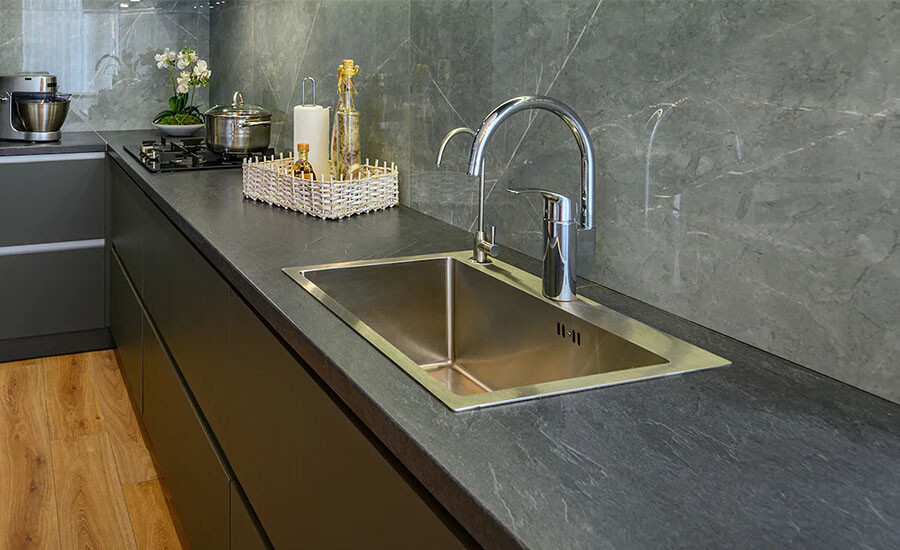
Tip: Slate countertops have a lot of texture and are uneven, which can hinder kitchen work.
Slate slabs can be laid in a very thin design due to their high strength. As a result, the countertop looks smaller than a kitchen countertop made of solid wood.
Tip: Slate is not as hard as granite countertops and is not scratch resistant.
In case of impact, pieces can even fall out of the material. However, annoying scratches can be prevented by using a cutting board. Any scratches can be repaired with special care products.
Advantages | Disadvantages |
Elegant optical effect | Uneven stone surface |
Sturdy natural stone | Not resistant to scratching |
Enables very thin worktops | Not resistant to impact |
Heat resistant | |
Insensitive to water |
Are Slate Countertops Good for Kitchens?
Yes, slate kitchen countertops are considered a good choice for many kitchens because they combine durability, heat resistance, and aesthetic appeal.
Key reasons why slate countertops work well in kitchens:
- Resistant to heat from cookware
- Low water absorption compared to marble
- Unique natural appearance
- Suitable for both modern and rustic kitchen styles
Designers often recommend grey slate countertops for contemporary kitchens, while darker black slate surfaces work beautifully with white cabinetry or wooden cabinets.
Because of its durability and subtle texture, slate countertop surfaces are also used in kitchen islands and breakfast bars.
Best Cabinet Colors and Kitchen Styles for Slate Countertops
Choosing the right cabinetry enhances the beauty of slate kitchen countertops.
White Cabinets
White cabinets paired with black slate countertops create a classic high-contrast kitchen design.
Wooden Cabinets
Natural wood cabinets complement the earthy texture of slate counter tops, creating a warm and organic feel.
Light Gray Cabinets
Light gray cabinets paired with grey slate countertops produce a modern minimalist aesthetic.
Dark Cabinets
Dark cabinets combined with slate surfaces create a dramatic and luxurious atmosphere.
Because slate countertops colors are mostly neutral, they work well with a wide variety of kitchen styles, including:
- Modern kitchens
- Industrial kitchens
- Rustic kitchens
- Scandinavian interiors
- Minimalist kitchens
Kitchen Design Ideas with Slate Countertops
Slate countertops are highly versatile and can enhance a wide range of kitchen styles, from modern to rustic. Because of their natural texture and neutral tones, slate kitchen countertops easily adapt to different interior designs.
Modern Kitchens
In modern kitchens, grey slate countertops or gray slate countertops are often paired with sleek cabinetry, handleless doors, and stainless steel appliances. The matte finish of a slate countertop adds contrast to glossy cabinets, creating a clean and contemporary look.
Farmhouse Kitchens
For farmhouse-style kitchens, slate counter tops work beautifully with wooden cabinets, open shelving, and vintage fixtures. The slightly textured surface of slate countertops complements natural wood and creates a warm, inviting atmosphere.
Luxury Kitchens
In high-end kitchen designs, black slate countertops are often combined with marble backsplashes, gold hardware, and custom cabinetry. The understated elegance of a slate counter top provides a sophisticated alternative to polished stone surfaces.
Minimalist Kitchens
Minimalist kitchens benefit from the simplicity of slate kitchen countertops. Neutral tones like grey slate countertops help maintain a clean and uncluttered aesthetic, especially when combined with flat-panel cabinets and hidden storage.
Because of their subtle variations and natural appeal, slate countertops can be used in both small and large kitchens to create a timeless design.
Slate Countertop Thickness and Edge Styles
When choosing slate countertops, understanding thickness, edge profiles, and fabrication options is important for both design and durability.
Standard Thickness
Most slate countertop slabs are available in thicknesses of:
- 20mm (thin and modern look)
- 30mm (standard kitchen thickness)
Because slate is strong and dense, slate counter tops can often be fabricated thinner than granite while still maintaining durability.
Edge Profiles
The edge style of slate countertops affects the overall appearance of the kitchen. Common edge profiles include:
- Straight edge (modern and clean)
- Beveled edge (adds subtle detail)
- Bullnose edge (rounded and softer look)
- Ogee edge (decorative and traditional style)
Choosing the right edge enhances both safety and aesthetics, especially for kitchen islands and high-use areas.
Fabrication Process
The fabrication of slate kitchen countertops involves cutting, shaping, and finishing the stone to fit the kitchen layout. Because slate has a layered structure, experienced manufacturers ensure precise cutting to prevent chipping and maintain surface integrity.
Professional fabrication also allows customization of sink cutouts, edge detailing, and surface finishing, ensuring that each slate countertop fits perfectly within the kitchen design.
How to Clean, Seal and Maintain Slate Countertops
Maintaining slate countertops is relatively simple compared to other natural stones.
Daily Cleaning
Use warm water and mild dish soap to wipe the surface. Avoid harsh chemical cleaners.
Sealing
Although slate is naturally dense, some slate countertop varieties benefit from occasional sealing to enhance stain resistance.
Preventing Scratches
Use cutting boards when preparing food to protect slate countertops from scratches.
Preventing Chips
Avoid dropping heavy objects on the edges of the countertop.
With proper care, slate kitchen countertops can last for decades while maintaining their natural beauty.
Frequently Asked Questions
Are slate countertops good for kitchens?
Yes. Slate kitchen countertops are heat-resistant, durable, and visually distinctive, making them a practical option for many kitchens.
Do slate countertops scratch easily?
Slate is softer than granite, so minor scratches can occur. However, using cutting boards helps protect slate countertops.
What colors do slate countertops come in?
Common slate countertop colors include black, grey, gray-blue, red-toned, and occasionally greenish or yellowish variations.
Do slate countertops need sealing?
Some slate countertops benefit from sealing depending on the stone type, though many varieties are naturally dense and resistant to stains.
Are slate countertops expensive?
Slate countertops are generally moderately priced, usually less expensive than high-end granite but more costly than laminate surfaces.
What cabinets look best with slate countertops?
White, gray, and wooden cabinets work particularly well with slate kitchen countertops because they highlight the natural texture of the stone.
Do slate countertops stain?
Slate countertops are relatively resistant to stains because they are less porous than many other natural stones. However, spills such as oil, wine, or acidic liquids should still be cleaned promptly to maintain the appearance of slate countertops. Applying a sealer can further improve stain resistance.
How long do slate countertops last?
With proper care, slate countertops can last for decades. Their durability, resistance to heat, and low water absorption make slate kitchen countertops a long-lasting choice for both residential and commercial kitchens.
Conclusion
Slate countertops are a beautiful and practical choice for homeowners who want a natural stone surface with a modern matte finish. With their durability, heat resistance, and unique textures, slate kitchen countertops bring character and sophistication to any kitchen design.
Whether paired with white cabinetry, natural wood, or modern gray kitchens, slate counter tops offer versatility and timeless style. By understanding slate countertop pros and cons, colors, and maintenance needs, homeowners can make an informed decision when selecting the perfect kitchen surface.
Get High-Quality Slate Countertops
If you are looking for high-quality slate countertops for residential or commercial projects, our team provides custom stone solutions tailored to your needs. From slate kitchen countertops to full project supply, we ensure quality manufacturing and reliable global delivery.
Contact us today to get a quote and start your project with premium slate countertops designed for durability and style.