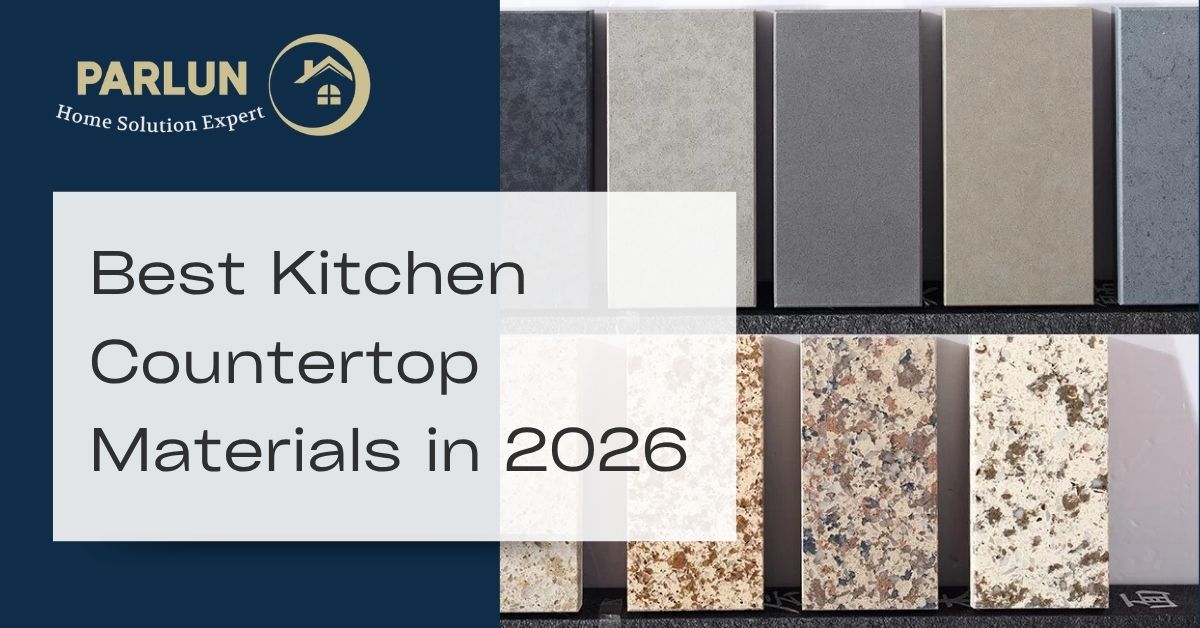
Your countertop is the hardest-working surface in the kitchen, and you will live with it for 10 to 20 years, so the decision deserves real thought. The best countertop for kitchen use depends on your budget, how much maintenance you will tolerate, your style, and the way you cook. This guide walks through every major countertop material option and gives you a clear kitchen countertop materials comparison, so you can decide with confidence rather than guesswork.
How to Choose a Countertop Material
Picking the best countertop for kitchen life comes down to four practical questions. Work through them in order and the field narrows fast.
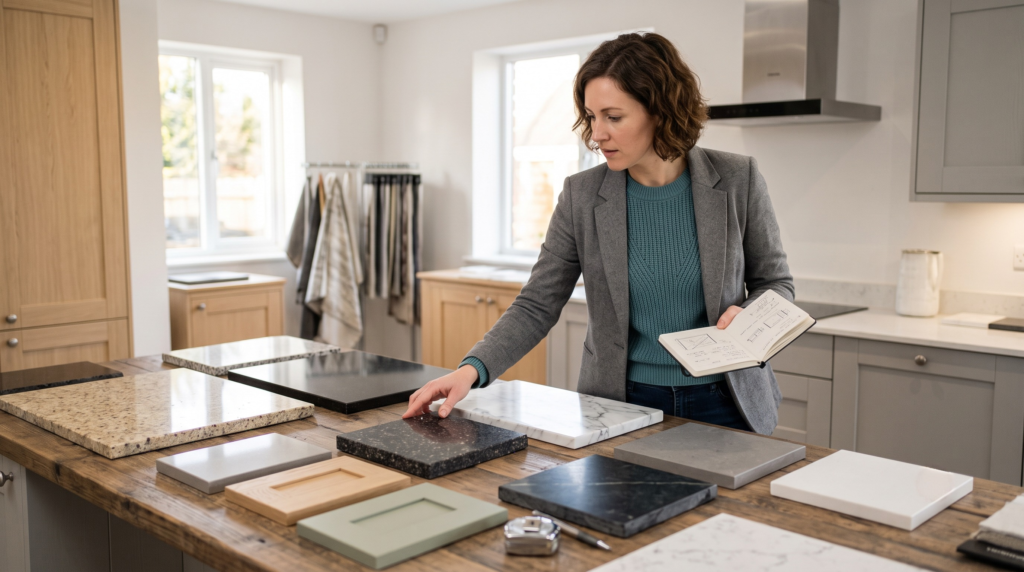
Budget comes first. Countertop material options span a wide range, from affordable laminate at the entry level up to premium natural marble at the top, so setting a realistic number early rules out anything that will not fit the project.
Maintenance tolerance is next. Some surfaces are close to fit-and-forget, while others need regular attention to stay their best. Quartz sits at the low-maintenance end, whereas marble and wood ask for ongoing sealing, oiling, or careful cleaning. Be honest about how much upkeep you will actually keep up with.
Style direction shapes the shortlist. A modern kitchen often leans toward quartz or porcelain, a classic scheme suits marble or granite, and a rustic or industrial look pairs naturally with wood or slate. The surface sets the tone for the whole room, so let the overall design lead here.
Last, think about how you actually use the space. Heavy high-heat cooking counts against wood and, to a degree, quartz, since neither loves direct heat from pans. Keen bakers, on the other hand, gravitate to the cool touch of marble. Answer these four questions and your countertop material options become far easier to compare.
One more thing worth keeping in mind: cost and durability usually move together, but not always. A pricier surface is not automatically the toughest, and some mid-range materials outlast premium ones in a real kitchen. Weigh the upfront countertop material cost against how long the surface should last and how much upkeep it needs, and you get a truer picture of value than price alone.
Natural Stone Countertops
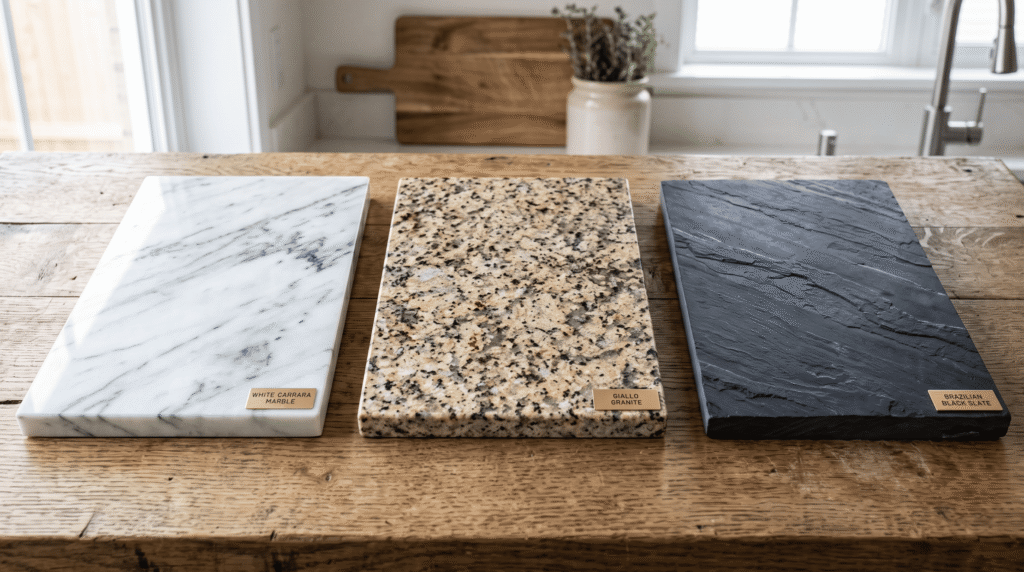
Natural stone brings genuine character to a kitchen, with patterns that no two slabs ever share. Each type is quarried, cut, and polished, and each balances beauty against upkeep in its own way. If you want an authentic natural look, marble, granite, and slate are the classics worth weighing, and softer stones such as travertine are worth a look too. All natural stone rewards a little care with a surface that ages gracefully and adds real resale appeal, which is why it stays in demand despite the extra upkeep.
Marble
Marble is prized for its soft veining and bright, elegant appearance, and its naturally cool surface makes it a long-standing favourite for baking and pastry work. The trade-off is clear on any marble countertops pros cons list: the stone is porous and acid-sensitive, so it etches and stains more easily than harder options. Regular sealing and gentle cleaning keep it looking its best over the years, and many owners come to see the patina it develops as part of its charm rather than a flaw.
Granite
Granite is considerably harder than marble and far more resistant to scratches and everyday knocks, which is a big part of its lasting popularity. Every slab carries dramatic natural variation in colour and pattern, so no two kitchens end up alike. It does need periodic sealing to guard against stains. Buyers weighing quartz vs granite countertops often choose granite for its authentic stone character and its strong countertop material durability.
Slate
Slate offers a matte, softly textured surface and a distinctive, understated look that stands apart from glossier stones. It is dense, naturally non-porous, and very durable, holding up well against heat and stains with little fuss. Slate is less common than marble or granite, which makes it a smart pick for anyone who wants something individual. Our slate countertops guide covers colours and care in more detail.
Engineered and Artificial Stone Countertops
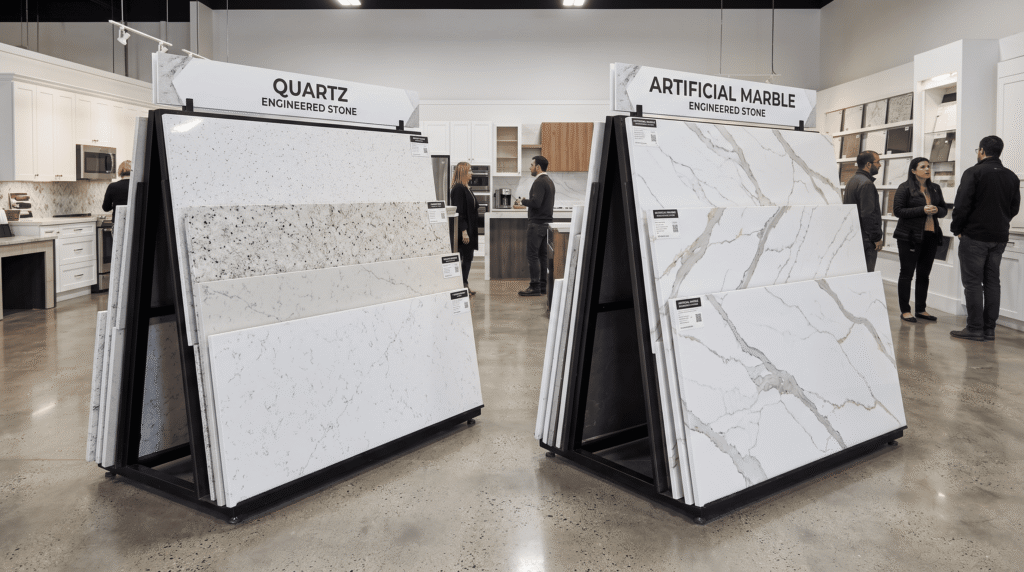
Engineered surfaces are made by binding crushed stone or minerals with resin, which gives manufacturers tight control over colour, pattern, and performance. Among all countertop material options, this category has grown the fastest, largely because it removes much of the upkeep that natural stone demands while keeping a high-end look. Two options dominate here, and both give you the stone aesthetic with more predictable performance and easier care than a quarried slab.
Quartz
Quartz is the most popular countertop material in the world, and for good reason. It is engineered from ground natural quartz bound with resin, which makes it non-porous, so it never needs sealing and shrugs off stains and bacteria. The pattern stays highly consistent from slab to slab, and scratch resistance is excellent. Its one real limitation is heat, since quartz is not heat-proof and trivets are a must near the hob. In the quartz vs granite countertops debate, quartz wins on low maintenance while granite wins on natural authenticity. For most everyday kitchens, that easy upkeep is exactly why quartz keeps topping the list.
Artificial Stone (Artificial Marble)
Artificial stone, sometimes called artificial marble, is engineered to imitate the look of marble or other natural stone at a friendlier price. It is generally more affordable than quartz and comes in a broad range of designs, from clean solid tones to convincing veined patterns. Because the appearance is manufactured rather than quarried, you get consistent colour with far fewer surprises than a one-off natural slab. Our artificial stone countertops page shows the finishes currently available. It is a sensible middle ground for buyers who love the marble look but want a lower price and easier day-to-day care.
Other Popular Countertop Materials
Beyond stone and engineered stone, a few other materials have earned loyal followings, each suited to a particular look or way of working in the kitchen. All three below move in and out of fashion, so our countertop trends post is a useful companion if you want to see what is popular right now.
Porcelain Slabs
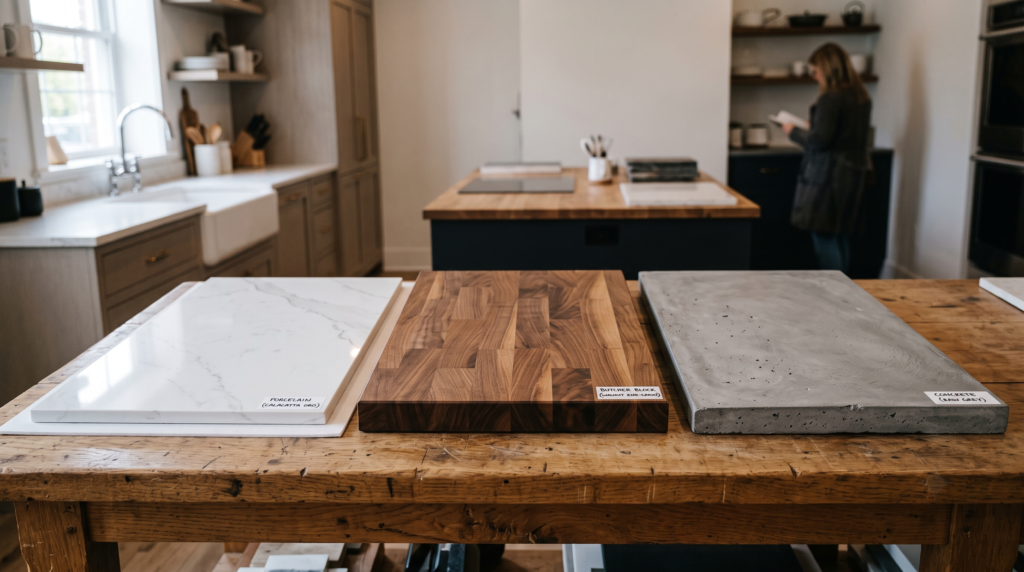
Porcelain slabs are ultra-thin, highly heat resistant, and very hard to scratch, which suits busy modern kitchens well. They come in large formats and sleek, contemporary finishes, and they resist UV fading over time. Growing fast as an alternative to quartz, porcelain countertop options are well worth a close look for anyone chasing a clean, minimal aesthetic. The thin profile also suits waterfall edges and large islands without adding visual bulk. The main trade-offs are a higher price than many alternatives and a limited choice of edge profiles, since the slabs are so thin.
Butcher Block (Wood)
A butcher block countertop brings warmth and natural texture that hard surfaces cannot match, and wood is renewable and easy to refresh by sanding. It shines as a dedicated prep or baking zone. The catch is care, since wood needs regular oiling and is not waterproof, so it wants extra attention around sinks and taps. Many kitchens use it as an accent island rather than across every run.
Concrete
A concrete countertop kitchen has an industrial, tactile appeal, and the material can be cast into almost any shape, colour, or edge profile you can picture. Each piece is genuinely one of a kind. Concrete is heavy, so cabinets must be built to support the load, and the surface needs sealing to resist stains and moisture. Hairline surface cracks can develop over time, which some owners see as character and others as a drawback. It is very much a bespoke, made-to-order surface, so lead times and cost tend to run higher than mass-produced options.
Countertop Materials Compared: Quick Reference Table
The table below sums up this kitchen countertop materials comparison at a glance. Material names the surface. Countertop material cost is rated from $ for budget-friendly, through $$ for mid-range, to $$$ for premium. Maintenance level is marked low, medium, or high. Heat resistance and scratch resistance show how each surface copes with hot pans and daily wear, the two traits that most affect countertop material durability.
|
Material |
Cost |
Maintenance |
Heat Resistance |
Scratch Resistance |
|---|---|---|---|---|
|
Marble |
$$$ |
High |
High |
Medium |
|
Granite |
$$$ |
Medium |
High |
High |
|
Slate |
$$ |
Low |
High |
Medium |
|
Quartz |
$$$ |
Low |
Medium |
High |
|
Artificial Stone (Artificial Marble) |
$$ |
Low |
Medium |
Medium |
|
Porcelain Slab |
$$$ |
Low |
High |
High |
|
Butcher Block (Wood) |
$$ |
High |
Low |
Low |
|
Concrete |
$$$ |
High |
High |
Medium |