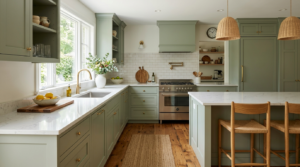
A blue and grey kitchen can look bright and relaxed, dark and dramatic, or somewhere in between. The difference is not simply which two colours you choose. It is where you use them and what sits beside them.
A navy island against pale grey cabinets creates a different impression from dusty blue doors with charcoal countertops. Add a wood floor, change the backsplash or switch the hardware, and the same palette takes on another character.
Use the ideas below to find a combination you enjoy, then check it against your room’s lighting, existing finishes and everyday cooking needs.
Blue and Grey Kitchen Design Summary
A balanced blue and grey kitchen, or blue and gray if you prefer that spelling, starts with compatible undertones and a clear plan for where each colour will appear. Navy cabinets with light grey surfaces offer contrast, while dusty blue and softer greys create a gentler palette. You can divide colours between upper and lower cabinets, use a contrasting island or introduce blue through the backsplash. Compare countertops, flooring, hardware and lighting alongside physical cabinet samples before committing. In smaller rooms, protect useful storage and circulation space while controlling the amount of dark colour. The sections below explain these choices and help you prepare a practical specification for a kitchen update.
Choose Blue and Grey Kitchen Colours That Work Together
Start with the surfaces you are keeping. Flooring, window frames, appliances and an existing countertop can narrow the palette before you look at cabinet colours.
Grey is not automatically a perfect match for every blue. Some greys lean towards beige, while others show blue, green or violet undertones. Place samples together to see how they interact.
Navy Blue and Light Grey Kitchens
Navy blue and light grey create a noticeable difference in depth. Try navy on the lower cabinets or island, with lighter grey on the surrounding units.
A pale countertop can separate the darker fronts from the backsplash. Wood stools or flooring can introduce another texture if the room feels too uniform.
Navy leans dark fast, so it helps to see more navy cabinet colour combinations before you commit.
To test navy on your own wall, start with named references such as Sherwin-Williams Naval SW 6244 and In the Navy SW 9178.
Dusty Blue and Warm Grey Kitchens
Dusty blue can suit a softer scheme, particularly alongside grey with a beige undertone. This combination is worth sampling if bright blue feels too strong for the room.
Avoid choosing both colours separately from different photographs. The blue may look much greener beside one grey than another.
Compare available shades in our custom blue cabinet collection.
Light Blue and Soft Grey Kitchens
Light blue and soft grey can create a restrained palette. Give the room some definition through hardware, a darker stool frame or a contrasting countertop edge.
You can also choose one blended blue grey cabinet colour and introduce the second shade through walls or tile. This keeps the number of cabinet finishes manageable.
Pale and deep greys read very differently on a door, so look through the grey cabinet finish options side by side.
| Starting combination | Where to introduce contrast |
|---|---|
| Navy and light grey | Pale countertops and restrained hardware |
| Dusty blue and warm grey | Wood accents and a warm neutral floor |
| Light blue and soft grey | Darker handles or selected accessories |
| Slate blue and charcoal | Lighter walls or backsplash surfaces |
These are starting points rather than fixed formulas. Test the actual finishes in your room during the day and evening. Hold cabinet samples vertically and countertop samples horizontally so the comparison resembles the finished kitchen.
Choose Hardware and Door Styles for Blue and Grey Cabinets
Hardware is a small part of the kitchen, but it repeats across almost every cabinet. Choose something you enjoy looking at and find comfortable to use.
Brushed brass can add a warmer accent beside blue and grey. Nickel or chrome can connect the cabinets with stainless steel appliances. Matte black can give lighter doors a more defined outline.
You do not need every metal finish to match exactly. Start with one main hardware finish, then check the faucet and lighting beside it. A deliberate mixture is easier to assess when you have physical samples.
Flat Panel Blue and Grey Cabinets
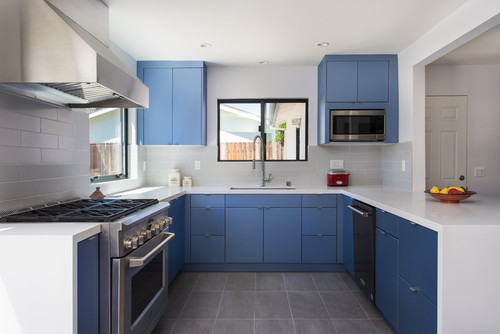
Flat panel fronts let colour and proportion take the lead. They can suit a contemporary kitchen where you prefer fewer decorative details.
If you combine two colours, keep door and drawer lines coordinated. A consistent profile can connect the blue and grey areas even when the shades differ.
Profile and material both change how a flat front looks, and the flat panel cabinet design guide compares them.
Shaker Blue and Grey Cabinets
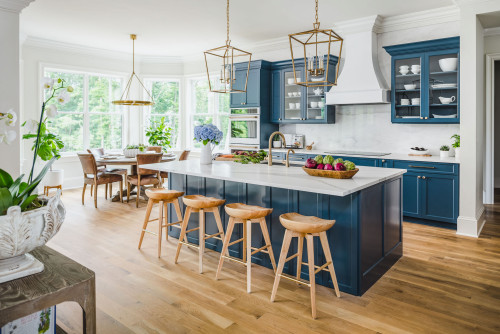
Shaker doors introduce a frame around the centre panel. They can work with a traditional, transitional or contemporary palette, depending on the frame proportions and surrounding finishes.
For a restrained result, compare a simpler frame with uncomplicated handles and a quieter backsplash. A more decorative door may need fewer competing details elsewhere.
To compare Shaker options side by side, start with the Shaker cabinet buying guide.
Choose the cabinet profile before finalising the hardware. A handle that looks proportionate on a framed door may feel quite different on a wide slab drawer.
Brass Hardware With Blue Cabinets
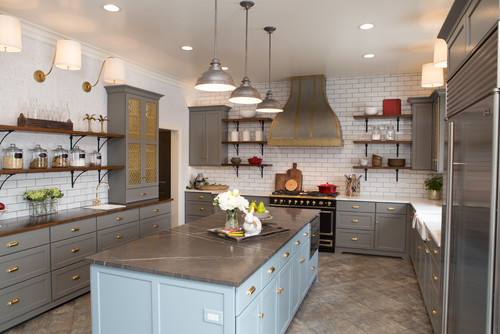
Brass can stand out clearly against navy or slate blue fronts. Compare the finish carefully because polished, brushed and aged brass have different appearances.
Try a handle on a sample door if possible. Check the grip space and whether the projection could interfere with another door, appliance or walkway.
Where the handle sits changes the whole look, and the cabinet handle positioning guide shows how.
Pair Blue Kitchen Cabinets With a Grey Backsplash
A grey backsplash can connect blue cabinetry with a pale countertop, stainless steel appliances or grey flooring. The important choice is how much contrast and pattern you want.
If the cabinet colour is already strong, a quieter backsplash gives it more attention. If the doors and countertop are simple, tile shape or texture can become the main decorative feature.
Grey Subway Tile With Blue Cabinets
Grey subway tile offers several directions within the same basic shape. A horizontal layout can feel familiar, while a vertical arrangement can change the rhythm of the wall.
Grout affects the result too. A closer colour match makes the joints less prominent. A contrasting grout makes the tile pattern easier to see.
The same grey tile looks different in each arrangement, so browse these grey subway backsplash layouts before you choose.
Textured Grey Backsplashes With Light Blue Cabinets
Texture can add interest without introducing another strong colour. Consider how a sample looks under the intended task lighting because shadows can make the texture more noticeable.
Also check cleaning requirements, particularly behind the cooker. The surface finish, joints and installation details matter alongside the appearance.
Before ordering, place the backsplash sample beside both cabinet colours and the countertop. This helps you assess the entire working area rather than one finish in isolation.
Grey Veined Backsplashes With Navy Cabinets
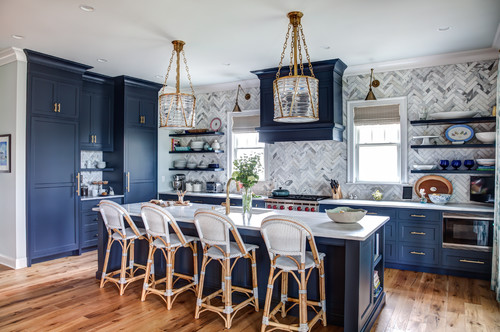
A grey veined surface can connect navy doors with lighter areas of the kitchen. Look at the scale of the pattern and how it will appear across the full wall.
If the countertop is strongly patterned, consider a quieter backsplash or a coordinated continuation. Two busy surfaces can compete, especially in a compact room.
For more ways to treat veined grey, browse this grey marble backsplash inspiration.
Confirm the actual material with the supplier. A photograph of veining does not establish whether a surface is natural marble, porcelain, quartz or another product.
Use a Blue Kitchen Island With Grey Cabinets
A blue kitchen island can bring colour into the room without changing every cabinet. It is a useful option if you like blue but want the surrounding cabinetry to remain more neutral.
Choose the island shade alongside the perimeter cabinets. Navy with pale grey gives a stronger contrast, while dusty blue with warm grey creates a softer relationship.
Think about the view from adjoining rooms too. The seating side and exposed ends may be more visible than the working side, so include those panels in the finish specification.
Navy Island With Light Grey Cabinets
A navy island can provide a focal point within a lighter kitchen. You can connect it with the perimeter through matching handles, a shared countertop material or a repeated door profile.
There is no need to repeat navy on every accessory. A few carefully chosen details can be enough to make the combination feel intentional.
Pale greys shift with the light in the room, so see the light grey cabinet colour guide before you settle on one.
Dusty Blue Island With Dark Grey Cabinets
A lighter blue island can introduce contrast where the surrounding cabinets are darker. Compare the combination with the floor so the room does not become a collection of unrelated blocks.
A pale worktop or lighter backsplash may help separate the cabinet areas visually. Test these options with samples before choosing.
For deeper greys, these dark grey cabinet design ideas show how far the colour can go.
Grey Island With Blue Cabinets
You can reverse the arrangement and use grey on the island. This may suit a room where blue cabinetry already occupies most of the wall space.
Keep the island finish distinct enough to look deliberate. If the two shades are very close, decide whether you prefer that subtle difference or a single cabinet colour throughout.
Before selecting the island size, review our kitchen layout planning steps.
Check access around open drawers, appliance doors and occupied seats. A peninsula or a smaller preparation area may suit the room better than a freestanding island. Colour should support a workable layout rather than determine it.
Introduce a Blue Backsplash With Grey Kitchen Cabinets
If you prefer neutral cabinet fronts, a blue backsplash can carry the colour instead. It creates a visible feature without requiring blue on every door.
Start by deciding whether the backsplash should blend with the cabinets or stand apart. A muted blue grey can create a subtle transition, while a deeper blue gives the wall more emphasis.
Light Blue Tile With Grey Cabinets
Light blue tile can suit a gentle palette with soft grey cabinetry and pale countertops. Compare several tiles together because some ranges contain intentional variation.
Keep the surrounding finishes restrained if you want that variation to remain the main detail. Consider the grout sample as part of the selection rather than leaving it until installation.
Navy Backsplash With Pale Grey Cabinets
A navy backsplash creates stronger contrast. You might use it along the main working wall or in a defined area behind the cooker.
Check how it relates to the hood, electrical outlets and any shelving. These details can interrupt the pattern, so a drawing of the wall helps you plan the layout.
For more directions to explore, browse these navy backsplash design examples offer additional directions to explore.
Blue Grey Tile With a Contrasting Island
A blue grey backsplash can connect a blue island with grey perimeter cabinets. The colours do not have to match exactly, but their relationship should be considered together.
View the samples at the distances you will normally see them. A pattern that looks busy close up may appear quieter across the room.
Use a backsplash material specified for its intended location, and follow the supplier’s installation and care requirements. The colour alone tells you nothing about suitability near water or cooking appliances.
Contemporary Kitchen with Slate Blue Backsplash and Greyish Cabinets
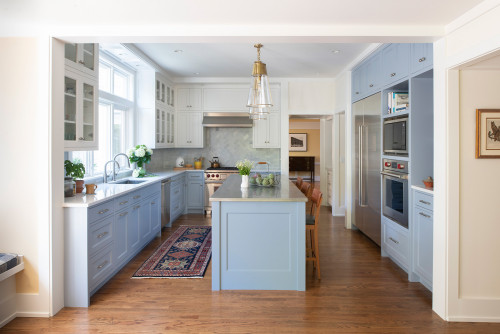
Tender textures with plain surfaces create both stylish and contemporary designs. The combination of light grey and slate blue color used for the flat-panel cabinets and the subway tile backsplash produces a charming harmony and they match well with the blue island with a grey marble waterfall and the medium-tone floors. Two small countertop windows invite natural lights in, brightening the countertop, and they form a natural vibe with greenery and wood stools. A pair of white glass-fronted cabinets create a soft contrast with the backsplash and add a crystal texture to the cabinetry.
Choose Countertops for Blue and Grey Kitchen Cabinets
The countertop occupies a large part of your view, so choose it alongside the cabinet finishes. Compare the undertone, pattern and surface sheen rather than looking only at the colour name.
A quieter worktop gives the cabinetry more attention. A strongly veined surface introduces another feature and may work better with simpler doors and a restrained backsplash.
Blue Cabinets With Grey Countertops
Blue cabinets with grey countertops can create a more tonal combination than blue with bright white. The effect depends on the depth of both colours.
Try pale grey beside navy for a clearer difference. With light blue doors, a deeper grey surface can provide definition. If the shades are similar, check whether the softer transition gives you the result you want.
White Countertops With Blue and Grey Cabinets
White and warm white worktops can connect the two cabinet colours through one continuous surface. Grey veining can also repeat a tone from the cabinetry.
Look at a larger sample or the selected slab where possible. A small swatch may not show the scale, spacing or variation of the pattern.
Compare Materials Before Ordering
Our kitchen countertop material guide explains the available surface categories.
| Surface option | What to confirm |
|---|---|
| Engineered quartz | Approved cleaning products and protection from hot cookware |
| Natural marble | Acid sensitivity, staining precautions and maintenance requirements |
| Porcelain or sintered surfaces | Product specifications, fabrication and edge details |
| Laminate | Edge construction, heat precautions and care instructions |
| Timber | Protective finish and care around wet areas |
Do not treat a marble look as proof of natural marble, or assume every grey stone has the same properties.
For quartz surfaces, follow the manufacturer’s heat guidance and use suitable protection beneath hot cookware. Some textured finishes can also need more cleaning than polished versions.
Natural marble can be affected by acidic substances. Ask the stone supplier about the exact material and its care requirements before deciding whether it suits your routine.
A countertop should fit how you cook as well as how you want the kitchen to look. Review the sink, cooker, joints and exposed edges as part of the final specification.
Plan Two Tone Blue and Grey Kitchen Cabinets
Two tone blue and grey kitchen cabinets work best when the colour division follows the layout. Choose which area should attract attention, then let the second colour support it.
You might divide the colours between upper and lower cabinets, separate an island from the perimeter or use one colour on a tall storage wall.
Try to avoid changing colour midway through a continuous drawer bank without a clear reason. Consistent lines and repeated door profiles can connect the different areas.
Navy Lower Cabinets With Grey Upper Cabinets
Navy lower cabinets with grey upper cabinets create a difference in visual weight. A lighter upper finish can be worth testing when you want the wall cabinetry to feel less prominent.
Keep the division consistent where practical. Use the countertop and backsplash to connect the colours, and check how the tall units will fit into the arrangement.
Blue and Grey Kitchen Ideas for Small Rooms
A small kitchen can include darker blue. The amount, placement and surrounding surfaces matter alongside the shade itself.
Consider navy on selected lower units, a compact peninsula or one feature area. You can keep other surfaces lighter if you prefer more contrast.
Explore our cabinet options for smaller kitchens when comparing layouts.
Protect useful storage. Removing upper cabinets may open the view, but it only helps if the remaining cupboards can hold what you need.
Warm Up Blue and Grey With Flooring and Lighting
If the palette feels too cool for your taste, introduce another texture. Timber flooring, wood stools or a warm neutral tile can change the relationship between the cabinet colours.
You do not need to add wood everywhere. One substantial surface can provide a clearer effect than many small decorative additions.
Plan lighting before approving the finishes. Ceiling lights provide general illumination, while task lighting helps you see the preparation surfaces clearly.
Our kitchen lighting collection can help you compare fixture types.
Check the cabinet samples under the actual lights you inte
Update Existing Cabinets or Plan New Ones
If the cabinet boxes and layout still work, repainting suitable fronts may be an option. Confirm the existing surface and the preparation required before choosing a coating.
Follow the paint system’s cleaning, priming, drying and curing instructions. A door that feels dry is not necessarily ready for heavy use or cleaning.
For replacement cabinetry, prepare a schedule covering the colours, door profile, box construction, hardware and exposed panels.
Use our kitchen design planning service to discuss how the palette can fit your measurements and storage priorities.
Frequently Asked Questions About Blue and Grey Kitchens
Yes, they can form a balanced palette when the undertones and depth of colour work together. Compare the actual cabinet finishes with the countertop, backsplash and floor. Colour names alone are not enough to judge the combination.
Pale grey creates a clearer contrast with navy, while deeper grey produces a more tonal look. A warmer grey may suit timber and beige finishes. Test several options beside the navy sample rather than assuming one grey will suit every room.
Yes. Consider the amount of navy and where it appears. Selected lower cabinets or a feature area can introduce the colour without covering every wall. Keep the layout, useful storage and lighting in mind rather than choosing on room size alone.
White, warm white and grey surfaces are useful starting points. A quieter pattern can let the cabinet colours stand out, while veining adds another feature. Compare the appearance and the care requirements of the selected material before ordering.
Brass offers a warmer accent, nickel and chrome can connect with appliances, and black gives lighter fronts more definition. Check the finish beside the cabinet sample, then test the handle’s grip and placement.
Try timber, a warmer neutral floor or carefully selected lighting. Compare these changes with your existing finishes. One well chosen material may create a stronger result than adding many small accessories in different warm colours.
It can match or contrast. A blue island with grey perimeter cabinets creates a focal point, while matching colours produce a more continuous appearance. Repeated hardware, door profiles or countertop materials can connect a contrasting island with the rest of the kitchen.
Possibly, if their condition and surface are suitable. Confirm the preparation, primer and coating system before starting. Follow the product’s drying and curing instructions, and check whether updating the fronts will address your storage and layout needs.
Plan Your Kitchen Colours With Parlunbuilding
Choose a blue and grey kitchen combination you enjoy, then develop it into a clear specification. Gather your room measurements, cabinet samples, surface choices and preferred design references.
Send these details to request a tailored kitchen quotation.
Include your preferred colour placement, storage requirements and the finishes you want to compare. This gives the team a more useful starting point than an inspiration photograph alone.